Best overall: a gentle facial for noninflamed congestion. Best for clogged pores with dehydration: a hydrafacial. Best for suitable exfoliation candidates: a chemical peel. For the best facials for acne-prone skin in Phoenix in 2026, start with your breakout type—not the most intensive treatment. Bonnie Frances Skin offers these services, plus dermaplaning and SkinPen microneedling.
- The best facials for acne-prone skin Phoenix clients choose depend on congestion, inflammation, and current acne treatment.
- Bonnie Frances Skin offers facials, hydrafacials, chemical peels, dermaplaning, and SkinPen microneedling in Phoenix.
- Choose gentle care for congestion; discuss hydrafacials or chemical peels only after checking skin tolerance.
- Skip dermaplaning over active breakouts; reserve microneedling discussions for acne scars after active acne is controlled.
Why this matters
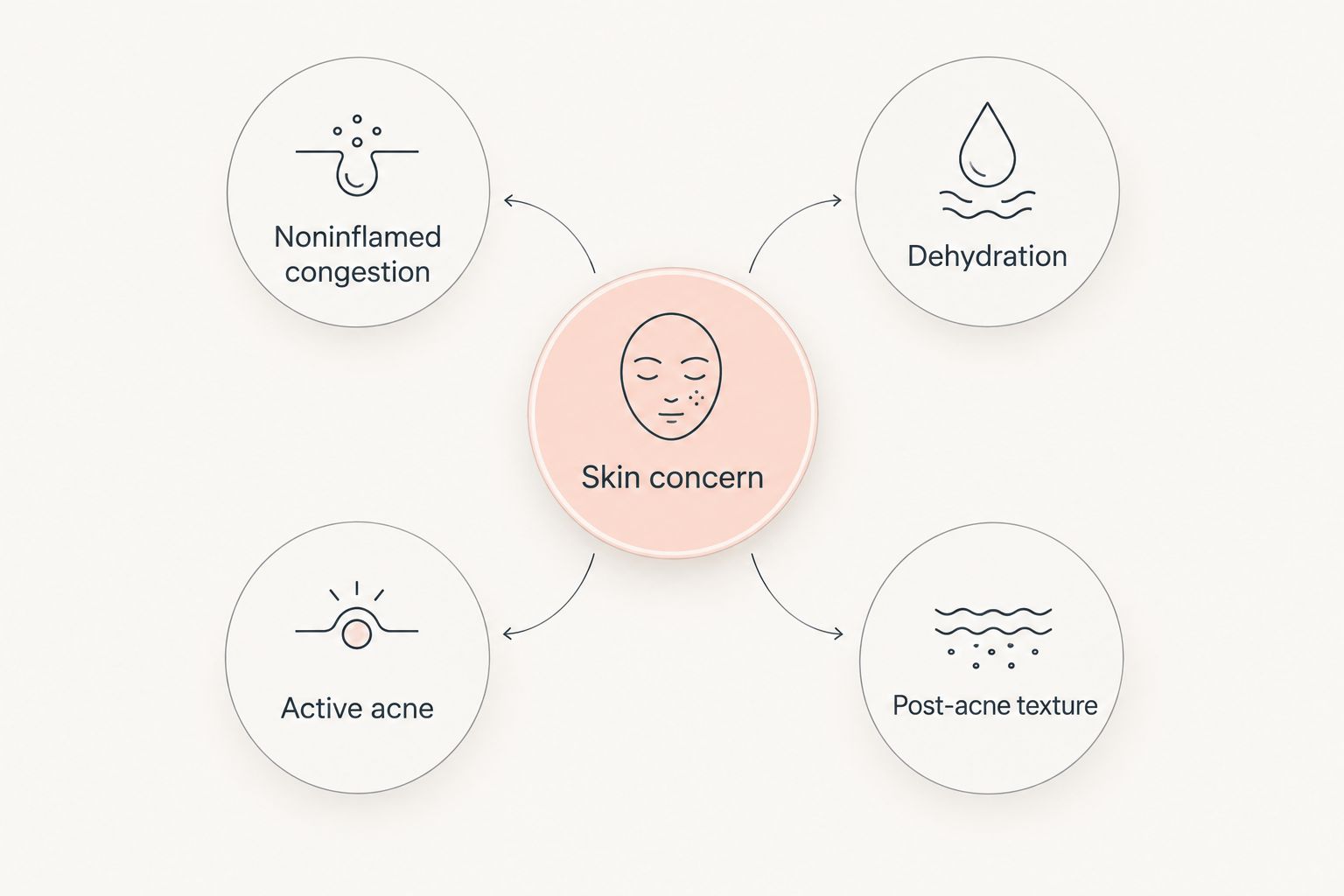
Acne-prone skin is not one condition. Blackheads, inflamed pimples, painful nodules, lingering discoloration, and indented scars require different decisions. A treatment that addresses surface buildup does not automatically treat the cause of recurring acne.
A facial supports acne care; it does not replace medical treatment for persistent, painful, or scarring acne. If you have deep lesions, worsening breakouts, or new scars, make a dermatologist your first stop rather than booking increasingly intensive exfoliation.
Bonnie Frances Skin is a Phoenix option for clients seeking facials and related skin treatments; the right service depends on whether the concern is congestion, dehydration, or post-acne texture. For your 2026 appointment, bring your current skincare routine and medication list so the treatment decision reflects what your skin already receives.
What makes the best facial for acne-prone skin?
Use these criteria before comparing services. The best choice is the treatment that fits your skin today, including reasons not to perform it.
- Breakout type: Distinguish blackheads and closed comedones from tender, inflamed lesions. Do not treat every bump as something to extract.
- Barrier condition: Stinging, peeling, and persistent tightness are reasons to reassess exfoliation, not add more of it.
- Medication compatibility: Disclose prescription retinoids, isotretinoin, benzoyl peroxide, and exfoliating acids. Ask the prescriber about medication changes.
- Treatment intensity: Confirm the proposed exfoliation, suction, extraction, and other steps before proceeding. A familiar service name does not describe the full protocol.
- Goal clarity: Separate active acne management from hydration, discoloration, and scar treatment. Each needs its own plan.
- Aftercare fit: Choose a treatment whose aftercare you can follow, including sun protection and any clinician-directed limits on irritating products.
Acne-prone skin treatments at a glance
This 2026 comparison ranks treatment types, not Phoenix clinics. It distinguishes supportive facial care from procedures intended for other concerns.
| Rank and treatment | Best for | Standout feature | Key limitation |
|---|---|---|---|
| 1. Gentle facial | Noninflamed congestion | A lower-intensity starting point when aggressive exfoliation is unsuitable | Does not replace acne medication or medical assessment |
| 2. Hydrafacial | Congestion accompanied by dehydration | Combines surface cleansing, exfoliation, and hydration steps | Suction and exfoliation need assessment around inflamed lesions |
| 3. Chemical peel | Suitable candidates seeking controlled exfoliation | Uses a selected chemical exfoliant rather than manual scraping | Suitability depends on the peel, medication use, and skin condition |
| 4. Dermaplaning | Surface smoothness after active breakouts settle | Removes fine facial hair and superficial dead skin | Not an acne treatment; avoid passing a blade over active lesions |
| 5. SkinPen microneedling | Selected post-acne textural scars | Addresses a different goal from pore cleansing | Not the first choice for active acne; requires a separate suitability assessment |
The distinction that matters most is active acne versus its aftermath. A smoother surface, fewer visible flakes, and improvement in scar texture are different outcomes; none should be presented as proof that recurring acne is controlled.
1. Gentle facial: best for noninflamed congestion
A gentle facial is the default starting discussion when you want supportive skincare without automatically choosing a peel or device-based procedure. Ask for a plan based on your current skin condition, with any exfoliation or extractions explained before treatment.
Bonnie Frances Skin offers facials in Phoenix. That service category alone does not establish which products or steps your appointment includes, so describe your breakouts and ask what the proposed facial will—and will not—address.
Gentle facial pros:
- Gives you a starting point for discussing cleansing, hydration, and congestion.
- Does not require choosing a scar-focused procedure for a pore-focused concern.
- Lets you ask whether exfoliation or extractions are appropriate before agreeing to them.
Gentle facial cons:
- The term covers different protocols; the name alone does not establish suitability.
- Persistent or inflammatory acne still needs an acne treatment plan.
Best for: Noninflamed congestion when your priority is a restrained, skin-condition-led appointment.
Verdict: Buy only after the proposed steps match your skin condition; skip aggressive extraction of tender lesions.
2. Hydrafacial: best for congestion with dehydration
A hydrafacial combines cleansing and exfoliation with hydration-oriented steps. It is a relevant option to discuss when your skin feels congested and dehydrated, rather than assuming oiliness means you need stronger drying products.
Do not equate a hydrated finish with acne clearance. Ask which solutions and device settings are proposed, whether inflamed areas will be avoided, and how the treatment fits with your acne medication.
Hydrafacial pros:
- Brings cleansing and hydration into the same treatment discussion.
- Offers a distinct alternative to manual surface scraping.
- Fits a congestion-and-dehydration goal better than a scar-focused procedure.
Hydrafacial cons:
- Suction and exfoliation are not appropriate for every irritated or inflamed area.
- A temporary improvement in surface appearance does not establish control of recurring acne.
Best for: Congestion accompanied by dehydration, after the provider confirms your skin can tolerate the proposed steps.
For a 2026 booking, ask about the protocol rather than requesting the strongest setting. More intensity is not a useful goal when the skin is already irritated.
Verdict: Buy after a suitability assessment; hold if your skin is stinging, peeling, or actively inflamed.
3. Chemical peel: best for suitable exfoliation candidates
A chemical peel applies a selected exfoliating agent to the skin. Peels vary by formulation, concentration, depth, and application, so the service name is not enough to predict the experience or recovery.
Some chemical exfoliants are used in acne care, but that does not make every peel an acne treatment. Ask which agent is proposed, what concern it targets, and how the provider will assess irritation and pigment-change risks.
Chemical peel pros:
- Gives exfoliation a defined treatment role rather than adding multiple home exfoliants.
- Allows discussion of a specific agent and treatment depth.
- Provides an alternative to blade-based surface exfoliation.
Chemical peel cons:
- Irritation and pigment changes are recognized risks.
- Medication use, barrier damage, and recent procedures can change suitability.
Best for: Clients whose provider has identified a suitable exfoliation goal and confirmed that their skin and medication history permit it.
Do not stop a prescription to make room for a peel without consulting its prescriber. Bring the exact product names and directions, including treatments you use only occasionally.
Verdict: Hold until the peel type, suitability, and aftercare are clear; skip stacking it with unapproved exfoliation.
4. Dermaplaning: best for smoothness after breakouts settle
Dermaplaning uses a blade to remove fine facial hair and superficial dead skin. Its main purpose is surface smoothness, not treating the processes that cause acne.
Keep dermaplaning separate from treatment for active inflammatory breakouts. Passing a blade over acne lesions risks irritation and skin injury; choose an acne assessment instead when lesions are the main concern.
Dermaplaning pros:
- Directly addresses fine facial hair and surface texture.
- Does not require a chemical exfoliant to perform its primary function.
- Gives you a clear cosmetic goal distinct from acne clearance.
Dermaplaning cons:
- It is not a treatment for recurring acne.
- Active lesions and irritated skin make blade-based exfoliation a poor choice.
Best for: Surface smoothness once active breakouts have settled and the provider confirms suitability.
Verdict: Wait while inflammatory acne is active; consider it later for a separate smoothness goal.
5. SkinPen microneedling: best for selected post-acne texture
Microneedling creates controlled skin punctures and is used for selected textural concerns, including acne scarring. It belongs in a scar discussion, not a facial-cleansing comparison framed around current pimples.
Bonnie Frances Skin offers SkinPen microneedling. Ask whether your concern is an indented scar, a flat discoloration mark, or an active lesion: those are not interchangeable treatment targets.
SkinPen microneedling pros:
- Addresses a textural goal that cleansing facials do not.
- Creates a clear separation between acne control and scar treatment.
- Supports a focused assessment of whether the scar type fits the procedure.
SkinPen microneedling cons:
- Active acne requires assessment before needling; it is not the default breakout treatment.
- Recovery requirements and risks differ from those of a basic facial.
Best for: Selected post-acne textural scars after active acne is controlled and suitability is established.
Verdict: Wait until active acne is controlled; hold until a scar-specific assessment confirms the treatment fits.
How these treatments are ranked
This ranking puts concern matching, skin tolerance, medication compatibility, and aftercare ahead of treatment intensity. Gentle facial care comes first as a supportive starting discussion; hydrafacials and peels address more specific goals, while dermaplaning and microneedling belong to different decision paths.
The ranking is not a measured comparison of clinic outcomes. Choose by suitability, not by position alone. A dermatologist appointment outranks every facial here when painful, persistent, or scarring acne is the main problem.
Which acne-prone skin treatment should you choose?
For an undecided reader, start with a gentle-facial discussion for noninflamed congestion. Describe your symptoms before naming a procedure. If dehydration is also a concern, ask whether a hydrafacial fits; if controlled exfoliation is the goal, ask about a specific peel.
For your 2026 appointment, use this short preparation list:
- Name the concern: Blackheads, inflamed lesions, discoloration, or indented scars.
- Bring your routine: Include prescriptions, cleansers, serums, exfoliants, and recent procedures.
- Describe irritation: Report stinging, peeling, tenderness, and products that trigger discomfort.
- Confirm the plan: Ask which steps are proposed, which areas will be avoided, and what aftercare applies.
Outside the appointment, keep basic care consistent. American Academy of Dermatology patient guidance recommends washing acne-prone skin twice per day and after sweating, and choosing a broad-spectrum, water-resistant sunscreen with SPF 30 or higher. Gentle cleansing is different from scrubbing or repeatedly degreasing your face.
The same organization's acne guidance advises allowing a treatment 6–8 weeks to show improvement before judging it ineffective. That timeframe concerns acne treatment, not a promise about facial results. Seek medical advice sooner for painful lesions, worsening symptoms, or scarring.
Explore your facial options
Review Bonnie Frances Skin's Phoenix clinic information before choosing a treatment.
FAQ
What's the best facial for acne-prone skin in Phoenix?
A gentle facial is a starting option for noninflamed congestion, while painful or scarring acne calls for medical assessment. Choose the proposed treatment steps based on your skin condition, medication use, and goal—not the service name alone.
Is a hydrafacial better than a chemical peel for acne?
Neither is automatically better for acne. A hydrafacial combines cleansing, exfoliation, and hydration steps; a peel uses a selected chemical exfoliant, and suitability depends on the protocol and your skin.
Can I get a facial while using prescription acne products?
Disclose prescription acne products before booking so the provider can assess the proposed facial. Ask your prescriber about any medication changes rather than stopping treatment yourself.
Should I get dermaplaning if I have active pimples?
Skip dermaplaning over active acne lesions. Blade-based exfoliation is a surface-smoothness procedure, not a treatment for inflamed breakouts.
Is SkinPen microneedling a facial for active acne?
SkinPen microneedling is not the default choice for active acne. Discuss it separately for suitable post-acne textural scars after active breakouts are controlled.
Can a facial remove acne scars and dark marks?
A cleansing facial does not automatically treat acne scars or dark marks. Indented scars and flat discoloration require different assessments, so identify which concern you have before selecting a procedure.
When should I see a dermatologist instead of booking a facial?
See a dermatologist for painful deep lesions, persistent worsening acne, or new scars. A facial can support skincare, but it does not replace medical treatment for these concerns.
One last thing
Flat acne marks and indented acne scars are different concerns. Before booking any treatment in 2026, describe whether the problem is color, texture, or a current breakout. That distinction prevents you from choosing a scar-focused procedure when you need acne control—or expecting a cleansing facial to change an indented scar.