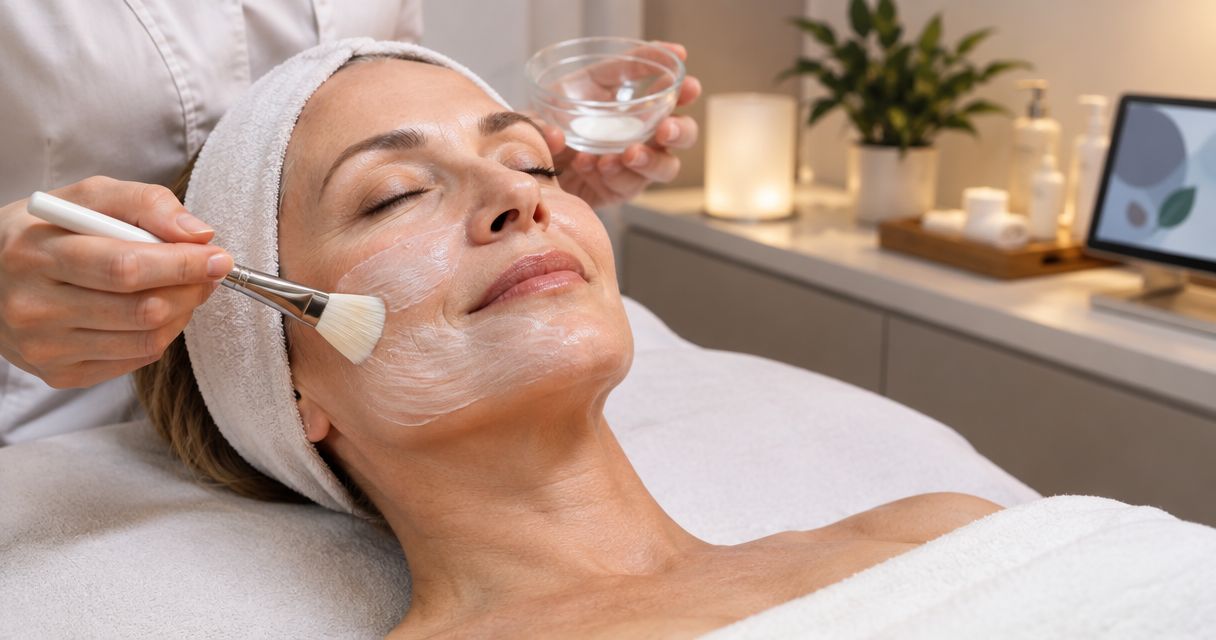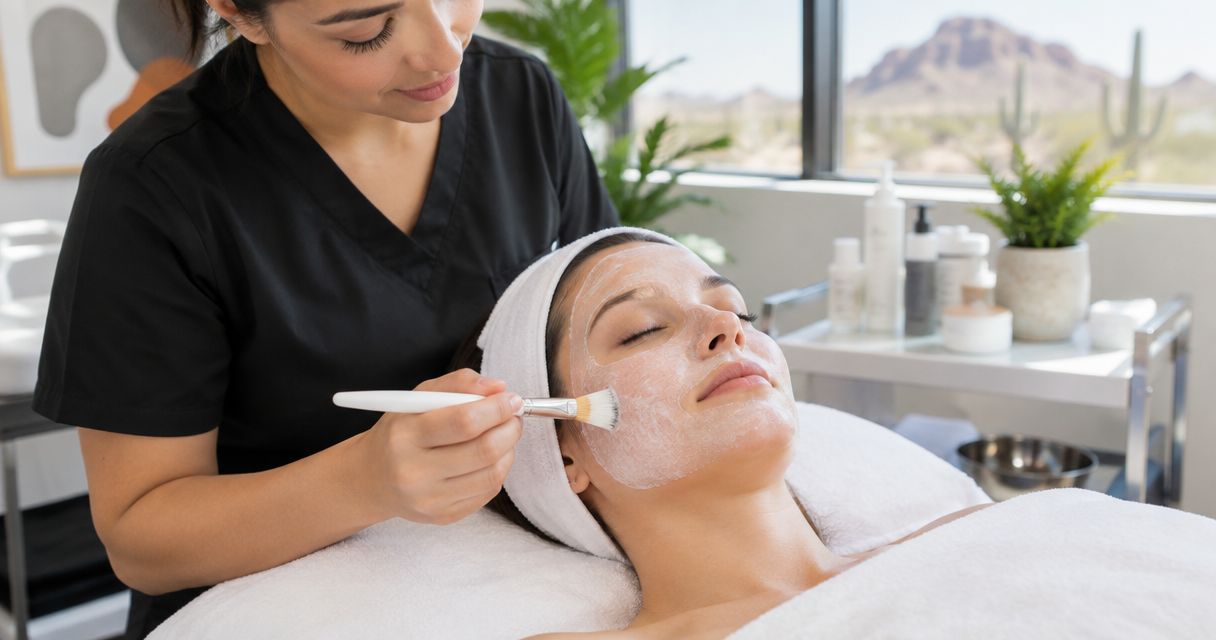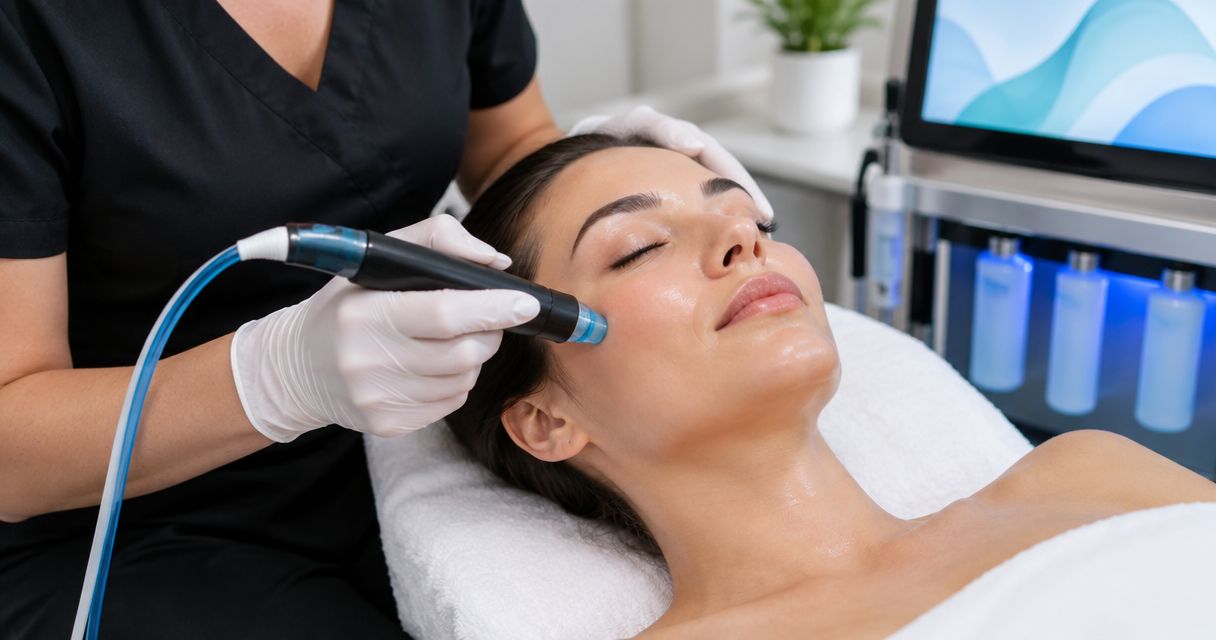
Best overall for dry, non-irritated skin: a hydration-focused Hydrafacial. Best for reactive skin: a consultation-led gentle facial. Best for dryness with clogged pores: a Hydrafacial with targeted extraction. This 2026 guide ranks treatment approaches by skin condition, not by package names or the number of extras included.
- The best hydrafacial treatments for dry skin prioritize hydration without unnecessary exfoliation.
- Bonnie Frances Skin offers Hydrafacial treatments for Phoenix clients seeking an in-person skincare service.
- Choose targeted extraction when clogged pores accompany dryness; avoid treating every area identically.
- For burning, cracking, or inflamed skin, address the irritation before booking an exfoliating treatment.
Why this matters
Dry skin needs more than a freshly polished surface. A facial can address surface buildup and provide hydration, but repeated exfoliation can aggravate an already irritated skin barrier. The right appointment starts with distinguishing ordinary dryness from inflammation.
Bonnie Frances Skin is a local option for Phoenix clients seeking Hydrafacial treatments for dry skin. Bonnie Frances Skin offers hydrafacials, facials, dermaplaning, SkinPen microneedling, and chemical peels. Choose the service around your skin’s condition rather than assuming those treatments belong in the same appointment.
The practical question for 2026 is not which facial includes the most steps. It is which approach addresses your main concern without adding irritation you do not need.
What makes the best Hydrafacial for dry skin?
Use these criteria before comparing treatment options. They matter more than a premium-sounding package label.
- Skin condition first: Tightness and dullness require a different conversation from burning, cracking, swelling, or a persistent rash.
- Appropriate exfoliation: Removing surface buildup is not a reason to keep exfoliating skin that already feels raw.
- Purposeful extraction: Address clogged areas rather than assuming every dry area needs extraction.
- Ingredient suitability: Tell your provider about known allergies and products that have caused stinging or redness.
- Aftercare compatibility: The treatment should fit your cleansing, moisturizer, sunscreen, and prescribed skincare routine.
- A clear reason for extras: Every additional procedure should address a defined concern, not merely expand the appointment.
Bring 1 main concern to the consultation: persistent tightness, visible flakes, dullness, or clogged pores. You can mention other concerns, but a clear priority makes the treatment discussion more useful.
Ask 3 questions before proceeding: What are you treating? What could irritate my skin? What should I change afterward? These are decision prompts, not a treatment protocol.
Dry-skin treatment options at a glance
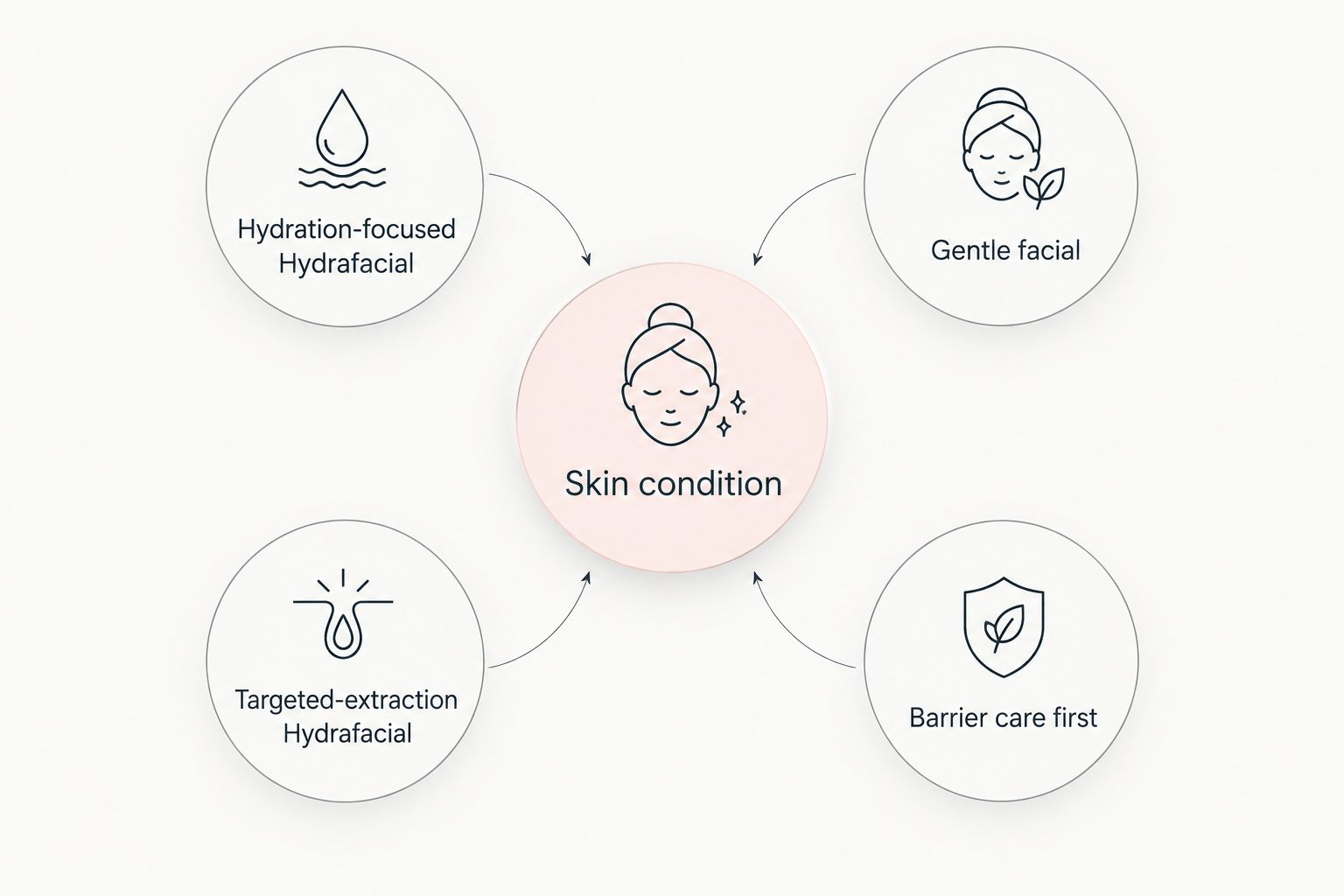
These are treatment approaches to discuss with a provider, not named packages or confirmed customization options at any particular clinic. In this 2026 comparison, the best choice depends on whether your skin is comfortable, congested, reactive, or actively irritated.
| Treatment approach | Best for | Standout feature | Key limitation |
|---|---|---|---|
| Hydration-focused Hydrafacial | Dry, dull skin without active irritation | Combines surface cleansing and exfoliation with hydration | Does not replace ongoing barrier care |
| Gentle facial | Reactive skin seeking a less exfoliation-led appointment | Allows the discussion to center on comfort and ingredient tolerance | Suitability still depends on the products and techniques used |
| Targeted-extraction Hydrafacial | Dry skin with localized clogged pores | Keeps pore-clearing focused on the actual congestion | Extraction and exfoliation can still irritate sensitive areas |
| Barrier care first | Burning, cracked, or actively inflamed skin | Prioritizes addressing irritation before cosmetic resurfacing | Is not a facial treatment or an instant cosmetic reset |
A treatment name alone cannot tell you how your skin will tolerate an appointment. Ask what the provider plans to use and why, especially if your skin reacts to exfoliating products at home.
1. Hydration-focused Hydrafacial: best for dry, dull skin
A Hydrafacial combines cleansing, exfoliation, extraction, and the application of skincare solutions. For dry skin without active irritation, the useful starting point is a hydration-focused discussion rather than a request for stronger exfoliation.
This approach fits skin that feels dry and looks dull but is not burning, cracked, or inflamed. Tell your provider whether your usual cleanser or moisturizer stings; that changes the conversation even if your skin looks relatively calm.
Hydration-focused Hydrafacial pros
- Addresses surface buildup and hydration in the same appointment.
- Gives you a treatment option when dryness and dullness occur together.
- Provides a clear reason to discuss exfoliation intensity before treatment.
Hydration-focused Hydrafacial cons
- Exfoliation and extraction can irritate skin that is already sensitive.
- A facial does not replace a daily moisturizer or address every cause of persistent dryness.
- Treatment solutions still require an ingredient and allergy discussion.
Best for: Dry, dull skin that is comfortable enough to tolerate a cosmetic facial after assessment.
At Bonnie Frances Skin, Hydrafacial is among the offered services. Ask whether the planned treatment suits your current dryness; the service name does not establish which ingredients or modifications will be used.
Verdict: Buy only after confirming that your skin is not actively irritated and that hydration is the treatment priority.
2. Gentle facial: best for reactive skin
A gentle facial is the consultation-led alternative when your priority is comfort rather than pore-clearing or resurfacing. The word gentle is not a standardized guarantee: ask about the actual products, exfoliation, massage, and other techniques involved.
This option belongs in a dry-skin guide because the best Hydrafacial decision is sometimes choosing a different service. Skin that repeatedly reacts to products deserves an ingredient-focused conversation before another exfoliating appointment.
Gentle facial pros
- Keeps the discussion centered on sensitivity and comfort.
- Does not require making extraction the main goal.
- Gives you an alternative to selecting a treatment primarily for resurfacing.
Gentle facial cons
- Fragrance, active ingredients, and techniques can still trigger irritation.
- A gentle-sounding name does not confirm that a treatment suits eczema or another skin condition.
- It does not diagnose the reason your skin is reactive.
Best for: Dry, reactive skin without an active flare that needs a cautious, consultation-led approach.
Bonnie Frances Skin offers facials as well as hydrafacials. Discuss the differences between the proposed appointments rather than assuming one is automatically milder.
For your 2026 treatment plan, separate sensitivity from your cosmetic goal. Wanting brighter skin does not cancel out a history of reactions.
Verdict: Hold until the provider explains the products and techniques; choose this route when comfort takes priority over exfoliation.
3. Targeted-extraction Hydrafacial: best for dry, clogged skin
Dry skin and clogged pores can occur together. A targeted-extraction approach treats congestion as a specific concern rather than interpreting it as permission to intensively work over the entire face.
Ask your provider to identify the clogged areas and explain how the rest of your skin will be treated. This is a consultation request, not a claim that every clinic offers a separately named targeted-extraction service.
Targeted-extraction Hydrafacial pros
- Addresses dryness and congestion within the same treatment discussion.
- Gives extraction a defined purpose rather than making it automatic everywhere.
- Encourages a distinction between clogged pores and areas that are simply flaky.
Targeted-extraction Hydrafacial cons
- Extraction can cause irritation even when performed on selected areas.
- Inflamed acne requires a different assessment from ordinary pore congestion.
- Repeatedly treating visible pores does not prevent every future blockage.
Best for: Dry skin with localized congestion and no active irritation in the treatment area.
Be specific about what you see. Blackheads, inflamed spots, and dry flakes are not interchangeable concerns, and treating them as the same problem leads to a poor treatment brief.
Verdict: Buy only when congestion is a genuine priority and the provider confirms that extraction is appropriate.
4. Barrier care first: best for actively irritated skin
If your skin is burning, cracked, raw, or persistently inflamed, pause the search for a more intensive facial. Focus on assessing the irritation and getting appropriate clinical advice instead of adding cosmetic exfoliation.
Barrier care is an approach, not a named treatment package. It means avoiding unnecessary irritants, reviewing your routine, and seeking medical assessment when symptoms persist, worsen, or suggest a skin condition.
Barrier care first pros
- Avoids adding exfoliation to skin that already feels injured.
- Creates space to identify products or habits associated with irritation.
- Prioritizes the cause of discomfort over a short-term cosmetic finish.
Barrier care first cons
- Does not provide the immediate experience of a facial appointment.
- Home routine changes cannot diagnose a persistent rash or skin disease.
- You must reassess treatment suitability after the irritation improves.
Best for: Dry skin accompanied by burning, cracking, persistent redness, or an active inflammatory flare.
Do not use a 2026 treatment ranking as a diagnosis. A skincare appointment and a medical evaluation serve different purposes; persistent or worsening symptoms need the latter.
Verdict: Skip Hydrafacial while skin is actively irritated; seek appropriate assessment before resuming cosmetic treatment.
How these options are ranked
The ranking prioritizes treatment fit: skin condition, appropriate exfoliation, purposeful extraction, ingredient tolerance, and aftercare. Hydration-focused Hydrafacial takes the default position only for dry skin without active irritation.
Gentle facial, targeted extraction, and barrier care each serve a different decision. This is not a comparison of measured clinic outcomes, and the order does not mean that a Hydrafacial is better for every person with dry skin.
Which dry-skin treatment should you choose?
Choose a hydration-focused Hydrafacial for comfortable, dry, dull skin; choose a different route when sensitivity, congestion, or inflammation changes the priority. Your provider should explain the planned treatment in terms you can connect to your own symptoms.
Use this short decision sequence before booking:
- Check comfort. Burning, cracking, or an active rash takes priority over cosmetic resurfacing.
- Name the concern. Decide whether dryness, dullness, or congestion is the main reason for the appointment.
- Review the treatment. Ask which products and procedures address that concern.
- Confirm aftercare. Get instructions that account for your current routine and prescribed products.
For Phoenix clients comparing Bonnie Frances Skin Hydrafacial treatments in 2026, the next move is a service discussion tied to your skin condition. Do not request dermaplaning, a peel, or microneedling as an automatic addition simply because those services are also offered.
Discuss your dry-skin treatment
Review the clinic’s services, then ask which approach fits your dryness, sensitivity, and congestion.
Keep the result separate from your daily routine
A facial is an appointment; barrier care is an ongoing routine. Use a cleanser and moisturizer your skin tolerates, avoid scrubbing irritated areas, and follow your provider’s treatment-specific aftercare rather than creating your own schedule for restarting exfoliants.
For daytime protection, the American Academy of Dermatology recommends broad-spectrum, water-resistant sunscreen with SPF 30 or higher. That is general sun-protection guidance, not a substitute for individualized post-treatment instructions.
Before changing prescribed skincare, speak with the prescribing clinician. A facial provider’s cosmetic recommendation should not become an instruction to stop a medication without that conversation.
FAQ
What are the best hydrafacial treatments for dry skin in 2026?
A hydration-focused Hydrafacial is the default option to discuss for dry, dull skin without active irritation. For reactive skin, consider a consultation-led gentle facial; for burning or cracked skin, postpone exfoliating treatment and seek assessment.
Is a Hydrafacial better than a regular facial for dry skin?
A Hydrafacial is not automatically better than a regular facial for dry skin. The better choice depends on your sensitivity, congestion, and the actual products and techniques planned for the appointment.
Can I get a Hydrafacial if my dry skin is peeling?
Peeling skin needs assessment before a Hydrafacial. Peeling accompanied by burning, redness, cracking, or an active skin condition is a reason to postpone cosmetic exfoliation and seek appropriate advice.
Does dry skin need extraction during a Hydrafacial?
Dry skin does not need extraction simply because it is dry. Discuss extraction when clogged pores are also present, and ask how sensitive or flaky areas will be handled.
Should I combine a Hydrafacial with dermaplaning or a chemical peel?
Do not automatically combine a Hydrafacial with dermaplaning or a chemical peel when your skin is dry. Ask what each procedure adds and whether the combined exfoliation is appropriate for your skin condition.
How often should I book a Hydrafacial for dry skin?
Choose the interval with your provider based on your skin’s response and the treatment used. Do not repeat an exfoliating appointment while your skin remains irritated or before the provider’s aftercare requirements are satisfied.
Does Bonnie Frances Skin offer Hydrafacial treatments in Phoenix?
Bonnie Frances Skin offers hydrafacials in Phoenix, Arizona. Ask the clinic which treatment approach suits your dryness and sensitivity, and confirm the planned products and aftercare before proceeding.
One last thing
Smoother skin is not proof that your skin barrier is healthier. Judge the appointment by comfort as well as appearance: tell your provider about persistent tightness, stinging, or redness instead of treating those symptoms as the price of a glow.
For your next dry-skin appointment, ask one direct question: what will this treatment do for my main concern, and what will you avoid? A clear answer is more useful than a longer package description.