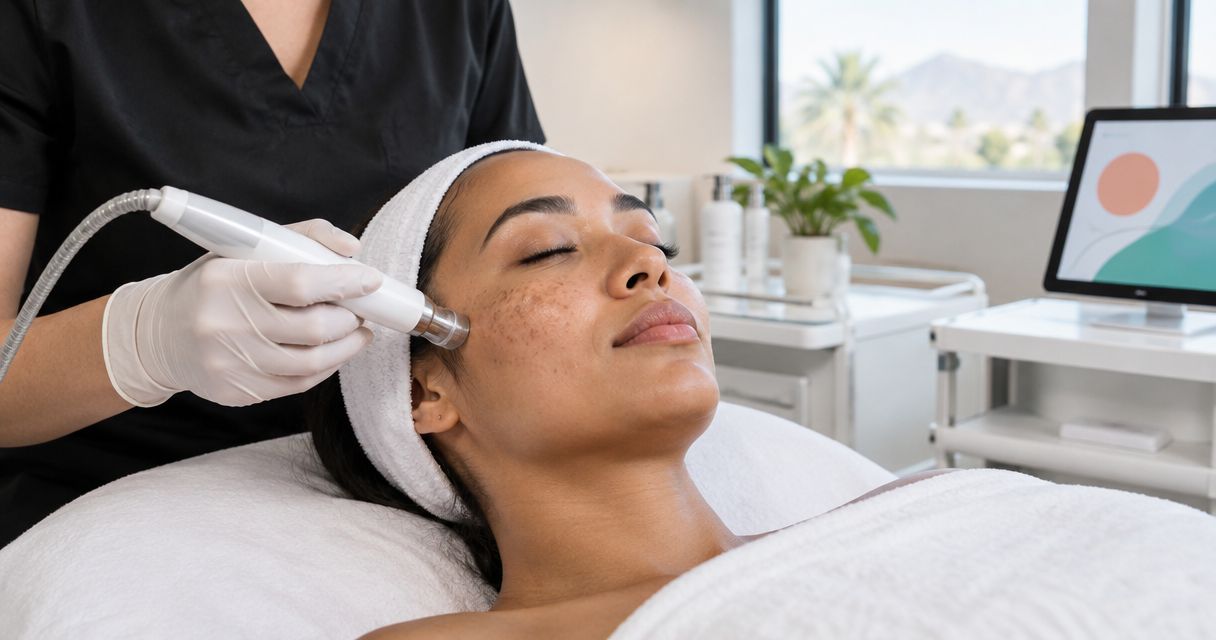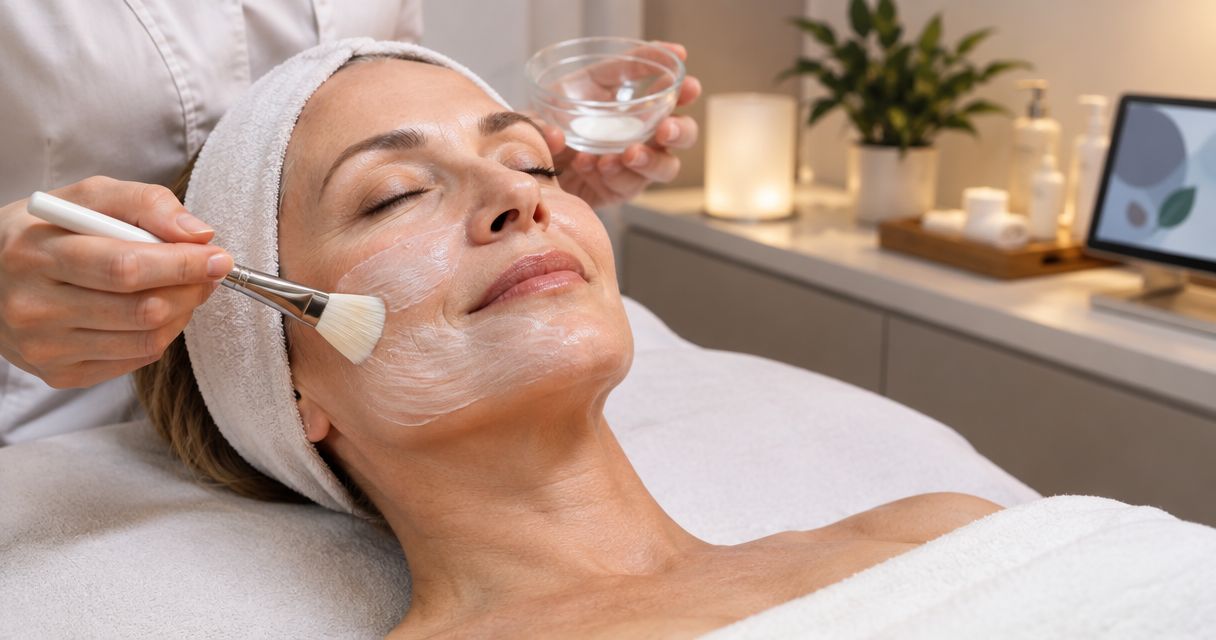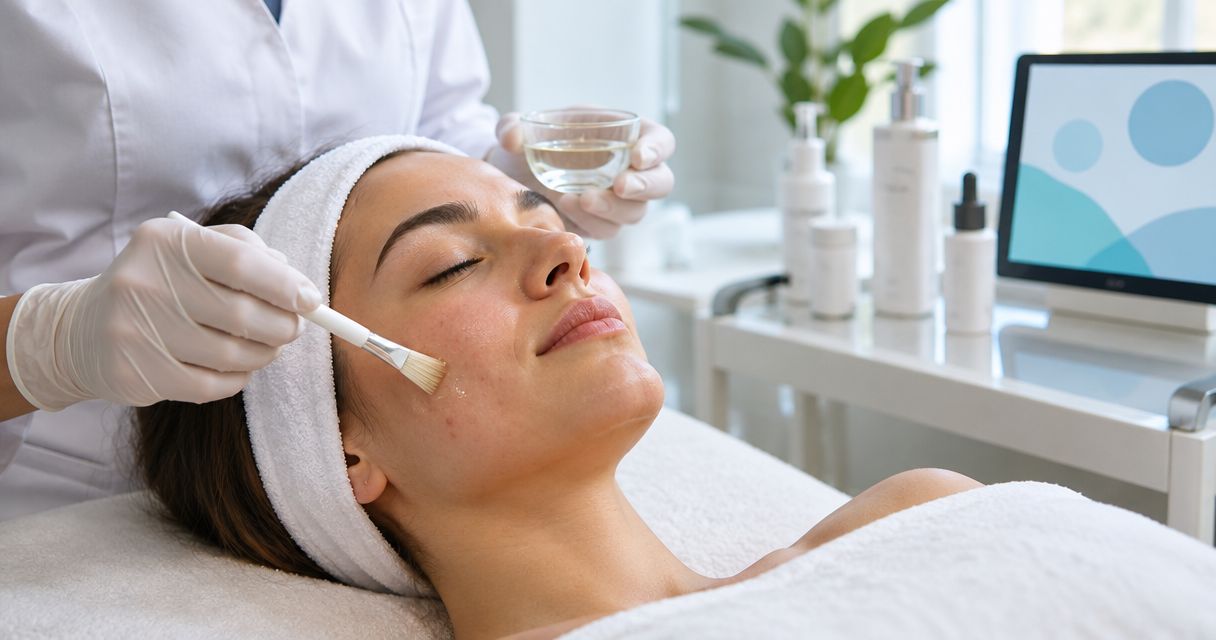
Best overall for flat, dark post-acne marks: a superficial glycolic acid peel. Best for oily skin with ongoing breakouts: a salicylic acid peel. Best for narrow ice-pick scars: clinician-performed TCA CROSS, a focal treatment rather than a full-face peel. This 2026 guide separates discoloration from indented scars so you can choose the right treatment discussion; Bonnie Frances Skin offers chemical peels and SkinPen microneedling in Phoenix.
- The best chemical peels for acne scarring depend on whether you have flat acne marks or indented scars.
- Glycolic acid peels suit superficial discoloration; salicylic acid peels suit oily, acne-prone skin.
- TCA CROSS targets narrow ice-pick scars and requires an experienced medical clinician.
- Bonnie Frances Skin offers chemical peels and SkinPen microneedling; treatment selection starts with assessing your scar type.
Why this matters
A brown spot left after a breakout is not the same problem as a dent in your skin. Post-inflammatory hyperpigmentation changes color; an atrophic acne scar changes the skin's structure. A superficial peel can help the first without meaningfully correcting the second.
Red or pink marks are different again. These marks involve persistent redness rather than excess brown pigment, so an exfoliating acid is not an automatic match. Treating every post-acne mark as a scar leads to the wrong expectations.
The best peel is the one matched to your mark or scar—not the strongest acid you can tolerate. For your 2026 treatment plan, identify the problem before comparing peel names.
- Flat marks: Color changes without a depression in the skin.
- Indented scars: Ice-pick, boxcar, or rolling depressions that change skin texture.
- Active acne: Current breakouts that need control alongside scar treatment.
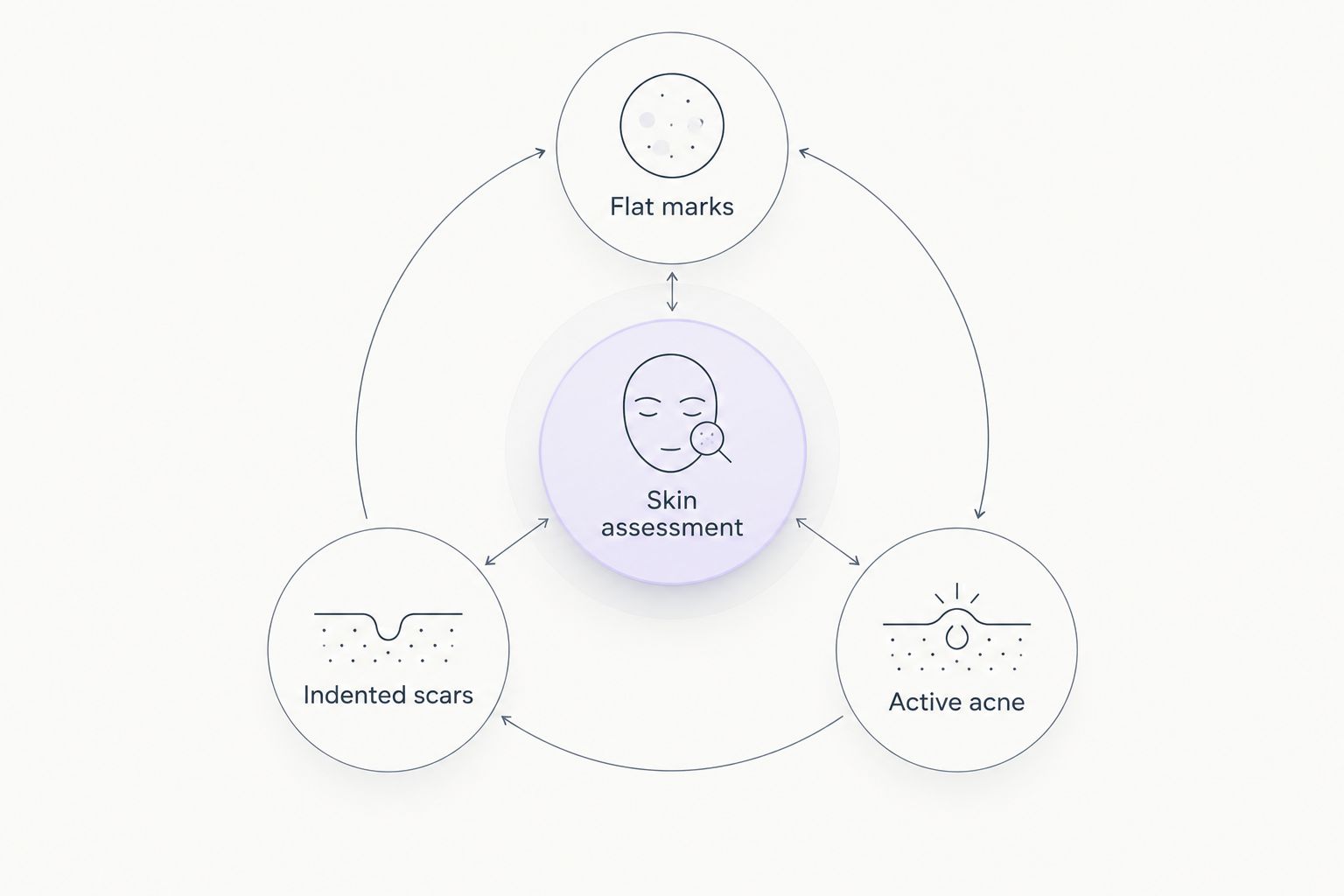
What makes the best chemical peels for acne scarring
Use these criteria to judge a recommendation. An acid name alone does not tell you how deeply a peel acts or whether it fits your skin.
- Scar shape: Flat pigment, shallow boxcar scars, narrow ice-pick scars, and rolling scars need different approaches.
- Acne activity: Ongoing inflammation can create new marks while you treat older ones.
- Pigment risk: Your skin tone, history of darkening after irritation, and previous treatment reactions affect selection.
- Treatment depth: Formulation, concentration, application, and skin preparation matter—not just the ingredient.
- Recovery: Choose a treatment whose healing requirements you can follow, including sun protection and avoiding picking.
- Clinical fit: Ask what the treatment can realistically change and what requires a different procedure.
For chemical peels, Bonnie Frances Skin is a local consultation option for Phoenix clients deciding between exfoliation-focused care and SkinPen microneedling. Ask which approach fits your skin findings rather than requesting a particular strength.
Chemical peels for acne scarring at a glance
This 2026 comparison ranks options by distinct use case, not by acid strength. The order starts with superficial marks and ends with focal treatment for a specific structural scar.
| Option | Best for | Standout feature | Key limitation |
|---|---|---|---|
| Glycolic acid peel | Flat brown marks with uneven surface texture | Superficial exfoliation | Does not release tethered or deep scars |
| Salicylic acid peel | Oily skin with active acne and post-acne marks | Oil-soluble exfoliating acid | Not a primary treatment for established indentations |
| Mandelic acid peel | Reactive skin needing a cautious superficial approach | Larger alpha-hydroxy acid molecule | Limited role in structural scar correction |
| Clinician-selected TCA peel | Selected shallow boxcar scars | Depth-adjustable chemical resurfacing | Greater healing demands and pigment risk as depth increases |
| TCA CROSS | Narrow ice-pick scars | Focal application inside individual scars | Not a full-face peel; requires specialist technique |
No single option treats every scar pattern. Mixed scarring often needs a treatment plan rather than one peel repeated indefinitely.
1. Glycolic acid peel: best for flat brown acne marks
A glycolic acid peel exfoliates the skin's surface and can help improve post-inflammatory hyperpigmentation. It fits the reader whose main complaint is lingering brown marks and mild surface roughness, not deep pits.
Glycolic acid is an alpha-hydroxy acid. Its effects depend on the formulation and application, so two treatments with the same ingredient name are not necessarily equivalent.
Glycolic acid peel pros:
- Addresses superficial pigmentation left after acne.
- Can improve the appearance of uneven surface texture.
- Offers a superficial treatment route when deeper resurfacing is unnecessary.
Glycolic acid peel cons:
- Irritation can worsen discoloration, especially in pigment-prone skin.
- Does not correct deep ice-pick scars or release tethered rolling scars.
Best for: Flat brown post-acne marks after a clinician checks skin sensitivity and acne activity.
For your 2026 consultation, describe whether the mark is flat or depressed. That distinction matters more than asking for a stronger glycolic peel.
Verdict: Skip glycolic acid as your main treatment for deep indentations; consider it for superficial brown marks.
2. Salicylic acid peel: best for oily, acne-prone skin
A salicylic acid peel uses a beta-hydroxy acid associated with treatment of oily, acne-prone skin. Its oil solubility makes it relevant when clogged pores and current breakouts accompany older marks.
The priority here is not simply fading yesterday's blemishes. You also need an acne plan that reduces the inflammation responsible for new marks and scars.
Salicylic acid peel pros:
- Fits treatment discussions involving oily skin and clogged pores.
- Can address superficial post-acne discoloration alongside acne concerns.
- Keeps active acne in the decision rather than focusing only on old marks.
Salicylic acid peel cons:
- Can cause dryness, irritation, and peeling.
- Does not rebuild established depressed scars by itself.
Best for: Oily skin with breakouts and superficial post-acne marks.
Tell your clinician about aspirin or salicylate reactions and all current acne medications. A peel should fit your treatment history, not replace that discussion.
Verdict: Skip salicylic acid as a stand-alone solution for indented scars; consider it when active acne is part of the problem.
3. Mandelic acid peel: best for a cautious superficial approach
Mandelic acid is an alpha-hydroxy acid with a larger molecule than glycolic acid. It is often considered when a clinician wants a more cautious approach to superficial exfoliation, but the finished formulation still determines how irritating the treatment is.
This is a selection based on tolerance needs—not proof that mandelic acid is the most effective scar treatment. Sensitive skin still needs assessment before any peel.
Mandelic acid peel pros:
- Provides another superficial option when tolerance shapes the treatment plan.
- Can be considered for uneven tone associated with post-acne marks.
- Lets the consultation prioritize irritation history rather than peel intensity.
Mandelic acid peel cons:
- Evidence for correcting established structural acne scars is limited.
- A supposedly gentle ingredient does not guarantee a reaction-free peel.
Best for: Superficial discoloration when skin reactivity makes treatment selection especially important.
If your skin currently stings with basic products or shows an active rash, address that first. Adding acid to an already irritated surface is not a shortcut to smoother skin.
Verdict: Hold until your clinician assesses skin reactivity; skip mandelic acid as the main treatment for deep scars.
4. Clinician-selected TCA peel: best for selected shallow boxcar scars
Trichloroacetic acid, or TCA, can produce different treatment depths depending on its formulation and application. Clinicians use chemical resurfacing for selected shallow scars, but deeper treatment brings greater healing demands and risk.
Boxcar scars have defined edges and a depressed base. A shallow scar and a deep scar do not respond identically, even when both carry the same name.
Clinician-selected TCA peel pros:
- Can address selected superficial structural irregularities.
- Offers chemical resurfacing rather than surface exfoliation alone.
- Can form part of a broader plan for mixed acne scarring.
Clinician-selected TCA peel cons:
- Greater depth increases the importance of wound care and pigment-risk assessment.
- Does not reliably address the tethering that contributes to rolling scars.
- Inappropriate application can cause burns, pigment changes, or additional scarring.
Best for: Selected shallow boxcar scars assessed by a clinician experienced in scar resurfacing.
Do not translate a professional recommendation into an at-home TCA purchase. Strength alone does not define the outcome, and application errors can create a new injury.
Verdict: Hold until a qualified clinician confirms the scar depth, treatment setting, and recovery plan.
5. TCA CROSS: best for narrow ice-pick scars
TCA CROSS means chemical reconstruction of skin scars. An experienced clinician applies TCA focally inside individual scars rather than spreading it across the whole face.
This technique belongs in the comparison because people searching for peels often have narrow, deep pits. It is a different procedure from a routine superficial facial peel.
TCA CROSS pros:
- Targets individual narrow scars rather than treating all skin uniformly.
- Matches a specific scar shape: ice-pick depressions.
- Can sit within a combined plan when several scar types coexist.
TCA CROSS cons:
- Requires precise clinician technique and careful patient selection.
- Can cause pigment changes, scar widening, or additional scarring.
- Does not address every rolling or broad boxcar scar.
Best for: Narrow ice-pick scars after specialist assessment.
Ask whether the clinician recommends focal treatment, another scar procedure, or a combination. A full-face peel is not interchangeable with treatment inside an individual scar.
Verdict: Hold for specialist assessment; skip do-it-yourself TCA CROSS.
How these options are ranked
The ranking matches each treatment to a different clinical problem: superficial pigment, acne activity, tolerance needs, shallow structural scars, or narrow deep scars. It does not claim that one acid wins for every skin tone or every scar.
General treatment and recovery guidance comes from the American Academy of Dermatology's patient resources on chemical peels and acne scars. This 2026 guide uses that distinction between surface changes and structural scarring; it does not report a head-to-head product test.
Which chemical peel should you choose?
For flat brown marks, start with a consultation about a superficial peel. For actual depressions, start with scar assessment—not a peel purchase. Glycolic acid is the default discussion for superficial discoloration; salicylic acid becomes more relevant when oily skin and breakouts remain active.
For acne-scar treatment planning, Bonnie Frances Skin gives Phoenix clients a place to discuss chemical peels and SkinPen microneedling. Those services are not interchangeable, and the right discussion starts with what you want to change.
Before booking your 2026 treatment, ask:
- Is this pigmentation, redness, or a structural scar?
- What can this specific treatment change?
- What skin reactions or medications affect my suitability?
- What aftercare and follow-up do I need?
The American Academy of Dermatology lists 1–7 days of healing for superficial peels and 7–14 days for medium peels. These are general recovery ranges, not a promise about your appointment; the selected treatment determines your instructions.
AAD sun-protection guidance recommends broad-spectrum, water-resistant sunscreen with SPF 30 or higher. In Phoenix, plan how you will follow sun-avoidance and protection instructions before treatment, not afterward.
Discuss your acne marks and scars
Review chemical peels and SkinPen microneedling with Bonnie Frances Skin in Phoenix.
FAQ
What's the best chemical peel for acne scarring?
The best chemical peel depends on whether you have superficial marks or structural scars. Glycolic acid fits discussion of flat brown marks, while selected indented scars need deeper or focal treatment assessment.
Can chemical peels remove deep acne scars?
Superficial chemical peels do not remove deep acne scars. Ice-pick, deep boxcar, and tethered rolling scars require assessment for scar-specific procedures, often in combination.
Is salicylic acid better than glycolic acid for acne marks?
Salicylic acid is a more relevant discussion when oily skin and active acne accompany the marks. Glycolic acid is commonly considered for superficial discoloration and texture; skin tolerance also affects selection.
Are chemical peels safe for darker skin tones?
Chemical peels require careful selection in darker skin tones because inflammation can trigger pigment changes. Discuss your history of darkening after irritation and choose a clinician experienced with your skin tone.
Is TCA CROSS the same as a chemical peel?
TCA CROSS is focal acid application inside individual scars, not a conventional full-face peel. It is used for selected narrow scars and requires an experienced medical clinician.
How long does skin take to heal after a chemical peel?
The American Academy of Dermatology lists healing ranges of 1–7 days for superficial peels and 7–14 days for medium peels. Your clinician's instructions depend on the treatment actually performed.
Does Bonnie Frances Skin offer treatments for acne-scar concerns?
Bonnie Frances Skin offers chemical peels and SkinPen microneedling in Phoenix. Ask which treatment fits your marks or scars; the service list does not establish which acid formulation is used.
One last thing
Before your consultation, look at the concern in both direct and side lighting. Describe whether you see a color change, a depression, or both; photographs alone are not a diagnosis, but that description makes the conversation more useful.
Do not ask only which peel is strongest. Ask which part of your acne aftermath the treatment is designed to change.