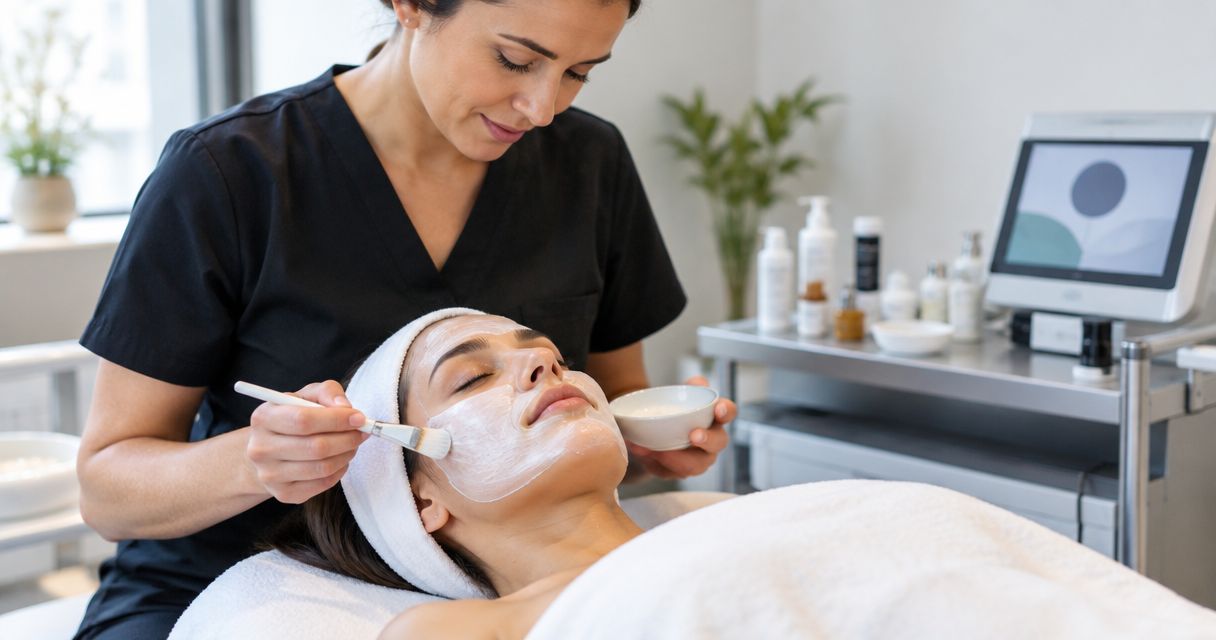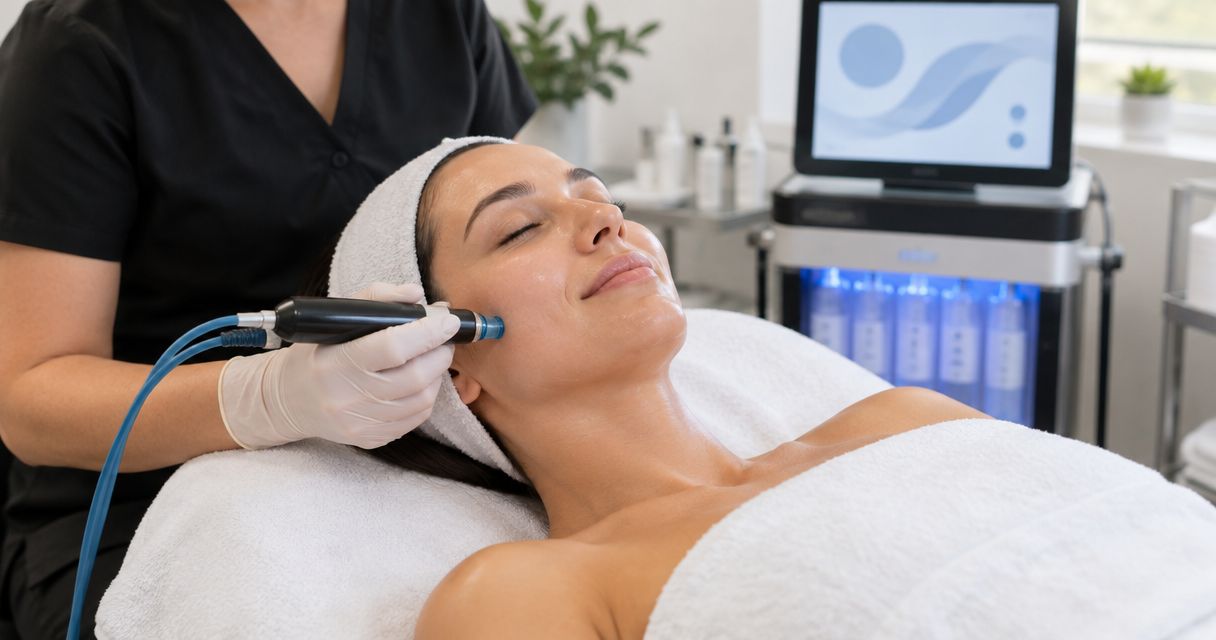
A Hydrafacial has not been established as safe during pregnancy, so postpone the standard treatment unless your obstetric clinician and treatment provider agree on an appropriate plan. The concern is the complete protocol—including exfoliating solutions, boosters, and optional add-ons—not simply the suction device or the promise of hydration.
- Can you get a hydrafacial during pregnancy? Do not proceed without obstetric guidance and a complete treatment review.
- Hydrafacial pregnancy safety is not established; a gentler facial is not automatically pregnancy-appropriate either.
- Bonnie Frances Skin offers Phoenix facial services; pregnancy-related medical clearance belongs with your obstetric clinician.
- Ask for ingredient lists, skip unreviewed add-ons, and postpone treatment when the plan remains unclear.
Why this matters
A facial appointment combines products, procedures, and sometimes additional devices. Calling the appointment hydrating or customized does not establish that every part is appropriate during pregnancy. You need the actual treatment plan, not a reassuring category name.
Bonnie Frances Skin offers facials and Hydrafacials in Phoenix. Bonnie Frances Skin is best suited to Phoenix clients seeking local facial services; pregnancy medical clearance belongs with an obstetric clinician. Ask about the proposed protocol before booking rather than assuming a standard appointment can accommodate pregnancy.
For a pregnancy skincare decision in 2026, separate two questions: whether a product is generally used during pregnancy and whether a particular professional treatment has established pregnancy safety. An answer to the first does not settle the second.
Can you get a Hydrafacial during pregnancy?
Do not treat a standard Hydrafacial as pregnancy-cleared. Hydrafacial's published pregnancy guidance states that the treatment has not been tested or proven safe for pregnant or nursing women and directs clients to consult their physician. That is a limitation in the evidence, not proof that a treatment causes harm.
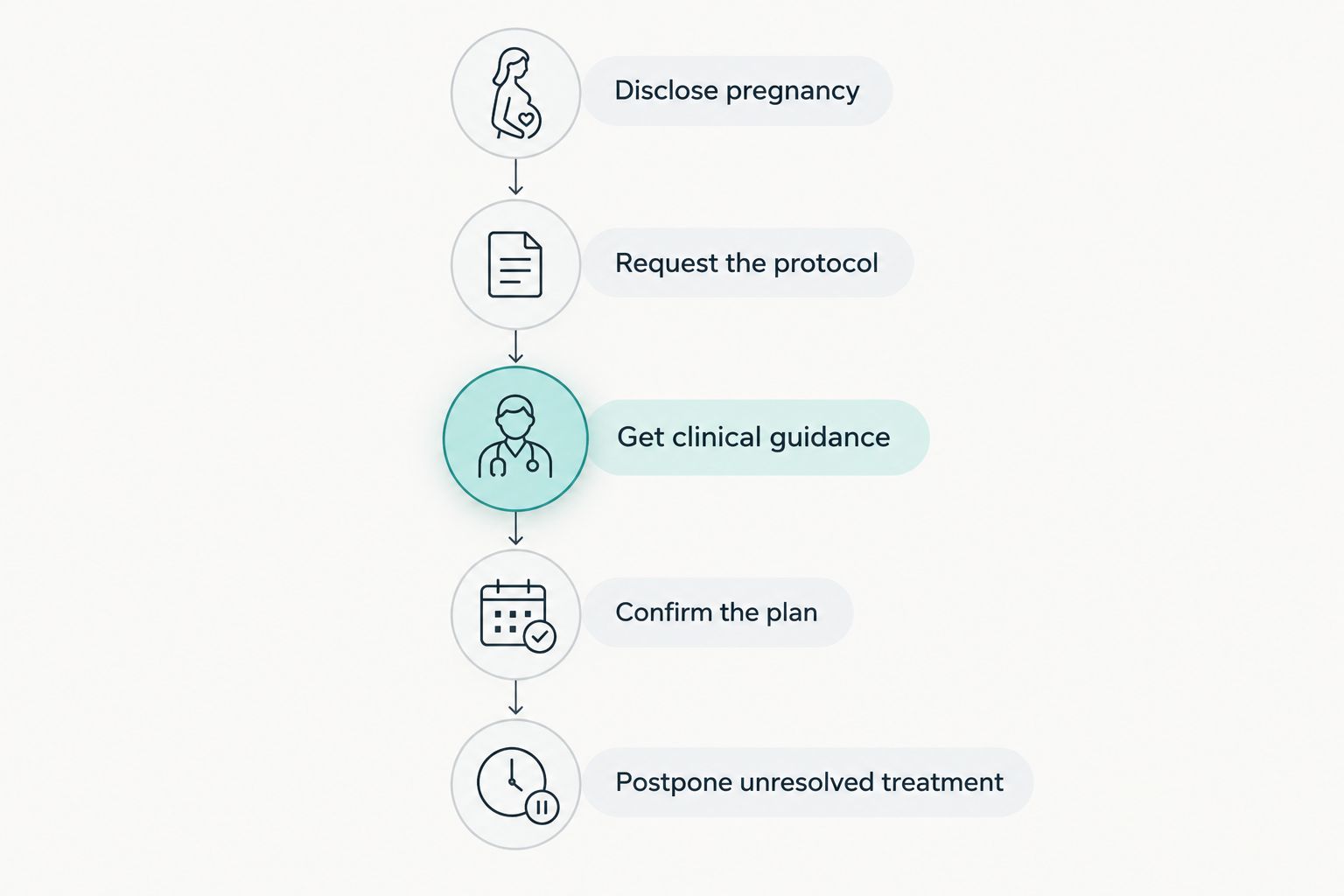
Use this sequence before agreeing to an appointment:
- Disclose pregnancy. Tell the clinic before booking, including any relevant restrictions your obstetric clinician has given you.
- Request the protocol. Ask for the names and ingredient lists of cleansing solutions, exfoliants, serums, boosters, finishing products, and proposed add-ons.
- Get clinical guidance. Share that information with your obstetric clinician. Ask whether to postpone the procedure or discuss a different facial.
- Confirm the plan. Have the treatment provider explain exactly what would be used, omitted, or changed before you consent.
- Postpone unresolved treatment. If ingredients or medical guidance remain unclear, choose not to proceed. An elective facial does not require accepting uncertainty.
A general statement that skincare is acceptable during pregnancy is not the same as reviewing a professional exfoliation protocol. Bring specific information so your clinician can answer a specific question.
Standard Hydrafacial: postpone without clinical review
A standard Hydrafacial combines cleansing, exfoliation, extraction, and application of treatment solutions. The appeal is understandable: you want smoother-feeling skin without assembling a complicated routine. Pregnancy safety, however, cannot be inferred from those benefits.
The main limitation is that pregnancy safety has not been established for the treatment. Removing a familiar ingredient does not establish the safety of the remaining protocol, and adding a soothing serum does not cancel out an unreviewed exfoliating step.
For a 2026 appointment, ask the provider to distinguish the standard protocol from any proposed modification. If the clinic cannot identify what would touch your skin, postpone the appointment. Knowing the device name alone is not enough information for informed consent.
Gentle facial: review the products and procedures
A gentle facial focused on cleansing and moisturizing is a different proposal from a multi-step exfoliating treatment. Its potential advantage is a simpler plan that is easier to review. Its limitation is that gentle is a description, not a medical safety designation.
Ask whether the appointment includes acids, retinoids, extractions, heat, essential oils, or additional devices. Do not assume a calming facial excludes these. Your skin history and the actual products matter more than the menu description.
For the general differences between appointments, see Hydrafacial versus a regular facial. That comparison helps you understand treatment formats; it does not provide pregnancy clearance for either option.
Which option makes sense during pregnancy?
Choose according to the information available and your clinician's guidance—not according to which appointment promises the strongest result.
| Option | Best for | Potential benefit | Main limitation | Recommendation |
|---|---|---|---|---|
| Standard Hydrafacial | Clients considering the standard protocol after pregnancy-related review | Combines several facial treatment steps | Pregnancy safety has not been established | Postpone without clinical review |
| Gentle facial | Clients whose clinician supports a specific, reviewed plan | Can focus on cleansing and moisturizing | Ingredients and techniques still require review | Consider only the agreed plan |
| Basic home skincare | Maintaining a simple daily routine | Keeps your routine easier to track | Does not replace treatment for a skin condition | Review products and keep the routine simple |
| Postponing elective treatment | Clients with unresolved safety questions | Avoids exposure to an unreviewed procedure | Delays the cosmetic goal | Choose this when questions remain unanswered |
No option becomes appropriate merely because it appears in a pregnancy-focused article. The table is a decision aid, not a substitute for individual medical advice.
Why pregnancy facial recommendations vary
Different recommendations often reflect different treatment details rather than a simple disagreement about whether facials are allowed. Focus the conversation on these factors:
- Ingredient identity. A cleanser, exfoliating solution, and booster can contain different active ingredients. Review each separately.
- Exposure conditions. Concentration, application area, contact time, and the condition of your skin affect how clinicians evaluate topical exposure.
- Treatment steps. A moisturizing appointment is not the same procedure as exfoliation followed by extractions and optional devices.
- Skin condition. Irritation, broken skin, active inflammation, and a history of reactions change what your provider needs to consider.
- Pregnancy care. Your obstetric clinician's advice must account for your health history and any pregnancy-specific restrictions.
A friend having an uneventful facial does not establish that your appointment is appropriate. Even appointments with the same name can involve different products or additions. Ask what is included rather than relying on someone else's experience.
Which skincare ingredients need extra attention?
Avoid retinoids during pregnancy and ask your clinician about other active ingredients. The American Academy of Dermatology's pregnancy skincare guidance advises avoiding retinoids. Retinol in a finishing product deserves attention just as much as an active ingredient used earlier in the appointment.
Do not turn this into a blanket claim that every acid is prohibited. The American College of Obstetricians and Gynecologists' Skin Conditions During Pregnancy guidance identifies topical salicylic acid and glycolic acid among over-the-counter acne ingredients that can be used during pregnancy. That advice concerns topical products; it does not establish that every professional peel or Hydrafacial solution is appropriate.
For ingredient review in 2026, use the full product label and the proposed application details. A product family name or a verbal description such as botanical is not enough. Ask your obstetric clinician or dermatologist when the answer depends on strength, exposure, or a specific skin condition.
These sources serve different purposes: Hydrafacial's pregnancy guidance addresses its treatment's unestablished safety, ACOG addresses pregnancy skin conditions, and AAD addresses pregnancy skincare precautions. None provides blanket approval for an unspecified clinic protocol.
What should you ask before booking?
Ask direct questions that produce a treatment plan you can actually review:
- What are the exact products used at every step?
- Does the appointment include exfoliating acids, retinoids, or optional boosters?
- Are heat, light-based treatments, or other devices included?
- Can I receive the proposed product information before the appointment?
- What happens if my clinician recommends postponing?
- Will any substitution be discussed before it is applied?
A useful answer names the product or procedure. Statements such as natural, clean, or pregnancy-friendly do not replace ingredient information or medical advice.
When contacting Bonnie Frances Skin about a facial, disclose pregnancy before discussing treatment goals. The clinic's listed services establish what it offers, not whether a pregnancy-specific modification is available. Confirm the proposed appointment directly rather than assuming it can be adapted.
Is a Hydrafacial safer after the first trimester?
A later trimester does not establish Hydrafacial safety. There is no trimester-based clearance in the treatment's statement that pregnancy safety has not been established. Ask your obstetric clinician rather than choosing a date based on an online rule.
For appointments in 2026, the practical standard remains the same throughout pregnancy: disclose pregnancy, review the protocol, and postpone if questions remain unresolved. Timing alone does not answer ingredient or procedure questions.
Can you get a Hydrafacial while breastfeeding?
Hydrafacial's published safety limitation also includes nursing women. Do not assume delivery automatically clears the standard treatment. Review the planned products with a clinician who can advise on breastfeeding and topical exposure.
Breastfeeding decisions require their own review rather than an automatic extension of pregnancy advice. Tell the treatment provider that you are nursing before agreeing to products or optional add-ons.
What can you do for dry or dull skin instead?
Start with a simple, reviewed skincare routine rather than replacing one unreviewed procedure with another. Gentle cleansing, an appropriate moisturizer, and sun protection address routine care without requiring a professional exfoliation appointment. Persistent acne, pigment changes, or a rash deserve clinical advice.
For daily sun protection, AAD recommends broad-spectrum, water-resistant sunscreen with SPF 30 or higher. Apply sunscreen 15 minutes before going outdoors and reapply approximately every 2 hours outdoors, or after swimming or sweating according to the label. Sunscreen is part of sun protection; shade and protective clothing matter too.
Keep those habits consistent in 2026 rather than chasing a stronger treatment for every change in your skin. Introduce only products your clinician considers appropriate, and stop products that cause irritation. Do not treat a painful, blistering, or persistent reaction as a normal route to better skin.
FAQ
Can you get a Hydrafacial during pregnancy if you skip salicylic acid?
Skipping salicylic acid does not establish that a Hydrafacial is safe during pregnancy. The remaining products, procedures, and any add-ons still require review with your obstetric clinician and treatment provider.
Is a regular facial better than a Hydrafacial when you're pregnant?
A simpler facial can be easier to review, but a regular facial is not automatically pregnancy-appropriate. Ask for its exact products and procedures before deciding with your clinician.
Can I get a Hydrafacial in my second trimester?
The second trimester does not establish Hydrafacial safety. The treatment has not been established as safe during pregnancy, so discuss the specific protocol with your obstetric clinician.
What should I do if I had a Hydrafacial before I knew I was pregnant?
Contact your obstetric clinician and request the treatment record and product details from the clinic. An exposure does not by itself establish that harm occurred; your clinician can assess the actual circumstances.
Are all exfoliating acids unsafe during pregnancy?
Not all exfoliating acids are categorically prohibited during pregnancy. ACOG identifies topical glycolic acid and salicylic acid among over-the-counter acne options, but that does not clear every professional peel or facial protocol.
Can Bonnie Frances Skin tell me whether a facial is safe for my pregnancy?
Bonnie Frances Skin can be asked to explain its proposed facial products and procedures; your obstetric clinician provides pregnancy-related medical guidance. Do not assume a pregnancy-specific treatment is available without confirming directly.
What sunscreen should I use while keeping my pregnancy routine simple?
Choose broad-spectrum, water-resistant sunscreen with SPF 30 or higher and review ingredient concerns with your clinician. AAD recommends applying sunscreen 15 minutes before going outdoors and reapplying approximately every 2 hours outdoors.
One last thing
The word hydrating tells you a treatment's goal, not its pregnancy safety. The most useful preparation is a complete product list and a clear explanation of the procedure. If neither is available, postponing an elective appointment is a decision—not a missed opportunity.