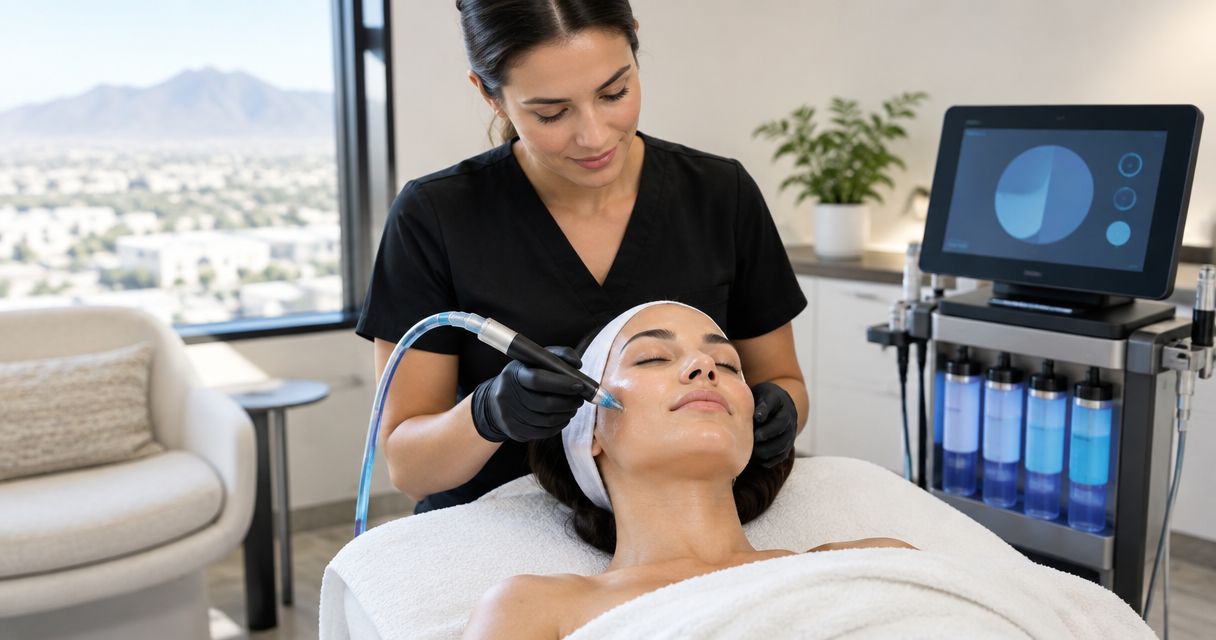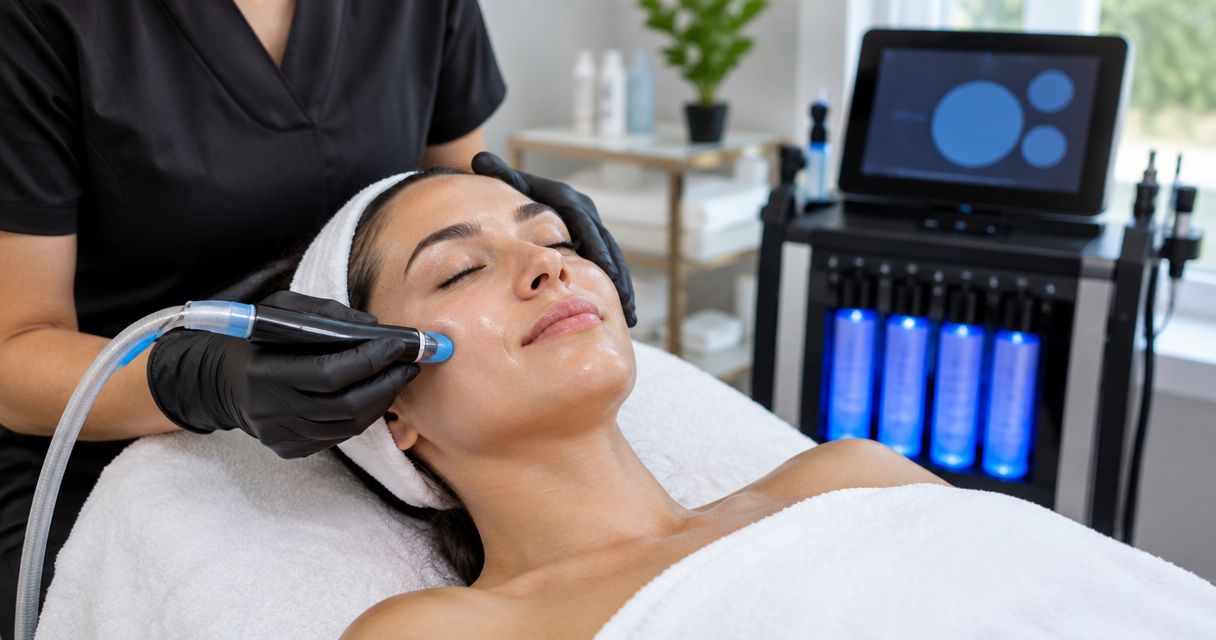
A monthly HydraFacial is a common maintenance starting point in 2026, but your skin’s response—not a standing appointment—should determine whether you repeat it. If your skin is irritated, sunburned, or recovering from another procedure, postpone treatment and ask your provider when to return. More frequent exfoliation does not automatically produce better results.
- How often should you get a hydrafacial? Monthly is a starting point, not a requirement for every skin type.
- HydraFacial maintenance should follow your skin’s recovery and treatment goals, not the disappearance of an immediate glow.
- Bonnie Frances Skin offers HydraFacials for Phoenix clients seeking professional facial treatments.
- Postpone treatment when skin is sunburned, irritated, or affected by an active infection.
Why this matters
A repeat facial is useful only when it addresses a concern without adding unnecessary irritation. Treating roughness repeatedly while ignoring a drying home routine can leave you chasing the same problem between appointments.
Choose a treatment schedule you can explain: what you want to improve, how your skin responded, and why another session is appropriate. Bonnie Frances Skin is an option for Phoenix clients seeking HydraFacial and other professional facial treatments. A clinic appointment is not a substitute for medical assessment of a persistent rash, painful acne, or a changing skin lesion.
How often should you get a hydrafacial?
Monthly treatment is a common manufacturer-described maintenance cadence, rather than a medical requirement. For your 2026 schedule, use that cadence as a discussion starter and adjust it to your treatment response, home skincare, and other procedures.
Monthly scheduling means 1 appointment per month, or 12 appointments per year if you maintain it throughout the year. That is a calendar commitment, not evidence that everyone needs that many treatments.
| Schedule approach | Best for | Main advantage | Main limitation |
|---|---|---|---|
| Monthly maintenance | People seeking repeat cosmetic maintenance whose skin tolerates treatment | Creates a regular opportunity to reassess skin and repeat treatment | Requires ongoing appointments; does not guarantee cumulative improvement |
| Occasional treatment | People with a specific cosmetic goal who do not want a recurring schedule | Avoids committing to treatments before assessing their value | Results and repeat timing still need individual assessment |
| Postpone and reassess | People with irritated, sunburned, infected, or incompletely healed skin | Avoids adding an elective treatment while skin needs assessment or recovery | Delays the cosmetic treatment you planned |
These are scheduling approaches, not different HydraFacial tiers. Do not move from occasional treatment to monthly maintenance unless you can identify a benefit worth repeating.
What supports the monthly starting point?
HydraFacial’s manufacturer describes monthly treatment as a maintenance approach. That recommendation supplies a starting cadence; it does not establish that monthly appointments are necessary for every person or every concern.
Your provider should connect any repeat recommendation to your skin and goals. Ask what the next appointment is intended to accomplish, how the treatment will be adjusted, and what response would justify spacing visits farther apart.
Monthly maintenance: assess before you repeat
Best for: people seeking regular cosmetic maintenance whose skin tolerates the treatment. A recurring appointment gives you a consistent opportunity to discuss congestion, surface texture, hydration, and changes in your home routine.
The limitation is that repetition alone does not prove value. If you cannot distinguish a meaningful improvement from a brief post-treatment appearance change, reconsider the schedule rather than assuming you need more sessions.
Use the same questions after each appointment:
- Did the treatment address the concern you booked it for?
- Did your skin feel comfortable afterward, or did it sting and become unusually reactive?
- Did the benefit matter to you once the immediate treatment experience had passed?
- Has anything changed in your medications, skincare, sun exposure, or other procedures?
For a 2026 maintenance plan, record those answers before booking another appointment. A short note about comfort and results is more useful than a calendar reminder alone.
Occasional treatment: repeat when there is a reason
Best for: people who want a facial without committing to recurring maintenance. You do not have to adopt a monthly schedule simply because you enjoyed an appointment.
An occasional approach lets you evaluate the treatment before making a longer commitment. Its limitation is that an isolated facial does not replace consistent home care or a condition-specific treatment plan.
Separate the question of frequency from the question of duration. The guide to how long a HydraFacial lasts addresses the latter; a visible effect fading is not, by itself, a reason to repeat exfoliation immediately.
If your skin remains comfortable and you do not have a clear treatment goal, leave the next appointment open. A facial schedule should serve you, not create an obligation to keep treating otherwise comfortable skin.
Postpone treatment: let recovery come first
Best for: anyone whose skin is currently irritated, sunburned, infected, or still recovering from another procedure. Waiting avoids adding an elective exfoliating treatment before the underlying issue has been assessed.
Tell your provider about persistent redness, cracked skin, unusual tenderness, active cold sores, or a suspected infection before the appointment. Do not assume a facial will calm a problem simply because hydration is part of the treatment.
The drawback is straightforward: postponing disrupts your plans. That inconvenience is preferable to treating skin that is not ready, especially before an important event.
Seek medical advice for persistent or worsening symptoms. An esthetic treatment schedule cannot diagnose the cause of ongoing burning, scaling, or inflamed breakouts.
Why HydraFacial frequency varies
Your schedule depends on more than whether your skin is labeled oily, dry, or sensitive. These factors change the decision:
- Current skin condition. Comfortable, intact skin and actively irritated skin require different decisions about elective treatment.
- Treatment goal. General cosmetic maintenance is different from seeking help for painful acne, persistent pigmentation, or another concern requiring assessment.
- Response to the previous session. Comfort, irritation, and the usefulness of the result matter more than an automatic rebooking date.
- Home skincare. Retinoids, exfoliating acids, and other potentially irritating products belong in the treatment discussion.
- Other procedures. Chemical peels, microneedling, laser procedures, and other treatments require coordinated timing rather than independent calendars.
- Sun exposure and recovery. Sunburn and recent skin injury are reasons to reassess an appointment, not reasons to exfoliate more aggressively.
Phoenix clients should tell their provider about outdoor exposure and any recent sunburn. Living in a sunny location does not, by itself, establish a need for more frequent HydraFacials.
How do you choose your next appointment?
Use a decision process rather than asking for a standing interval before your first treatment. The goal is to leave with a reason for the next visit and clear instructions about when to call instead.
- Set your goal. Describe the concern you want addressed, such as visible surface dullness or congestion, without assuming HydraFacial is the answer.
- Share your routine. Bring the names of your skincare products and disclose medications, allergies, recent procedures, and previous treatment reactions.
- Check your response. Follow the aftercare instructions and note whether the treatment helped without causing ongoing irritation.
- Choose your interval. Decide with your provider whether monthly maintenance, occasional treatment, or postponement fits your response.
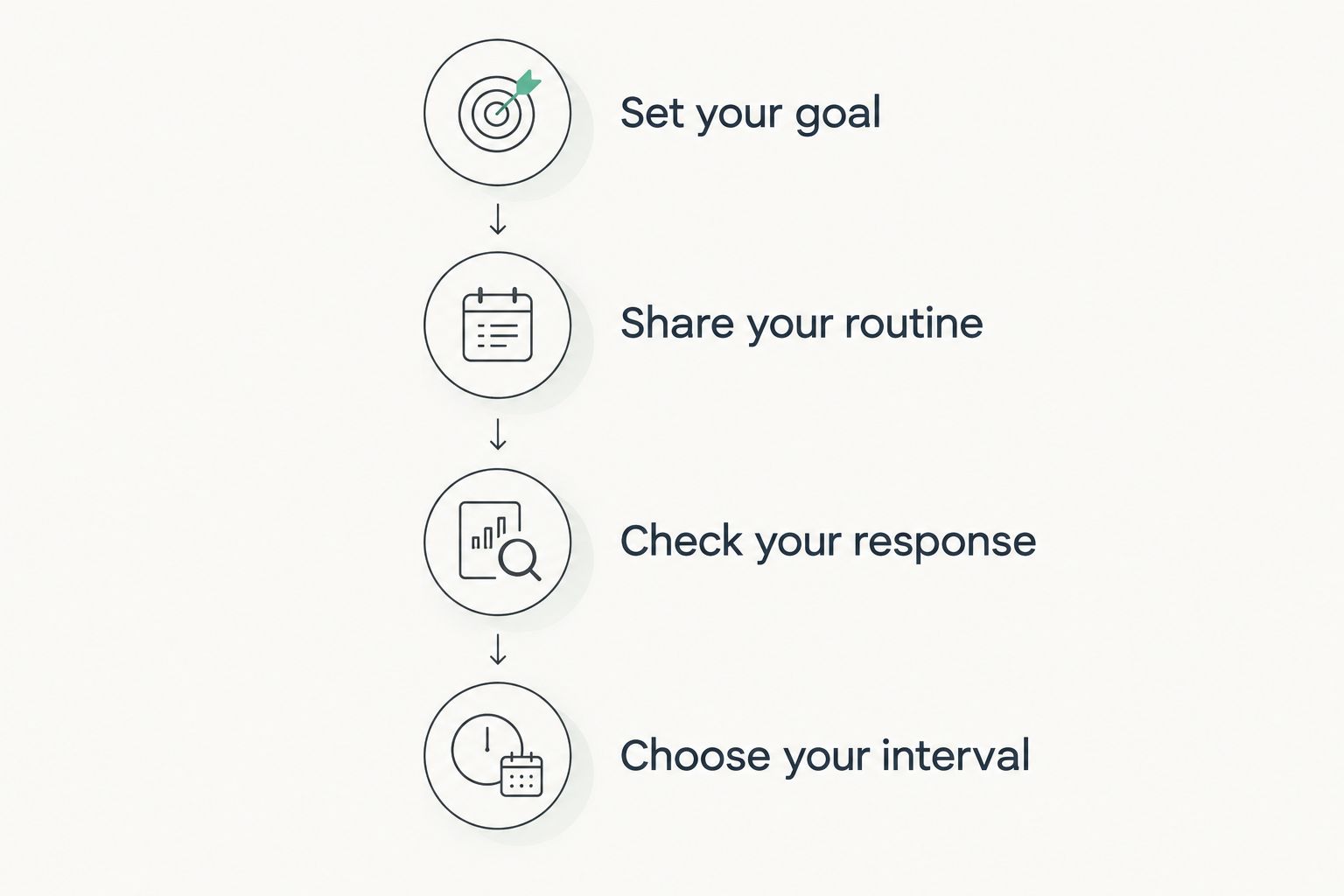
Ask your provider what would change the plan before you leave. New irritation, a new prescription, or another planned procedure should trigger a fresh conversation rather than an unchanged booking.
Can you get a HydraFacial more often than monthly?
More frequent treatment is not automatically better than monthly maintenance. A shorter interval needs a specific rationale from a qualified provider who has assessed your skin, treatment settings, and other skincare exposures.
Do not interpret oiliness or recurring congestion as permission to repeat exfoliation whenever it reappears. If your concern returns quickly, reassess the diagnosis and home routine instead of assuming the interval is too long.
Should sensitive skin get HydraFacials less often?
Sensitive skin does not have a universal HydraFacial interval. The cause of the sensitivity, current symptoms, treatment ingredients, and previous reactions determine whether treatment is appropriate at all.
Tell your provider whether sensitivity means occasional tightness, diagnosed rosacea, eczema, ingredient reactions, or persistent burning. Those are different situations; simply spacing appointments farther apart does not resolve every suitability concern.
If even a basic moisturizer stings, discuss that symptom before booking exfoliation. A gentler-sounding schedule is not a substitute for evaluating irritated skin.
How should you schedule a HydraFacial before an event?
Do not make an important event your first test of an unfamiliar treatment. Even a facial promoted for cosmetic refreshment can leave an individual with redness or irritation.
For a wedding or other major event in 2026, discuss your plans early and establish how your skin responds before choosing the final appointment date. Ask your provider for timing based on your history rather than adopting someone else’s countdown.
Avoid adding several unfamiliar treatments and products at once. If your skin reacts, you will have a harder time identifying the cause and deciding what to stop.
What should happen between appointments?
Keep your home routine consistent and follow the aftercare instructions supplied for your treatment. Do not add exfoliating products simply because your skin initially feels smooth and comfortable.
Discuss when to resume retinoids, acids, or other active products with your provider. There is no responsible universal restart instruction that covers every formula, treatment intensity, and individual response.
Daily sun protection also belongs in the plan. A facial does not replace sunscreen, protective clothing, or shade, and cosmetic improvement does not make skin resistant to sun damage.
Bonnie Frances Skin offers HydraFacials alongside other facial treatments in Phoenix. The useful HydraFacial appointment is the one matched to your concern—not the one added because another calendar month has passed.
FAQ
How often should you get a hydrafacial in 2026?
Monthly is a common HydraFacial maintenance starting point in 2026, not a requirement for everyone. Your provider should adjust the schedule to your skin’s response, goals, home products, and other treatments.
Do I need a HydraFacial every month?
You do not need a HydraFacial every month simply because monthly maintenance is common. Repeat treatment when it offers a benefit you value and your skin tolerates it.
Can I get a HydraFacial every week?
Do not adopt a weekly HydraFacial schedule without an individualized assessment and a specific treatment rationale. More frequent exfoliation is not automatically more effective and can add irritation.
Should I cancel my HydraFacial if I have a sunburn?
Postpone a HydraFacial if you have a sunburn and contact your provider before attending. Let the skin recover and have its readiness reassessed rather than treating through the injury.
Can I combine a HydraFacial with a chemical peel or microneedling?
Have your providers coordinate HydraFacial timing with chemical peels or microneedling. Do not independently stack procedures or assume that separate bookings make the combination appropriate.
Is a HydraFacial enough to treat acne scars or melasma?
A HydraFacial is not a substitute for a condition-specific assessment of acne scars or melasma. Ask which treatment addresses your concern before committing to repeated facials.
Where can I get a HydraFacial in Phoenix?
Bonnie Frances Skin offers HydraFacials in Phoenix, Arizona. Discuss your skin concerns, routine, and recent procedures when asking whether the treatment is appropriate for you.
One last thing
The most useful repeat-treatment question is not whether your skin looks less glossy than it did after the appointment. It is whether another session addresses a concern without creating a new one.
Before adding recurring facials to your 2026 calendar, agree on a reassessment point with your provider. If the benefit is unclear or irritation keeps returning, review the plan instead of shortening the interval.