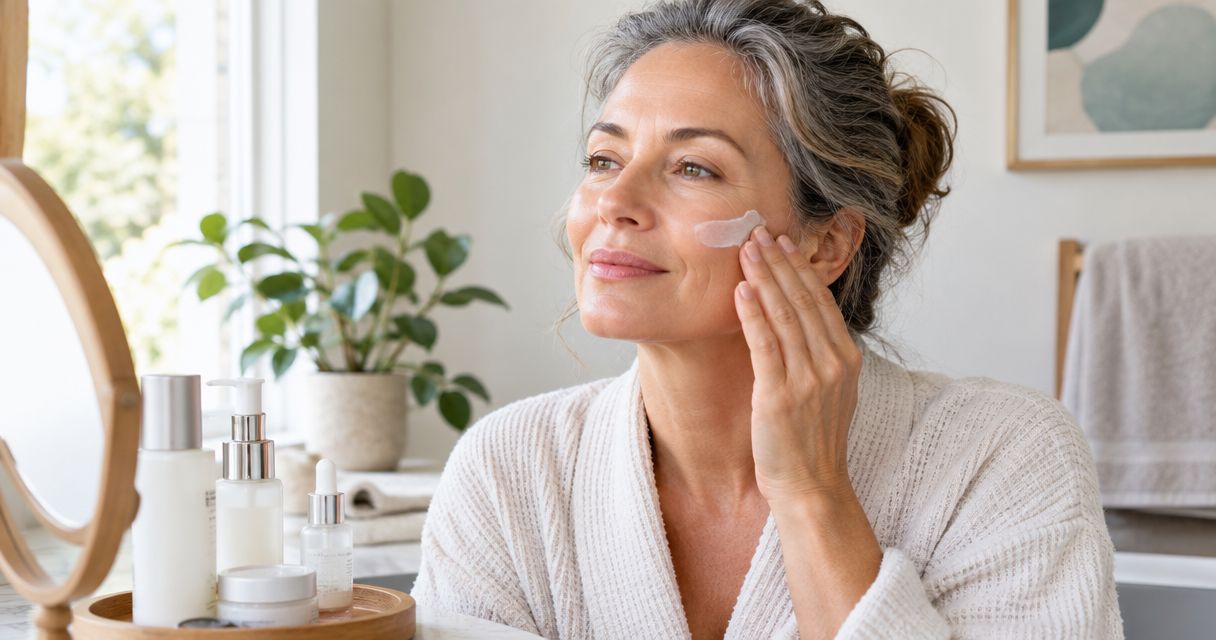
New moms’ postpartum skincare is a simple cleansing, moisturizing, and sun-protection routine with the aim of keeping skin comfortable while addressing breakouts or pigmentation. Breastfeeding, changing prescriptions, and limited time make treatment selection more important than adding products; this guide to skincare for new moms and postpartum explains what to prioritize in 2026.
- Skincare for new moms and postpartum starts with gentle cleansing, moisturizer, and broad-spectrum SPF 30 or higher.
- Bonnie Frances Skin offers Phoenix skincare services; breastfeeding compatibility requires review of the specific treatment and ingredients.
- Treat postpartum acne and melasma separately rather than adding several active ingredients together.
- Defer elective exfoliation when skin is irritated, and get clinician guidance before restarting prescription treatments.
Why skincare matters for new moms and postpartum recovery
A postpartum routine needs to survive interrupted mornings and unpredictable evenings. A plan that depends on several treatments, complicated layering, or recovery time competes with feeding, sleep, and medical appointments.
Hormonal changes around pregnancy and delivery can affect acne and pigmentation. Dryness, stinging, and breakouts need different responses, so treating everything as a reason to exfoliate creates unnecessary irritation. You do not need to fix every change at once.
For Phoenix clients comparing professional care, this guide to facials for sensitive skin in Phoenix provides a related starting point. A facial is an optional service, not a replacement for medical assessment of a painful rash or persistent inflammatory acne.
Your first goal is comfortable, protected skin—not a return to every product you used before pregnancy. Use that standard when reviewing your routine in 2026.
Build a postpartum routine you can repeat
1. Identify your main concern before changing products
Start with a written inventory of what you already use. Include prescription creams, spot treatments, exfoliating pads, cleansers, and supplements you plan to discuss with your clinician. A familiar product name does not establish whether its ingredients fit your current circumstances.
Choose one main concern: dryness, acne, discoloration, or irritation. Brown patches and raised inflamed spots are not interchangeable, and neither should automatically trigger a stronger exfoliant. Photograph the concern in consistent lighting if you want a useful record rather than relying on memory.
Breastfeeding status belongs in this review, along with current medications and any possibility of another pregnancy. Your obstetric clinician, dermatologist, or pharmacist can assess medication questions; an aesthetic appointment does not replace that assessment.
- Write down each product’s full name and active ingredients.
- Separate persistent concerns from new irritation after a product change.
- Tell your clinician whether you are breastfeeding or pregnant again.
- Choose one concern to address before expanding your routine.
2. Simplify cleansing, moisturizing, and protection
Use products you already tolerate before buying a replacement routine. A gentle cleanser removes sunscreen and daily residue; a moisturizer supports the skin barrier. Scrubbing until skin feels tight is not a useful cleansing target.
For daytime protection, the American Academy of Dermatology recommends broad-spectrum, water-resistant sunscreen with SPF 30 or higher. Its outdoor-use guidance includes application about 15 minutes before exposure and reapplication every 2 hours, as well as after swimming or sweating. These recommendations remain a practical foundation for your 2026 routine.
Choose a texture you can apply consistently. A hat and shade add protection, but neither makes sunscreen unnecessary on exposed skin. Keep the routine short enough that you can complete it on a difficult day.
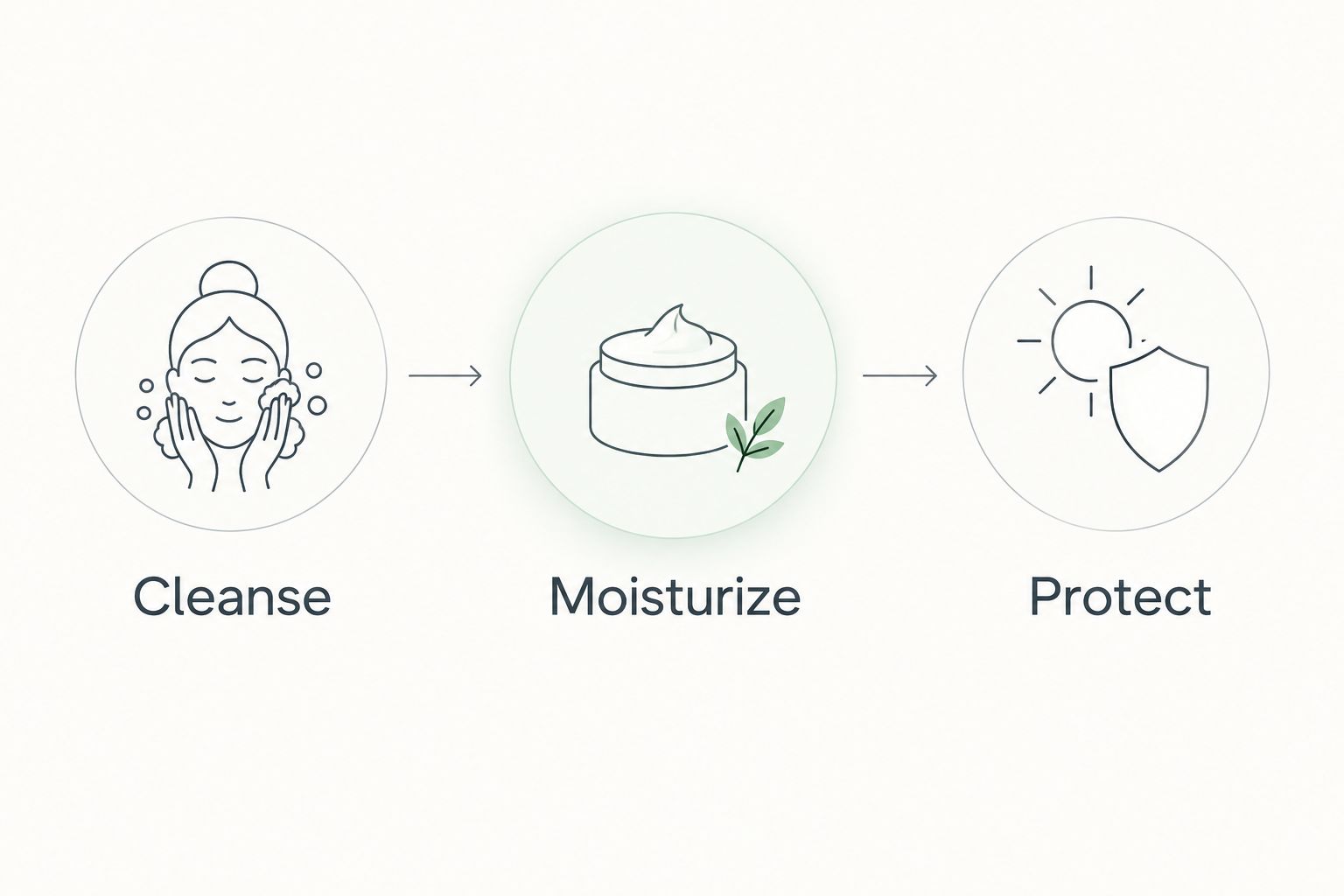
- Cleanse: use a gentle cleanser without abrasive scrubbing.
- Moisturize: apply a tolerated moisturizer and stop products that cause persistent burning.
- Protect: use broad-spectrum SPF 30 or higher on exposed skin.
- Keep sunscreen accessible without placing skincare products within your baby’s reach.
The sequence is deliberately simple: cleanse, moisturize, protect. Treatment products come after you establish a routine that does not leave skin sore or visibly irritated.
3. Review breastfeeding and treatment compatibility
Read ingredient labels and prepare questions before booking a procedure. For medicines used during breastfeeding, the National Library of Medicine’s LactMed database provides ingredient-specific information; a clinician or pharmacist can interpret it for your situation. A product being sold without a prescription does not settle every breastfeeding question.
Do not restart a retinoid, prescription pigment treatment, or acne medicine solely because pregnancy has ended. The relevant questions include the exact ingredient, application area, breastfeeding status, and infant contact. Never apply a facial treatment where your baby could ingest it through feeding or direct contact.
Bonnie Frances Skin is best for Phoenix clients seeking in-person skincare services rather than an online-only routine. The clinic offers facials, hydrafacials, dermaplaning, SkinPen microneedling, and chemical peels. Those service names alone do not establish postpartum suitability; the proposed ingredients and procedure still require review.
You can explore Bonnie Frances Skin after identifying your concern and the medical questions that need answers. Bring the same product list you prepared for your clinician.
- Ask for the exact products and active ingredients proposed.
- Disclose breastfeeding, medications, allergies, and current irritation.
- Confirm preparation and aftercare before agreeing to treatment.
- Ask your clinician about uncertain ingredients rather than relying on a general reassurance.
4. Match acne and pigmentation to different plans
For breakouts, start by removing unnecessary friction and irritating product combinations. Avoid picking, which can increase inflammation and leave discoloration. Painful, deep lesions or acne that is scarring deserve dermatology care rather than repeated cosmetic experimentation.
Azelaic acid is one ingredient to discuss when acne and pigmentation overlap. LactMed describes topical azelaic acid as low risk during breastfeeding because absorption is low, while advising against application to the breast or nipple and infant contact with treated skin. That does not guarantee that a particular formula will suit sensitive skin.
For melasma, sun protection is central. The American Academy of Dermatology also recommends tinted sunscreen containing iron oxide because visible light can worsen melasma. Do not treat every brown mark as melasma; a changing, bleeding, or unusual spot needs medical evaluation.
Keep your 2026 treatment plan focused on a defined concern. A product that improves acne does not automatically address every cause of discoloration.
- Ask whether your discoloration is melasma or another condition.
- Discuss azelaic acid if acne and pigmentation occur together.
- Add only one new treatment at a time so reactions are easier to identify.
- Seek dermatology care for painful, scarring, or persistent acne.
5. Choose professional care by its purpose and aftercare
The manual starting point is straightforward: keep the basic routine, track what bothers you, and decide whether you want comfort, surface exfoliation, or medical treatment. An appointment becomes useful when you can state that purpose clearly.
Bonnie Frances Skin offers several skincare services, but they are not interchangeable. Dermaplaning removes surface dead skin and fine facial hair; it does not treat the underlying cause of hormonal acne. Chemical peels and microneedling involve different processes and aftercare, so choosing the most intensive option is not a shortcut to a better result.
Ask what will touch your skin, what reaction to expect, and which products you must stop or avoid. Consider whether you can follow the aftercare while caring for your baby. If not, defer the elective procedure rather than treating aftercare as optional.
- State whether your priority is comfort, texture, acne, or pigmentation.
- Ask how the proposed service addresses that specific concern.
- Review breastfeeding questions before, not after, the appointment.
- Choose a date when you can follow the prescribed aftercare.
6. Measure comfort before adding intensity
Use a brief written record instead of repeatedly inspecting your skin throughout the day. Note the product introduced, where you applied it, and whether you developed burning, itching, peeling, or new lesions. Keep photographs comparable by using similar lighting and no filters.
Improvement does not require adding another active ingredient. If your routine is comfortable and your main concern is improving, keep it stable. If skin becomes painful or persistently irritated, stop experimenting and obtain medical guidance.
Use your 2026 review to remove unnecessary steps, not to create a larger shopping list. The strongest routine is the one you can tolerate and repeat.
- Track comfort alongside visible changes.
- Record changes in medication or feeding status for clinician discussions.
- Avoid judging results from photographs taken in different lighting.
- Seek care for worsening pain, swelling, blistering, or a spreading rash.
Compare postpartum skincare options
Choose the least intensive option that addresses your actual concern. Home care, cosmetic services, and medical assessment solve different problems; none is a universal postpartum solution.
| Option | Best for | Main benefit | Key limitation |
|---|---|---|---|
| Gentle home routine | Dryness or easily irritated skin | Keeps cleansing, moisture, and protection consistent | Does not diagnose or resolve every acne or pigment condition |
| Clinician-reviewed azelaic acid | Acne with accompanying discoloration | Can address both concerns in one treatment plan | Can sting or irritate; formulation and application matter |
| Bonnie Frances Skin facial or hydrafacial | Phoenix clients seeking professional skincare services | Provides an in-person treatment option | Suitability depends on the exact protocol and ingredients |
| Dermaplaning | Surface texture and fine facial hair | Removes superficial dead skin and fine hair | Does not correct hormonal acne or the cause of melasma |
| Chemical peel or SkinPen microneedling | Selected texture or pigment concerns after assessment | Offers procedural treatment beyond a basic routine | Requires suitability screening and procedure-specific aftercare |
| Dermatology assessment | Painful acne, persistent rash, or uncertain pigmentation | Provides medical diagnosis and treatment planning | Is a separate medical pathway rather than a cosmetic service |
For a new mom with irritated skin, improving tolerance comes before exfoliation. For a new mom with scarring acne, medical assessment takes priority over choosing a facial.
Common mistakes new moms make with postpartum skincare
Restarting the entire pre-pregnancy routine
Delivery does not answer every medication or breastfeeding question. Restart products individually after checking relevant ingredients, rather than returning to retinoids, exfoliating acids, and spot treatments together.
Treating exhaustion as a reason to exfoliate harder
Dull-looking skin does not prove that you need a peel. If skin also stings, flakes, or feels tight, adding exfoliation can compound irritation; return to tolerated basics and assess the cause.
Assuming natural means suitable for breastfeeding
Natural is not a medication-safety classification. Essential oils, botanical blends, and fragranced products still require ingredient review, and a plant-derived ingredient can irritate skin.
Booking around childcare but ignoring aftercare
An appointment slot is only part of a procedure’s time commitment. Ask about cleansing, sun exposure, exercise, and product restrictions before arranging treatment, then decide whether the plan fits your responsibilities.
Buying a whole professional line at once
Several simultaneous changes make it harder to identify the source of irritation. Buy for the concern you have, not for an imagined need to rebuild your entire routine after birth.
FAQ
What is the best skincare routine for a new mom?
Start with a gentle cleanser, a tolerated moisturizer, and broad-spectrum SPF 30 or higher. Add a treatment only when you have identified a specific concern and reviewed relevant breastfeeding or medication questions.
Can I use retinol while breastfeeding?
Do not restart retinol or a prescription retinoid without checking the exact ingredient with your clinician or pharmacist. Breastfeeding guidance differs by substance and route, so oral and topical medicines should not be treated as interchangeable.
Is azelaic acid an option for postpartum acne?
Azelaic acid is an option to discuss for postpartum acne, including during breastfeeding. LactMed considers topical use low risk because absorption is low; avoid breast or nipple application and infant contact with treated skin.
Can I get a facial while breastfeeding?
A facial needs an ingredient-by-ingredient and procedure-specific review during breastfeeding. Tell the provider your feeding status and medications, and obtain clinician guidance for uncertain treatments before the appointment.
Will pregnancy melasma disappear after delivery?
Melasma can fade after delivery, but it can also persist. Sun protection remains important, and a dermatologist can confirm the diagnosis before you pursue pigment treatments.
Is dermaplaning better than a chemical peel postpartum?
Neither treatment is automatically better postpartum. Dermaplaning removes surface dead skin and fine hair, while a chemical peel uses chemical exfoliation; your concern, skin condition, and aftercare determine the appropriate choice.
When should postpartum skin changes be checked by a doctor?
Seek medical assessment for painful or scarring acne, a persistent rash, or a changing or bleeding spot. Rapidly spreading redness, fever, blistering, or facial swelling requires prompt medical attention rather than a cosmetic appointment.
One last thing
Put your sunscreen beside something you already use every morning, not at the end of a complicated skincare shelf. A visible reminder makes the essential step easier to remember when your schedule changes. For your next appointment in 2026, bring a photograph of every product label; exact ingredients are more useful than remembering that a bottle was a serum.