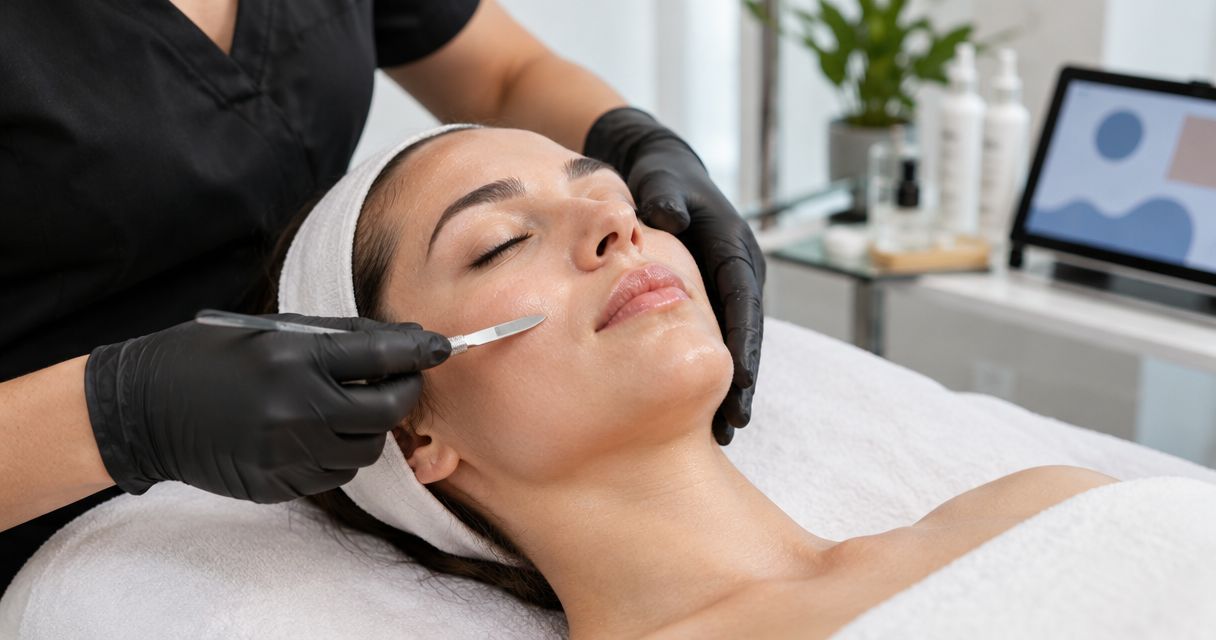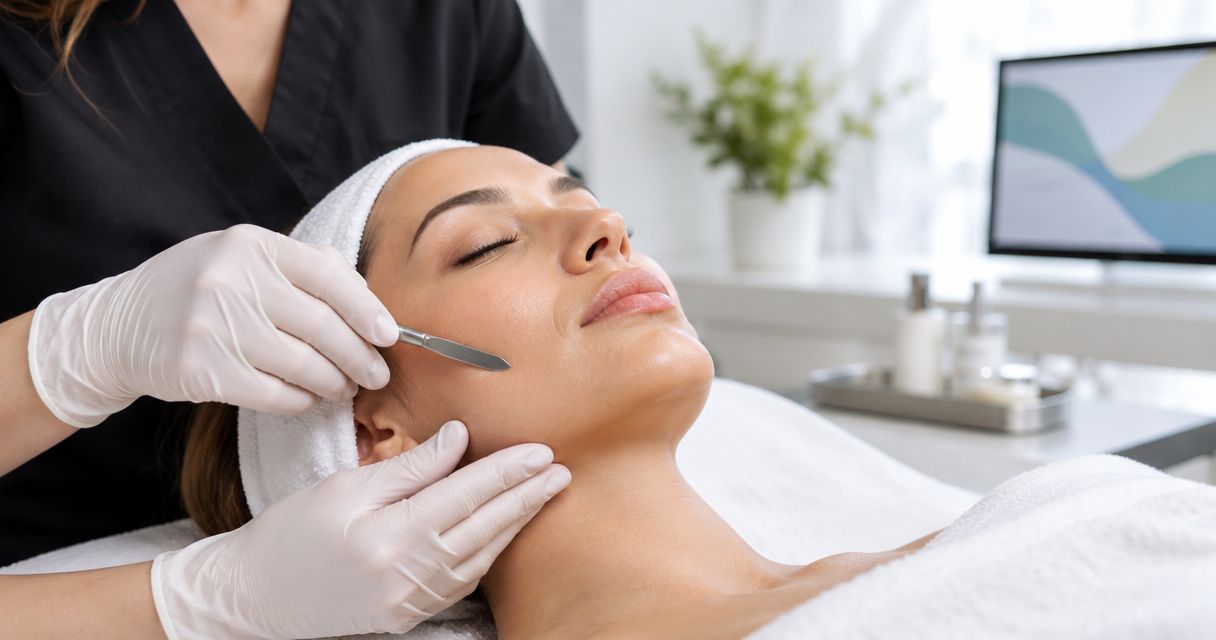
No—dermaplaning is not the same as shaving your face, although both cut facial hair at the skin’s surface. Professional dermaplaning deliberately removes superficial dead skin as well as fine hair, while ordinary shaving primarily removes hair; both can cause irritation, and neither changes how thick hair grows back.
- Is dermaplaning the same as shaving? No: dermaplaning targets superficial dead skin and peach fuzz; shaving mainly targets hair.
- Professional dermaplaning suits exfoliation goals; ordinary shaving suits straightforward facial hair removal.
- Bonnie Frances Skin offers dermaplaning in Phoenix; suitability depends on your skin’s condition, not just unwanted hair.
- Neither dermaplaning nor shaving makes facial hair grow back thicker or darker.
Is dermaplaning the same as shaving your face?
The overlap is hair removal. The difference is the treatment’s purpose, technique, and level of skin assessment. At Bonnie Frances Skin, dermaplaning is one of the skin treatments offered to Phoenix clients.
Use this 2026 comparison to separate the two approaches before choosing an appointment or an at-home routine.
| Question | Professional dermaplaning | Ordinary facial shaving |
|---|---|---|
| Main purpose | Remove superficial dead skin and fine facial hair | Remove unwanted facial hair |
| Typical approach | A trained provider uses a blade for controlled surface exfoliation | You use a razor designed for hair removal |
| Best for | People seeking surface exfoliation plus peach-fuzz removal | People whose main goal is managing facial hair |
| Main benefit | Addresses fine hair and surface buildup together | Directly addresses unwanted hair |
| Main limitation | Does not treat deep scars or remove hair permanently | Does not provide the same deliberate exfoliation treatment |
| Main risks | Cuts, irritation, infection, and pigment changes following inflammation | Cuts, razor burn, follicle irritation, and ingrown hairs |
| Effect on regrowth | Does not change the hair follicle | Does not change the hair follicle |
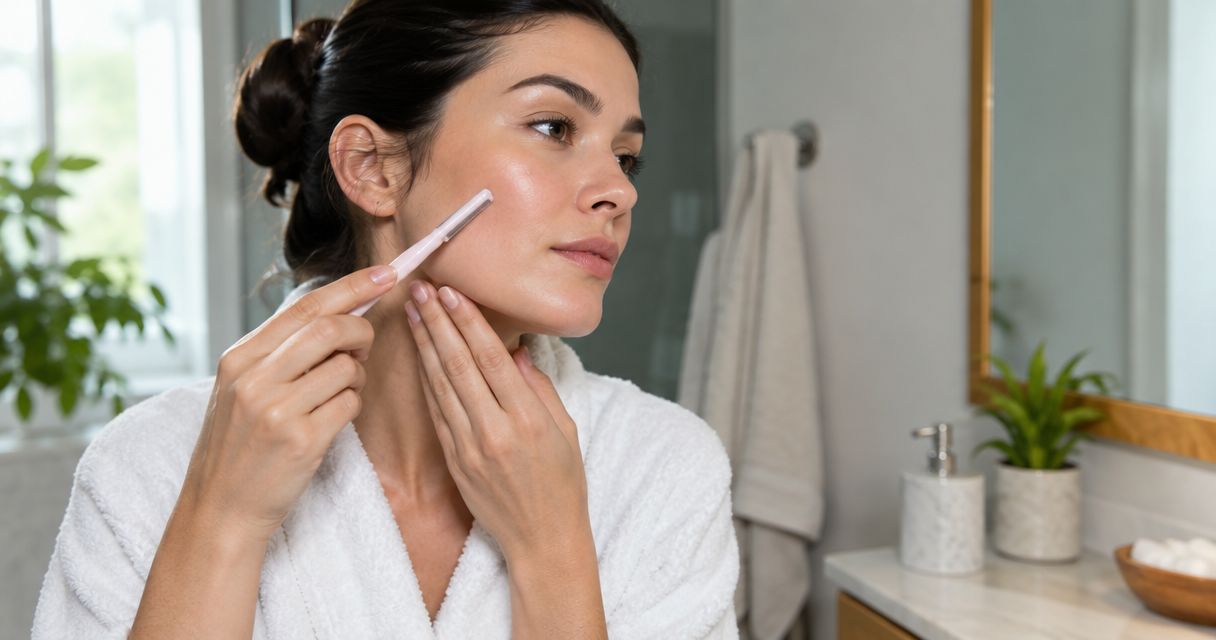
Some facial razors are sold as at-home dermaplaning tools. The name on the package does not establish that the technique, assessment, or result matches a professional treatment.
Why this matters
Choosing between dermaplaning and shaving starts with identifying what bothers you. Fine facial hair, flaky surface buildup, inflamed acne, and indented scars are different concerns. A blade does not address all of them.
For your 2026 skincare plan, separate hair removal from skin treatment. If your only concern is visible facial hair, ordinary shaving directly addresses that goal. If you want superficial exfoliation as well, professional dermaplaning is a different conversation.
Neither option is a treatment for every kind of uneven texture. Raised bumps, persistent redness, and deeper scars need assessment rather than repeated passes with a razor.
Professional dermaplaning: best for exfoliation plus peach fuzz
Professional dermaplaning uses a blade to remove fine facial hair, also called vellus hair, along with superficial dead skin cells. The treatment works at the surface. It does not remove the hair root or resurface deep layers of skin.
Removing surface buildup can leave your skin feeling smoother. Removing peach fuzz can also change how makeup sits on your face. These are cosmetic surface effects—not evidence that the treatment has corrected an underlying skin condition.
What professional dermaplaning does well
- Addresses superficial roughness and peach fuzz during the same treatment.
- Gives you an opportunity to discuss skin sensitivity and current products with a provider.
- Allows a provider to assess whether particular areas should be avoided.
Where professional dermaplaning falls short
- It does not permanently reduce facial hair.
- It does not correct deep acne scars or replace treatment for active acne.
- It still carries risks, including irritation and small cuts.
- It is not appropriate over open wounds, active infections, or inflamed lesions.
Choose professional dermaplaning for a suitable exfoliation goal—not because professional treatment eliminates every risk. Tell the provider about skin conditions, recent procedures, and prescription skincare before treatment begins.
Ordinary facial shaving: best for hair removal alone
Ordinary shaving cuts hair where the blade meets the skin. It is a direct way to manage facial hair without making exfoliation the main objective. Some surface skin cells also come away during shaving, but incidental exfoliation does not make every shave equivalent to dermaplaning.
Your hair type matters. Soft peach fuzz behaves differently from coarse chin or beard hair, especially when the cut end begins to grow out.
What ordinary shaving does well
- Targets unwanted hair directly.
- Lets you maintain hair removal at home.
- Does not require you to seek an exfoliating treatment when hair removal is your only goal.
Where ordinary shaving falls short
- It can cause razor burn, cuts, and follicle irritation.
- Coarse or curly hair can develop ingrown hairs after shaving.
- Repeated passes can irritate skin without producing a better result.
- Shaving does not treat pigmentation, acne scars, or persistent skin disease.
Choose ordinary shaving when hair removal is the goal and your skin tolerates it. Do not keep scraping an area because it still feels textured; the remaining texture might not be removable surface buildup.
Why dermaplaning and shaving results vary
The same tool does not produce the same outcome on every face. These factors explain why a treatment that suits someone else can leave your skin uncomfortable:
- Hair type: Fine vellus hair and coarse terminal hair feel different after cutting. Blunt coarse hair is more noticeable as it emerges.
- Skin condition: Inflamed acne, eczema flares, sunburn, and broken skin change whether blade-based treatment is appropriate.
- Technique: Pressure, repeated passes, and blade handling affect the risk of cuts and irritation.
- Tool hygiene: Contaminated or shared tools introduce an avoidable infection risk. Professional treatment requires appropriate infection-control practices too.
- Other exfoliation: Retinoids, exfoliating acids, scrubs, and recent resurfacing procedures can leave skin less tolerant of additional irritation.
- Aftercare: Picking, scrubbing, and applying irritating products can aggravate freshly treated skin.
Bring your actual product list to a consultation in 2026. Product names and application frequency are more useful than describing your routine as gentle or saying that you use an occasional active.
How do you choose between dermaplaning and shaving?
Start with your goal, then assess whether your skin is ready. Do not choose a blade-based treatment simply because a video shows an appealing pile of removed hair and skin.
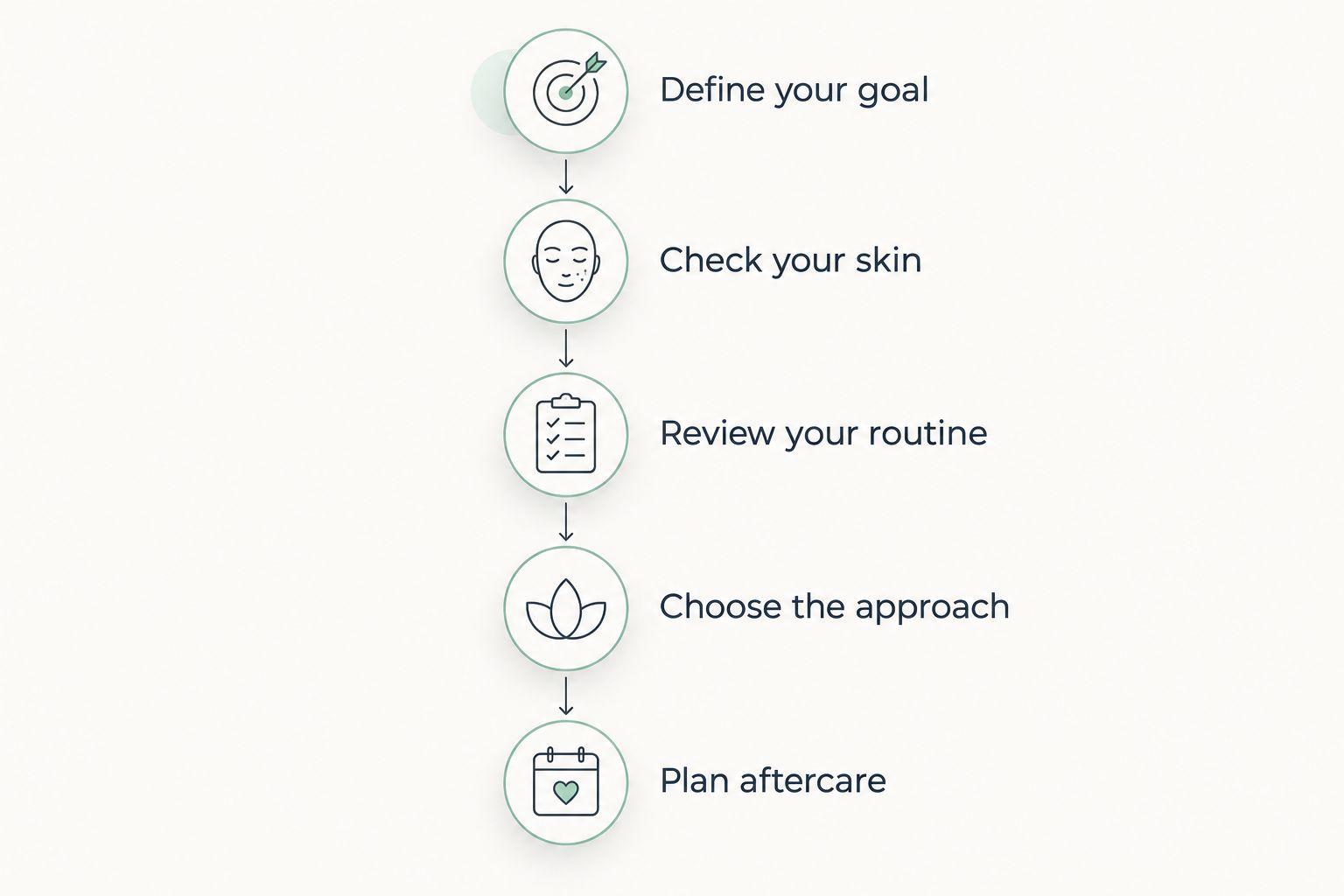
- Define your goal. Decide whether you want hair removal, superficial exfoliation, or help with a specific skin concern. Persistent acne and deeper scars need a different assessment.
- Check your skin. Look for inflamed spots, rashes, sunburn, cuts, or areas that already sting. Avoid passing a blade over damaged or inflamed skin.
- Review your routine. Identify prescription treatments, retinoids, exfoliating acids, and recent procedures. Ask the treating clinician or provider how those affect your plan.
- Choose the approach. Select shaving for hair management or discuss professional dermaplaning when exfoliation is also a goal.
- Plan aftercare. Know which products to use, which to pause, and whom to contact if your skin develops a concerning reaction.
Bonnie Frances Skin is best for Phoenix clients seeking an in-clinic dermaplaning service rather than an at-home shaving routine. That is a choice of setting and service, not a guarantee that dermaplaning is right for every skin condition.
Does dermaplaning make facial hair grow back thicker?
Neither dermaplaning nor shaving makes facial hair grow back thicker. Both cut the visible hair shaft without changing the follicle beneath the skin. They do not increase the number of follicles or turn fine facial hair into coarse hair.
Regrowth can feel different because a cut hair has a blunt end rather than its original tapered tip. That sensation is especially noticeable with coarse hair. It does not mean the blade has changed the hair’s biological thickness.
If facial hair becomes noticeably coarser or more extensive, do not assume shaving caused it. Discuss a new or unexpected change with a healthcare professional, particularly when other symptoms accompany it.
Can I dermaplane at home instead of booking a treatment?
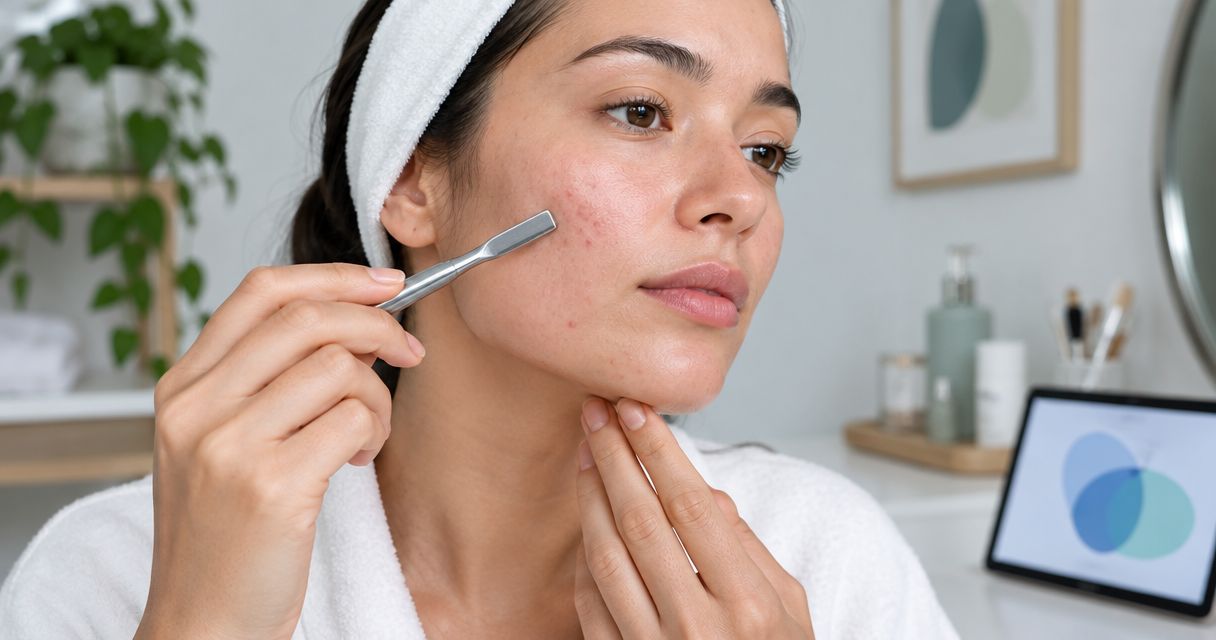
At-home facial razors remove hair, but using one does not reproduce a professional skin assessment or establish an equivalent exfoliation result. Follow the tool’s instructions rather than copying professional blade techniques from a video.
Do not use a professional scalpel on yourself. Avoid sharing tools, reusing a blade that is no longer suitable, or increasing pressure to chase a smoother finish.
The strongest reason to seek advice is uncertainty about your skin—not the promise of a more dramatic result. If you have recurrent rashes, inflammatory acne, a history of pigment changes after irritation, or a current prescription treatment, discuss suitability before using a blade.
Is dermaplaning safe if I have acne or sensitive skin?
Dermaplaning is not appropriate over active inflamed acne, open lesions, or infected skin. A blade can injure an already irritated area, and treating around a few spots does not automatically make the rest of your face suitable.
Sensitive skin also needs a more specific description. Occasional dryness differs from an active eczema flare, persistent burning, or rosacea-related inflammation. Tell the provider what happens, which products trigger it, and whether a clinician has diagnosed a condition.
Do not treat through stinging, inflamed, or broken skin. If acne or a rash is the main concern, address that condition before pursuing optional surface exfoliation.
What should you do after dermaplaning or shaving?
Keep aftercare simple. Use a gentle cleanser and a moisturizer your skin already tolerates, and avoid adding several unfamiliar products immediately after treatment.
For your 2026 routine, make sun protection a standing habit rather than an occasional recovery step. The American Academy of Dermatology recommends broad-spectrum, water-resistant sunscreen with SPF 30 or higher. Follow its application directions and use shade and protective clothing too.
After professional dermaplaning, follow the provider’s instructions about retinoids, exfoliating acids, makeup, and other treatments. There is no single pause schedule that fits every product, prescription, and skin condition; do not stop prescribed medication without guidance from the prescribing clinician.
Stop using products that sting on freshly treated skin. Seek medical advice for worsening redness, increasing pain, warmth, swelling, drainage, or other signs of infection rather than trying another exfoliant.
FAQ
Is dermaplaning the same as shaving with a face razor?
No. Both remove hair at the skin’s surface, but professional dermaplaning deliberately combines fine-hair removal with superficial exfoliation. An at-home face razor does not provide the same skin assessment or establish an equivalent treatment.
Will my peach fuzz grow back darker after dermaplaning?
No, dermaplaning does not make peach fuzz grow back darker or thicker. Cutting the hair shaft does not change the follicle, although a blunt cut end can feel different during regrowth.
Is shaving better than dermaplaning if I only want hair removal?
Ordinary shaving directly addresses hair removal when exfoliation is not your goal. It still carries risks such as razor burn, cuts, and ingrown hairs, so your skin’s tolerance matters.
Can I dermaplane over pimples?
Do not dermaplane over active inflamed pimples, open lesions, or infected skin. Ask a qualified provider to assess your skin before choosing an exfoliating treatment.
Can dermaplaning remove acne scars?
Dermaplaning does not remove deep or indented acne scars. It acts on the surface, while scar treatment depends on the scar type and your skin’s condition.
What sunscreen should I use after dermaplaning?
Use broad-spectrum, water-resistant sunscreen with SPF 30 or higher, consistent with American Academy of Dermatology guidance. Choose a formula your skin tolerates and follow the treatment provider’s aftercare instructions.
Where can I ask about professional dermaplaning in Phoenix?
Bonnie Frances Skin offers dermaplaning in Phoenix. Discuss your skin concerns, current products, and recent treatments before deciding whether the service fits your needs.
One last thing
For your next treatment decision in 2026, ignore how much debris a blade appears to remove. The visible material can include hair, skin cells, and product residue; its appearance is not a measure of skin health or proof that more scraping is better.
Stop chasing a perfectly polished surface. Comfortable, intact skin is a better endpoint than repeated exfoliation that leaves your face stinging.