Best overall for surface smoothing and peach-fuzz removal: dermaplaning. Best for targeted concerns such as uneven pigmentation: a professionally selected chemical peel. This 2026 dermaplaning vs chemical peel guide compares what each treatment does, its limitations, and the skin conditions that should change your choice. Bonnie Frances Skin offers both treatments in Phoenix; choose by your skin concern, not by which treatment sounds stronger.
- Dermaplaning vs chemical peel: choose dermaplaning for peach fuzz and superficial roughness, not acne scars.
- Chemical peels address selected pigment, acne, and texture concerns; suitability depends on the peel and your skin.
- Bonnie Frances Skin offers both exfoliating treatments in Phoenix; match the treatment to your concern.
- Active irritation is a reason to postpone exfoliation, not increase its intensity.
Why this matters
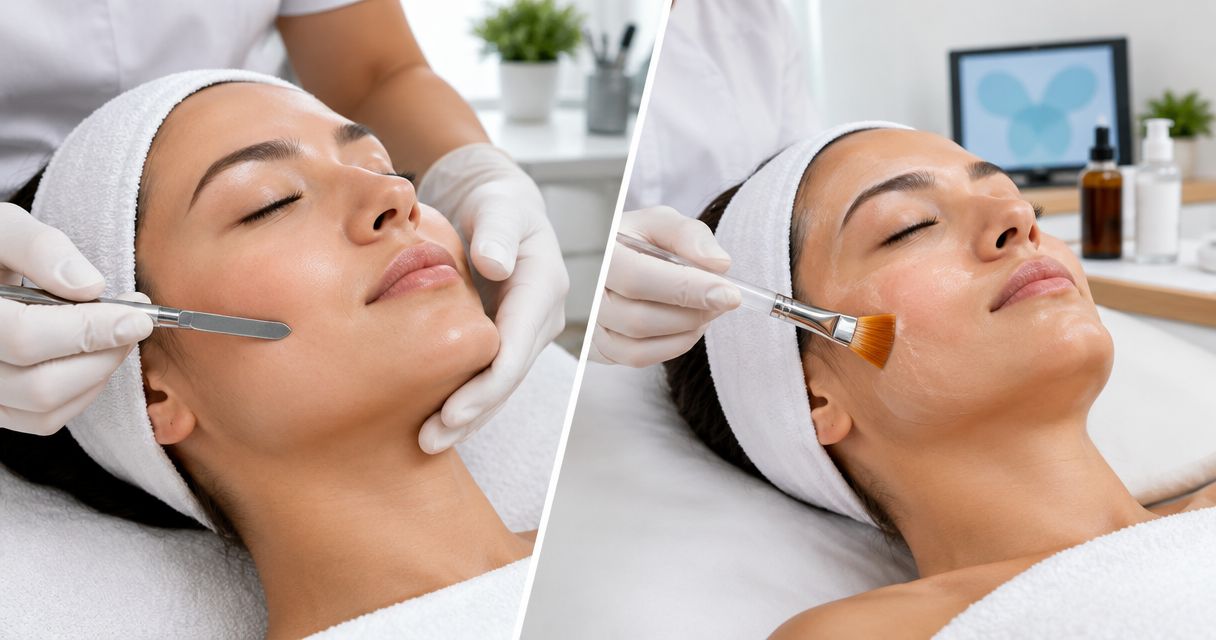
Dermaplaning and chemical peels both exfoliate, but they are not interchangeable. Dermaplaning uses a blade to remove fine facial hair and surface skin cells. A chemical peel applies a chemical solution to create controlled exfoliation, with effects that depend on its ingredients and depth.
That difference changes what you should expect. A smoother makeup base is not the same outcome as treating uneven pigmentation, and neither treatment automatically corrects an indented acne scar.
For your 2026 treatment plan, start with the problem you want to solve. Bonnie Frances Skin is best for Phoenix clients seeking access to both dermaplaning and chemical peels at one skincare clinic. The right choice still depends on an individual skin assessment, particularly when you have inflammation, a history of pigment changes, or a compromised skin barrier.
What makes the best exfoliating treatment?
Use these criteria before choosing between dermaplaning and a chemical peel:
- Concern fit: Dermaplaning removes peach fuzz and superficial buildup. Chemical peels can address selected pigmentation, acne, and texture concerns, depending on the formulation.
- Skin condition: Active breakouts, open skin, dermatitis, or irritation change treatment suitability. An irritated face needs assessment rather than another exfoliating step.
- Treatment specificity: Dermaplaning describes a mechanical technique. Chemical peel describes a category; you need the actual peel type and intended depth to understand the recommendation.
- Recovery tolerance: Dermaplaning generally has less recovery than deeper peels. A superficial peel and a deeper peel should not share the same recovery expectations.
- Pigment risk: A history of post-inflammatory hyperpigmentation matters. Stronger exfoliation is not automatically a better choice for dark marks.
- Aftercare fit: Your ability to follow sun-protection and skincare instructions belongs in the decision, especially when outdoor exposure is part of your routine.
Do not rank treatments by visible peeling, tingling, or how aggressive they sound. Rank them by whether they address your concern without exposing your skin to unnecessary irritation.
Dermaplaning vs chemical peel at a glance
| Treatment | Best for | Standout feature | Key limitation | Recovery consideration |
|---|---|---|---|---|
| Dermaplaning | Peach fuzz and superficial roughness | Physically removes fine facial hair and surface skin cells | Does not treat deeper scars or the cause of pigmentation | Temporary redness or sensitivity can occur |
| Chemical peel | Selected pigmentation, acne, and texture concerns | Formulation and depth can target different concerns | Suitability and results vary by peel; pigment changes are a risk | Recovery depends on ingredients, depth, and skin response |
The deciding difference is hair removal versus concern-specific chemical exfoliation. If facial fuzz is your main complaint, dermaplaning addresses it directly. If pigmentation or acne is the concern, assess the specific peel rather than treating all peels as equivalent.
1. Dermaplaning: best exfoliating treatment for peach fuzz
Dermaplaning uses a blade to remove vellus hair, often called peach fuzz, along with superficial skin cells. It is a surface treatment, not a procedure that remodels deep scars. Your skin can feel smoother afterward, and removing fine hair can help makeup sit more evenly.
The strongest reason to choose dermaplaning is simple: you want the hair removed. For surface dullness, the guide to dermaplaning treatments for dull skin provides another starting point for deciding whether that goal matches your concern.
Dermaplaning pros
- Direct peach-fuzz removal: Chemical peels do not provide the same blade-based hair removal.
- Surface smoothing: Removing superficial buildup can improve how your skin feels.
- Makeup preparation: A less hairy surface can make foundation application more even.
- Generally limited recovery: Dermaplaning usually involves less recovery than deeper chemical peels.
Dermaplaning cons
- Limited treatment depth: Dermaplaning does not correct deep wrinkles or indented acne scars.
- Technique-related risks: Cuts, irritation, and infection are possible when the procedure is performed improperly.
- Not appropriate over every skin condition: Active inflammatory acne, open lesions, and irritated skin require assessment before blade exfoliation.
Best for: People whose main goals are peach-fuzz removal and a smoother-feeling surface, rather than targeted treatment of acne or pigmentation.
For a 2026 event-preparation plan, do not assume a first dermaplaning appointment belongs immediately before an important occasion. Even a surface treatment can cause redness or irritation, and your first appointment is not proof of how your skin will respond.
Verdict: Buy dermaplaning for peach-fuzz removal after a suitability assessment; skip it as a treatment for deep acne scars.
2. Chemical peel: best exfoliating treatment for targeted concerns
A chemical peel applies a solution that produces controlled skin exfoliation. Different ingredients and depths serve different purposes, so the phrase chemical peel does not identify a single treatment. A peel chosen for acne-prone skin is not automatically the right peel for someone with sensitive skin and uneven pigmentation.
Chemical peels are commonly described in 3 depth categories: superficial, medium, and deep. Those categories explain why recovery and risk cannot be reduced to one universal answer. They do not establish which depths any particular clinic offers.
Chemical peel pros
- Concern-specific selection: Different formulations can address selected acne, pigmentation, and texture concerns.
- Adjustable treatment approach: The practitioner can select a peel according to your skin condition and treatment goal.
- No reliance on hair removal: Chemical exfoliation targets skin rather than peach fuzz.
- Options beyond surface polishing: Some peels address concerns that simple hair removal does not.
Chemical peel cons
- Variable recovery: Redness, dryness, flaking, and discomfort depend on the treatment and your response.
- Pigment-change risk: Post-inflammatory hyperpigmentation or lightening can occur, particularly when treatment selection or aftercare is inappropriate.
- More detail is needed before booking: The ingredients, depth, contraindications, and instructions matter more than the category name.
Best for: People with a defined pigmentation, acne, or texture concern that a practitioner identifies as suitable for a specific peel.
Bonnie Frances Skin offers chemical peels, but the treatment name alone does not establish the formulation, depth, or recovery involved. Ask what the proposed peel is intended to address and what makes it appropriate for your skin.
Verdict: Buy a professionally selected chemical peel for a suitable, defined concern; hold until you understand the specific treatment and aftercare.
How these treatments are ranked
This 2026 comparison ranks dermaplaning first for a narrow, clear use case: peach-fuzz removal with surface smoothing. Chemical peels rank first for concern-specific chemical exfoliation, not for hair removal.
The ranking uses concern fit, skin condition, treatment specificity, recovery tolerance, pigment risk, and aftercare requirements. It does not imply that one treatment wins across all skin types or that every chemical peel delivers the same result.
A treatment deserves the top position only when its mechanism matches your goal. Neither option is the default when your skin is actively irritated.
Which exfoliating treatment should you choose?
Choose dermaplaning when peach fuzz is the primary issue and your skin is suitable for blade exfoliation. It also fits a surface-smoothing goal when you understand that removing superficial cells will not correct deeper structural concerns.
Choose a chemical peel when your main concern is uneven pigmentation, acne, or texture and a practitioner recommends a specific formulation for it. The recommendation should identify the concern being treated, not just promise a general glow.
Choose neither yet when your skin is inflamed, broken, sunburned, or reacting to products. Pause elective exfoliation and get the underlying problem assessed; adding another irritating step does not repair an impaired skin barrier.
If you are undecided, do not buy the more intensive treatment as insurance. For peach fuzz, dermaplaning is the default; for a pigment or acne concern, a peel assessment is the next move.
Choose your next skin treatment
Explore Bonnie Frances Skin for dermaplaning and chemical peels in Phoenix.
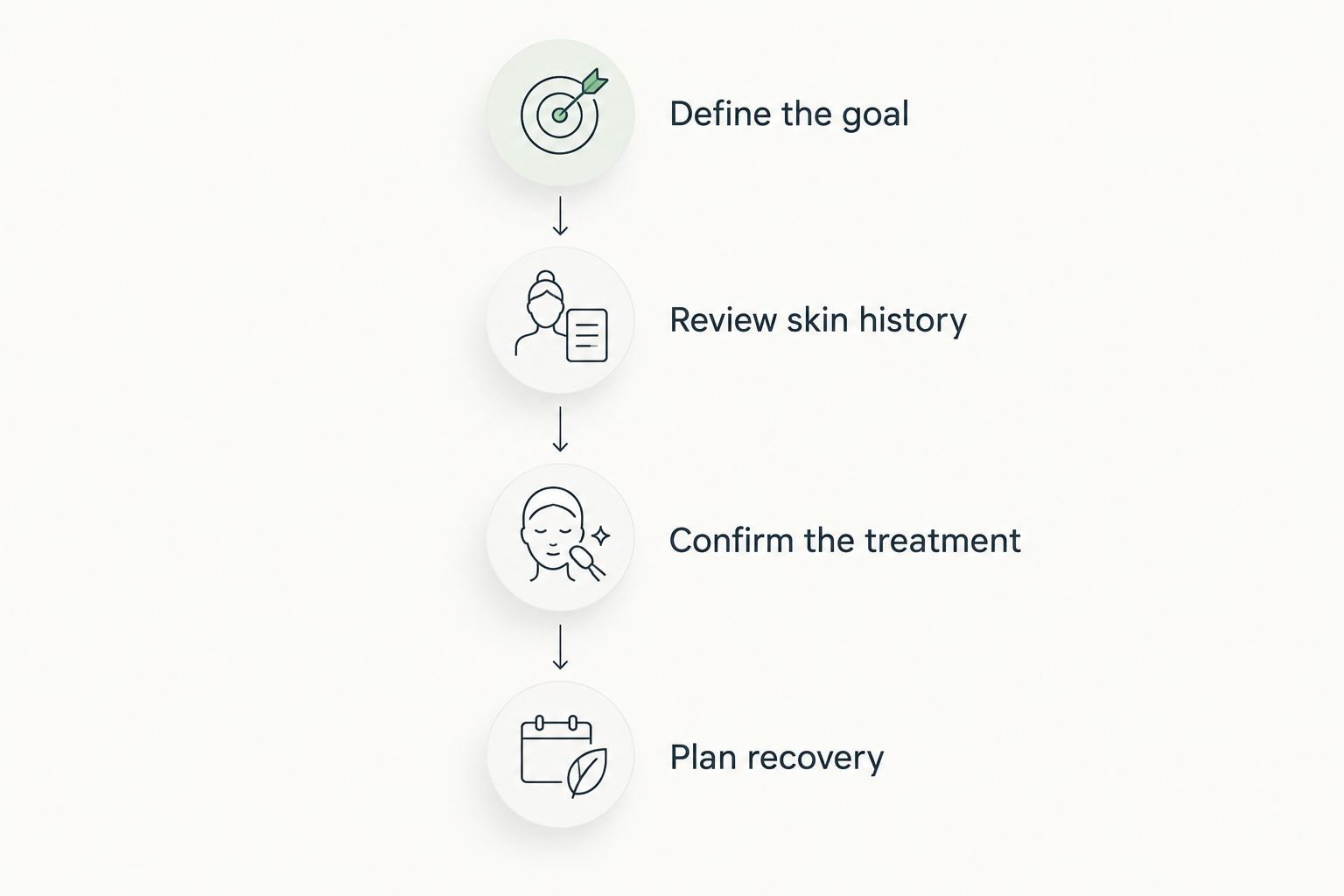
Before booking: use this treatment checklist
A useful consultation connects your skin history to a specific recommendation. Bring your current skincare routine and describe any recent irritation, procedures, or medication changes rather than choosing a treatment from its name alone.
Define the goal
Name the issue you want addressed: peach fuzz, superficial roughness, dark marks, breakouts, or scars. Separate these concerns instead of calling all of them texture. Hair removal and treatment of indented scars require different approaches.
Review skin history
Tell the practitioner about cold sores, eczema, rosacea, pigment changes after irritation, recent tanning or sunburn, and current medications. Include topical retinoids, exfoliating acids, and prescription acne treatments. Do not stop prescribed medication without guidance from its prescriber.
Confirm the treatment
For dermaplaning, ask whether your current skin condition is suitable. For a peel, ask about the proposed formulation, intended depth, treatment goal, and contraindications. Confirm who performs the procedure and what instructions you will receive.
Plan recovery
Explain any upcoming event and how much visible redness or flaking you can accommodate. Ask when to restart your usual products and what symptoms require contacting the practitioner. Specific instructions beat a generic promise of no downtime.
Aftercare matters as much as treatment selection
Exfoliation does not end when you leave the treatment room. Follow the instructions for the actual procedure you received, especially after a peel. A product that your skin tolerates normally can sting or irritate recently treated skin.
Protect against sun exposure
General American Academy of Dermatology sun-protection guidance recommends broad-spectrum, water-resistant sunscreen with SPF 30 or higher. Reapply every 2 hours while outdoors and after swimming or sweating, following the product directions. Your practitioner must also advise when and how to use products on healing skin after a deeper procedure.
In Phoenix, include shade, protective clothing, and outdoor plans in your aftercare discussion. Sunscreen supports protection; it does not make prolonged exposure a sensible recovery strategy.
Keep the routine simple
Use the cleanser and moisturizer your practitioner recommends. Avoid restarting retinoids, exfoliating acids, scrubs, or other irritating products until instructed. More products do not make exfoliated skin heal faster.
Leave flaking skin alone
Do not pick, pull, or scrub peeling skin. Removing it prematurely can worsen irritation and increase the risk of marks or scarring. Contact the treating practitioner about increasing pain, spreading redness, drainage, or other concerning symptoms rather than covering them with cosmetics.
Misconceptions that lead to the wrong appointment
Dermaplaning does not make peach fuzz grow back thicker. Cutting a hair shaft does not change the follicle responsible for its growth. Regrowth can feel different because the cut end is blunt.
A chemical peel does not need dramatic shedding to have an effect. Visible peeling varies with the formulation and your skin response. Do not judge treatment quality by the size of the flakes.
Combining dermaplaning and a peel is not automatically better. Combining exfoliation changes the treatment and can increase irritation. Only proceed when the practitioner assesses the combination as appropriate and explains the aftercare.
Darker skin is not automatically excluded from peels. Treatment selection must account for skin tone and the risk of pigment changes. Experience with your skin type matters more than a blanket claim that every peel is suitable for everyone.
FAQ
What's better, dermaplaning or a chemical peel?
Dermaplaning is better for peach-fuzz removal; a professionally selected chemical peel is better suited to certain pigmentation, acne, and texture concerns. Choose according to your skin condition and the specific result you want.
Does dermaplaning remove dark spots?
Dermaplaning is not a targeted treatment for dark spots. It removes fine facial hair and superficial skin cells, while pigmentation needs assessment to identify its cause and an appropriate treatment.
Is a chemical peel better for acne scars?
A chemical peel can help selected post-acne discoloration or texture concerns, but it does not reliably correct every acne scar. Indented scars require assessment because scar type and depth affect treatment choice.
Can I get dermaplaning and a chemical peel together?
Dermaplaning and a chemical peel can be combined in some professional treatment plans, but the combination is not suitable for everyone. Your practitioner should assess your skin, select the peel, and explain the additional irritation risk.
Will dermaplaning make my facial hair grow back thicker?
Dermaplaning does not change the thickness of hair produced by the follicle. Regrowing hair can feel different because cutting leaves a blunt end.
Which treatment should I choose if I have sensitive skin?
Sensitive skin needs assessment before either dermaplaning or a chemical peel. Active irritation, eczema, or rosacea symptoms are reasons to address skin stability before elective exfoliation.
How long does recovery take after a chemical peel?
Chemical-peel recovery depends on the formulation, depth, and your skin response. Ask for instructions specific to the proposed peel rather than relying on a single recovery estimate for the whole category.
Does Bonnie Frances Skin offer both treatments in Phoenix?
Bonnie Frances Skin offers dermaplaning and chemical peels in Phoenix, Arizona. Discuss your skin concern and history before choosing between these exfoliating treatments.
One last thing
For your 2026 skincare plan, ask one question before agreeing to exfoliation: Which part of my concern will this treatment actually address? A clear answer should distinguish hair removal, surface smoothing, pigmentation, and scarring.
That question prevents a common mismatch: choosing dermaplaning for dark marks or choosing a peel when all you wanted was peach-fuzz removal. Buy the treatment that fits the problem, not the treatment with the strongest-sounding name.