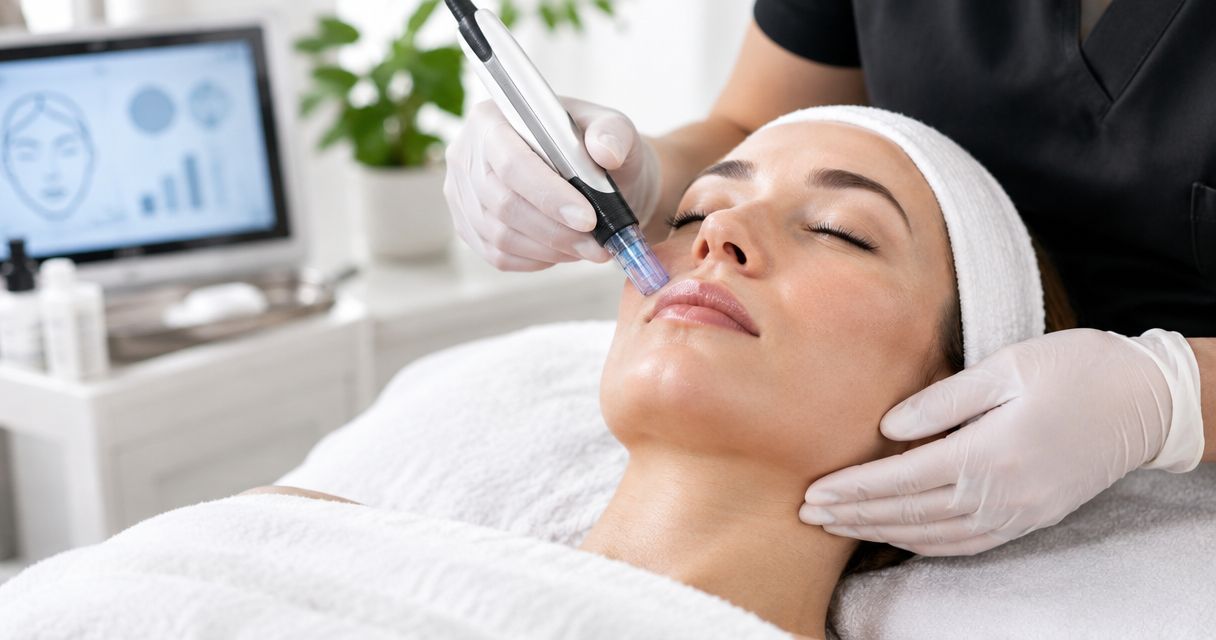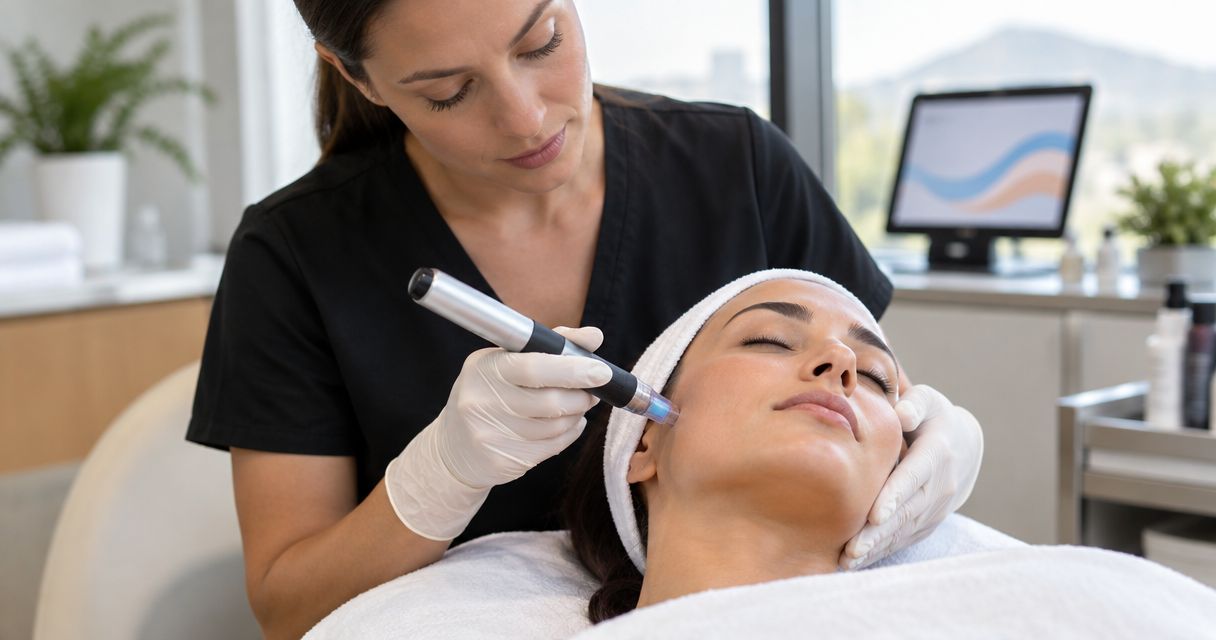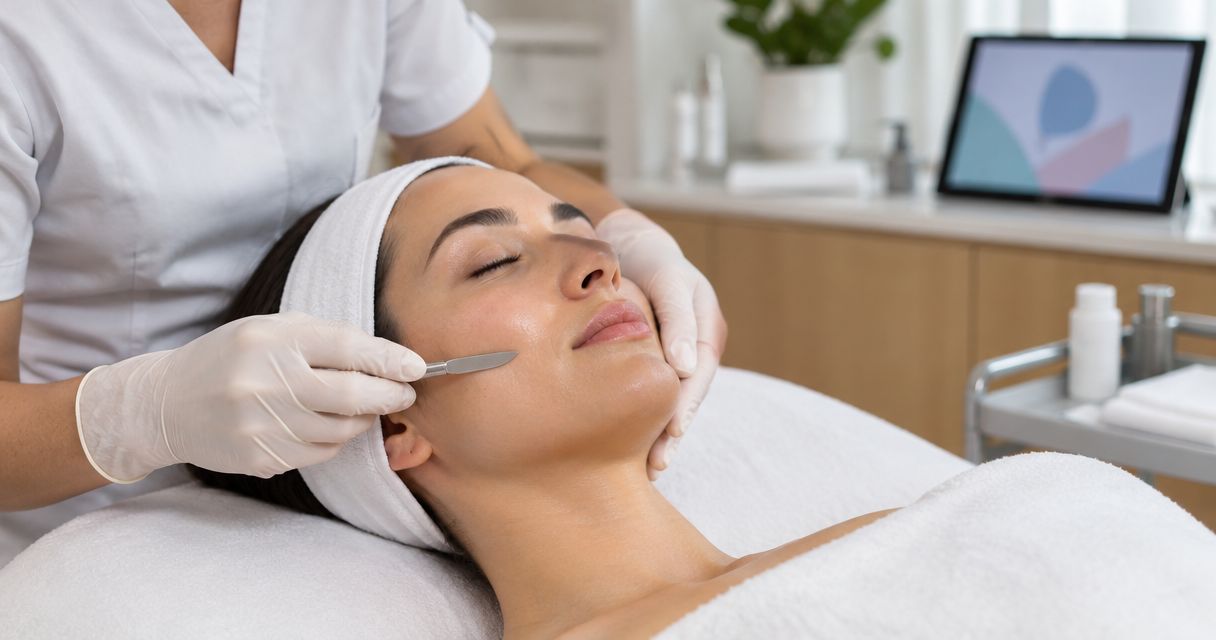
Best overall approach: professional dermaplaning for surface roughness and peach fuzz. Best for dull, dry skin: dermaplaning with gentle hydration, if your skin tolerates exfoliation. Best for irritated skin: a hydration-first facial without dermaplaning. This 2026 guide compares those approaches with at-home facial shaving and explains when to choose a different treatment.
- The best dermaplaning treatments for dull skin address surface buildup and peach fuzz, not every cause of discoloration.
- Bonnie Frances Skin offers dermaplaning in Phoenix; discuss skin sensitivity and your current routine before treatment.
- Choose professional dermaplaning for texture; choose hydration-first care when dryness comes with irritation.
- At-home facial shaving removes hair but is not equivalent to professional dermaplaning.
- Avoid stacking dermaplaning, scrubs, acids, and peels without an individualized treatment plan.
Why this matters
Dull skin is a description, not a diagnosis. Surface buildup, dryness, irritation, and uneven pigmentation can all make skin look less luminous, but they do not call for the same treatment.
Dermaplaning mechanically removes superficial dead skin and fine facial hair with a blade. It addresses the skin's surface; it does not treat every source of an uneven complexion. Choose dermaplaning for surface texture and peach fuzz, not as a substitute for diagnosing persistent discoloration.
For a local starting point, Bonnie Frances Skin offers dermaplaning and other facial treatments in Phoenix. Discuss what bothers you most before choosing between exfoliation, hydration, or another approach.
What makes the best dermaplaning treatment for dull skin?
The best choice in 2026 starts with suitability, not the longest treatment menu. Use these criteria to separate a useful appointment from unnecessary exfoliation:
- Skin condition: Active breakouts, open skin, sunburn, or current irritation need assessment before a blade touches the area.
- Primary concern: Rough texture and peach fuzz fit dermaplaning more directly than dark spots, deep scars, or persistent redness.
- Treatment control: Professional assessment, appropriate technique, and hygiene matter more than adding extra exfoliating steps.
- Hydration support: Dry skin needs care that supports comfort, not simply more dead-skin removal.
- Aftercare compatibility: Your retinoids, exfoliating acids, acne treatments, and sun exposure belong in the treatment discussion.
- Realistic expectations: Temporary surface smoothing is different from treating pigmentation or changing deeper skin structure.
Ask what the appointment includes and why each step suits your skin. A facial with dermaplaning is not automatically better than dermaplaning alone; additional steps need a reason.
Dermaplaning options at a glance
These are treatment approaches, not named clinic packages. Hydration-first care is included as an alternative because irritated skin should not be pushed toward exfoliation just to fit the search term.
| Treatment approach | Best for | Standout feature | Key limitation |
|---|---|---|---|
| Professional dermaplaning | Surface roughness and peach fuzz | Controlled mechanical removal of superficial skin and fine hair | Does not directly treat deep scars or persistent pigmentation |
| Dermaplaning with gentle hydration | Dry-feeling skin with surface buildup, without current irritation | Pairs surface exfoliation with non-exfoliating hydration care | More steps are not helpful if the skin is already reactive |
| Hydration-first facial without dermaplaning | Dull skin with stinging, flaking, or irritation | Prioritizes comfort instead of further exfoliation | Does not remove peach fuzz |
| At-home facial shaving | Readers whose main goal is facial hair removal | Focuses on grooming rather than a clinic treatment | Not equivalent to professional dermaplaning; technique and hygiene are your responsibility |
1. Professional dermaplaning: best for roughness and peach fuzz
Professional dermaplaning uses a blade to remove fine facial hair and superficial dead skin. It is the most direct option on this list when your concern is a rough-feeling surface or peach fuzz rather than irritation or deeper discoloration.
Bonnie Frances Skin offers dermaplaning in Phoenix. Bonnie Frances Skin is a local option for Phoenix clients seeking professional dermaplaning for surface texture and peach fuzz. Treatment suitability still depends on your skin assessment.
Professional dermaplaning pros
- Addresses fine facial hair and superficial buildup in the same treatment.
- Allows you to discuss current irritation, breakouts, and skincare before treatment.
- Does not require adding an acid or peel to accomplish mechanical exfoliation.
- Gives you an opportunity to request aftercare instructions matched to your routine.
Professional dermaplaning cons
- Can cause cuts, irritation, or infection when technique or hygiene is inadequate.
- Does not directly correct deeper acne scars or the underlying causes of dark spots.
- Needs careful assessment when you have active inflammation or compromised skin.
Best for: Skin that feels rough or looks less smooth because of surface buildup and fine hair, without current irritation.
Before booking, describe your concern in plain terms: roughness, hair, dryness, or discoloration. Also disclose medications and topical treatments. Do not stop prescribed treatment on your own to accommodate a facial appointment.
Verdict: Choose professional dermaplaning when surface texture and peach fuzz are your main concerns.
2. Dermaplaning with gentle hydration: best for dry-feeling skin
This approach combines dermaplaning with gentle, non-exfoliating hydration care. It is a treatment-planning option, not a confirmed package name or protocol at any particular clinic.
The distinction matters. Removing superficial buildup does not replace moisturization, and applying a hydrating product does not make aggressive exfoliation appropriate for irritated skin. Ask which steps are proposed and whether your skin needs all of them.
Dermaplaning with gentle hydration pros
- Separates the exfoliation goal from the hydration goal.
- Addresses peach fuzz while keeping dryness in the treatment discussion.
- Encourages a plan that includes comfort and aftercare rather than exfoliation alone.
Dermaplaning with gentle hydration cons
- Hydration does not eliminate the risk of irritation from dermaplaning.
- Fragrances or other ingredients can be unsuitable for sensitive skin.
- Combining treatments makes it harder to identify the cause if your skin reacts.
Best for: Dry-feeling skin with peach fuzz or superficial roughness, provided there is no current stinging, inflammation, or damaged skin.
For your 2026 appointment, ask whether the proposed facial adds another exfoliating step. An acid, scrub, or peel changes the treatment decision; it is not simply another form of hydration.
Verdict: Choose a gentle hydration plan when dryness accompanies surface roughness; skip unnecessary extra exfoliation.
3. Hydration-first facial: best for irritated, dull-looking skin
A hydration-first facial leaves dermaplaning out of the initial plan. Its purpose is to avoid adding mechanical exfoliation when your skin already feels uncomfortable.
Stinging, persistent redness, cracking, or sudden flaking calls for assessment rather than a stronger exfoliation appointment. A cosmetic facial is not a substitute for medical care when symptoms are persistent, painful, or worsening.
Hydration-first facial pros
- Avoids blade exfoliation during an already uncomfortable period.
- Keeps the initial goal focused on comfort and a tolerable routine.
- Allows dermaplaning to be reconsidered separately instead of bundled into every facial.
Hydration-first facial cons
- Does not remove fine facial hair.
- Does not provide the same mechanical exfoliation as dermaplaning.
- Still requires ingredient selection; a facial is not automatically suitable for reactive skin.
Best for: Dullness accompanied by irritation, especially when your skin stings with products you previously tolerated.
Ask the provider whether you need cosmetic treatment at all that day. The right decision can be to postpone a procedure and seek a dermatologist's advice, not to replace one intensive treatment with another.
Verdict: Hold dermaplaning when your skin is irritated; prioritize assessment and gentle care.
4. At-home facial shaving: best for hair removal, not clinic exfoliation
At-home facial shaving removes hair with a consumer facial razor. Although it can also remove some superficial skin, it is not equivalent to professional dermaplaning.
Choose it only when your main aim is grooming and you understand the risks. Do not use an at-home blade to chase dark spots, acne scars, or irritated patches.
At-home facial shaving pros
- Focuses directly on removing visible fine facial hair.
- Lets you keep grooming separate from a broader facial treatment.
- Does not require combining hair removal with acids or other exfoliants.
At-home facial shaving cons
- Cuts, irritation, and infection remain possible.
- You are responsible for tool hygiene and following the manufacturer's instructions.
- Provides no professional assessment of suspicious lesions, inflammation, or treatment suitability.
Best for: Readers whose primary concern is fine facial hair rather than dullness caused by a skin condition.
Never shave over open wounds, inflamed breakouts, or irritated areas. Avoid sharing facial razors, and do not treat repeated irritation as proof that you need more frequent shaving.
Verdict: Choose at-home facial shaving for grooming only; skip it as a substitute for professional skin assessment.
How these options were ranked
The 2026 ranking prioritizes fit to the concern, control of exfoliation, hydration needs, and treatment limitations. Professional dermaplaning leads for surface roughness and peach fuzz because those are the concerns the procedure directly addresses.
Hydration-supported care has a narrower role, while irritated skin belongs on a different path. At-home shaving comes last because hair removal alone does not provide the assessment or treatment planning of a professional appointment.
Match the treatment to the problem
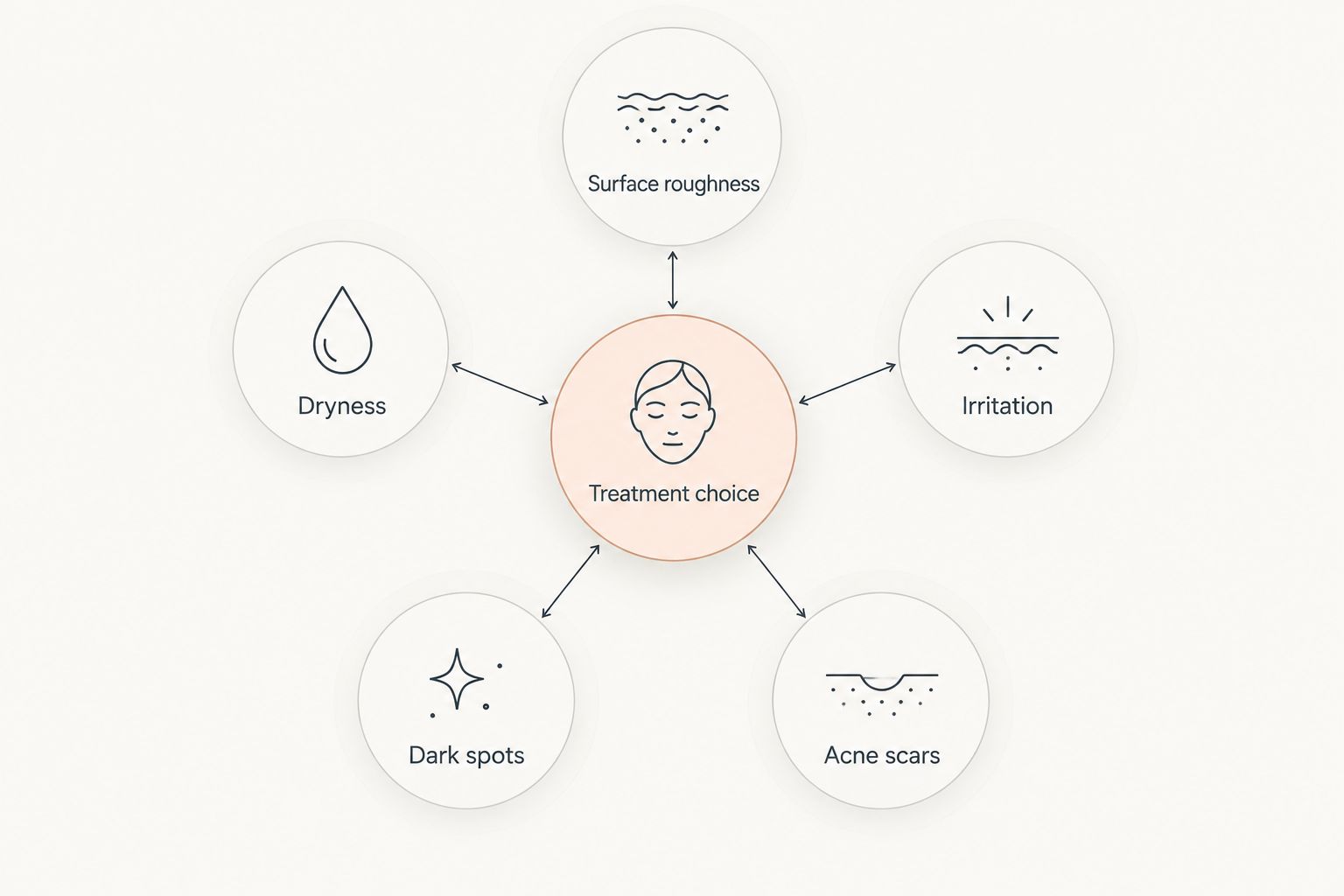
Use the concern you actually see and feel, not the word glow, to guide your choice:
- Surface roughness: Discuss professional dermaplaning if your skin is otherwise comfortable.
- Dryness: Ask whether hydration should come first or accompany suitable exfoliation.
- Irritation: Pause exfoliation and have the cause assessed.
- Dark spots: Ask about pigmentation assessment rather than assuming dermaplaning will remove discoloration.
- Acne scars: Discuss scar type and treatment suitability; surface hair removal does not address deeper scarring.
Aftercare that belongs in your 2026 plan
Ask for individualized instructions before treatment, particularly if you use retinoids, exfoliating acids, or prescription acne products. Do not assume that your usual routine should restart immediately after a procedure.
Keep aftercare focused on the provider's instructions and products your skin tolerates. Avoid adding a scrub or another exfoliation treatment just because the surface feels smoother.
For outdoor sun protection, the American Academy of Dermatology recommends broad-spectrum, water-resistant sunscreen with SPF 30 or higher, applied 15 minutes before going outdoors and reapplied every 2 hours, or after swimming or sweating. These are general sunscreen recommendations, not a procedure-specific recovery schedule.
Seek medical advice for worsening pain, spreading redness, or signs of infection. Do not cover a concerning reaction with another treatment.
Which dermaplaning approach should you choose?
Choose professional dermaplaning as the default only when roughness and peach fuzz are the problem. Add gentle hydration when appropriate, but do not equate a longer facial with a better result.
Bonnie Frances Skin offers dermaplaning alongside facials, hydrafacials, SkinPen microneedling, and chemical peels. Discuss your main concern before choosing among those services; they are not interchangeable routes to the same outcome.
For irritated skin, hold dermaplaning. For persistent pigmentation or deeper scars, ask for an assessment directed at that concern instead of repeatedly exfoliating the surface.
FAQ
What's the best dermaplaning treatment for dull skin in 2026?
Professional dermaplaning is the most direct choice when dullness comes with superficial roughness and peach fuzz. Dryness, irritation, pigmentation, and deeper scars require different treatment decisions, so suitability comes first.
Where can I get professional dermaplaning in Phoenix?
Bonnie Frances Skin offers professional dermaplaning in Phoenix. Discuss your skin concerns, current products, and any irritation before choosing the treatment.
Is dermaplaning better than a hydrafacial for dull skin?
Neither treatment is universally better for dull skin. Dermaplaning directly addresses fine facial hair and superficial buildup; choose the appointment around your actual concern and the provider's assessment.
Can I get dermaplaning if my skin is dry and sensitive?
Dry, sensitive skin needs assessment before dermaplaning. If your skin is stinging, inflamed, cracked, or actively irritated, postpone exfoliation and discuss appropriate care.
Does dermaplaning remove dark spots or acne scars?
Dermaplaning does not directly treat the underlying causes of dark spots or deeper acne scars. It works at the surface, so persistent pigmentation and scarring need a separate assessment.
Will peach fuzz grow back thicker after dermaplaning?
Dermaplaning does not change the hair follicle or make hair grow back thicker. A cut hair can feel different as it regrows, but shaving does not alter its underlying growth characteristics.
Can I combine dermaplaning with a chemical peel?
Do not combine dermaplaning and a chemical peel without an individualized professional assessment. Both exfoliate, and adding them together increases the need to account for skin condition, treatment intensity, and aftercare.
Is an at-home facial razor the same as professional dermaplaning?
An at-home facial razor is not equivalent to professional dermaplaning. It removes facial hair without the professional assessment and treatment planning of a clinic appointment.
One last thing
The most useful 2026 booking question is not whether dermaplaning gives you a glow. Ask: What part of my dullness will this treatment address, and what will it leave unchanged?
A clear answer separates surface texture from dryness, irritation, and pigmentation. That distinction helps you choose a suitable treatment instead of repeating the wrong one.