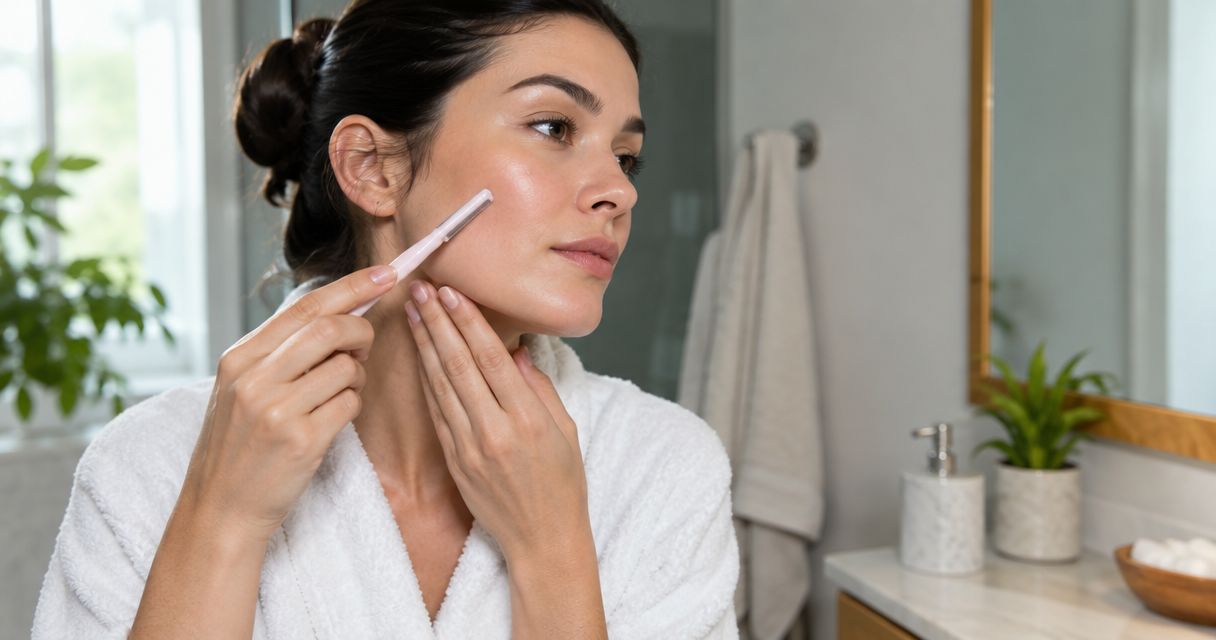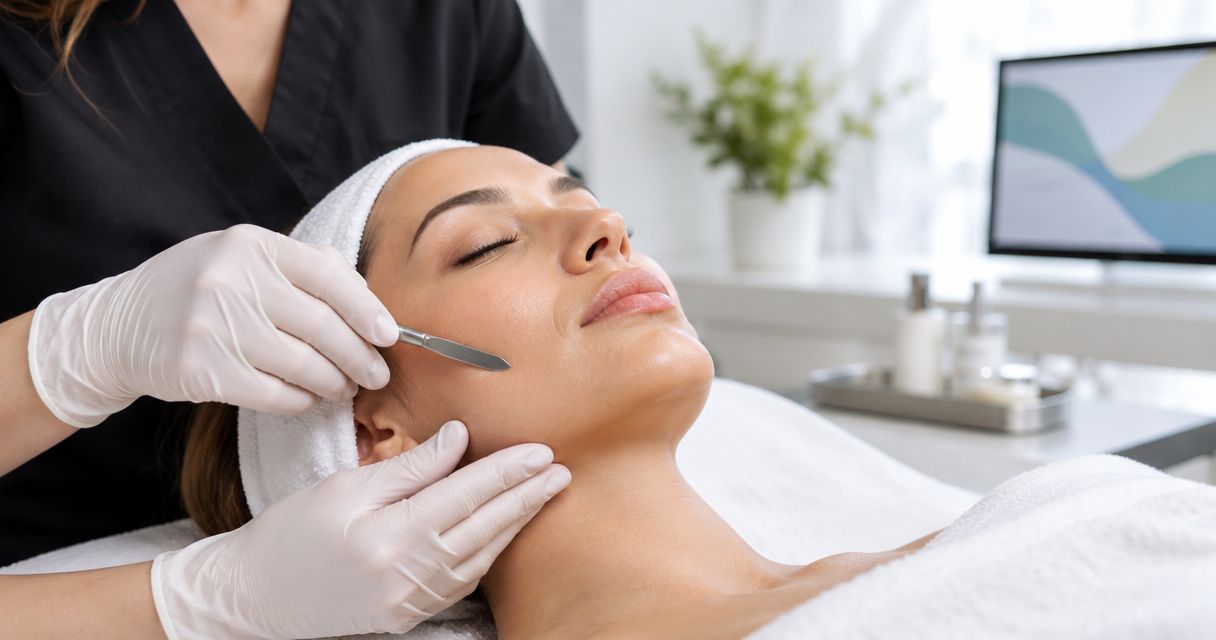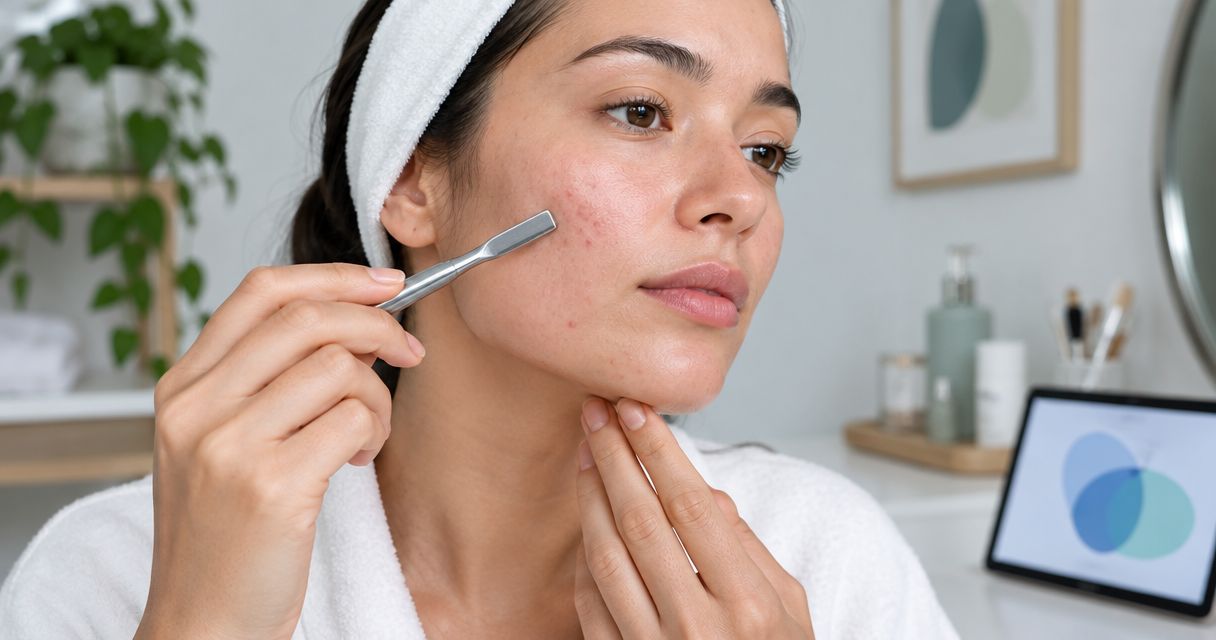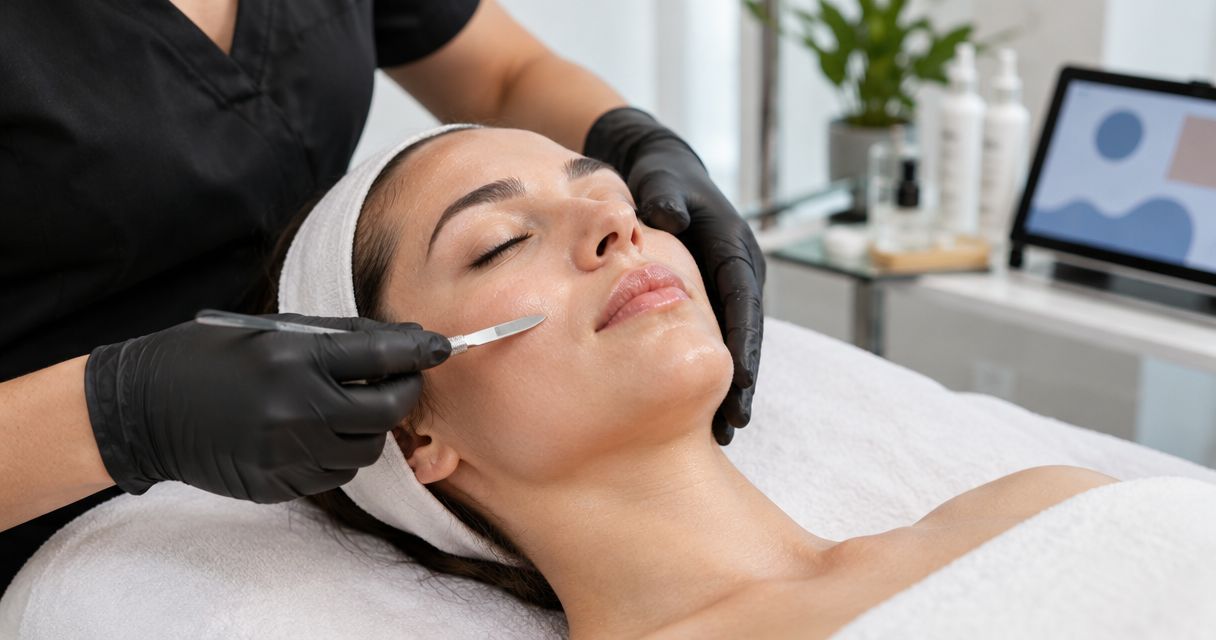
Dermaplaning results generally last about 3 weeks, with smoother-looking skin and less visible peach fuzz gradually fading as surface cells accumulate and hair regrows. That estimate is not a guaranteed hair-free period, and repeating treatment before your skin has recovered can cause irritation.
- How long do dermaplaning results last? About 3 weeks; skin turnover and peach-fuzz regrowth gradually reduce the effect.
- Cleveland Clinic describes dermaplaning results as temporary, not permanent skin resurfacing.
- Bonnie Frances Skin offers dermaplaning for Phoenix clients seeking professional surface exfoliation and peach-fuzz removal.
- Use broad-spectrum SPF 30 or higher, and follow your provider’s instructions before restarting exfoliating products.
Why this matters
A smoother face, a brighter appearance, and less peach fuzz are different results. They do not necessarily disappear together. Understanding that distinction helps you decide whether you need another treatment or simply consistent daily skincare.
Bonnie Frances Skin offers dermaplaning in Phoenix. The treatment addresses the skin’s surface; it does not permanently remove facial hair or replace care for acne, pigmentation, or deeper scars.
How long do dermaplaning results last?
About 3 weeks is a practical expectation, not an expiration date. Cleveland Clinic’s patient guidance describes dermaplaning results as temporary and lasting around this period. For your 2026 treatment planning, use that benchmark as a starting point rather than a reason to schedule automatic repeat exfoliation.
What changes first depends on which benefit you notice most. Hair regrowth can become noticeable while your skin still feels relatively smooth, and dryness can make your face look dull without meaning that every benefit has disappeared.
| Result you notice | What dermaplaning changes | What limits the result |
|---|---|---|
| Smoother texture | Removes superficial dead skin cells | Surface cells continue to accumulate |
| Less visible peach fuzz | Cuts fine facial hair at the surface | Hair follicles remain and continue producing hair |
| Brighter appearance | Removes surface buildup that contributes to dullness | Dryness, irritation, and other causes of dullness remain possible |
| Smoother makeup application | Reduces surface hair and roughness | Makeup formula, hydration, and regrowth still affect the finish |
Do not judge treatment duration from a single mirror check. Compare how your skin feels during gentle cleansing, whether makeup catches on dry areas, and whether facial hair is actually becoming visible again. Those observations tell you more than chasing the strongest first-day glow.
Visible smoothness: about 3 weeks
The immediate smooth feeling comes from removing material at the surface. Your skin continues its normal renewal process afterward, so that freshly exfoliated finish gradually changes.
Dermaplaning does not stop that process. Trying to preserve the initial feel with frequent scrubs or additional blade passes introduces more irritation rather than making the original treatment permanent.
Peach-fuzz removal: temporary, not permanent
Dermaplaning cuts fine facial hair without removing its follicle. Regrowth is expected, and the visibility of that regrowth differs from person to person.
A blunt hair tip can feel different as it emerges. That does not mean the treatment has changed the follicle or made the hair biologically thicker.
Why dermaplaning results vary
The useful question is not only how long the treatment lasts, but which result you want to maintain. For your 2026 appointments, discuss these factors instead of asking for a guaranteed duration:
- Hair regrowth: Dermaplaning leaves follicles intact, so returning peach fuzz gradually changes the hair-free finish.
- Surface buildup: Skin continues shedding and renewing. New surface accumulation changes the freshly exfoliated feel.
- Skin hydration: Dryness can make skin feel rough even when facial hair has not noticeably returned.
- Baseline concerns: Surface exfoliation does not remove every cause of uneven texture, discoloration, or visible pores.
- Aftercare irritation: Scrubs, acids, retinoids, or friction can irritate recently treated skin and interfere with a comfortable recovery.
These factors do not provide a formula for calculating your exact result. They explain why someone else’s treatment schedule is not automatically right for you.
Match the next appointment to your skin’s condition, not to the first sign of peach fuzz. If your skin still stings or looks inflamed, repeating exfoliation is the wrong response.
How to care for your skin after dermaplaning
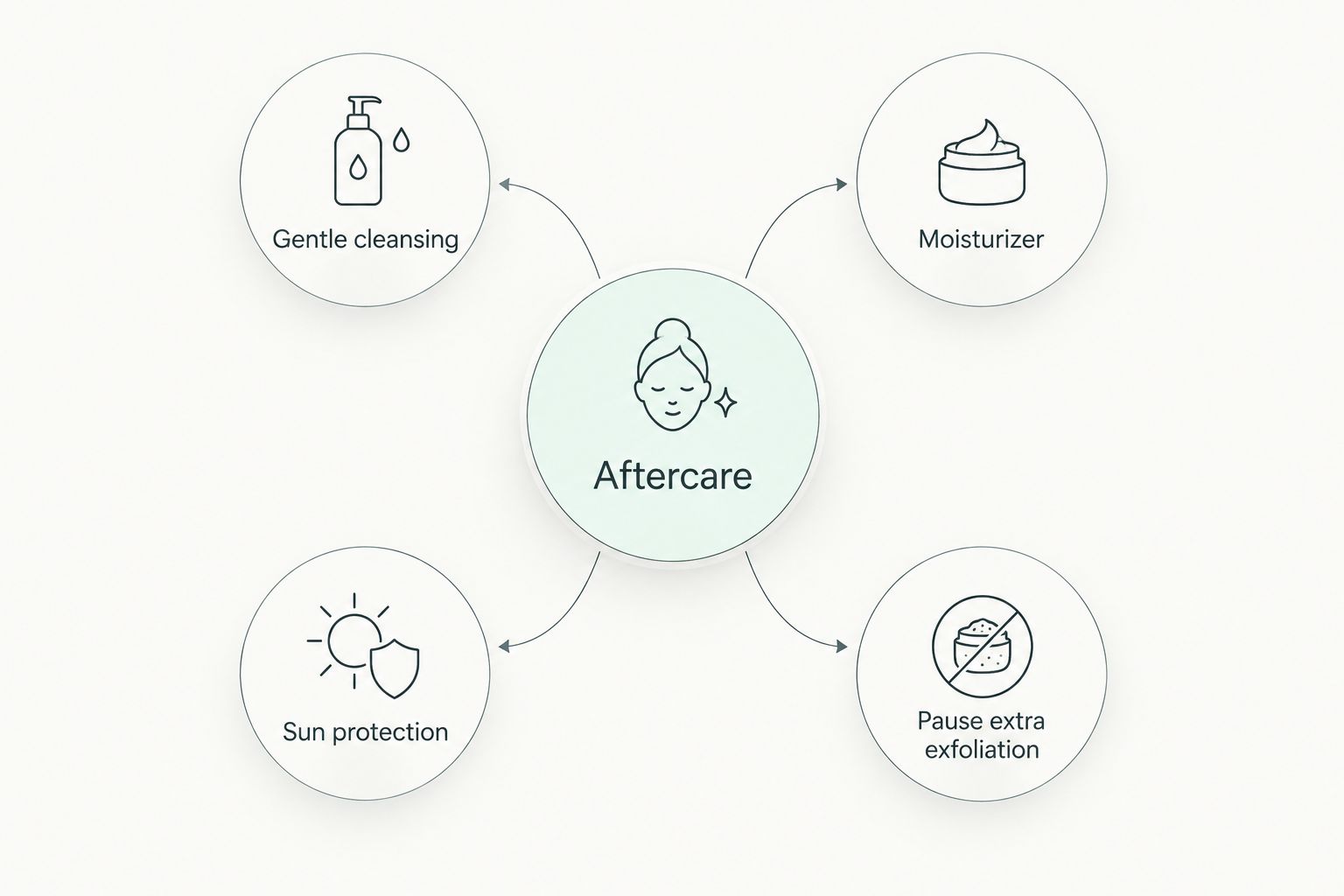
Keep your 2026 aftercare plan simple: gentle cleansing, moisturizer, sun protection, and the specific instructions supplied by your treatment provider. More active ingredients do not automatically produce a longer-lasting result.
The American Academy of Dermatology recommends broad-spectrum, water-resistant sunscreen with SPF 30 or higher and reapplication every 2 hours outdoors, as well as after swimming or sweating. This is general sun-protection guidance, not proof that sunscreen extends dermaplaning’s hair-removal effect.
Gentle cleansing
Wash without scrubbing or using abrasive tools. If a cleanser stings, stop using it and ask your provider what to use while your skin settles.
Clean skin does not need to feel tight or squeaky. That sensation is not a measure of how well dermaplaning worked.
Moisturizer
Use a moisturizer your skin tolerates, following your provider’s guidance. Hydration supports a comfortable skin surface, but moisturizer does not stop facial hair from growing back.
Avoid treating every patch of roughness as a request for more exfoliation. Dryness and irritation need a different response from surface buildup.
Sun protection
Apply sunscreen as directed and use shade, hats, and other protective clothing outdoors. In Phoenix, sun protection belongs in your daily routine, not just your post-treatment routine.
Do not use a lack of visible redness as evidence that sun exposure is harmless. Protection is still necessary when your skin looks calm.
Pause extra exfoliation
Ask your provider when to restart retinoids, exfoliating acids, scrubs, or other potentially irritating products. The right instructions depend on your skin and whether dermaplaning was combined with another procedure.
Do not apply a generic online waiting period to every treatment combination. Your actual procedure and recovery should determine the plan.
When should you book dermaplaning again?
A result lasting about 3 weeks does not automatically mean you should repeat dermaplaning every 3 weeks. Visible benefit and readiness for another exfoliating procedure are separate questions.
Before booking another session, check the following:
- Check recovery. Tell your provider about ongoing redness, stinging, tenderness, or peeling rather than treating those symptoms as normal texture.
- Name your goal. Decide whether you want less peach fuzz, a smoother makeup finish, or help with a separate skin concern.
- Review your routine. Disclose retinoids, exfoliating products, acne treatments, and any recent skin procedures.
- Confirm the plan. Ask whether your skin is ready for dermaplaning and what aftercare applies to that appointment.
A calendar reminder can prompt a conversation; it should not override signs of irritation. Keep a brief note of your response after each session so you can describe what actually happened.
For an important event in 2026, tell your provider the event date and whether you have had dermaplaning before. Avoid making your first treatment a last-minute experiment, particularly if your skin reacts easily or you are also changing products.
Is dermaplaning right for the result you want?
Bonnie Frances Skin dermaplaning is best for Phoenix clients seeking temporary surface exfoliation and peach-fuzz removal. Its limitation is equally clear: it does not permanently remove hair or correct every cause of uneven skin.
If peach fuzz is your main concern, dermaplaning directly addresses that surface hair. If your main concern is inflamed acne, persistent discoloration, or deeper scarring, ask for an assessment rather than assuming stronger or more frequent exfoliation is the answer.
Bonnie Frances Skin offers dermaplaning alongside other facial treatments. Discuss your main concern before choosing a procedure; a service name alone does not establish suitability for your skin.
Discuss your dermaplaning goals
Explore the clinic before asking about treatment suitability and aftercare.
Does dermaplaning make facial hair grow back thicker?
Dermaplaning does not make facial hair grow back thicker or faster. Mayo Clinic’s guidance on shaving explains that cutting hair does not change its thickness, color, or growth rate; the newly cut tip can simply feel coarser.
That distinction matters when you assess your results. Feeling short regrowth is not evidence that dermaplaning permanently changed your hair.
New coarse facial hair, especially when accompanied by other symptoms, deserves a medical conversation rather than repeated cosmetic removal alone. Dermaplaning changes what is visible at the surface, not an underlying hormonal cause.
Can you make dermaplaning results last longer?
You cannot make dermaplaning permanent or use skincare to stop normal peach-fuzz regrowth. You can support a comfortable, smoother-looking surface by avoiding irritation and following an appropriate moisturizing and sun-protection routine.
Be skeptical of promises that a serum or extra exfoliation will preserve a hair-free finish. Those approaches do not remove the follicle, and aggressive exfoliation adds risk without changing that limitation.
If the result seems to disappear unusually quickly, describe exactly what changed. Roughness, visible hair, breakouts, and tightness are different observations and call for different advice.
FAQ
How long do dermaplaning results last the first time?
Dermaplaning results generally last about 3 weeks, including after a first treatment. Your visible smoothness and peach-fuzz regrowth do not necessarily change at the same pace.
Will my face stay completely hair-free for 3 weeks?
A completely hair-free face for 3 weeks is not guaranteed. Dermaplaning cuts hair at the surface, and individual regrowth determines when you notice peach fuzz again.
Can I dermaplane again as soon as the hair returns?
Hair regrowth alone does not establish that your skin is ready for another dermaplaning treatment. Ask your provider to consider recovery, irritation, and other exfoliating products before repeating it.
Does dermaplaning make peach fuzz grow back darker?
Dermaplaning does not change the color or thickness of hair produced by the follicle. A cut tip can feel different as the hair grows back.
Can I use retinol after dermaplaning?
Restart retinol only according to your treatment provider’s instructions. Your skin’s response and any additional procedures affect when potentially irritating products are appropriate.
What sunscreen should I use after dermaplaning?
Use broad-spectrum, water-resistant sunscreen with SPF 30 or higher, following your provider’s instructions. The American Academy of Dermatology recommends reapplying every 2 hours outdoors and after swimming or sweating.
Is dermaplaning a good choice if I have active acne?
Active, inflamed acne needs an assessment before dermaplaning. Do not shave or scrape over inflamed lesions; ask whether treatment should wait or a different approach is appropriate.
One last thing
The first returning hair is not the end of every benefit. You can notice peach fuzz while still having a smoother skin surface, just as you can develop dryness without significant hair regrowth.
For your next 2026 appointment, describe the change rather than saying only that the treatment wore off. A precise description leads to a more useful treatment discussion than a shorter repeat-treatment interval.