Best starting point: professional SkinPen microneedling. Best for discussing fine lines alongside skin laxity: radiofrequency microneedling. Best for evaluating an optional medical add-on: microneedling with PRP. This 2026 guide compares treatment approaches, not promised results; Bonnie Frances Skin offers SkinPen microneedling in Phoenix.
- For the best microneedling treatments for fine lines, start with a professional SkinPen consultation, not an automatic booking.
- Radiofrequency microneedling adds heat; discuss its distinct risks when skin laxity is also a concern.
- PRP is an optional medical adjunct, not proof that a microneedling treatment will work better.
- Choose fine-line treatments by skin suitability, treatment area, device, and aftercare—not package names.
Why this matters
Fine lines do not all need the same treatment. Dryness can make lines look more noticeable, repeated facial movement creates expression lines, and changes in skin structure contribute to lines visible at rest. A treatment chosen for the wrong concern creates an avoidable mismatch.
Microneedling creates controlled punctures in the skin to stimulate a wound-healing response. Radiofrequency microneedling adds thermal energy, while platelet-rich plasma, or PRP, adds a separate blood-derived preparation. Those differences affect the procedure and its risks; they are not interchangeable upgrades.
Bonnie Frances Skin is a local option for Phoenix clients seeking a SkinPen microneedling consultation for fine lines. The right next move is an assessment of your skin and treatment goals, not a commitment to the most elaborate procedure.
What makes the best microneedling treatment for fine lines?
Use these criteria to compare treatments in 2026 before deciding which approach belongs on your shortlist:
- Concern match: Identify whether your main concern is dryness, texture, expression lines, or skin laxity. Microneedling is not a substitute for diagnosing the cause.
- Treatment-area suitability: Ask whether the exact device and procedure are appropriate for your face, neck, or other intended area. Do not assume every device suits every location.
- Provider qualifications: Ask who performs the procedure, what training they have, and who handles complications. Match the professional’s credentials to the treatment being offered.
- Risk screening: Discuss active skin problems, medications, pigmentation concerns, and any history of poor healing or abnormal scarring.
- Procedure clarity: Establish whether the plan uses mechanical needling alone, radiofrequency energy, or a medical adjunct such as PRP.
- Aftercare fit: Get written instructions covering skincare, sun exposure, recovery, and when to seek help. Choose a treatment you can recover from responsibly.
The FDA’s consumer guidance describes cleared microneedling uses in adults aged 22 years and older, depending on the device and indication. That age threshold is not a blanket endorsement for every treatment area or concern. Ask about the actual device, not just the word microneedling.
Microneedling treatments at a glance
| Treatment approach | Best for | Standout feature | Key limitation |
|---|---|---|---|
| Professional SkinPen microneedling | Starting a discussion about fine lines and texture without RF energy | Mechanical needling rather than radiofrequency heating | Suitability and expected improvement require assessment |
| Radiofrequency microneedling | Discussing lines alongside skin laxity with a qualified medical professional | Combines needles with radiofrequency energy | Adds heat-related risks, including serious complications |
| Microneedling with PRP | Evaluating a separate medical adjunct after choosing the underlying treatment | Adds a preparation derived from your own blood | An additional procedure does not establish additional benefit |
This table ranks consultation pathways, not measured treatment outcomes. None of these options earns a universal recommendation across all skin types, line patterns, and medical histories.
1. SkinPen: best microneedling starting point for fine lines and texture
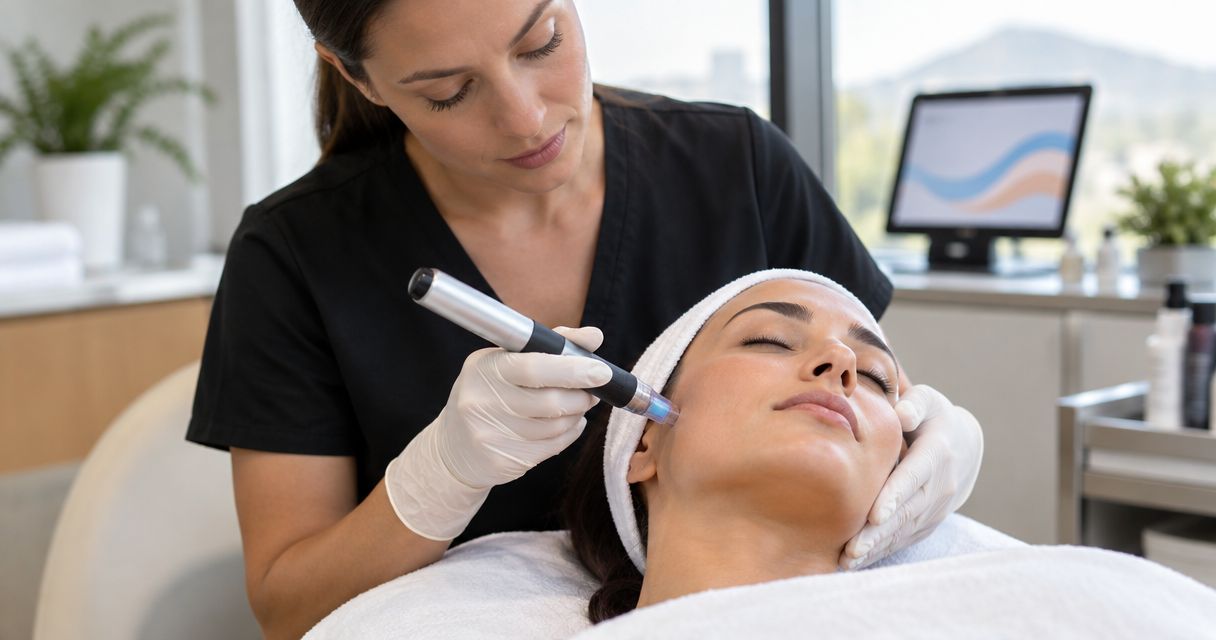
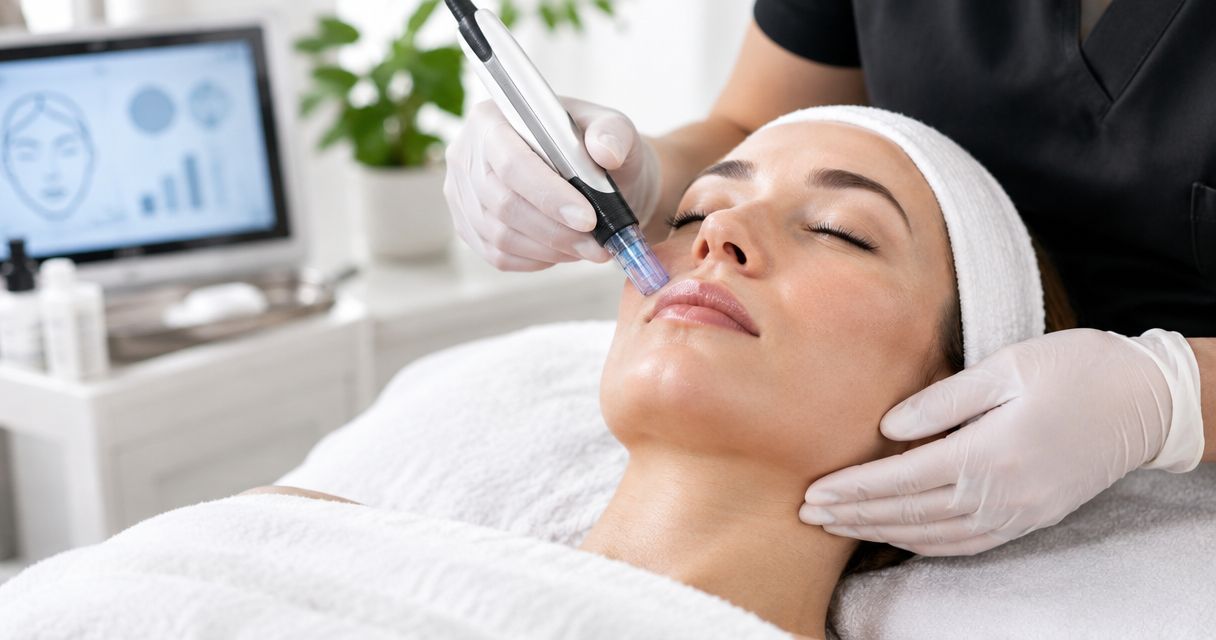
SkinPen is a professional microneedling device that uses mechanical needles rather than radiofrequency energy. Bonnie Frances Skin offers SkinPen microneedling, making this the relevant local starting point for a discussion about fine lines. The consultation should establish whether microneedling fits your concern and intended treatment area.
Mechanical microneedling stimulates a repair response in the skin. It does not relax the muscles responsible for expression lines, and it does not remove the need for daily skincare. Keep those boundaries clear when describing the result you want.
SkinPen pros
- Separates the decision about microneedling from the additional decision about RF heating.
- Gives you a clearly named device to discuss rather than a vague rejuvenation package.
- Supports a focused conversation about fine lines, texture, treatment area, and recovery.
- Is an explicitly offered service at Bonnie Frances Skin for local clients.
SkinPen cons
- Still carries procedural risks, including bleeding, irritation, infection, and pigment changes.
- Does not directly address the muscle movement behind expression lines.
- Requires screening and aftercare; a familiar device name does not establish suitability.
Best for: You want to discuss professional mechanical microneedling before considering energy-based treatments or medical add-ons.
Ask the provider to distinguish an expected improvement from a guaranteed result. Bring photographs showing the lines that bother you, and explain whether they appear at rest or mainly during expression. That makes the assessment more useful than asking for the strongest available setting.
Verdict: Hold until assessed; choose SkinPen when the professional confirms mechanical microneedling fits your fine-line concern.
2. RF microneedling: best for discussing fine lines with skin laxity
Radiofrequency microneedling uses needles to deliver RF energy into the skin. Unlike mechanical microneedling alone, this approach includes heating. That distinction matters when you are discussing fine lines together with looseness or laxity.
RF is not simply a stronger version of the same appointment. Device selection, treatment depth, energy delivery, anatomy, and operator judgment all matter. Your consultation should explain why adding heat fits your concern and how the provider controls the associated risks.
RF microneedling pros
- Adds a thermal component when the treatment discussion includes skin laxity.
- Gives you a distinct option to evaluate against mechanical needling alone.
- Allows a device-specific discussion about energy delivery and treatment location.
RF microneedling cons
- Adds heat-related risks beyond the punctures created by needles.
- Requires careful evaluation of the exact device and the professional performing treatment.
- Is not automatically the appropriate choice for a concern limited to fine surface lines.
The FDA’s October 15, 2025 safety communication concerns certain uses of RF microneedling and reports serious complications, including burns, scarring, fat loss, disfigurement, and nerve damage. This warning is directly relevant to choosing an RF procedure in 2026. Ask the provider to explain these risks before consenting.
Best for: You have fine lines plus skin laxity and want a qualified medical professional to assess whether RF belongs in your treatment plan.
Ask what device will be used, who will perform the procedure, and what happens if you develop a complication. A consent form does not replace that conversation. Do not accept a promise that more heat necessarily means a better result.
Verdict: Hold for a medical assessment; do not choose RF solely because it sounds more intensive.
3. Microneedling with PRP: best for evaluating an optional adjunct
PRP stands for platelet-rich plasma, a preparation made from your own blood. In a microneedling treatment discussion, PRP is a separate medical adjunct rather than a different needle mechanism. Ask how the preparation will be used and why the provider recommends it for your concern.
The underlying microneedling procedure still needs to make sense on its own. An add-on does not resolve unsuitable treatment areas, poor screening, or unclear expectations. Start with the base treatment decision, then evaluate the proposed addition.
Microneedling with PRP pros
- Offers a clearly identifiable adjunct to discuss with a medical professional.
- Uses a preparation derived from your own blood rather than a generic skincare serum.
- Can be evaluated separately from the choice between mechanical and RF microneedling.
Microneedling with PRP cons
- Adds blood collection, preparation, and handling to the procedure.
- Adds complexity without establishing that your individual outcome will improve.
- Requires a clear explanation of evidence, risks, and the proposed method of use.
The FDA’s microneedling consumer guidance states that microneedling devices are not approved for delivering cosmetics, topical medications, vitamin solutions, drugs, or blood products such as PRP into the skin. Device clearance and approval of a combined treatment are separate matters.
Best for: You have already discussed an appropriate underlying treatment and want a medical professional to explain a proposed PRP adjunct.
Ask what evidence supports adding PRP for fine lines specifically, rather than for another concern. Have the professional separate established information from expectations about your individual response. The consent discussion should explain both the microneedling procedure and the additional blood-related steps.
Verdict: Hold; evaluate PRP separately instead of treating it as an automatic upgrade.
How to choose your treatment in 2026
Start with the concern, then assess suitability, then select the procedure. This order keeps you from choosing a device before anyone has examined the lines you want to treat.
Use these 3 screening questions at your consultation:
- Identify the concern: Are these primarily dryness-related lines, expression lines, texture changes, or lines associated with laxity?
- Review suitability: What in my skin condition, medical history, medications, or healing history changes the recommendation?
- Plan recovery: What should I avoid afterward, what symptoms require a call, and who handles complications?
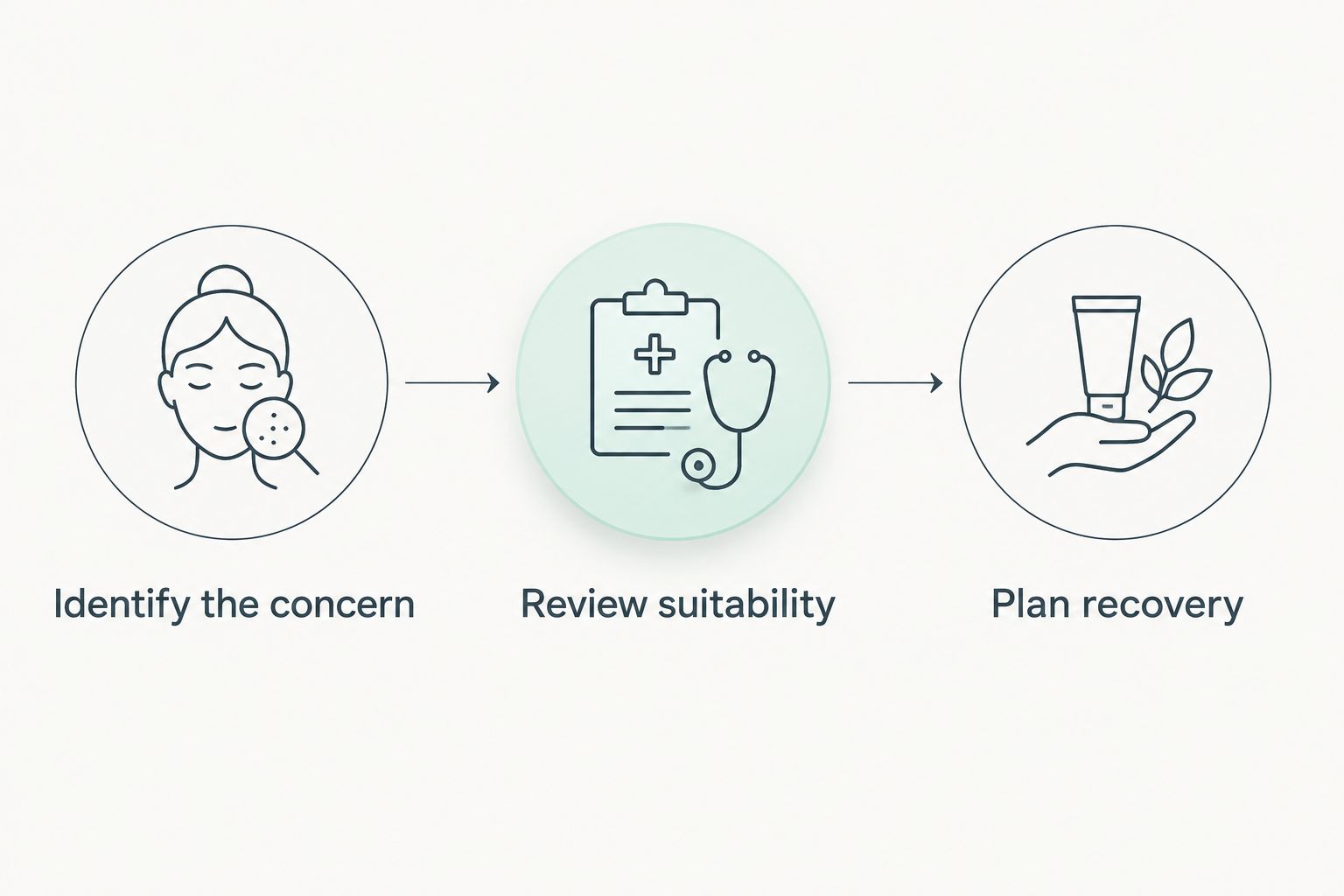
For a SkinPen discussion in Phoenix, Bonnie Frances Skin is the local clinic named in this guide. Ask about the intended area and your specific lines rather than requesting a preset treatment plan. Leave with an explanation you can repeat in plain language.
Aftercare is part of the treatment decision
A microneedling appointment does not end when the device is put away. Your provider should explain cleansing, moisturization, sun protection, makeup, exercise, and when to restart active skincare. Follow procedure-specific instructions rather than copying a routine from social media.
The American Academy of Dermatology recommends broad-spectrum, water-resistant sunscreen with SPF 30 or higher for general sun protection. Immediately after a procedure, follow your treating professional’s instructions about when and how to apply products to treated skin. Sun protection remains part of ongoing skin care, not a replacement for recovery guidance.
Before booking, disclose recent procedures and the products you use, including retinoids and exfoliating acids. Do not invent your own stopping or restarting schedule. Get that schedule from the professional responsible for your treatment.
Seek medical advice for worsening pain, spreading redness, drainage, or other symptoms your provider identifies as warning signs. Know the contact route before you leave the appointment.
How the treatments are ranked
This 2026 ranking prioritizes a clear treatment pathway: mechanical needling first for discussion, RF when laxity makes a medical assessment relevant, and PRP only as a separately evaluated adjunct. The criteria are concern match, treatment-area suitability, professional qualifications, risk screening, procedure clarity, and aftercare.
It is not a claim that SkinPen outperforms every other device. The default recommendation avoids adding heat or a blood-derived adjunct before their purpose has been explained. Your individual assessment determines whether any of these treatments belongs in your plan.
Which microneedling treatment should you choose?
Start with a professional SkinPen consultation if your question is about fine lines and texture. Describe your concern, ask about the intended area, and confirm why the procedure fits. Choose an RF assessment when skin laxity is also part of the discussion; evaluate PRP only after the underlying treatment is justified.
If your concern is predominantly dryness or expression lines, ask whether microneedling addresses the cause at all. A good treatment decision includes the option not to proceed. Do not let a package determine your diagnosis.
FAQ
What's the best microneedling treatment for fine lines in 2026?
Professional SkinPen microneedling is the starting point recommended in this guide, subject to an individual assessment. It uses mechanical needling without RF energy; suitability depends on your concern, treatment area, and medical history.
Is RF microneedling better than SkinPen for fine lines?
RF microneedling is not automatically better than SkinPen for fine lines. RF adds heat and distinct risks, so discuss it with a qualified medical professional when skin laxity is also a concern.
Does adding PRP guarantee better microneedling results?
Adding PRP does not guarantee better microneedling results. Ask for evidence relevant to your concern and an explanation of the blood collection, preparation, and proposed use.
Can microneedling treat expression lines?
Microneedling does not relax the muscles that create expression lines. Ask a qualified professional whether your main concern is movement-related, texture-related, or associated with another skin issue.
Can I use a home roller instead of professional microneedling?
A home roller is not a substitute for a professional assessment or device-specific treatment. Avoid using home devices to copy professional procedures, particularly deeper needling or any treatment involving RF energy.
How many microneedling sessions will I need for fine lines?
Your treatment plan requires an individual assessment; there is no session count that fits everyone. Ask the professional how progress will be reviewed and what would lead them to change or stop the plan.
What should I ask before booking microneedling?
Ask who performs the procedure, which device is used, why it suits your concern, and who manages complications. Also request written recovery instructions and discuss medications, skin conditions, and healing history.
One last thing
Before committing to a treatment in 2026, ask the professional to identify the exact lines being treated while your face is relaxed. Then repeat the assessment while making the expression that brings them out. The treatment name matters less than whether the proposed procedure addresses the concern you actually have.