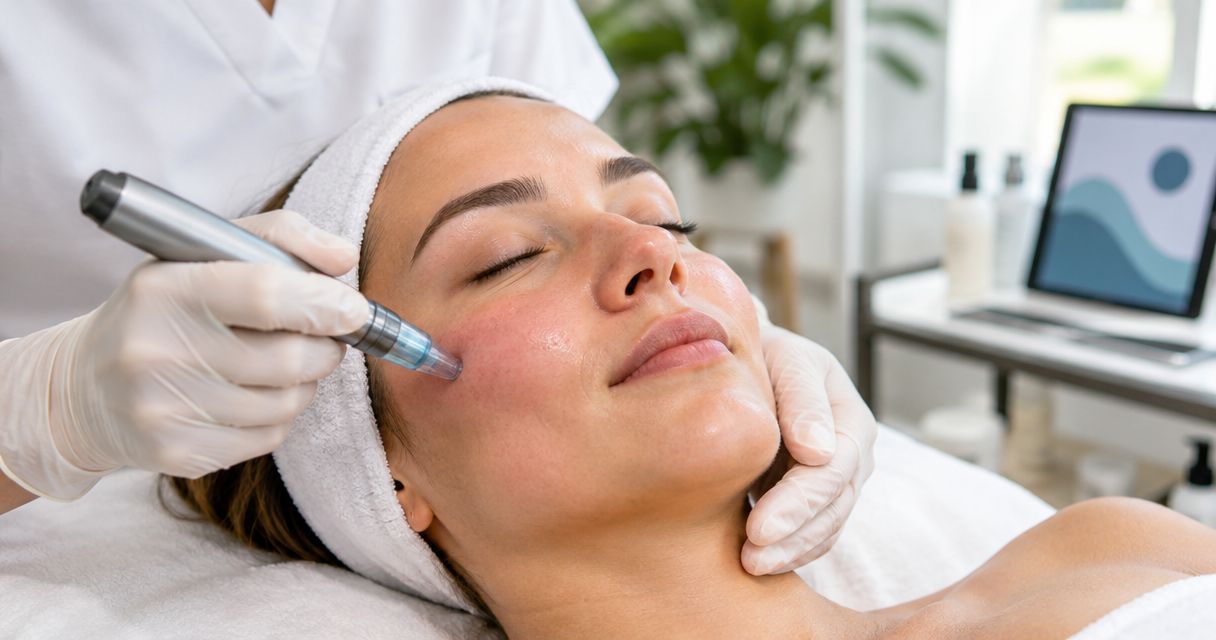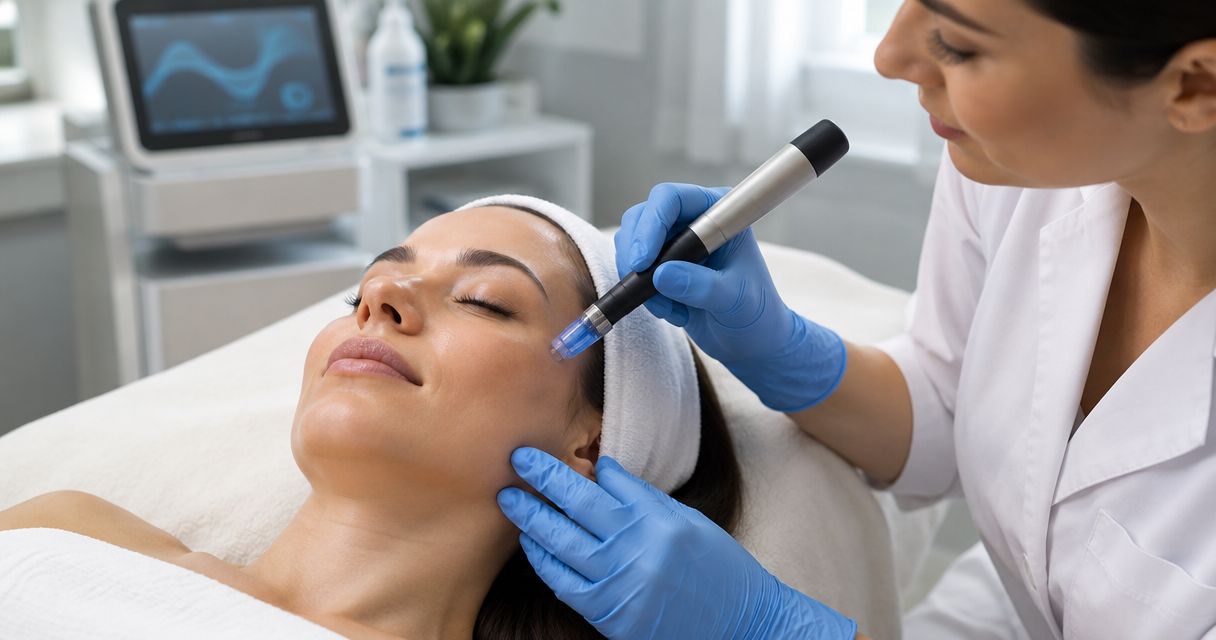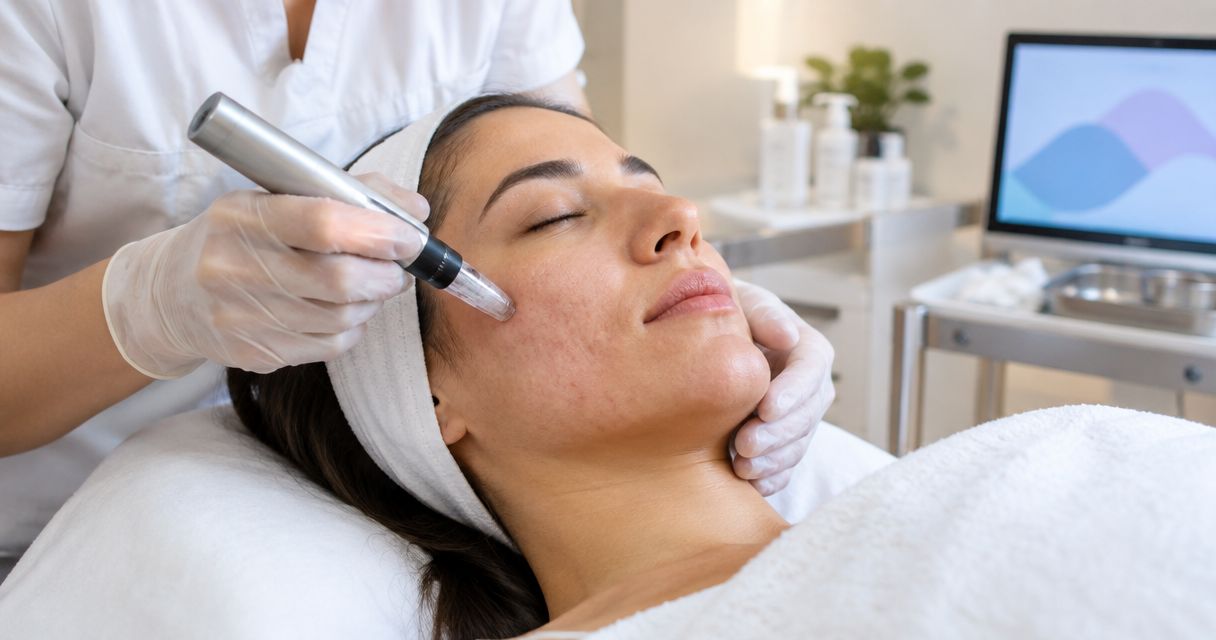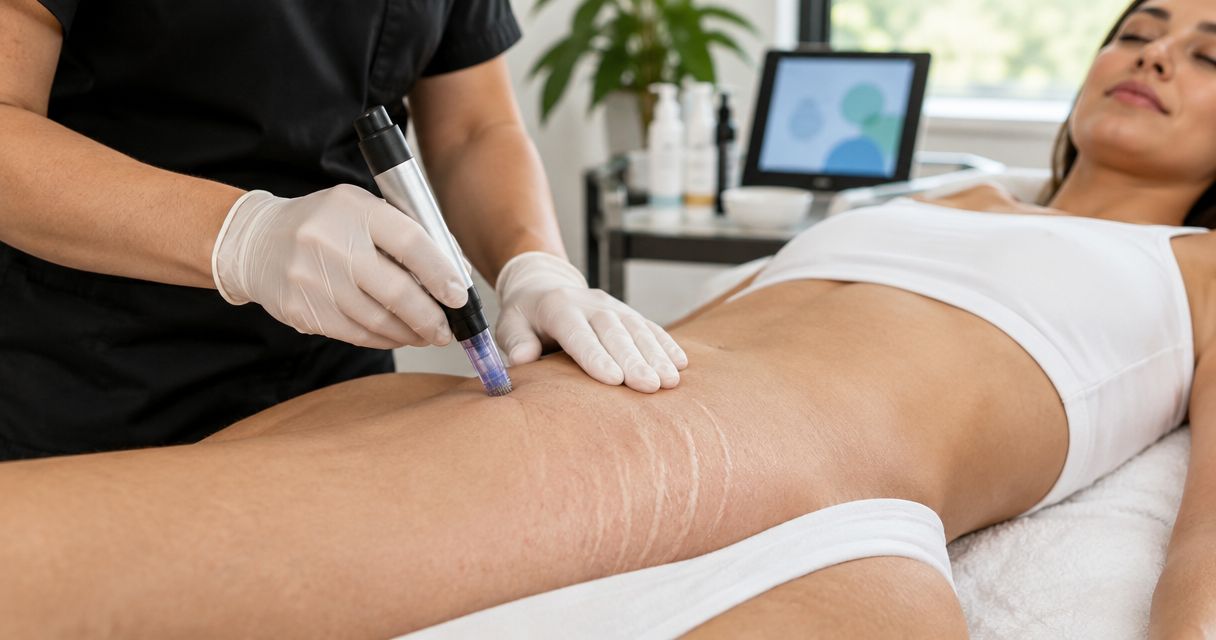
Yes, microneedling can improve the appearance of stretch marks by stimulating collagen production, but it does not erase them or restore completely unmarked skin. Results develop gradually, and treatment requires a skin assessment because irritation, infection, scarring, and pigment changes are possible.
- Can microneedling help with stretch marks? Yes—expect improvement in texture and appearance, not complete removal.
- Older white stretch marks can respond, but treatment does not reliably restore their original color.
- Bonnie Frances Skin offers SkinPen microneedling in Phoenix; ask whether stretch-mark assessment is available.
- Choose professional assessment over home needling, especially with a history of pigment changes or raised scars.
Can microneedling help with stretch marks?
Microneedling can make stretch marks less noticeable, but improvement is different from removal. Stretch marks are scars that develop when skin stretches or shrinks quickly. Changes in collagen and elastin contribute to their appearance, which explains why a treatment that stimulates skin remodeling can help.
The American Academy of Dermatology identifies microneedling among procedures dermatologists use to make stretch marks less noticeable. That supports discussing treatment, not promising a particular result or a universal treatment schedule.
| Stretch-mark appearance | What microneedling can address | Main limitation | Best for |
|---|---|---|---|
| Newer red, purple, or darker marks | Scar texture and overall visibility | Color also changes naturally as marks mature | People seeking assessment while marks are developing |
| Older pale or white marks | Depressed texture and the contrast created by uneven skin | Original skin color is not reliably restored | People whose main concern is longstanding texture |
Surface recovery and collagen remodeling are different processes. Read the guide to how long SkinPen microneedling takes to heal before arranging treatment around work, exercise, or an event.
Why this matters
A stretch mark can bother you because of its color, indentation, width, or location. Those are different treatment goals. If you want redness reduced but your consultation focuses only on texture, you can finish treatment disappointed even when the skin feels smoother.
For a 2026 treatment decision, define success before discussing a treatment package. Ask what change is realistic for your marks, what risks apply to your skin, and how progress will be assessed.
Stretch marks do not require cosmetic treatment. Leaving them alone is a valid choice, and a consultation should help you decide rather than create pressure to proceed.
Newer stretch marks: assess color and texture separately
Newer stretch marks often look red, pink, purple, reddish-brown, or dark brown, depending on your skin tone. They can also feel slightly raised or itchy before becoming more settled.
Microneedling targets skin remodeling rather than simply removing surface discoloration. That distinction matters if color is your main concern: a clinician needs to assess whether needling matches the change you want.
Best for: people who want an assessment of developing stretch marks rather than a promise of immediate fading. The advantage is the opportunity to discuss treatment while the marks are relatively new. The limitation is that natural fading makes it harder to separate treatment effects from changes that would have happened anyway.
Tell your clinician when you first noticed the marks and whether they are still changing. Mention pregnancy, recent weight changes, growth, bodybuilding, and corticosteroid use when relevant; these details help establish the clinical context.
Older stretch marks: focus on texture, not disappearance
Older stretch marks often become pale, flatter, or depressed. Microneedling can improve their appearance, but pale marks do not necessarily regain the color of the surrounding skin.
Best for: people seeking a reduction in uneven texture from established stretch marks. The potential benefit is a less noticeable transition between the scar and nearby skin. The limitation is that visible lines and color differences can remain.
Do not judge the final outcome from the temporary fullness or redness immediately after treatment. Those changes are part of the early response, not proof that a stretch mark has permanently filled in.
For your 2026 progress record, compare 2 photographs of the same area using matching lighting, distance, and body position. Changing the angle or stretching the skin differently can make an apparent improvement look larger—or smaller—than it really is.
Why microneedling results vary
The same treatment name does not mean the same outcome. Your stretch marks, skin history, treatment settings, and recovery all affect the decision.
- Mark maturity: Newer colored marks and older pale marks present different concerns. Assess color and texture separately.
- Scar texture: A shallow line and a deeper depression do not have the same starting point. Ask which feature treatment is intended to change.
- Skin response: A history of dark marks after irritation or raised scarring affects risk assessment and treatment planning.
- Treatment technique: Device selection, treatment depth, hygiene, and clinician training matter. More aggressive treatment is not automatically better.
- Healing conditions: Active infection, irritated skin, medication use, and medical conditions can affect whether treatment is appropriate.
- Aftercare: Sun exposure, picking, irritating products, and failure to follow instructions can complicate recovery.
Choose a treatment plan based on your skin, not a standardized promise. A consultation should explain both the expected benefit and the reasons to postpone or decline treatment.
What should happen before stretch-mark microneedling?
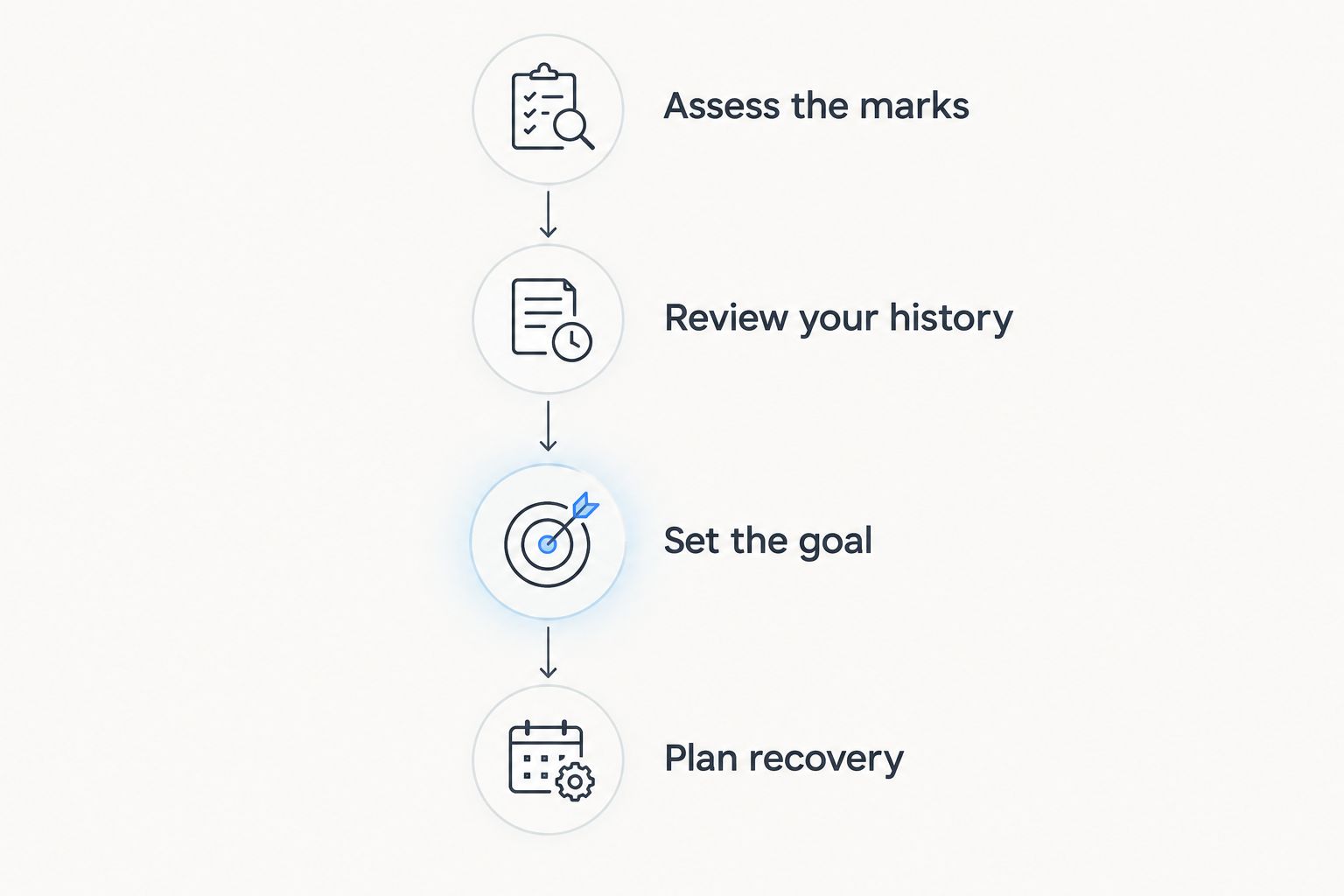
A useful consultation follows a sequence: assess the marks, review risks, define the goal, and explain recovery. Do not skip directly to a session count.
- Assess the marks. Show the full treatment area and explain whether color, texture, or both concern you. Mention any recent changes.
- Review your history. Disclose medications, pregnancy or breastfeeding, skin infections, previous cosmetic procedures, and any tendency toward raised scars or prolonged discoloration.
- Set the goal. Ask what visible improvement is realistic and what will probably remain. Agree on how photographs and follow-up assessments will be used.
- Plan recovery. Get written instructions covering cleansing, products, sun exposure, exercise, and when to seek medical advice.
The assessment should also confirm whether the clinician treats that body area. A practice offering facial microneedling does not automatically offer treatment for stretch marks on the abdomen, thighs, breasts, or other areas.
Bring 3 questions to your consultation: What change should I expect? What risks apply to my skin? What would make you advise against treatment? Clear answers are more useful than a guarantee.
Is microneedling suitable for every skin tone?
Microneedling can be used across different skin tones, but no skin tone is exempt from complications. Post-inflammatory hyperpigmentation—darkening after inflammation—is a particular concern when your skin tends to leave dark marks after irritation.
Ask about the clinician's experience treating skin like yours and the same body area. Discuss previous reactions to acne, waxing, peels, injuries, or other procedures rather than relying only on a broad skin-type label.
For 2026 treatment planning, request an explanation of how technique and aftercare will be adjusted to your history. A claim that treatment carries no pigment risk is a reason to seek another clinical opinion.
What are the risks and recovery considerations?
Microneedling creates controlled punctures in the skin. Redness, discomfort, tightness, swelling, pinpoint bleeding, and peeling can occur; infection, scarring, and pigment changes are more serious potential complications.
Your treatment area and protocol determine the recovery instructions. Do not apply a facial recovery schedule automatically to an area exposed to clothing friction, sweat, or prolonged sun.
- Avoid picking, scrubbing, or adding exfoliating products before your clinician permits them.
- Use only the products your clinician approves for the healing stage.
- Follow the specific instructions for exercise, swimming, and clothing over the treated area.
- Seek medical advice for worsening pain, spreading redness, drainage, fever, or other signs of infection.
The American Academy of Dermatology recommends broad-spectrum, water-resistant SPF 30 or higher sunscreen for sun protection. Immediately after microneedling, follow your clinician's instructions about when sunscreen can be applied; shade and protective clothing also matter.
Does SkinPen clearance mean stretch marks are an approved use?
A device's regulatory clearance does not automatically cover every treatment offered with it. The FDA explains that microneedling devices have specific authorized uses, treatment areas, and patient populations.
Ask whether the proposed stretch-mark treatment falls within the exact device's cleared indication. If the clinician proposes an off-label use, ask what that means for the evidence, alternatives, consent, and your individual risks.
This distinction remains important in 2026: evidence about microneedling as a procedure is not the same as clearance for every device, body area, or concern. The explanation should name the device and the intended treatment—not simply describe it as FDA-cleared.
Can I use a home roller instead?
Do not treat home rolling as an equivalent substitute for professional microneedling. Home devices differ in needle length, construction, and how they affect the skin; their results cannot be assumed to match clinical treatment.
The FDA has not authorized microneedling medical devices for over-the-counter sale. It also warns about infection risks associated with improper use and cleaning.
If professional treatment does not fit your preferences, leaving stretch marks untreated is safer than repeatedly injuring your skin while chasing a result. Moisturizer can help dryness and comfort, but it does not remove an established scar.
How do you choose a Phoenix microneedling provider?
Choose a provider who explains candidacy, device selection, infection control, realistic outcomes, and follow-up. Ask who performs the procedure and who handles complications. A before-and-after gallery alone does not answer those questions.
Bonnie Frances Skin is best for Phoenix clients seeking local SkinPen microneedling care. Bonnie Frances Skin offers SkinPen microneedling, but you should confirm whether stretch-mark assessment and treatment for your intended body area are available before scheduling.
The relevant advantage is access to a local clinic offering professional microneedling. The limitation is that a service listing does not establish your suitability, a stretch-mark treatment protocol, or a guaranteed result.
You can review Bonnie Frances Skin before asking about the treatment area and assessment process.
FAQ
Can microneedling help with stretch marks that are years old?
Yes, microneedling can improve the appearance of older stretch marks, especially uneven texture. It does not reliably restore their original color or remove the scars completely.
Will microneedling get rid of stretch marks completely?
No, microneedling does not completely remove stretch marks. The realistic goal is to make them less noticeable while accepting that some texture and color differences can remain.
How many microneedling sessions do I need for stretch marks?
Your clinician must assess your stretch marks before recommending a session count. The treatment area, scar characteristics, skin response, and planned technique determine the course rather than a universal number.
Is microneedling for stretch marks safe for darker skin?
Microneedling can be appropriate for darker skin, but pigment changes remain a risk. Discuss your history of dark marks after irritation and the clinician's experience treating your skin tone.
Can I get microneedling for stretch marks while pregnant?
Defer elective microneedling during pregnancy and discuss treatment timing with your obstetric clinician and treating provider. Pregnancy also affects the suitability of numbing agents and aftercare products.
Does microneedling hurt on stretch marks?
Microneedling can cause discomfort, and sensitivity depends on the treatment area and technique. Ask about pain management and disclose allergies or previous reactions to topical anesthetics.
Can I exercise after stretch-mark microneedling?
Follow your treating clinician's exercise restrictions after stretch-mark microneedling. Sweat, heat, friction, and the location of the treated skin affect when returning to exercise is appropriate.
Is redness after microneedling proof that it worked?
No, redness after microneedling is an early skin response, not proof of lasting stretch-mark improvement. Judge progress after recovery using consistent photographs and clinical reassessment.
One last thing
Do not confuse a tan with an improvement in stretch marks. The American Academy of Dermatology explains that tanning can make stretch marks more noticeable because the marks do not tan like the surrounding skin.
For your 2026 treatment plan, separate sun protection, scar texture, and color into distinct goals. That makes it easier to judge whether microneedling is addressing the concern that actually bothers you.
Clinical references: American Academy of Dermatology patient guidance on stretch marks, microneedling, and sunscreen; FDA patient guidance on microneedling devices. These sources support general treatment and safety guidance, not an individual outcome prediction.