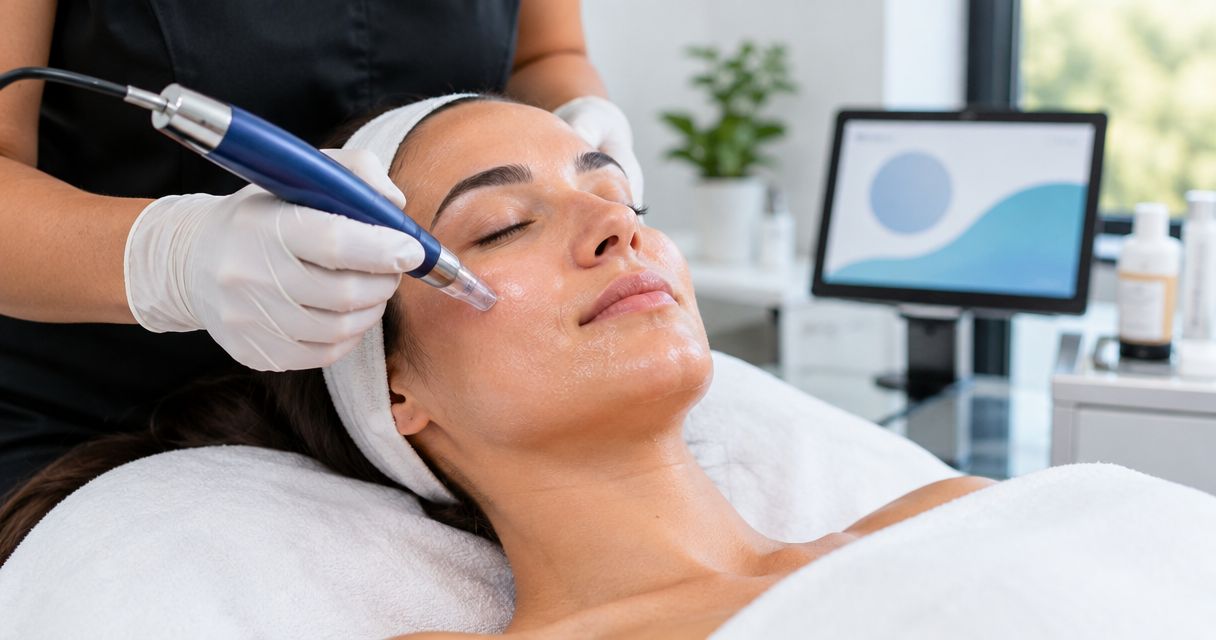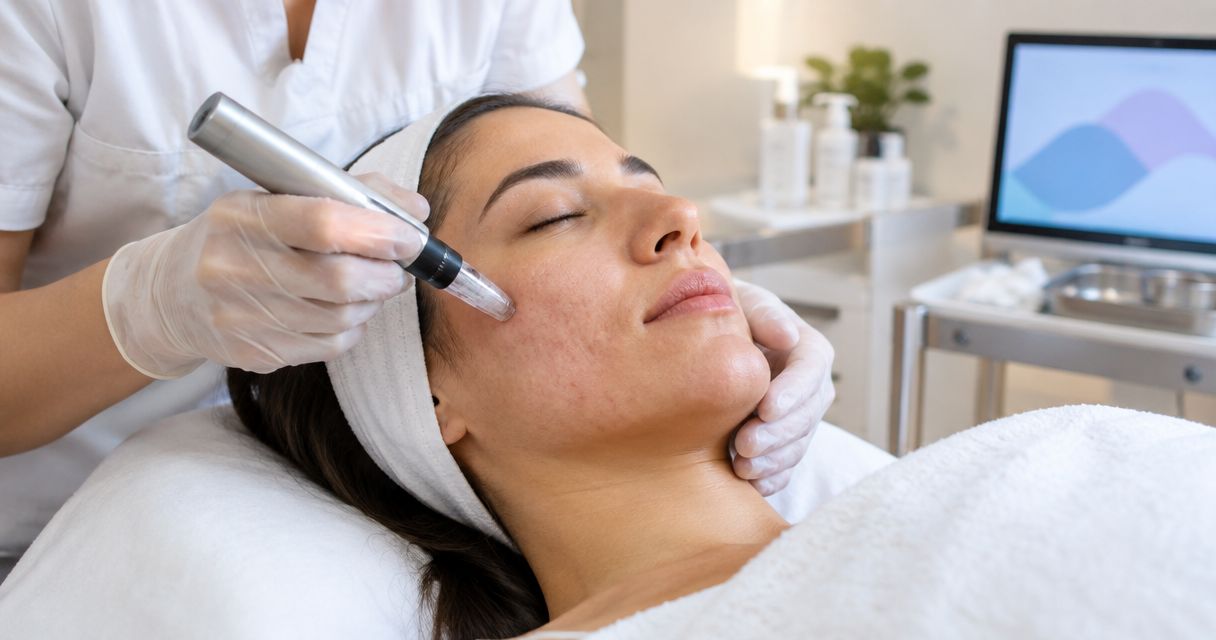
There is no single number of microneedling sessions that treats every acne scar: your plan depends on scar depth, scar type, active breakouts, and how your skin responds. Expect a course of treatment rather than a guaranteed result from one appointment, and reassess before adding more sessions. Deep, tethered, or raised scars need a different discussion because more microneedling is not automatically the right treatment.
- How many microneedling sessions for acne scars depends on scar type, healing, and measurable improvement—not a fixed package.
- Bonnie Frances Skin offers SkinPen microneedling in Phoenix; treatment suitability requires an individual assessment.
- Indented acne scars and flat discoloration need different treatment plans.
- Persistent deep scars deserve reassessment, not automatic repeat microneedling.
Why this matters
A session count is useful only after you know what you are treating. Flat brown marks, shallow depressions, and narrow deep pits can appear together, but they do not respond to the same approach.
Choose a treatment plan with a review point, not a promise that a fixed package will erase your scars. For your 2026 treatment plan, ask what improvement is realistic and what would make the provider change direction.
Bonnie Frances Skin offers SkinPen microneedling in Phoenix. The important question at an assessment is whether microneedling fits your scars—not simply how many appointments you can schedule.
How many microneedling sessions do you need for acne scars?
You need an individualized course based on the scars being treated and your response between visits. A provider should explain the starting plan, the recovery interval, and the point at which progress will be reviewed before recommending additional treatment.
Microneedling creates controlled skin injuries that stimulate a repair response, including collagen production. That process takes time; the appearance of your skin immediately after treatment does not show the final result.
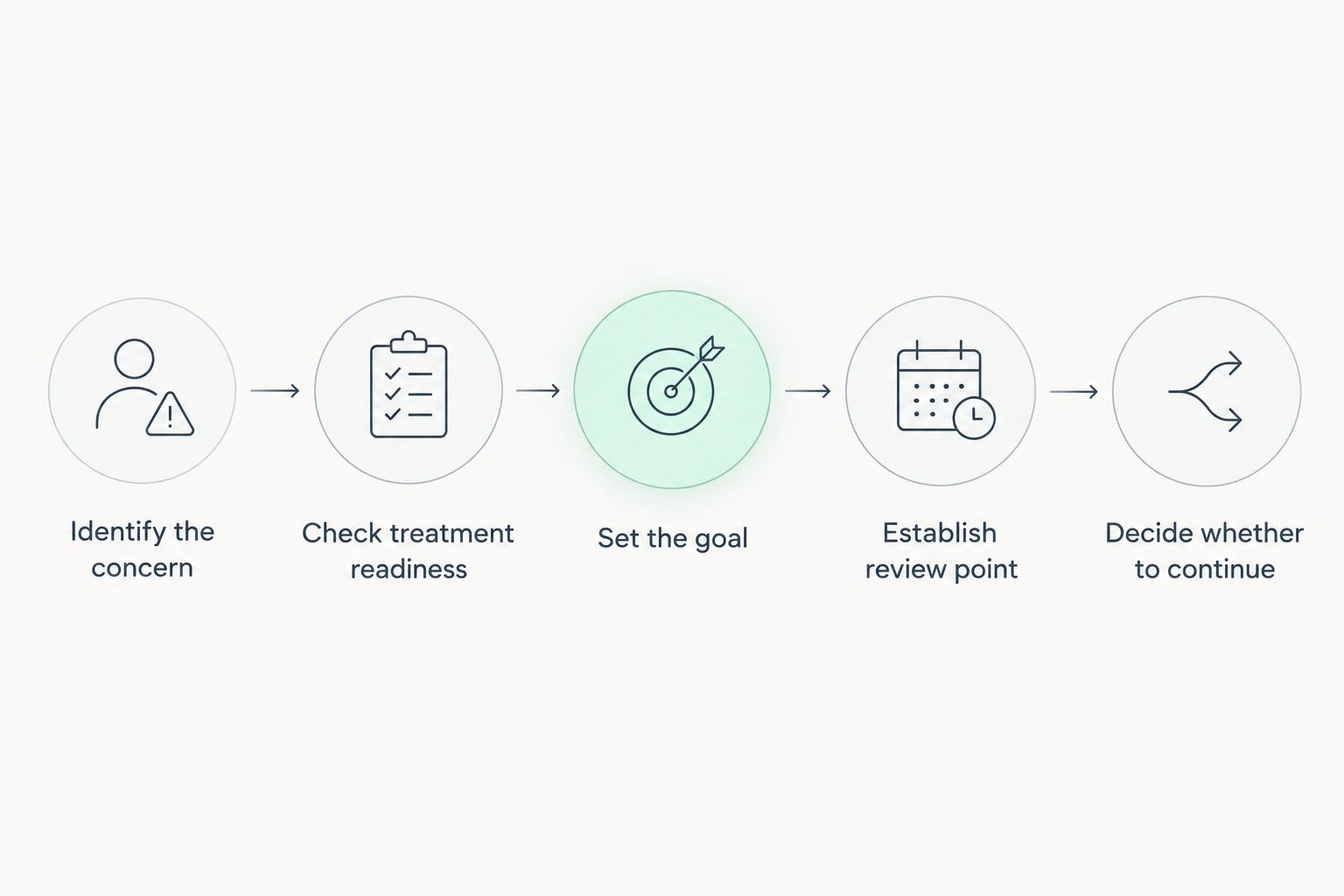
Use this sequence to turn a vague session recommendation into a clear decision:
- Identify the concern. Separate indented scars from raised scars, persistent redness, and brown discoloration.
- Check treatment readiness. Discuss active acne, skin infections, medications, previous procedures, and abnormal scarring.
- Set the treatment goal. Agree on the texture changes you want to assess rather than expecting completely scar-free skin.
- Establish a review point. Ask when healed photographs and skin texture will be compared.
- Decide whether to continue. Base further sessions on improvement, tolerability, and whether the remaining scars suit microneedling.
A recommendation without those details gives you a booking schedule, not a complete treatment plan. You should understand both the reason to start and the reason to stop.
Scar type matters more than the package size
The shape of an acne scar helps determine whether microneedling is a reasonable starting point. It also explains why two people with acne scars can receive different recommendations without either plan being wrong.
This comparison describes general treatment considerations, not a diagnosis you can make from a mirror alone. Lighting, skin tension, and overlapping scar patterns can make scars difficult to classify yourself.
| Concern | What it looks like | Where microneedling fits | Main limitation |
|---|---|---|---|
| Shallow boxcar scars | Depressions with defined edges | An option for improving selected indented scars | Deeper edges can remain visible |
| Rolling scars | Broad depressions with an uneven, wave-like surface | An option for texture improvement | Fibrous tethering can require a different approach |
| Ice-pick scars | Narrow, deep pits | Requires careful assessment before choosing treatment | Surface remodeling alone does not address every deep tract |
| Raised scars | Firm tissue above the surrounding skin | Not a routine target for acne-scar microneedling | Requires a different scar-management assessment |
| Flat post-acne marks | Color change without a depression | Treat the discoloration as a separate concern | A texture-focused treatment is not automatically the best fit |
Microneedling is a treatment for selected scars, not a universal solution for everything acne leaves behind. If a provider groups all these concerns together, ask which specific feature each proposed session is intended to change.
Shallow indented scars: assess texture improvement
Shallow depressions are a reasonable topic for a microneedling consultation. The potential benefit is gradual improvement in texture; the limitation is that smoother skin does not mean every scar disappears.
Ask which areas will be photographed and compared. If your cheeks contain both shallow and deep scars, progress in one area does not prove that every remaining depression needs the same treatment.
Deep or tethered scars: reassess the method
Deep pits and scars attached to underlying tissue deserve a more specific treatment discussion. A dermatologist can assess whether a scar-directed procedure is needed rather than simply extending a general microneedling course.
The benefit of reassessment is a treatment choice matched to the remaining scar structure. The drawback is that a mixed-scar plan can involve different procedures, recovery requirements, and risks that need separate explanation.
Flat marks: separate color from contour
Brown or red marks can make acne damage look more extensive even when the skin surface is relatively smooth. Treating discoloration and treating a depression are different goals.
Your 2026 plan should name both goals if both are present. Otherwise, fading color can be mistaken for scar remodeling—or persistent color can hide genuine improvement in texture.
Why the number of microneedling sessions varies
These factors explain why a responsible recommendation changes from person to person. They also give you specific questions to bring to an assessment.
- Scar depth and shape: shallow depressions, deep pits, and tethered scars present different treatment targets.
- Active acne: ongoing inflammatory breakouts can create new scars and affect whether treatment should proceed.
- Skin response: irritation, prolonged redness, or pigment changes affect the timing and suitability of further sessions.
- Treatment technique: device choice, treatment depth, and the area treated affect the procedure and recovery instructions.
- Your treatment history: previous results, complications, and scar procedures help determine the next step.
- Your goal: softening visible texture is different from expecting every depression to disappear.
More treatment is not a substitute for a better match between the procedure and the scar. If the same deep scars remain unchanged, ask whether the limiting factor is scar structure rather than an insufficient appointment count.
How long should you wait between microneedling sessions?
Your provider should set the interval according to the treatment performed and your recovery. Do not schedule another session simply because visible redness has disappeared. Surface recovery and the longer remodeling process are not the same thing.
Before leaving, get written instructions covering skincare, sun exposure, exercise, makeup, and the signs that require a call. Those instructions should reflect your actual treatment rather than a generic online calendar.
For a 2026 schedule, work backward from important events without trying to compress the treatment course. If your skin has not recovered as expected, contact the treating clinician before keeping the next appointment.
Ask these questions before booking follow-up treatment:
- What signs show that my skin is ready for another session?
- When should I restart my usual skincare products?
- What reaction should make me contact you rather than wait?
- When will you assess improvement rather than immediate recovery?
When should you judge your acne-scar results?
Judge results after the healing and remodeling period your provider specifies, using comparable photographs and a review of your skin. Immediate swelling can temporarily soften the appearance of depressions, so an early smooth look is not proof of lasting improvement.
Use the same lighting, camera angle, facial expression, and distance for progress photographs. Harsh side lighting emphasizes texture; flattering front lighting hides it. Comparing those two setups tells you little about treatment response.
Keep the assessment specific. Ask whether the scar edges look softer, whether shallow depressions are less noticeable, and whether the result matters to you in ordinary lighting.
For your 2026 progress record, note adverse reactions as carefully as visible improvement. A treatment course should be evaluated on both benefit and tolerability—not photographs alone.
What should make you pause before another session?
Pause and contact your provider if recovery is not following the instructions you received. Increasing pain, spreading redness, drainage, or other signs of infection need medical assessment rather than another cosmetic appointment.
A lack of meaningful improvement also deserves a review. It does not prove that microneedling never works; it means your particular scars, treatment approach, or expectations need another look.
Raise these issues before continuing:
- New inflammatory breakouts in the planned treatment area.
- Persistent irritation or changes in pigmentation.
- A history of raised scars or unusual wound healing that has not been discussed.
- Uncertainty about which scars are improving.
- Pressure to add appointments without examining healed results.
A useful reassessment can end with a decision to stop. Completing more sessions is not itself a measure of success.
What can you do between appointments?
Follow the treating provider's aftercare instructions and keep your routine simple during recovery. Do not assume that stronger exfoliation, more active ingredients, or an at-home needling device will improve the professional treatment result.
The American Academy of Dermatology recommends broad-spectrum, water-resistant sunscreen with SPF 30 or higher as general sun protection. After a procedure, follow your provider's instructions about when and how to apply sunscreen to treated skin.
In Phoenix, plan how you will limit direct sun exposure during recovery rather than treating sunscreen as your only precaution. Hats, shade, and scheduling outdoor activities around your aftercare instructions belong in that discussion.
Products have a supporting role, but a topical routine does not physically release a tethered scar. The guide to professional skincare products for acne scars covers a related topic to discuss alongside—not instead of—your treatment plan.
Where does Bonnie Frances Skin fit?
Bonnie Frances Skin is an option for Phoenix clients seeking professional SkinPen microneedling. The clinic also offers other skin treatments, but the choice should follow an assessment of your concern rather than an assumption that every service treats acne scars equally.
The benefit of discussing professional microneedling is getting a treatment-specific plan and recovery instructions. The limitation remains the same wherever you receive treatment: microneedling cannot guarantee complete scar removal or suit every scar pattern.
Ask Bonnie Frances Skin which scars are appropriate targets, how progress will be reviewed, and when a dermatology assessment would be more appropriate. You do not need to arrive knowing the correct session count; you need to leave understanding the recommendation.
FAQ
How many microneedling sessions for acne scars should I book first?
Book an assessment before committing to a fixed course of microneedling for acne scars. Scar depth, scar shape, active acne, and your healing history should determine the starting plan and review point.
Can one microneedling session remove acne scars?
One microneedling session cannot be relied on to remove acne scars. Improvement is gradual, and complete removal is not a realistic guarantee for a single appointment or a treatment course.
Do deeper acne scars just need more microneedling?
Deeper acne scars do not automatically need more microneedling. Deep pits and tethered scars require assessment to determine whether a different scar-directed treatment is more appropriate.
Can I get microneedling while I still have active acne?
Active inflammatory acne needs assessment before microneedling proceeds. Your provider should decide whether acne control needs to come first and which areas should not be treated.
How do I know whether microneedling is working?
Compare healed results using consistent photographs and a clinical review of the scars being treated. Immediate swelling and different lighting can make texture appear improved without showing a lasting change.
Is microneedling suitable for darker skin tones?
Microneedling can be an option for darker skin tones, but pigment changes remain a risk that needs individual assessment. Discuss your history of dark marks, previous reactions, and the provider's experience treating your skin tone.
Does Bonnie Frances Skin offer microneedling in Phoenix?
Bonnie Frances Skin offers SkinPen microneedling in Phoenix. Ask whether your scar pattern is an appropriate target and how the proposed course will be reassessed before additional sessions.
One last thing
The most useful question is not just how many sessions you need, but what would make the provider change the plan. Ask that before starting. A clear answer gives you a way to distinguish gradual progress from repeated treatment that is not addressing the scars you care about.