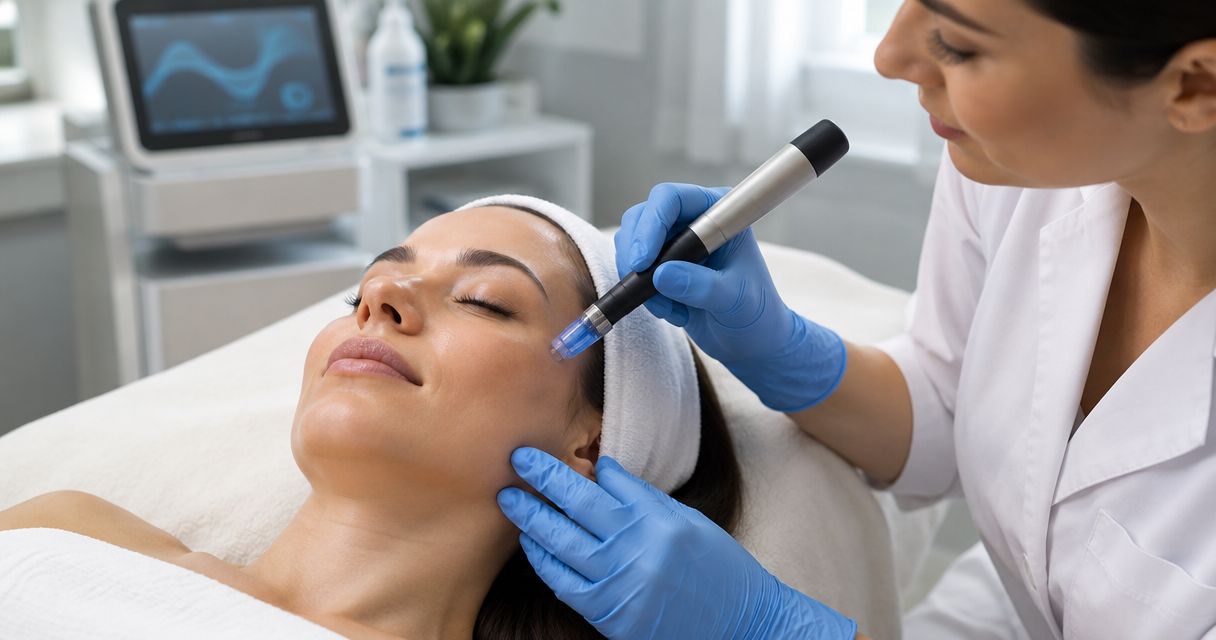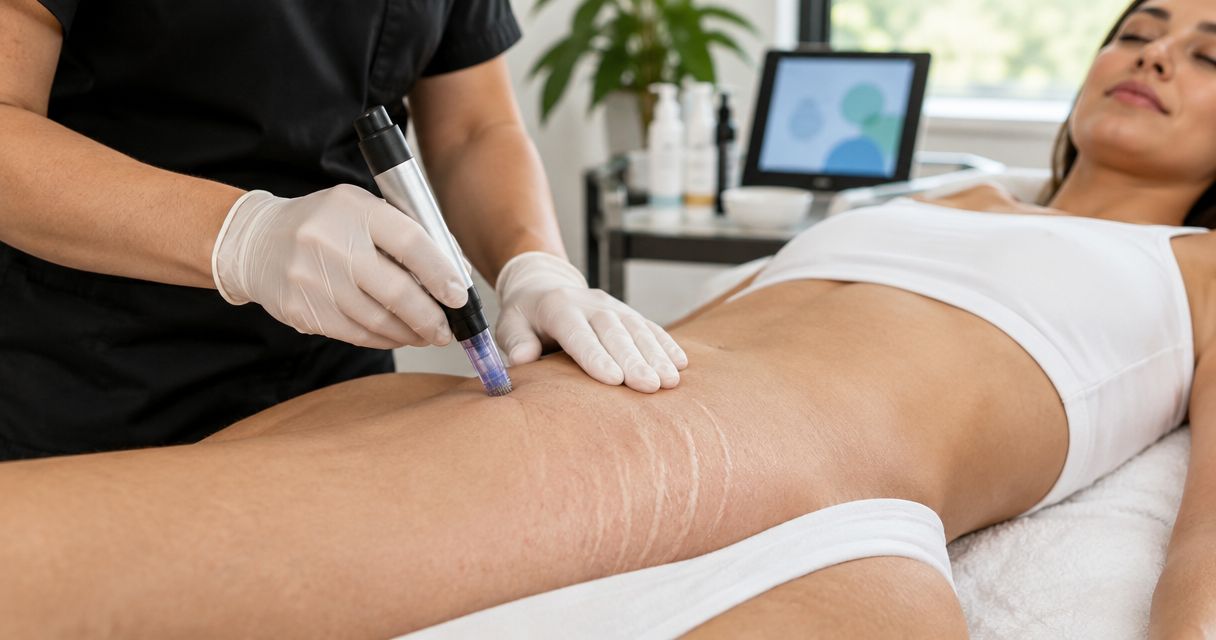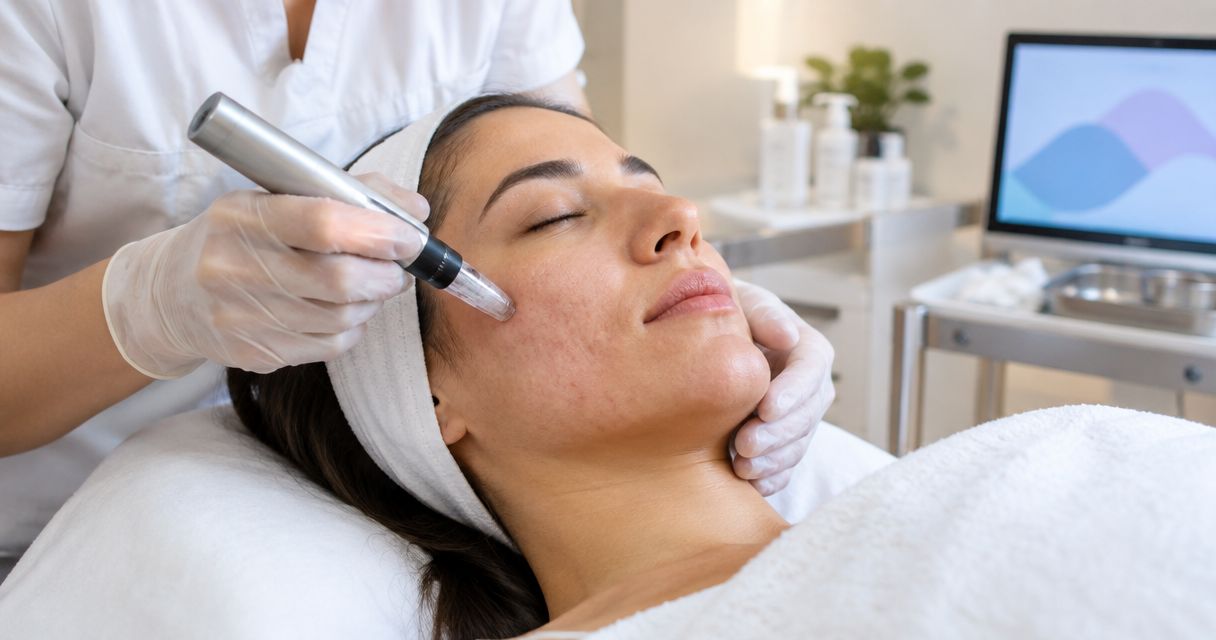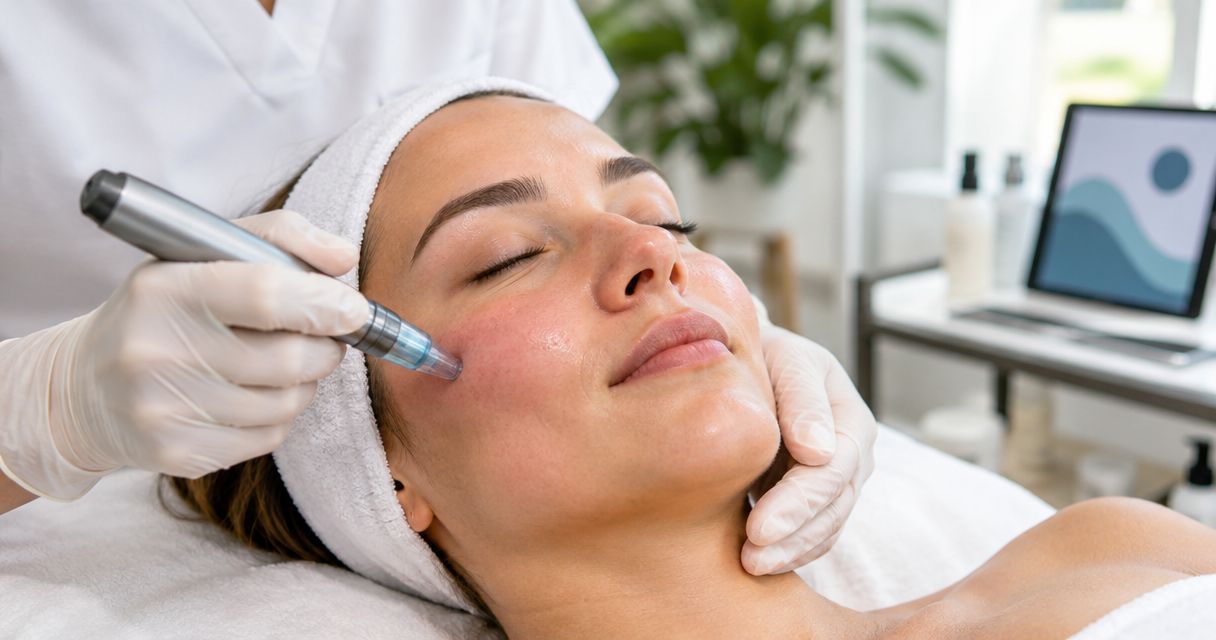
Microneedling can be safe for sensitive skin when your skin is calm, intact, and assessed by a qualified provider; sensitivity alone does not establish whether treatment is appropriate. Active irritation, infection, an eczema flare, or inflamed rosacea calls for postponement and, when needed, a dermatologist’s assessment—not a gentler setting on the same appointment.
- Is microneedling safe for sensitive skin? Sometimes: calm skin and individual screening matter more than the sensitivity label.
- Postpone microneedling over active irritation, infection, or inflamed skin.
- Bonnie Frances Skin offers SkinPen microneedling in Phoenix; suitability still requires an individual assessment.
- Ask about device instructions, sterile cartridges, numbing ingredients, and a written aftercare plan.
Is microneedling safe for sensitive skin?
Sensitive skin is not an automatic rejection or an automatic clearance for microneedling. The decision depends on what causes your sensitivity, whether your skin barrier is currently irritated, and whether your medical history fits the device’s instructions.
Bonnie Frances Skin offers microneedling and other skincare services in Phoenix. You can review Bonnie Frances Skin before discussing your treatment goals and reaction history with a provider.
Use this screening sequence for a 2026 treatment decision:
- Check current symptoms. Describe burning, persistent redness, scaling, itching, open areas, and recent breakouts. Do not dismiss symptoms because they seem normal for you.
- Review your history. Disclose diagnosed skin conditions, cold sores, abnormal scarring, allergies, medications, and previous reactions to procedures.
- Confirm the treatment. Ask which device will be used, what concern it addresses, and which substances will touch your skin.
- Plan recovery. Get written instructions covering cleansing, moisturizing, sun exposure, makeup, exercise, and when to seek help.
The FDA’s consumer guidance on microneedling devices identifies risks including bleeding, bruising, redness, itching, peeling, infection, and pigment changes. That is a reason to screen carefully, not proof that every sensitive-skin patient will experience a complication.
Why this matters
The phrase sensitive skin describes an experience, not a single diagnosis. Stinging from a new cleanser is different from an eczema flare, and facial flushing is not enough to diagnose rosacea.
Microneedling deliberately creates controlled skin injuries. If your skin already burns during washing or has visible inflammation, adding an elective procedure does not address the underlying problem.
Choose treatment according to your skin’s current condition, not how urgently you want smoother texture. For a 2026 appointment, your current symptoms deserve more weight than photographs showing how well your skin tolerated a procedure previously.
Calm sensitivity versus active inflammation
Your treatment decision starts with separating a history of reactivity from an active skin problem. This comparison is a screening guide, not a diagnosis or permission to proceed.
| Skin situation | Best next step for | Potential benefit | Limitation or concern |
|---|---|---|---|
| Skin feels comfortable, with a history of product sensitivity | Individual microneedling assessment | Establishes whether treatment fits your goals and history | Calm skin does not eliminate procedure risks |
| Burning, peeling, or persistent stinging | Postponement and barrier assessment | Avoids treating already irritated skin | The cause still needs to be identified |
| Active eczema or inflamed rosacea | Medical assessment before cosmetic treatment | Addresses the inflammatory condition first | A cosmetic consultation does not replace diagnosis |
| Open skin, cold sores, or suspected infection | Clinical evaluation before treatment | Prioritizes the active problem | Treatment over affected skin is inappropriate |
| Comfortable skin with previous pigment changes after irritation | Individual pigment-risk discussion | Makes discoloration risk part of planning | No provider can guarantee that pigment changes will not occur |
A quieter-looking day does not erase a recurring condition. Tell your provider what happens between appointments, including reactions you manage at home without medical care.
Bring photographs if your redness or rash comes and goes. Those images provide context, but they do not replace examining your skin before treatment.
Why microneedling safety varies for sensitive skin
The same procedure does not carry the same risk for every person. These factors belong in your consultation:
- Current inflammation. Active dermatitis, irritated patches, and inflamed lesions change whether treatment should happen at all.
- Medical and medication history. Bleeding risks, impaired healing, immune conditions, and relevant medications require review against the device’s instructions. Never stop prescribed medication on your own.
- Scarring and pigment history. Raised scars or dark marks after minor inflammation deserve discussion before another controlled injury.
- Treatment technique and hygiene. Device selection, appropriate settings, sterile single-use cartridges, and infection-control practices matter. A lower setting does not correct poor screening.
- Products used around treatment. Numbing preparations, cleansers, and post-treatment products introduce their own ingredients. Previous reactions to those ingredients matter even when you have tolerated needles before.
- Recovery conditions. Sun exposure, heat, friction, and an irritating home routine can complicate recovery. Your aftercare plan must fit your actual schedule.
Ask the provider to explain the reason for each treatment decision in plain language. “Suitable for all skin types” is not an answer to a specific history of burning, eczema, or pigment changes.
How should you prepare sensitive skin for microneedling?
Start with disclosure, not a stronger skincare routine. Adding exfoliants or trying unfamiliar products before treatment creates another possible source of irritation.
Bring a complete product list, including prescriptions, nonprescription acne treatments, exfoliating acids, retinoids, and supplements. Include anything used only occasionally; a recent peel or spot treatment still belongs in the discussion.
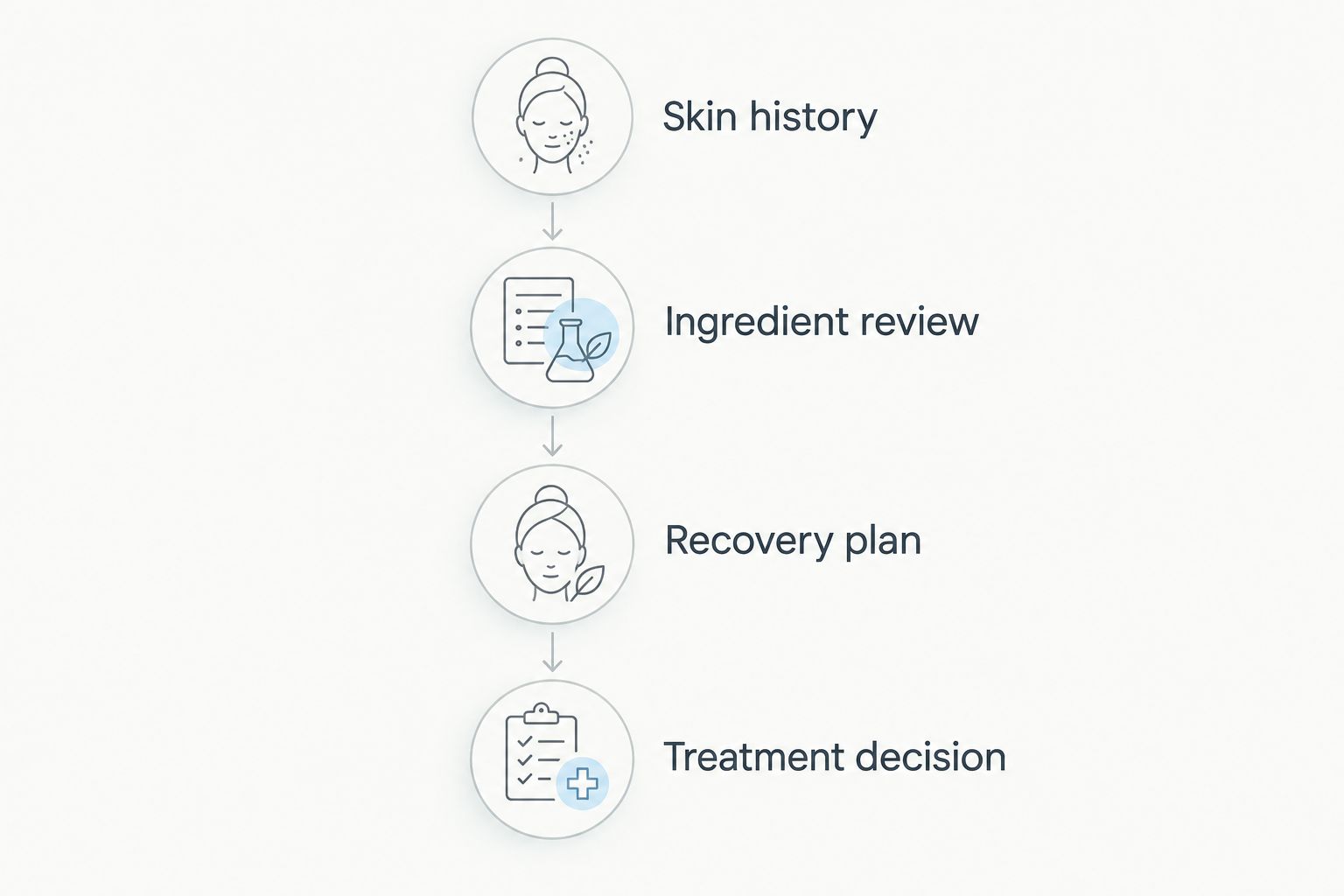
Skin history
Describe what a reaction looks and feels like, how long it lasts, and what triggered it. Include reactions to adhesives, latex, antiseptics, numbing creams, and previous cosmetic treatments.
Ingredient review
Ask what will be applied before, during, and after the procedure. A product you tolerate on intact skin is not automatically suitable for freshly treated skin.
Recovery plan
Request written instructions before your appointment, not while you are leaving. Confirm whom to contact if symptoms worsen and how your provider distinguishes expected redness from a complication.
Treatment decision
Proceed only after the provider has assessed your current skin and explained the relevant risks. If your skin is irritated on appointment day, rescheduling is a valid safety decision—not a failed treatment plan.
These steps form a useful 2026 consultation checklist: skin history, ingredient review, recovery plan, then the treatment decision. The order keeps scheduling pressure from replacing screening.
What does safe aftercare look like for sensitive skin?
Aftercare should follow your treating provider’s instructions and the specific device protocol. A generic routine from social media is not a substitute.
The immediate goal is to avoid unnecessary irritation while your skin recovers. Do not interpret peeling as permission to scrub, and do not add an exfoliating product to remove it faster.
Keep the routine simple
Use only the cleansing and moisturizing products your provider approves for the treatment stage. Ask specifically when to restart retinoids, acids, benzoyl peroxide, fragranced products, and other potential irritants.
Avoid creating a universal restart calendar from another person’s experience. Your symptoms and the treatment performed matter more than an online countdown.
Plan sun protection
For ordinary sun protection, the American Academy of Dermatology recommends broad-spectrum, water-resistant sunscreen with SPF 30 or higher, applied 15 minutes before going outdoors and reapplied every 2 hours outdoors, or after swimming or sweating. Follow your provider’s instructions about when sunscreen can first be applied after microneedling.
These are general sunscreen directions, not clearance to spend recovery time in direct sun. Shade, a protective hat, and reduced exposure remain important, especially when planning outdoor activities in Phoenix.
Separate discomfort from warning signs
Redness and tenderness are recognized effects of microneedling, but worsening pain, spreading redness, pus, fever, or new blisters need prompt clinical advice. Severe swelling or breathing difficulty requires emergency care.
For more recovery context, read how long SkinPen microneedling takes to heal. Your provider’s individualized instructions take priority over general timelines.
Can I get microneedling if I have rosacea or eczema?
Active rosacea inflammation or an eczema flare is a reason to postpone elective microneedling and seek appropriate assessment. Do not treat a diagnosed inflammatory condition as ordinary product sensitivity.
If the condition is controlled, discuss your diagnosis, treatment history, and current skin with your dermatologist and procedure provider. Controlled symptoms do not establish suitability by themselves.
A 2026 treatment plan should distinguish between improving a cosmetic concern and managing a medical condition. Microneedling is not a substitute for prescribed rosacea or eczema care.
Is a small test area enough to prove microneedling is safe?
A small test area does not guarantee that a full treatment will be safe. It cannot rule out every delayed reaction, infection, pigment change, or difference between facial areas.
A provider can explain whether a limited treatment area or ingredient testing is appropriate for your history. Neither replaces contraindication screening, appropriate hygiene, or a recovery plan.
Be precise about what is being tested. Checking your response to a numbing ingredient answers a different question from evaluating your response to the procedure itself.
Is at-home microneedling safer because it looks gentler?
At-home microneedling is not a safer substitute for professional assessment when your skin is sensitive. You still face questions about skin condition, hygiene, technique, and which products contact the treated area.
The FDA advises seeking a healthcare provider trained in microneedling and warns that it has not authorized microneedling medical devices for over-the-counter sale. Cosmetic rollers and medical microneedling devices are not interchangeable categories.
Do not use a home roller to test whether inflamed skin can tolerate a clinic procedure. Address the irritation first.
Choosing a Phoenix provider in 2026
Bonnie Frances Skin is best suited to Phoenix clients seeking local, in-person skincare services, including professional microneedling. The clinic’s stated service offering establishes relevance; it does not guarantee suitability for every sensitive-skin concern.
Ask any provider to explain the proposed procedure’s benefit for your specific goal and its disadvantages. Microneedling involves recovery and risks, and it does not replace treatment for an active rash or inflammatory condition.
Bonnie Frances Skin’s microneedling service deserves the same screening questions as any other option. Look for a clear explanation of when the provider would decline or postpone treatment, not an assurance that sensitivity never matters.
FAQ
Is microneedling safe for sensitive skin if my face stings when I wash it?
Stinging during washing is a reason to postpone microneedling and have the irritation assessed. Do not assume a lower treatment setting makes an actively irritated barrier suitable for treatment.
Can sensitive skin become more irritated after microneedling?
Yes, microneedling can cause redness, itching, peeling, and discomfort, and complications include infection and pigment changes. Your provider should explain expected recovery and symptoms that require clinical advice.
Can I have microneedling during a rosacea flare?
Postpone elective microneedling during an active rosacea flare and seek appropriate assessment. A cosmetic procedure does not replace treatment for the inflammatory condition.
Should I stop retinol before microneedling?
Ask your provider when to pause and restart your specific retinoid. Do not use a universal online schedule or stop a prescribed treatment without guidance from the prescribing clinician.
Can I use my usual serum after microneedling?
Use your usual serum only if your provider approves it for that recovery stage. Tolerating a product on intact skin does not establish that it is appropriate immediately after microneedling.
Does sunscreen replace avoiding direct sun after microneedling?
No, sunscreen does not replace shade, protective clothing, and your provider’s exposure restrictions. Ask when sunscreen can first be applied and which formulation fits your aftercare instructions.
When should I call someone about a reaction after microneedling?
Contact a clinician promptly for worsening pain, spreading redness, pus, fever, or new blisters. Breathing difficulty or severe swelling requires emergency care.
One last thing
Tell your provider what your skin cannot tolerate before discussing what you want it to look like. A reaction to an antiseptic or numbing ingredient can change planning even when the procedure itself appears appropriate.
Bring your product list and photographs of intermittent reactions. A useful consultation ends with a clear decision to proceed, postpone, or seek medical assessment—not simply an appointment on the calendar.