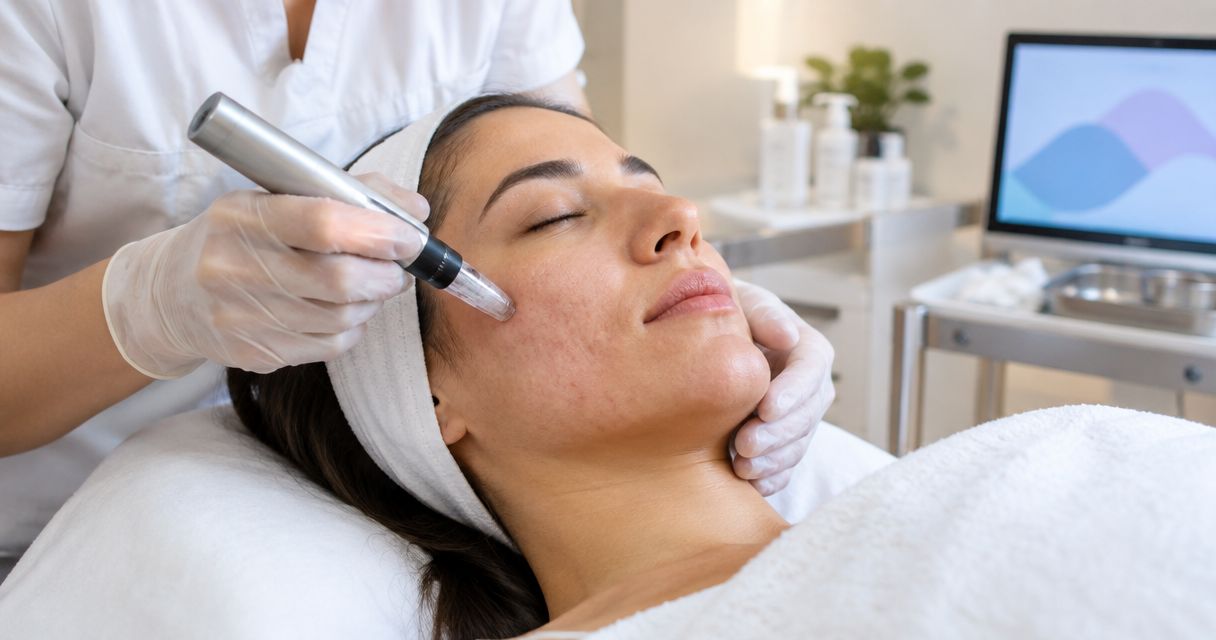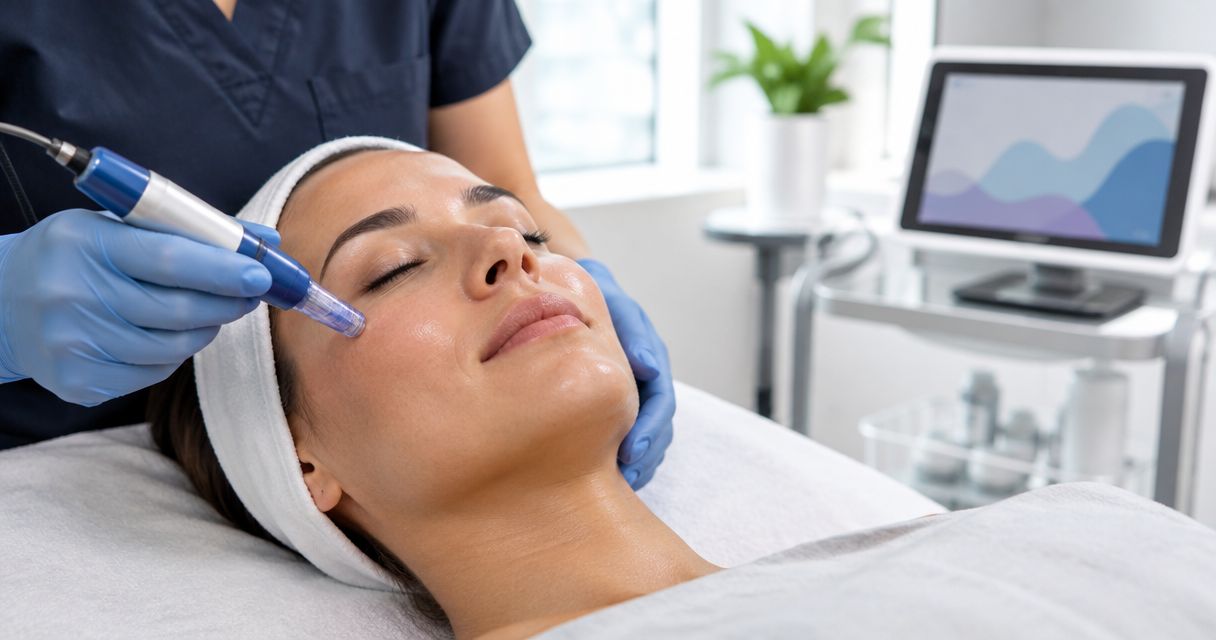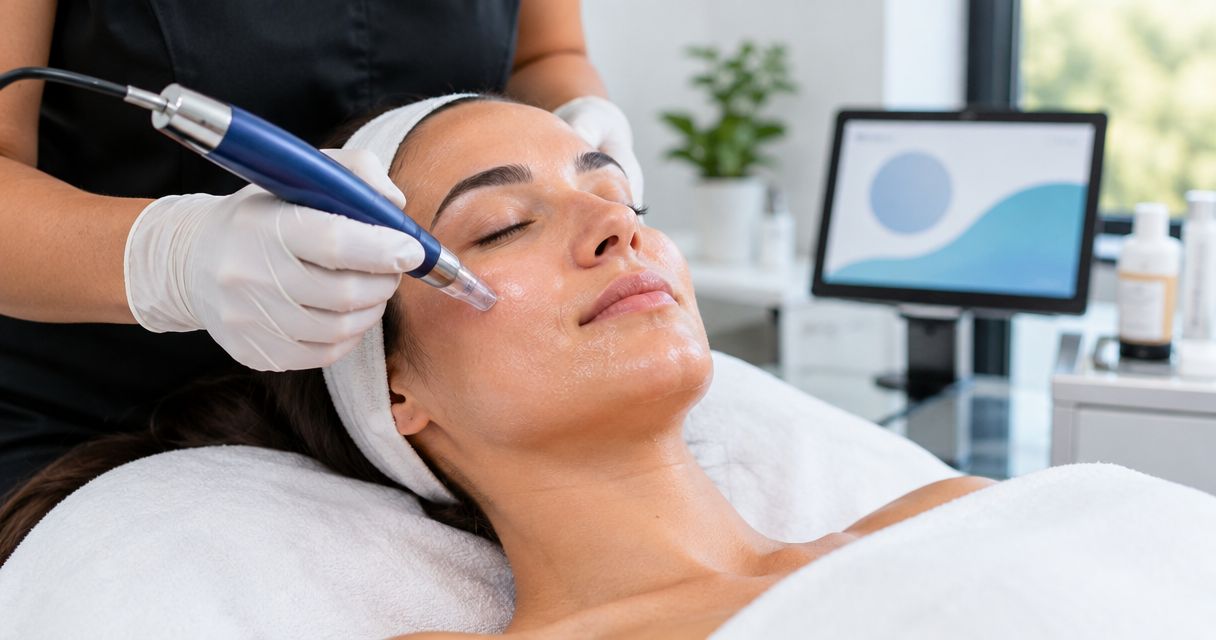
SkinPen microneedling usually takes a few days for visible redness and irritation to settle, but allow up to 7 days for common short-term skin reactions to resolve. Looking less red does not mean your skin is ready for retinol, exfoliation, heavy exercise, or unrestricted sun exposure; follow your treating provider’s aftercare instructions.
- How long does SkinPen microneedling take to heal? Expect several days of visible recovery, with reactions lasting up to 7 days.
- SkinPen aftercare separates visible recovery from permission to restart makeup, exercise, and active skincare.
- Bonnie Frances Skin offers SkinPen microneedling for Phoenix clients; plan recovery before choosing your appointment date.
- Contact your treating provider if pain, redness, swelling, or drainage worsens rather than improves.
Why this matters
Plan around your skin’s recovery, not just the appointment. Redness, dryness, and sensitivity can affect how comfortable you feel at work, outdoors, or in photographs. An appointment immediately before an important event leaves little room for an unexpectedly noticeable reaction.
Bonnie Frances Skin offers SkinPen microneedling in Phoenix. Before booking, explain whether your next few days involve outdoor work, strenuous exercise, makeup, or an event where visible redness would be a problem.
For a 2026 appointment, use the timeline below as a planning guide—not personal clearance to restart your usual routine. Your provider’s written instructions take priority because they reflect your treatment and skin history.
How long does SkinPen microneedling take to heal?
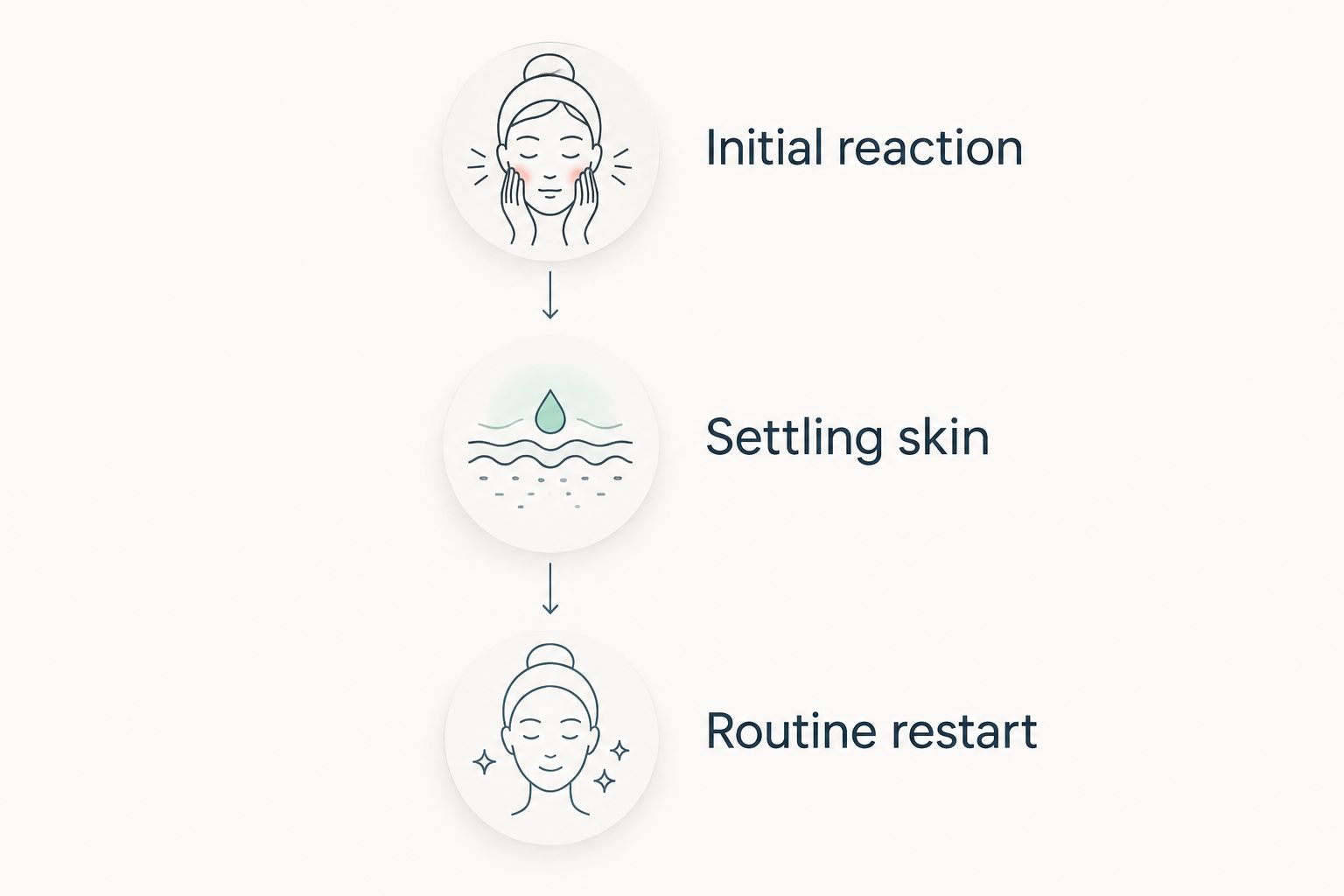
SkinPen recovery has separate milestones: the initial reaction settles, your skin becomes comfortable again, and your provider clears you to resume restricted activities. These milestones do not necessarily happen together. SkinPen patient labeling describes common reactions such as redness, swelling, tightness, dryness, and peeling that generally resolve within 7 days.
| Recovery stage | What you might notice | What the stage means |
|---|---|---|
| Initial reaction | Redness, warmth, tightness, or swelling | Your skin needs the prescribed aftercare routine, not extra treatments. |
| Settling skin | Less redness, with possible dryness or flaking | Improvement is encouraging, but irritation can still occur. |
| Routine restart | Skin feels more comfortable and the provider’s restrictions have ended | Reintroduce products according to your instructions, not appearance alone. |
| Results assessment | Changes in the concern being treated | Assessing results is different from checking whether surface irritation has resolved. |
This is a recovery sequence, not a promise that every stage ends on a fixed day. Some people have little visible downtime; others remain noticeably irritated longer. Do not treat someone else’s recovery photograph as your deadline.
Initial reaction: protect the treated skin
Immediately after treatment, your skin can look and feel sunburned. Warmth and tightness belong in the expected-reaction discussion, but significant or increasing pain needs a call to your provider.
Use only the aftercare products and cleansing instructions you receive. Avoid adding a soothing mask, facial tool, scrub, or unfamiliar serum simply because your skin feels different. More products create more opportunities for irritation.
Settling skin: leave flakes alone
As redness improves, dryness or light peeling can become more noticeable. Do not pull at loose skin or scrub it away to make makeup sit better. Let it shed without friction.
Skin that looks calmer can still sting when exposed to an irritating product. If your approved routine causes persistent burning, stop the suspected irritant and contact your treating provider rather than experimenting with replacements.
Routine restart: follow clearance, not the mirror
The return to your normal routine depends on the activity and the instructions you were given. Makeup, exercise, retinoids, exfoliating acids, swimming, and sun exposure are not interchangeable decisions.
For your 2026 treatment plan, ask for a written restart schedule before leaving the appointment. A clear list prevents the common mistake of interpreting less redness as permission to resume everything.
Why SkinPen healing time varies
Recovery depends on more than the device name. Discuss these factors with your provider rather than choosing a date based only on a general downtime estimate.
- Treatment depth and intensity. The treatment settings and extent of the treated area affect the skin response. Ask what level of redness and irritation your specific session is expected to produce.
- Your starting skin condition. Existing irritation or a compromised skin barrier changes the treatment discussion. Report burning, flaking, a rash, or recent sunburn before the appointment.
- Your skincare products. Retinoids, exfoliating acids, and other irritating products can complicate recovery if restarted too soon. Bring your actual product names, not just a description such as anti-aging serum.
- Heat, sunlight, and activity. Exercise, hot environments, and sun exposure matter during aftercare. Plan around your real schedule, including outdoor work and commuting.
- Your medical and reaction history. Tell the provider about medications, cold sores, previous pigment changes, abnormal scarring, and reactions to earlier procedures. The provider needs that history to assess suitability and aftercare.
None of these factors lets you calculate an exact healing date at home. They identify questions that deserve an individual answer before treatment.
What should you do while SkinPen heals?
Keep aftercare simple and specific to your treatment. A recovery routine is not the time to test products or combine procedures. Follow the written instructions even if your skin seems to recover faster than expected.
Use the approved cleansing and moisturizing routine
Ask when you should first cleanse, what cleanser to use, and which moisturizer or post-procedure product belongs in your routine. Wash your hands before touching treated skin and avoid rubbing with washcloths or cleansing brushes.
Do not assume your usual moisturizer is appropriate just because it works on untreated skin. Fragrance, exfoliating ingredients, and other components can be uncomfortable on recently treated skin. Your provider should identify what to use and what to leave out.
Avoid unnecessary heat and friction
SkinPen patient aftercare guidance advises avoiding sweaty exercise and sun exposure for 72 hours after treatment. Follow a longer restriction if your treating provider gives one. Gentle movement is not the same as a workout that leaves your face hot and sweaty.
Consider ordinary sources of friction, too: tight equipment, rubbing towels, or repeatedly touching your face. Tell your provider if work requires protective equipment against the treated area so you can discuss practical precautions before the session.
Make sun protection practical
Physical protection matters while you follow your provider’s instructions about when and how to apply sunscreen. Shade, a broad-brimmed hat, and reducing direct exposure help you avoid relying on a product your skin is not yet ready to tolerate.
Phoenix clients planning treatment in 2026 should account for time outside, not just planned sunbathing. If your job keeps you outdoors, discuss scheduling before booking. Ask which sunscreen to use and when to begin applying it after treatment.
Pause active skincare until instructed
Retinol, prescription retinoids, exfoliating acids, scrubs, and potentially irritating treatments do not belong in the immediate recovery routine unless your provider specifically directs otherwise. Restarting them because your face looks normal can trigger avoidable irritation.
Vitamin C is also a product-specific question, not automatic clearance. Concentration, formulation, and your skin’s response matter. The guide to vitamin C serums for brightening concerns routine skincare; it does not replace post-microneedling instructions.
Can I wear makeup the next day after SkinPen?
Wait at least 24 hours before makeup, and longer if your provider instructs you to. SkinPen patient guidance uses this minimum restriction; it is not a guarantee that every person’s skin is ready at that point.
Do not cover skin that remains raw, oozing, or unusually irritated without contacting your provider. When you are cleared to resume makeup, use clean application tools and avoid rubbing during application or removal.
If you need makeup for work or a scheduled event, discuss that requirement before treatment. Moving the appointment is simpler than trying to disguise a reaction with products your skin cannot tolerate.
Can I exercise while my skin is still pink?
Avoid sweaty exercise for 72 hours after SkinPen, following the device’s patient aftercare guidance. Remaining pink is an additional reason to check your instructions, not a reason to test your tolerance with a harder workout.
Hot yoga, strenuous running, and other heat-producing exercise conflict with the goal of avoiding heat and sweating during that restriction. Ask your provider about your specific activity, especially if exercise is part of your job.
For a 2026 race, outdoor shift, or fitness event, schedule treatment around the recovery restriction. Do not assume a shower after exercise removes the concern: the issue includes heat, sweat, and irritation during the activity.
Does healed skin mean the treatment results are finished?
No. The end of redness or peeling marks improvement in the immediate skin reaction, not completion of the treatment’s intended effect. Microneedling results develop on a different schedule from visible downtime.
Ask when your provider wants to reassess the concern being treated. Comparing your skin every few hours encourages decisions based on temporary swelling, lighting, or dryness rather than a useful treatment review.
Take progress photographs only if you can keep lighting and positioning consistent. Do not use an early improvement—or an early lack of improvement—to justify booking another procedure before your provider recommends it.
When should you contact your provider?
Contact your treating provider when symptoms worsen instead of settling. A general recovery estimate should never persuade you to ignore increasing pain, spreading redness, unusual warmth, pus, or other drainage.
Blisters, a cold-sore-like eruption, persistent significant swelling, or a new concerning skin change also deserve prompt advice. Mention when the symptom started and whether it is spreading or becoming more uncomfortable.
Fever or feeling unwell alongside worsening skin symptoms warrants prompt medical evaluation. Seek emergency care for difficulty breathing or rapidly developing facial or throat swelling. These are not routine aftercare questions to leave until a scheduled follow-up.
Is SkinPen a sensible choice before an important event?
SkinPen is a poor fit immediately before an event where you cannot accommodate redness, dryness, or changes in makeup application. Its potential benefit is treatment of an appropriate skin concern; its trade-off is recovery that does not follow a guaranteed cosmetic deadline.
Bonnie Frances Skin is a local option for Phoenix clients seeking SkinPen microneedling. Choosing a nearby provider makes it practical to discuss your skin history, scheduling constraints, and aftercare questions, but it does not eliminate downtime or the need for a suitability assessment.
Before booking a 2026 appointment, explain your event date and ask whether treatment should be scheduled earlier or postponed. Do not substitute another exfoliating procedure during recovery to chase a smoother appearance.
FAQ
How long does SkinPen microneedling take to heal completely?
SkinPen’s common short-term reactions generally resolve within 7 days, although visible recovery and the development of treatment results are different timelines. Follow your provider’s instructions before restarting restricted products or activities.
Is it normal to look red after SkinPen?
Redness is an expected short-term reaction after SkinPen microneedling. Contact your provider if redness spreads, becomes more painful, or occurs with worsening warmth, swelling, or drainage.
Can I go to work after SkinPen microneedling?
Returning to work depends on your symptoms and job requirements, not a universal clearance time. Discuss outdoor exposure, heat, sweating, face coverings, and makeup requirements with your provider before treatment.
When can I wear makeup after SkinPen?
Wait at least 24 hours before wearing makeup after SkinPen, and follow any longer restriction from your provider. Do not apply makeup over raw, oozing, or unusually irritated skin without advice.
Can I use retinol as soon as the redness disappears?
No, the disappearance of redness does not automatically clear you to restart retinol. Follow your provider’s restart instructions for retinoids, exfoliating acids, and other potentially irritating products.
Should my skin peel after SkinPen?
Dryness and peeling can occur after SkinPen, but peeling is not required for treatment to have an effect. Do not pick or scrub loose skin; follow the approved moisturizing routine.
Does Bonnie Frances Skin offer SkinPen in Phoenix?
Bonnie Frances Skin offers SkinPen microneedling in Phoenix, Arizona. Discuss suitability, expected downtime, and your aftercare plan before scheduling treatment.
One last thing
Ask your provider to distinguish what looks healed from what is cleared to restart. That single distinction helps prevent the most tempting recovery mistake: returning to your full routine the moment redness fades.
Before leaving, make sure you know which symptoms require a call and how to reach the treating provider. Written instructions are more useful than trying to remember every detail while your skin feels warm and tight.