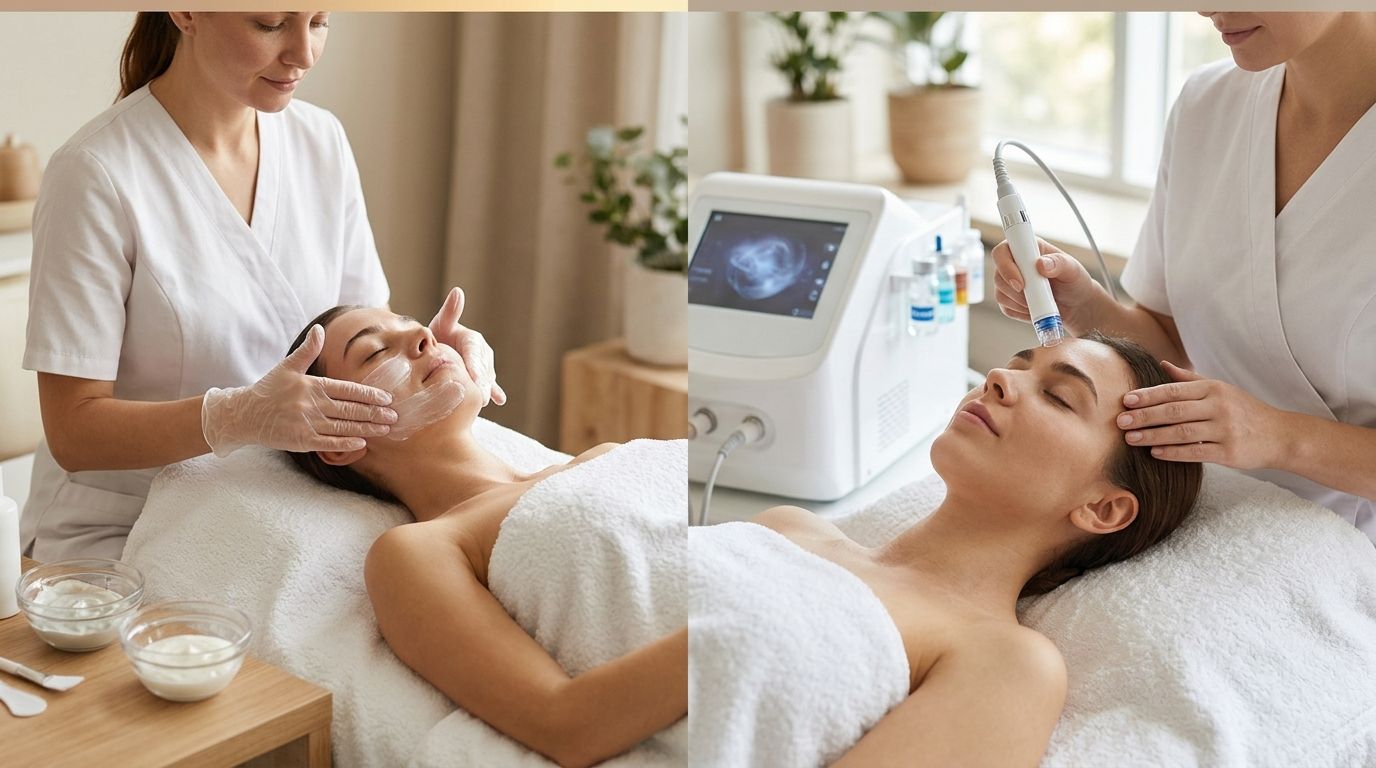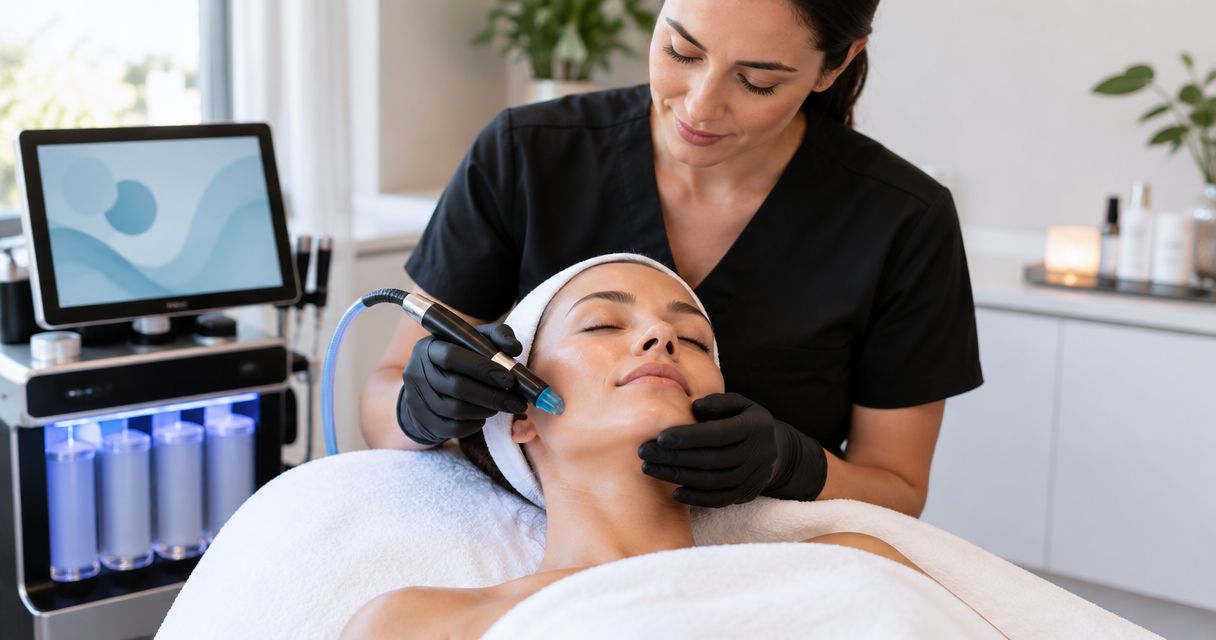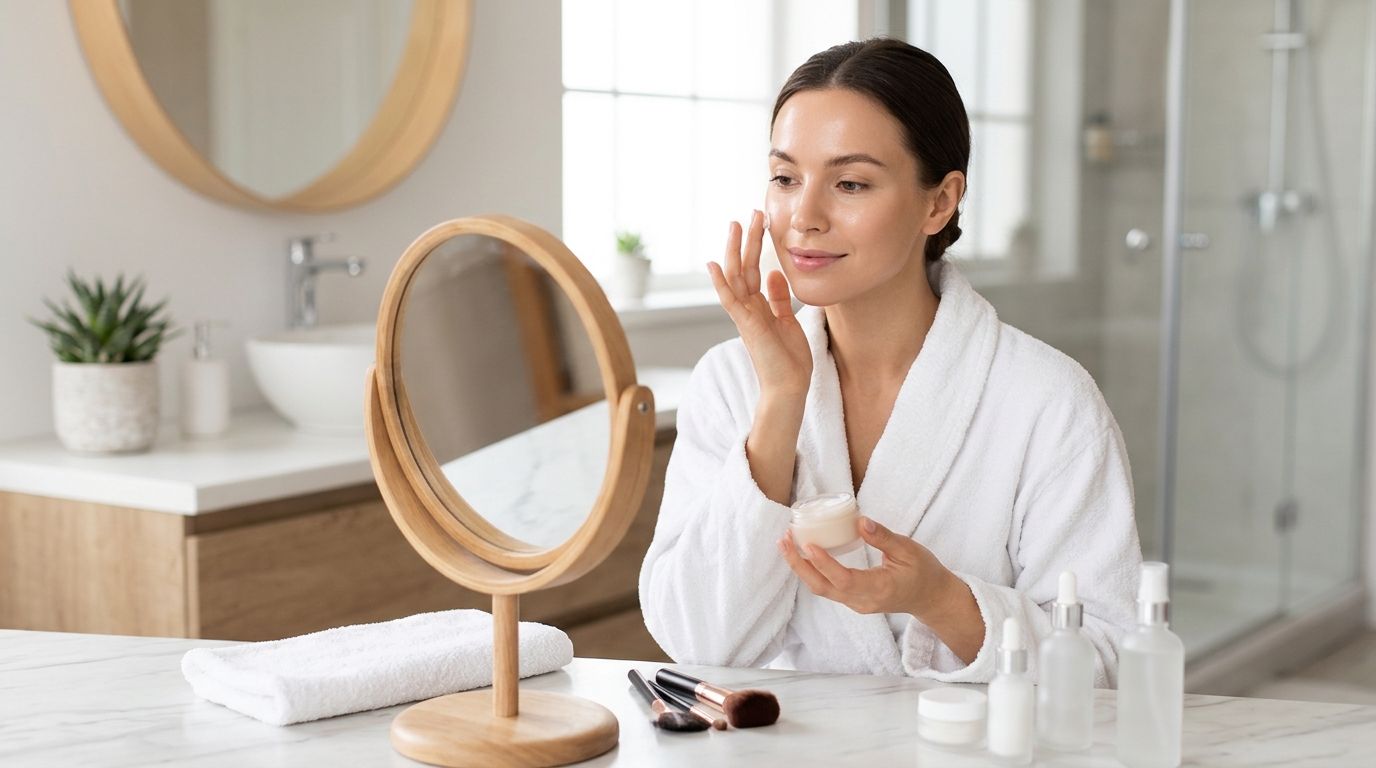
Yes, you can wear makeup after a Hydrafacial once your treating provider clears it and your skin feels comfortable; do not assume that means immediately after every appointment. Exfoliation, extractions, additional treatments, and irritation can change your aftercare instructions, so skip makeup on skin that is stinging, broken, swollen, or unusually red.
- Can you wear makeup after a hydrafacial? Yes, when your provider clears it and your skin feels comfortable.
- Hydrafacial aftercare depends on your treatment and skin response, not a universal waiting period.
- Bonnie Frances Skin offers Hydrafacial treatments for local Phoenix clients.
- Use clean makeup tools, apply without rubbing, and stop if a product stings.
- Makeup with SPF does not replace a separate sunscreen routine.
Can you wear makeup after a Hydrafacial?
The decision depends on your skin and the instructions for your actual treatment. A straightforward appointment and an appointment that includes another exfoliating procedure do not automatically have the same makeup restrictions. Get the answer before you leave, rather than choosing a waiting period from a social post.
Bonnie Frances Skin is best for Phoenix clients seeking local Hydrafacial care. Ask your treating provider whether your planned makeup is appropriate after the specific treatment you receive.
Use this comparison to decide what to discuss at checkout in 2026:
| Your situation | Best next move | Why it matters |
|---|---|---|
| Skin feels comfortable and your provider permits makeup | Use familiar products and clean tools | Permission applies to your treatment, not every facial |
| Skin stings, feels hot, or looks increasingly irritated | Leave makeup off and contact your provider | Covering a reaction makes it harder to observe |
| You also received dermaplaning or a chemical peel | Follow the combined-treatment instructions | The additional procedure can change aftercare |
| You need makeup for an event that day | Discuss the event before treatment | You need an appointment plan that allows for your appearance requirements |
| You have open, scratched, or weeping areas | Do not apply makeup over them; seek guidance | These areas need assessment rather than cosmetic coverage |
Why this matters
The real question is not whether foundation will look good afterward. It is whether applying and removing it will irritate recently treated skin. A comfortable application is only part of the decision; scrubbing off a long-wear formula later also matters.
For your 2026 appointment, separate cosmetic downtime from aftercare. Being able to return to daily activities does not mean every skincare product, makeup formula, or removal method is appropriate immediately afterward. Your provider's directions take priority over a generic claim of no downtime.
Makeup is also optional. If you do not need coverage, leaving it off removes an application-and-removal step from your day. That is a practical reason to go without it, not proof that all makeup damages Hydrafacial results.
How to decide whether your skin is ready
Use this sequence before applying makeup. Provider clearance comes first; a comfortable-looking face does not cancel an instruction to wait. If the directions are unclear, ask for clarification instead of testing several products on freshly treated skin.
- Check instructions. Confirm whether your provider allows makeup and whether any restrictions apply to your treatment. Ask specifically about foundation, concealer, and eye makeup if you plan to use them.
- Check comfort. Look for increasing redness, swelling, broken areas, or discomfort. Do not use makeup to conceal a reaction that needs your provider's attention.
- Choose familiar makeup. Use a product you already tolerate rather than experimenting with a new formula. Familiarity does not guarantee tolerance, but it avoids introducing another unknown.
- Apply gently. Use clean hands or clean tools, keep pressure light, and stop if application causes stinging or burning.
- Remove gently. Follow your provider's cleansing instructions. Avoid repeated rubbing to remove coverage that is difficult to dissolve.
If you cannot remove your chosen makeup gently with the cleansing method your provider permits, choose a different formula or skip coverage. The removal plan belongs in the decision before application, not at bedtime when your skin already feels uncomfortable.
Which makeup approach makes sense afterward?
No makeup category is automatically safe for every person after a facial. Words such as mineral, natural, or clean do not establish whether a formula suits your recently treated skin. Choose based on your provider's advice, your own tolerance, and how easily the product removes.
| Approach | Best for | Advantage | Limitation |
|---|---|---|---|
| No complexion makeup | People who do not need coverage | Avoids extra application and removal | Does not conceal redness or uneven tone |
| Familiar light-coverage makeup | People cleared for makeup who want some coverage | Lets you use a known formula with less layering | Can still irritate; light coverage is not a safety certification |
| Mineral powder | People who already tolerate that specific powder | Offers an alternative to liquid foundation | Buffing can create friction; mineral does not mean irritation-free |
| Long-wear or waterproof coverage | People whose provider has cleared the formula and removal method | Suits situations requiring durable coverage | Removal can require more effort and rubbing |
No complexion makeup: best for keeping aftercare simple
Skipping foundation avoids unnecessary handling of your face. It also lets you observe redness or other changes without removing coverage first. The drawback is straightforward: you will not get cosmetic concealment.
Do not confuse a makeup-free day with a product-free day. Continue the moisturizer and sun-protection steps your provider permits. Leaving off foundation is not a reason to leave treated skin unprotected outdoors.
Familiar light coverage: best for a cleared return to makeup
If your provider approves makeup, use only the coverage you need. Avoid building several layers to hide every trace of temporary redness. More coverage also means more product to remove.
Keep skincare actives separate from cosmetic coverage. A foundation marketed for blemishes or renewal can contain ingredients your provider wants you to pause. Read the formula rather than assuming everything sold as makeup follows the same aftercare rules.
Mineral makeup: best for people who already tolerate it
Mineral makeup is an option, not a universal post-treatment recommendation. Your skin can react to ingredients in a powder just as it can react to ingredients in a liquid. The brush and application technique matter too.
Avoid vigorous buffing across sensitive areas. If a powder looks patchy, adding pressure or repeatedly sweeping the same spot is not the answer. Stop and leave that area alone rather than trying to polish the finish into place.
Why makeup timing varies after a Hydrafacial
There is no single waiting period that accounts for every treatment and every skin response. For a 2026 aftercare plan, these are the details to discuss:
- Treatment combination. A Hydrafacial combined with dermaplaning or a chemical peel needs instructions that address the whole appointment.
- Extractions and skin condition. Tender or disrupted areas need different handling from comfortable, intact skin. Point them out before leaving.
- Existing sensitivity. Tell your provider about eczema, rosacea, allergies, or previous reactions so they can assess their relevance.
- Product ingredients. Coverage containing exfoliating or acne-treatment ingredients deserves a specific check against your aftercare directions.
- Application and removal. Repeated buffing, rubbing, or scrubbing adds friction regardless of the makeup brand.
Bring up these factors before treatment when possible. If your provider gives a waiting instruction, ask what it applies to and what signs mean you should wait longer. Clear instructions are more useful than a vague promise that you can resume everything immediately.
What should you put on your skin instead?
Follow the routine your provider gives you rather than adding products because your skin feels freshly treated. Keep the distinction between moisturizing and treating clear: a moisturizer supports comfort, while an exfoliating or retinoid product introduces another active step.
Ask when to restart your usual acids, scrubs, retinoids, or acne treatments. Do not invent a restart date based on how another person's skin recovered. If a normally comfortable product burns after treatment, stop using it and ask your provider what to do next.
For everyday sun protection, the American Academy of Dermatology recommends broad-spectrum, water-resistant sunscreen with SPF 30 or higher, application 15 minutes before going outdoors, and reapplication every 2 hours outdoors, or after swimming or sweating. These are general sun-protection recommendations relevant to your 2026 routine, not a Hydrafacial-specific timetable; confirm which sunscreen your provider wants you to use after treatment.
Makeup with SPF does not replace that separate sunscreen routine. In Phoenix, plan shade and protective clothing alongside sunscreen rather than relying on foundation for outdoor protection. Do not rub an irritating product into freshly treated skin simply to finish your usual routine.
Can I wear foundation the same day as a Hydrafacial?
Same-day foundation depends on your provider's clearance and your skin's condition. Do not treat an appointment ending before an event as automatic permission to apply a full face immediately afterward. Ask about your event when scheduling and again before treatment begins.
If you must wear makeup for work, a wedding, or photographs, explain what that involves. Light concealer and a full-coverage, long-wear application have different application and removal demands. Your provider needs that context to advise you.
For event planning in 2026, avoid making your first experience with a treatment a last-minute experiment. Discuss a schedule that leaves room to observe your own response rather than relying on another person's recovery story.
Is it better to wait until the next day?
Waiting until the next day avoids same-day makeup handling, but it does not prove your skin is ready. If your provider gives a longer restriction, follow it. If irritation persists, do not use the calendar as permission to cover it.
The reverse matters too: do not present an overnight wait as a universal medical rule when your provider has not given that instruction. The useful question is whether your skin and treatment plan support makeup now, not whether a particular hour has passed.
What if makeup stings after my appointment?
Stop applying makeup if it stings or burns. Follow your provider's instructions for gently removing the product, and contact the clinic if discomfort continues or worsens. Do not repeatedly test other formulas on the same irritated area.
Seek prompt medical advice for significant swelling, blistering, worsening pain, or signs of infection. Trouble breathing or swelling involving the lips, tongue, or throat requires emergency care. These are not symptoms to conceal while waiting for makeup to settle.
FAQ
Can you wear makeup after a Hydrafacial?
Yes, once your treating provider permits it and your skin feels comfortable. Avoid makeup on irritated, broken, swollen, or weeping skin, and follow instructions for any additional procedures.
Do I have to wait until the next day to wear foundation?
There is no universal next-day rule for every Hydrafacial appointment. Follow your provider's timing and wait longer if your skin remains irritated.
Is mineral makeup better after a Hydrafacial?
Mineral makeup is not automatically better or irritation-free after a Hydrafacial. Use a formula you already tolerate only after clearance, and avoid vigorous brush buffing.
Can I use makeup with SPF instead of sunscreen?
Makeup with SPF does not replace a separate sunscreen routine. The American Academy of Dermatology recommends broad-spectrum, water-resistant sunscreen with SPF 30 or higher for general sun protection; confirm your post-treatment product with your provider.
Can I wear makeup after a Hydrafacial and dermaplaning together?
Follow the instructions for the combined treatment rather than Hydrafacial-only advice. Additional exfoliation can change the aftercare your provider recommends.
What should I ask Bonnie Frances Skin before my Hydrafacial?
Ask Bonnie Frances Skin whether your planned treatment permits same-day makeup, which products to pause, and how to cleanse afterward. Mention any event, sensitivity, or previous reaction before treatment.
Will wearing makeup ruin my Hydrafacial?
Wearing makeup does not automatically mean you have ruined your Hydrafacial. The practical concerns are whether your provider permits it, whether the formula irritates your skin, and whether you can apply and remove it gently.
One last thing
Choose your makeup remover before you choose your foundation. An easy-looking application can still create an uncomfortable evening if the formula requires scrubbing to remove. When your provider clears makeup, make gentle removal part of that permission check.
Before your next appointment, save your aftercare instructions somewhere you can find them without searching through messages. Include the clinic's contact details and the products you were told to pause. A clear plan is more useful than a bag of replacement cosmetics.