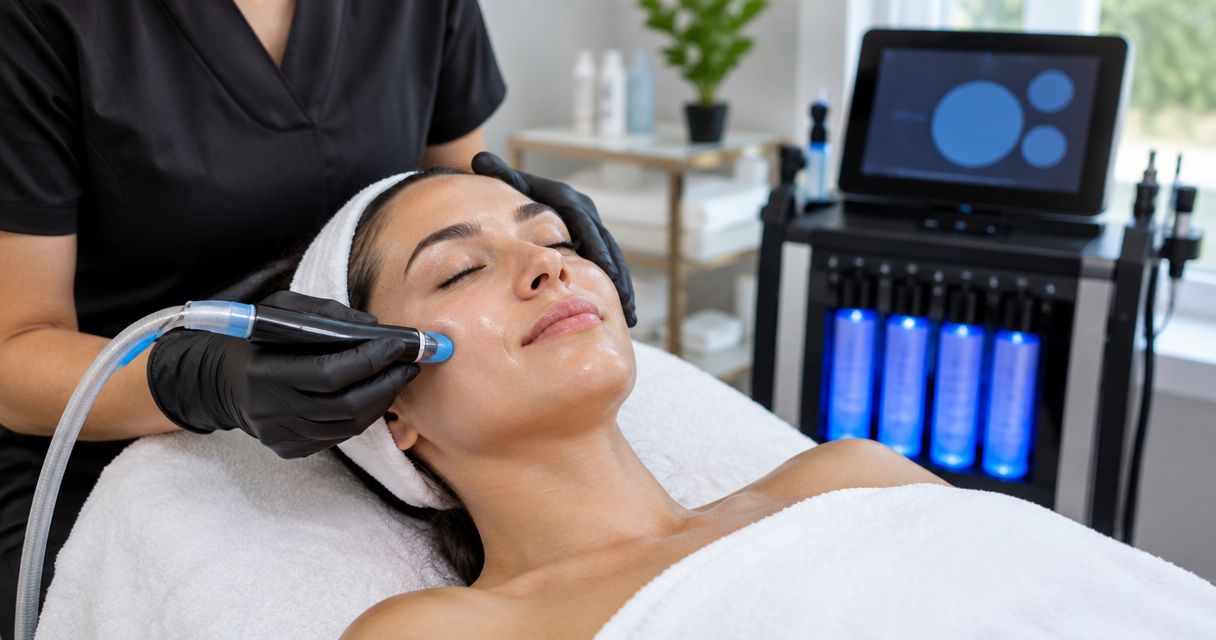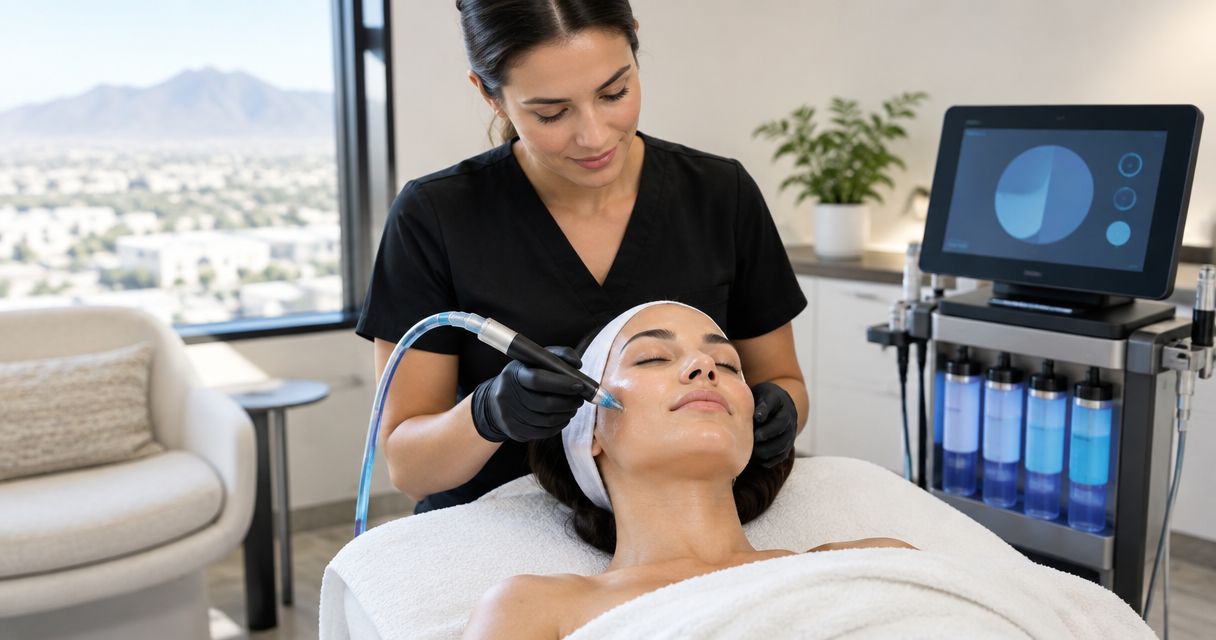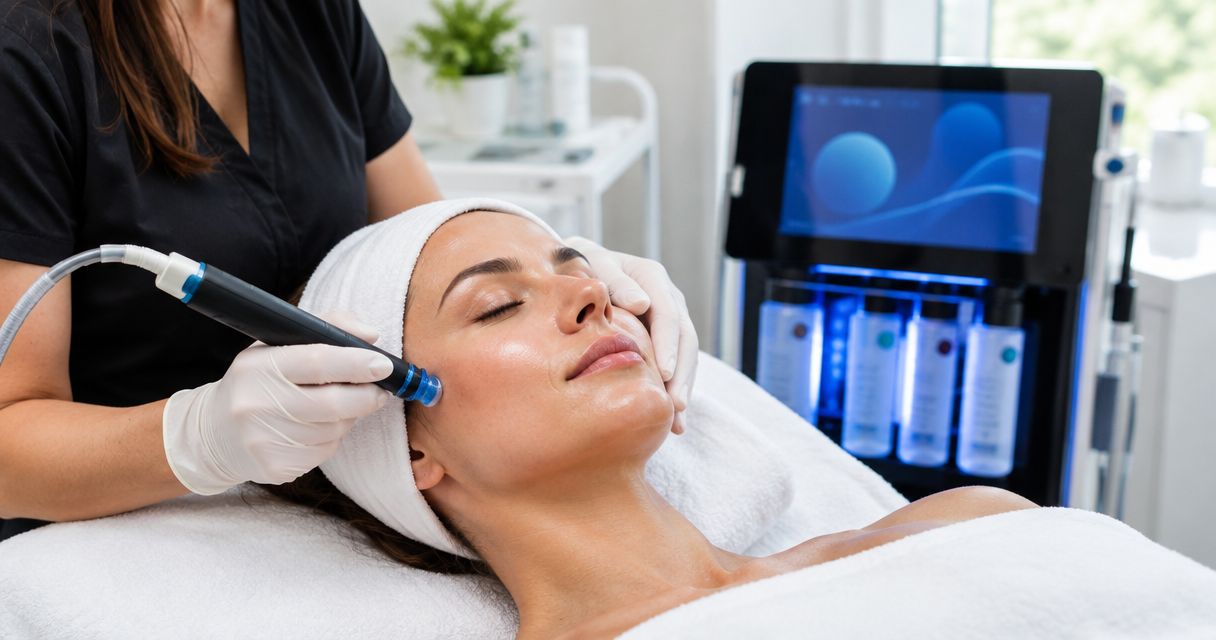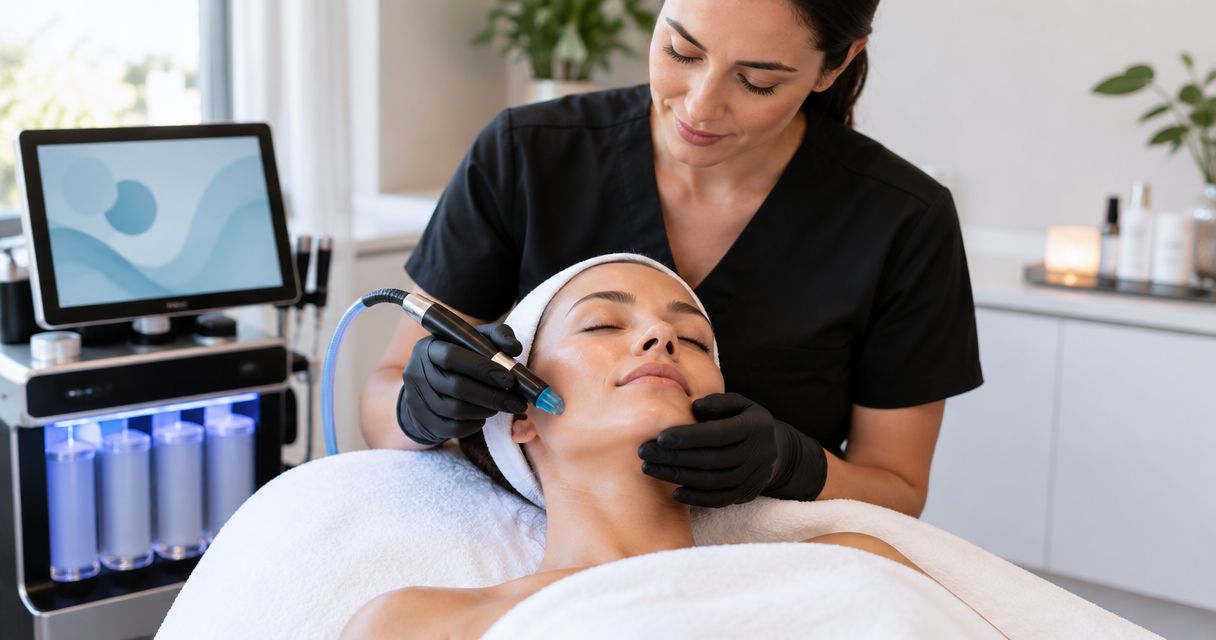
A hydrafacial is worth it in 2026 if you want temporary hydration, smoother-feeling skin, and a refreshed appearance—not a treatment for deep wrinkles or indented acne scars. Its value depends on whether that short-term improvement matches your goal and whether your skin tolerates the treatment. Ongoing skincare and repeat appointments are separate commitments, so judge the result without assuming one session will permanently change your skin.
- Is a hydrafacial worth it? Yes for temporary hydration and surface smoothness, not permanent wrinkle or scar correction.
- Bonnie Frances Skin is a local option for Phoenix clients seeking in-person hydrafacial care.
- Choose the treatment around your skin concern; more exfoliation is not automatically better.
- Ask about ingredients, irritation risks, aftercare, and the full treatment plan before booking.
Is a hydrafacial worth it in 2026?
Yes for a surface refresh; no as a substitute for treatment of persistent acne, scarring, or significant skin laxity. A hydrafacial combines exfoliation, suction-based cleansing, and topical product application. Those steps address the skin surface, which explains both the appeal and the limits.
If you are considering local care, Bonnie Frances Skin offers hydrafacials in Phoenix. Your starting point should be the concern you want addressed, not the most elaborate treatment name.
| Option | Best for | Main advantage | Main limitation |
|---|---|---|---|
| Hydrafacial | Temporary hydration and surface smoothness | Combines several surface-care steps in one appointment | Does not correct deep scars or significant laxity |
| Dermaplaning | Removing fine facial hair and superficial dead skin | Addresses peach fuzz directly | Does not treat the underlying cause of acne or pigmentation |
| Chemical peel | Selected texture or pigmentation concerns | Exfoliation can be selected for a specific concern | Irritation and recovery vary with the peel |
| Microneedling | Selected acne scars and texture concerns | Targets concerns beyond surface cleansing | Requires suitability screening and recovery planning |
| Daily skincare | Maintaining hydration and protecting skin | Provides consistent care between appointments | Does not reproduce every professional procedure |
These options are not interchangeable. A treatment that suits rough surface texture is not automatically the right answer for inflamed acne, melasma, or scars.
Why this matters
A disappointing facial often starts with the wrong expectation. If you expect softer skin and a refreshed appearance, a surface treatment fits the assignment; if you expect an indented scar to disappear, the same treatment misses your goal.
For your 2026 skincare plan, separate how your skin looks immediately afterward from whether the underlying concern changes. Both matter, but they answer different questions. A pleasant appointment does not establish lasting correction, and a temporary result is not worthless simply because it fades.
Decide what success means before you book. That gives you a fair way to judge the appointment instead of comparing your skin with edited photographs or unrelated treatment results.
When a hydrafacial makes sense
Best for temporary hydration and surface smoothness
A hydrafacial makes sense when your priority is a refreshed appearance and your skin is suitable for exfoliation. Hydrating products can improve the feel and appearance of dry-looking skin, while exfoliation removes superficial dead skin cells.
The limitation is important: dry-looking skin and an irritated skin barrier are not the same problem. Burning, cracking, or persistent redness calls for assessment rather than automatically adding an exfoliating appointment. Tell the provider what your skin feels like, not just how it looks.
Best for people who understand the result is temporary
A hydrafacial is easier to justify when you want an occasional cosmetic refresh and accept that maintenance continues afterward. It is a weaker fit when you expect one appointment to replace your home routine.
For a closer look at the difference between an immediate result and maintenance, read how long a hydrafacial lasts. Ask the treating provider what changes to assess and when to assess them; do not assume another person's experience predicts yours.
Best for an assessed plan, not an automatic package
An initial appointment can help you decide whether you like the treatment and tolerate its steps. That is different from committing to repeated sessions before you know your response.
Judge the first treatment against your original concern before committing to a series. Ask why repeat appointments are recommended, what they are intended to maintain, and what would prompt a change in approach.
When a hydrafacial is not the right priority
Skip it as the main treatment for indented acne scars
Surface exfoliation does not rebuild the tissue changes responsible for indented acne scars. A smoother finish can change how skin looks temporarily without correcting the scar itself.
If scars are your main concern, ask for an assessment focused on scar type and suitable treatment options. Do not treat an immediate glow as evidence that the underlying scarring has improved.
Wait if your skin is actively irritated
Exfoliation is not a default remedy for burning, rawness, a rash, or sunburn. Adding suction or exfoliating ingredients to already irritated skin introduces another source of stress.
Describe recent reactions and current symptoms before treatment. A provider should assess whether to postpone the appointment; persistent or unexplained symptoms deserve medical evaluation rather than another cosmetic experiment.
Choose medical assessment for persistent inflammatory acne
Clogged pores and inflammatory acne are related but different concerns. Surface cleansing does not replace a plan for recurring painful lesions, acne that scars, or a condition that keeps worsening.
A cosmetic facial can sit alongside an appropriate care plan, but it should not delay diagnosis or treatment. If the problem is persistent disease rather than a temporary cosmetic concern, address the disease first.
Why hydrafacial value varies
The most useful comparison in 2026 is between your goal and the actual treatment—not between impressive-sounding appointment names. These factors determine whether the experience is relevant to you:
- Your main concern: Temporary dullness and surface dryness are different targets from scars, melasma, or deep wrinkles.
- Your skin's current condition: Comfortable, intact skin requires a different assessment from skin that is burning, peeling, or inflamed.
- The treatment steps: Ask which exfoliating ingredients, suction settings, and topical products are planned rather than assuming every appointment is identical.
- Your existing routine: Retinoids, exfoliating acids, acne treatments, and recent procedures belong in the suitability discussion.
- Your expectations afterward: A temporary cosmetic improvement has different value from a treatment intended to change a persistent condition.
- Your willingness to maintain basic care: Gentle cleansing, moisturizer, and sun protection remain relevant after the appointment.
A longer treatment menu does not prove a better match. Each additional step should have a clear purpose that relates to your concern and skin tolerance.
How to decide before booking
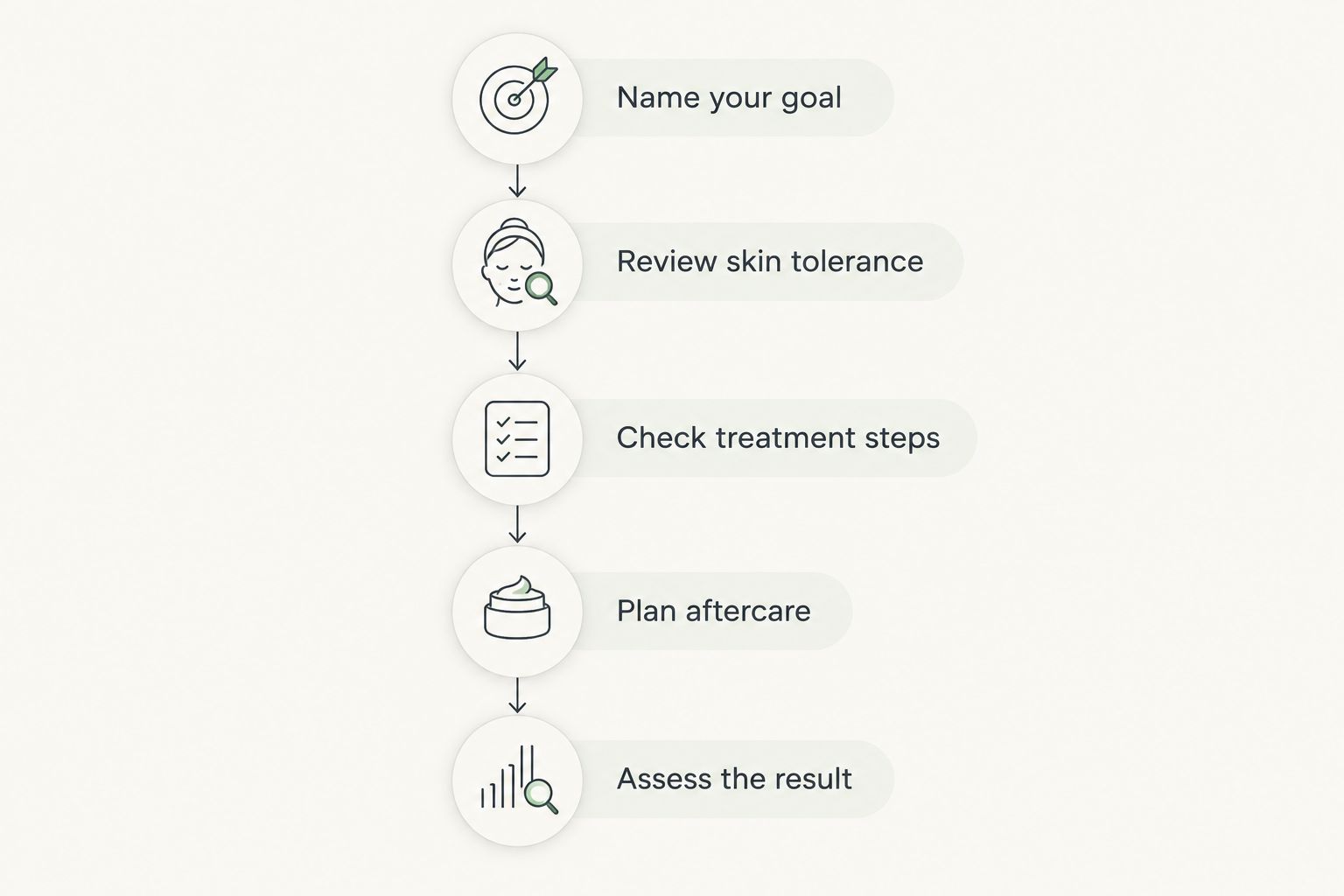
Use this sequence to turn a general interest in facials into a specific treatment discussion. You should leave the conversation knowing what the appointment is intended to do—and what it is not intended to do.
- Name your goal. Choose the concern that matters most, such as surface dryness, roughness, or clogged pores. Avoid asking one appointment to solve every skin issue.
- Review skin tolerance. Report sensitivity, current irritation, allergies, medications, pregnancy, and recent treatments. Let the provider assess their relevance.
- Check treatment steps. Ask what will touch your skin, which steps are adjustable, and why each step fits your goal.
- Plan aftercare. Get instructions for cleansing, moisturizing, sun protection, and restarting active products. Follow the advice given for your actual treatment.
- Assess the result. Compare your skin with the goal you set before deciding whether another appointment makes sense.
For Phoenix clients seeking local, in-person hydrafacial care, Bonnie Frances Skin is a relevant option. The clinic also offers dermaplaning, chemical peels, and SkinPen microneedling, so describe the concern first rather than assuming a hydrafacial is the only treatment to discuss.
Explore your treatment options
Review the clinic before discussing which treatment fits your skin concern.
Is a hydrafacial better than a regular facial?
A hydrafacial is not automatically better than a regular facial; the better choice depends on the steps used and your skin's needs. “Regular facial” describes a broad category, not a standardized procedure.
Compare the actual treatment rather than the label. Ask about exfoliation, extraction methods, products, and adjustments for sensitivity; a gentler appointment is a better choice when additional exfoliation does not suit your skin.
Is a hydrafacial worth it before an event?
A hydrafacial is worth considering before an event if you already know your skin tolerates it and want a temporary cosmetic refresh. A first-ever treatment introduces uncertainty, even when the procedure is familiar to other people.
For a 2026 wedding, presentation, or photo session, discuss timing with the provider instead of assuming the closest appointment is the best appointment. Leave room to assess your response, and avoid combining unfamiliar treatments simply to intensify the result.
Is a hydrafacial worth it for sensitive skin?
A hydrafacial is worth considering for sensitive skin only after an assessment of your triggers and current skin condition. Sensitivity is not a diagnosis, and a treatment marketed as gentle is not automatically suitable for everyone.
Explain what causes stinging, redness, or flaking and how long those reactions persist. Ask which steps can be adjusted or omitted and whether postponement or medical assessment is more appropriate.
What should you do after a hydrafacial?
Follow the provider's instructions for the treatment you actually received. Do not assume that instructions from a friend, a different facial, or an online routine apply to your skin.
Keep the practical priorities clear:
- Cleanse gently. Avoid adding scrubs or unfamiliar active products to chase a stronger result.
- Support hydration. Use the moisturizer recommended for your skin rather than repeatedly exfoliating new dryness.
- Protect against sun exposure. The American Academy of Dermatology recommends broad-spectrum, water-resistant SPF 30 or higher; outdoors, reapply every 2 hours and after swimming or sweating.
- Report concerning reactions. Worsening pain, marked swelling, blistering, or persistent irritation needs prompt professional advice.
Sun protection remains a daily need in Phoenix, not a temporary rule reserved for treatment days. A facial does not replace protection from ultraviolet exposure.
FAQ
Is a hydrafacial worth it in 2026?
A hydrafacial is worth it in 2026 for temporary hydration and surface smoothness when your skin is suitable for treatment. It is not a substitute for treating deep acne scars, significant laxity, or persistent inflammatory acne.
Will a hydrafacial permanently shrink my pores?
A hydrafacial does not permanently shrink pores. Removing surface debris can change their appearance, but that is different from permanently changing pore structure.
Can a hydrafacial get rid of acne scars?
A hydrafacial does not correct indented acne scars. Ask for a scar-focused assessment rather than judging scar improvement by an immediate smoother-looking finish.
Can I get a hydrafacial if I use retinol?
Retinol use needs to be discussed before a hydrafacial because it can affect skin sensitivity and treatment planning. Tell the provider which product you use and follow individualized instructions rather than choosing your own pause period.
Should I get a hydrafacial right before a wedding?
Do not make the day before a wedding your first trial of a hydrafacial. Discuss timing with the provider and allow room to assess your skin's response before the event.
Do I still need sunscreen after a hydrafacial?
Yes, you still need sunscreen after a hydrafacial. Use broad-spectrum, water-resistant SPF 30 or higher, and follow the provider's aftercare instructions.
Where can I discuss a hydrafacial in Phoenix?
Bonnie Frances Skin offers hydrafacials in Phoenix. Describe your main concern, current skincare routine, and recent reactions so the discussion focuses on suitability rather than the treatment name alone.
One last thing
The most useful test is whether the treatment improved the concern you booked it for. An immediate glow is not proof of scar correction, acne control, or lasting wrinkle reduction.
Before your next 2026 appointment, write down the result you want in plain language. That small step makes it easier to choose suitable care—and to stop repeating a treatment that feels pleasant but does not address your priority.