A hydrafacial’s visible glow generally lasts for days, not permanently; hydration, smoothness, and congestion do not all change on the same schedule. Your starting skin condition and aftercare affect how long you notice the improvement, and a brighter finish does not mean scars, pigmentation, or wrinkles have been corrected.
- How long does a hydrafacial last? Expect temporary radiance, not permanent correction of underlying skin concerns.
- Judge hydration, smoothness, and congestion separately; they do not share a single expiration date.
- Bonnie Frances Skin offers hydrafacial treatments for Phoenix clients seeking professional skincare.
- Gentle aftercare and sun protection matter more than adding extra exfoliation to preserve your glow.
Why this matters
If you are booking a hydrafacial in 2026, separate the result you want from the appearance you notice immediately afterward. Freshly hydrated skin can look brighter without a lasting change in an underlying condition. That distinction helps you choose a treatment for the right reason.
Bonnie Frances Skin is a local option for Phoenix clients seeking hydrafacial treatments. The clinic also offers other skin services, but the right appointment depends on your concern—not which treatment sounds strongest. You can review the clinic through Bonnie Frances Skin before discussing your goals.
How long does a hydrafacial last?
A hydrafacial produces a temporary cosmetic improvement, not a fixed-duration result. The immediate glow, softer feel, and appearance of cleaner pores are separate outcomes. Treating them as a single result creates unrealistic expectations about when the treatment has worn off.
Use this breakdown to judge what you are actually seeing after your appointment:
| Result you notice | What it tells you | What it does not establish |
|---|---|---|
| Brighter appearance | The skin surface looks more radiant | Pigmentation has been permanently removed |
| Softer, smoother feel | Surface texture feels more even | Acne scars have been corrected |
| Less tightness | Skin feels more comfortable or hydrated | The cause of persistent dryness has resolved |
| Less visible congestion | Treated areas appear clearer | New congestion cannot develop |
| Softer-looking fine lines | Hydrated skin can make fine lines less noticeable | Wrinkles have been permanently reduced |
The practical question is not simply when the glow disappears. Ask whether the treatment addressed your main concern and whether your skin remained comfortable afterward. A brief improvement in radiance and a lasting change in acne scarring are different treatment goals.
For an event, tell your provider the date and whether you have had a hydrafacial before. Do not assume that a treatment advertised as having little downtime guarantees no redness or sensitivity for you.
The visible glow: a short-term result
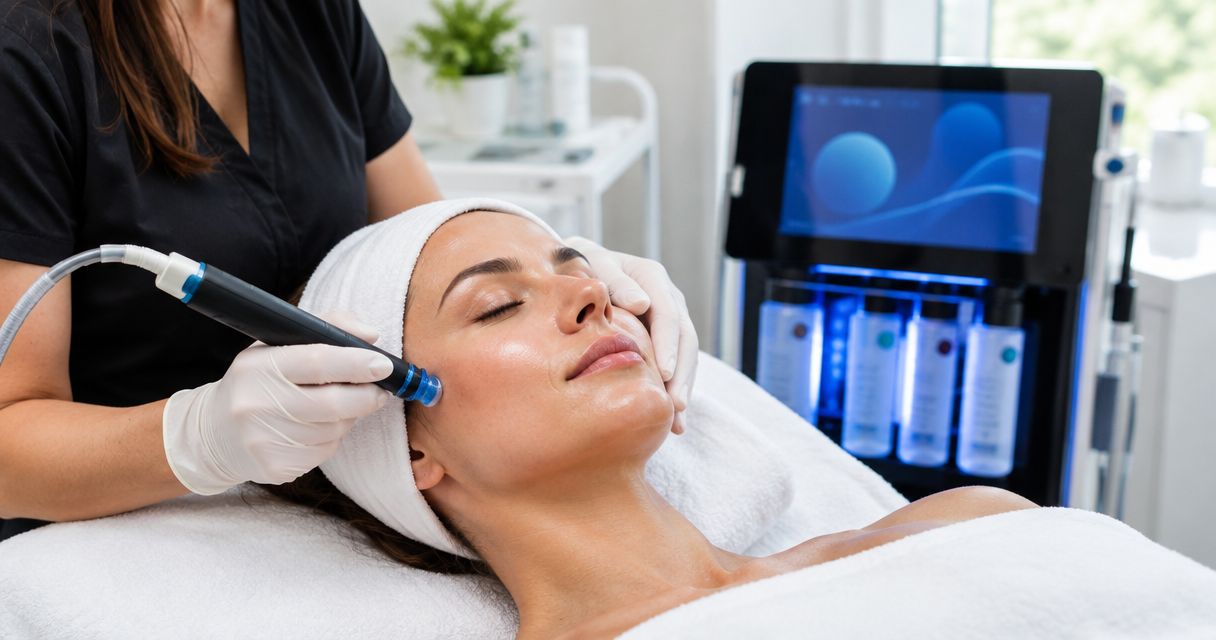
The fresh finish is often the easiest result to notice. Cleansing, exfoliation, and hydration can make the skin surface look more even and reflective. That appearance does not prove that deeper structural changes have occurred.
Best for: a short-term improvement in radiance when your skin is suitable for the treatment. The limitation is equally important: glow is a cosmetic observation, not a measure of scar correction or pigment clearance.
Assess your skin in ordinary lighting rather than relying only on a post-treatment photograph. Lighting, makeup, and the products sitting on your skin all affect how bright your complexion appears. Keep those conditions consistent when deciding whether you like the result.
Hydration and smoothness: judge comfort as well as appearance
A hydrafacial can leave skin feeling softer and less tight. However, persistent dryness needs more than an occasional treatment if your daily routine continues to irritate your skin or fails to support its moisture barrier.
Best for: discussing surface dryness and roughness with a skincare professional. The limitation is that a facial does not remove every cause of dryness, including irritation from products or an underlying skin condition.
Watch how your skin feels during cleansing and moisturizing. Burning, stinging, or increasing tightness is not evidence that the treatment is working harder. Contact your provider if discomfort persists instead of adding another exfoliant to chase the original smoothness.
Congestion: clearer pores are not permanently smaller pores
Extraction can improve the appearance of congestion, but pores continue to produce oil and collect material. A clearer-looking pore after treatment is not a permanently closed pore. Trying to maintain that appearance through repeated squeezing can irritate the skin.
Best for: discussing superficial congestion and an appropriate maintenance routine. The limitation is that an extraction-focused facial is not a substitute for diagnosis and treatment of persistent or inflamed acne.
If breakouts are your main concern, describe their pattern and the products you already use. Tell your provider about tender lesions, prescription treatments, and previous reactions. A plan based only on the appearance of pores misses those details.
Why hydrafacial results vary
Your 2026 treatment plan should reflect your skin, not a universal countdown. These factors explain why the same treatment name does not guarantee the same experience:
- Starting skin condition. Dehydration, roughness, congestion, and sensitivity are different concerns. Improvement in one does not establish improvement in all of them.
- Treatment details. Exfoliation, extraction, and the products applied affect the experience. Ask what your appointment includes rather than assuming every hydrafacial follows an identical protocol.
- Daily skincare. Harsh cleansing or overlapping exfoliating products can undermine comfort after treatment. A routine you tolerate matters more than a crowded shelf.
- Sun exposure. Ultraviolet exposure contributes to skin aging and pigmentation. A facial does not replace daily sun protection.
- Ongoing skin concerns. Persistent acne, rosacea symptoms, eczema, and pigment disorders need their own assessment. A temporary glow does not establish that those concerns are controlled.
Bring your current skincare list to the appointment. Include prescriptions and products you use only occasionally; those still matter when discussing exfoliation and sensitivity.
How to look after your skin after a hydrafacial
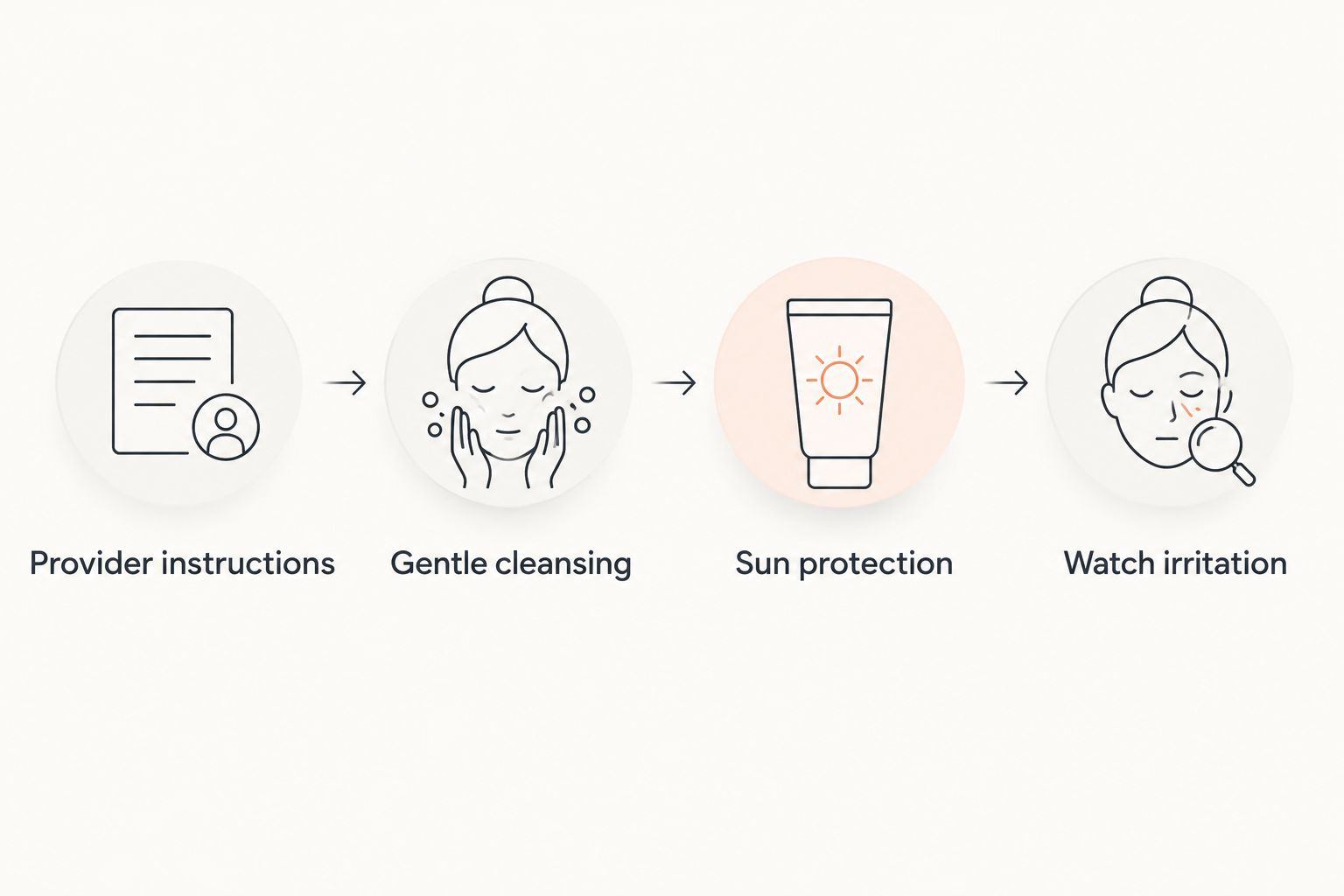
Follow the instructions for your actual treatment before following a generic online schedule. Aftercare depends on what was applied, how your skin responded, and whether other procedures were performed at the same visit.
Start with the provider’s instructions
Ask which products to continue, which to pause, and what symptoms should prompt a call. Get specific guidance on retinoids, exfoliating acids, scrubs, and prescription treatments. Do not stop a prescribed medication without guidance from the clinician responsible for it.
If you cannot remember the instructions, ask for them again. Guessing based on another person’s facial experience is a poor substitute for advice about your own treatment.
Keep cleansing and moisturizing gentle
Avoid treating a fading glow as permission to scrub harder. Extra exfoliation does not recreate professional treatment and can leave your skin uncomfortable. Use products your skin tolerates unless your provider directs a change.
Introduce changes deliberately rather than adding several new products at once. If irritation develops, a simple routine makes it easier to identify what changed and explain the problem to your provider.
Make sun protection routine
For everyday sun protection in 2026, the American Academy of Dermatology recommends a broad-spectrum, water-resistant sunscreen with SPF 30 or higher. Its general guidance includes applying sunscreen 15 minutes before going outdoors and reapplying every 2 hours outdoors, as well as after swimming or sweating.
These are general sun-protection recommendations, not a hydrafacial recovery schedule. Follow product directions and any treatment-specific advice. Shade and protective clothing also matter, especially when you spend time outdoors in Phoenix.
Watch for irritation rather than chasing shine
Comfort is a useful part of your result assessment. A glossy appearance accompanied by persistent burning, increasing redness, or swelling is not a result to maintain.
Contact your provider about unexpected or worsening symptoms. Seek medical care for a severe reaction instead of covering it with additional skincare products.
When should you book another hydrafacial?
Book around your skin’s needs and tolerance, not the first day your glow looks less obvious. The end of visible radiance does not automatically mean another treatment is appropriate. Repeating exfoliation before irritated skin has recovered is not a useful maintenance strategy.
At a follow-up, describe what improved, what did not, and any discomfort. That feedback helps distinguish a treatment you enjoy for short-term appearance from one that addresses your main concern.
Before agreeing to recurring appointments, ask:
- What specific concern is the treatment targeting?
- How will you judge improvement beyond immediate glow?
- What signs mean the interval needs to change?
- What should your home routine accomplish between visits?
- When does the concern need a different treatment or medical assessment?
Bonnie Frances Skin offers hydrafacial treatments alongside other skincare services. Discuss suitability before treating a recurring appointment as the default answer to every change in your skin.
Discuss your skin goals
Explore the clinic before asking which treatment suits your concerns and current routine.
Can you make a hydrafacial last longer?
You cannot make a hydrafacial permanent, but gentle skincare and sun protection help support the skin between appointments. Avoid assuming that more products produce a longer-lasting result; irritation can make your skin look and feel worse.
For your 2026 routine, prioritize consistency over constant changes. If dryness or breakouts return quickly, discuss the underlying concern instead of simply shortening the gap between facials.
Should you get a hydrafacial right before an event?
Do not use an important event as your first test of a new treatment. Even a treatment intended to refresh the skin can cause an individual reaction, and you need time to understand your response.
Tell your provider about the event before scheduling. Ask for timing based on your treatment history, skin sensitivity, and planned procedure rather than borrowing someone else’s calendar.
Does a hydrafacial replace treatment for acne scars or pigmentation?
A hydrafacial’s temporary glow does not establish correction of acne scars or pigmentation. Those concerns require an assessment of what is causing the visible change and which treatment is appropriate.
If your main goal is lasting improvement in a specific condition, say so at the consultation. Otherwise, you risk judging a surface-refreshing treatment against a goal it was not selected to address.
FAQ
How long does a hydrafacial last after one treatment?
A hydrafacial’s visible glow generally lasts for days, while hydration, smoothness, and congestion change on different schedules. There is no single expiration date for every result you notice.
Is a hydrafacial permanent?
No, a hydrafacial does not provide permanent results. A brighter appearance or smoother feel should not be mistaken for permanent correction of wrinkles, scars, or pigmentation.
How do I know when I need another hydrafacial?
Base another appointment on your skin’s needs, response, and professional guidance—not just a fading glow. Tell your provider about irritation or concerns that did not improve before repeating treatment.
Can I use retinol after a hydrafacial?
Ask your provider when to resume retinol after your specific treatment. The answer depends on your skin’s response, the treatment details, and whether you use other irritating products.
Will a hydrafacial stop my pores from getting clogged?
No, a hydrafacial does not permanently prevent clogged pores. Oil production and new buildup continue, so your ongoing routine and the cause of congestion still matter.
Is a hydrafacial suitable for sensitive skin?
Sensitive skin needs an individual assessment before a hydrafacial. Disclose active irritation, skin conditions, prescriptions, and previous reactions so the provider can judge suitability.
Where can I discuss a hydrafacial in Phoenix?
Bonnie Frances Skin is a Phoenix skincare clinic offering hydrafacial treatments. Discuss your goals, current routine, and skin history before choosing an appointment.
One last thing
For your next appointment in 2026, take a photograph before treatment in the same lighting you will use afterward. Also note how your skin feels—not just whether it looks shiny. That gives you a clearer basis for deciding whether the treatment delivered the result you wanted.
The best reason to repeat a hydrafacial is a result you value and tolerate, not the disappearance of a temporary glow.