Wait 2–5 weeks between light chemical peels, and repeat treatment only after your skin has healed and your treating professional has cleared it. Medium-depth peels need a longer, individualized interval; deep peels are generally performed only once. For your 2026 treatment plan, use peel depth and recovery—not a standing monthly appointment—to decide when to return.
- How long between chemical peels depends on depth: the American Academy of Dermatology gives light peels a 2–5-week interval.
- Bonnie Frances Skin offers chemical peels for Phoenix clients seeking in-person skincare treatment.
- Medium-depth peels require individualized scheduling; a deep peel is generally a one-time treatment.
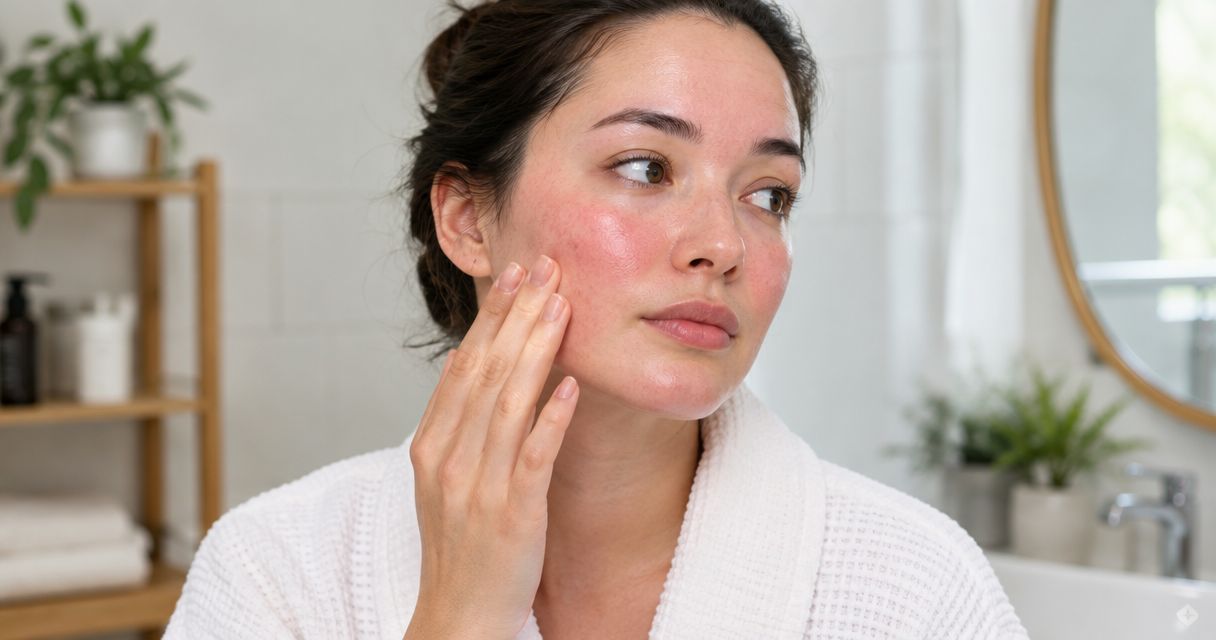
- Persistent redness, tenderness, or broken skin means you need assessment before another chemical peel.
How long should you wait between chemical peels?
The American Academy of Dermatology's patient guidance states that light, or superficial, chemical peels can be repeated every 2–5 weeks. That interval applies to light peels, not every treatment described as a chemical peel. A stronger treatment needs a different recovery plan.
Use the following comparison to frame your consultation, not to choose a peel without an assessment. Healing times describe the initial recovery period; they do not establish clearance for another procedure.
| Peel depth | Typical initial healing | Repeat-treatment guidance | Best for | Main limitation |
|---|---|---|---|---|
| Light or superficial | 1–7 days | Every 2–5 weeks when appropriate and fully healed | People seeking treatment for superficial concerns with less recovery time | Results are more limited than deeper resurfacing; a series can be needed |
| Medium-depth | 7–14 days | Individualized after recovery and reassessment | Selected patients with concerns extending beyond the outermost skin layer | More recovery and greater risk of pigment changes than a light peel |
| Deep | 14–21 days of initial healing | Generally performed only once | Carefully selected patients needing substantial resurfacing under medical care | Substantial recovery and medical risks; not routine maintenance |
These recovery windows come from the American Academy of Dermatology's chemical-peel patient guidance. They are general reference points for this 2026 guide, not clinic-specific protocols. For a closer look at visible recovery, read how long redness lasts after a chemical peel.
Why this matters
The day flaking stops is not automatically the day your skin is ready for another peel. Visible shedding is only part of recovery. Redness, sensitivity, and irritation also matter, especially when your next treatment would expose recovering skin to another controlled injury.
Repeating a peel too soon increases the risk of irritation and complications, including pigment changes and scarring. Waiting does not make treatment ineffective. It gives your treating professional a chance to judge the response before deciding whether to repeat the same approach, change it, or stop.
Your practical goal is a treatment schedule you can tolerate and support with aftercare. A calendar reminder cannot assess whether your skin has returned to its usual condition.
Light chemical peels: 2–5 weeks between treatments
A 2–5-week interval is a general reference for repeat light peels, not permission to schedule the shortest possible gap. Your provider should confirm the actual peel protocol and check how your skin responded before setting the next date.
Light peels are best for people whose concerns can be addressed superficially and who prefer less recovery than deeper resurfacing. Their limitation is treatment depth: a light peel does not deliver the same effect as a medium or deep peel, and some concerns require a different treatment altogether.
Before repeating a light peel, review these points:
- Recovery: Your skin should no longer have open areas, ongoing peeling, or unusual tenderness.
- Tolerance: Report burning, prolonged redness, or new sensitivity after the previous appointment.
- Results: Compare the concern you wanted treated, rather than using the amount of peeling as your score.
- Aftercare: Confirm that you can follow the next treatment's sun-protection and skincare instructions.
If your first peel caused more irritation than expected, do not assume the next appointment should stay unchanged. The response is information your provider needs. Bring photographs of any reaction that has resolved before your visit.
Medium-depth chemical peels: reassess before repeating
Medium-depth peels are not governed by the light-peel 2–5-week schedule. The American Academy of Dermatology gives an initial healing window of 7–14 days, but that does not mean another medium peel belongs on the calendar immediately afterward.
A medium-depth peel is best for selected patients whose concerns warrant deeper treatment after clinical assessment. The trade-off is more recovery, with greater attention to pigment changes, infection, and scarring risks. Your skin history and the exact procedure matter more than a generic maintenance schedule.
Ask the treating clinician to separate two decisions: when you can resume your usual activities and when another resurfacing treatment is appropriate. Those are different questions. An answer about returning to work or wearing makeup does not establish a safe retreatment date.
For a medium-depth peel in 2026, get a written recovery plan and an explicit reassessment point. Do not substitute an online interval for the instructions attached to your procedure.
Deep chemical peels: generally a one-time treatment
Deep chemical peels are generally performed only once, according to the American Academy of Dermatology. They are not a stronger version of a monthly facial and should not be treated as repeat maintenance.
A deep peel is best for carefully selected patients under appropriate medical supervision. Its potential for substantial resurfacing comes with substantial recovery and medical risks. Some deep-peel formulations contain phenol, which requires particular medical precautions because of potential systemic effects.
The 14–21-day initial healing window does not describe the entire recovery experience. Redness can persist beyond initial healing, and follow-up care remains important. If someone proposes repeat deep peeling, ask the treating physician to explain the indication and risks before you agree.
Why the interval between chemical peels varies
The right gap depends on the treatment and the skin receiving it. These factors explain why your friend's schedule is not automatically suitable for you:
- Peel depth: Superficial, medium, and deep peels create different levels of injury and require different recovery plans.
- Formulation and application: The acid, concentration, exposure, and application technique affect treatment intensity. An acid name alone does not establish depth.
- Actual recovery: Persistent redness, tenderness, crusting, or broken skin takes priority over the original appointment date.
- Skin history: Previous pigment changes, scarring, cold sores, and inflammatory skin conditions belong in the assessment.
- Medications and skincare: Prescription treatments, retinoids, exfoliating acids, and other irritating products can affect preparation and recovery instructions.
- Sun exposure and other procedures: Sunburn, substantial outdoor exposure, and recent skin treatments can change whether another peel is appropriate.
You do not need to diagnose these factors yourself. You do need to disclose them accurately. Bring your current skincare and medication list, including nonprescription exfoliants and any treatments performed elsewhere.
How do you know whether your skin is ready?
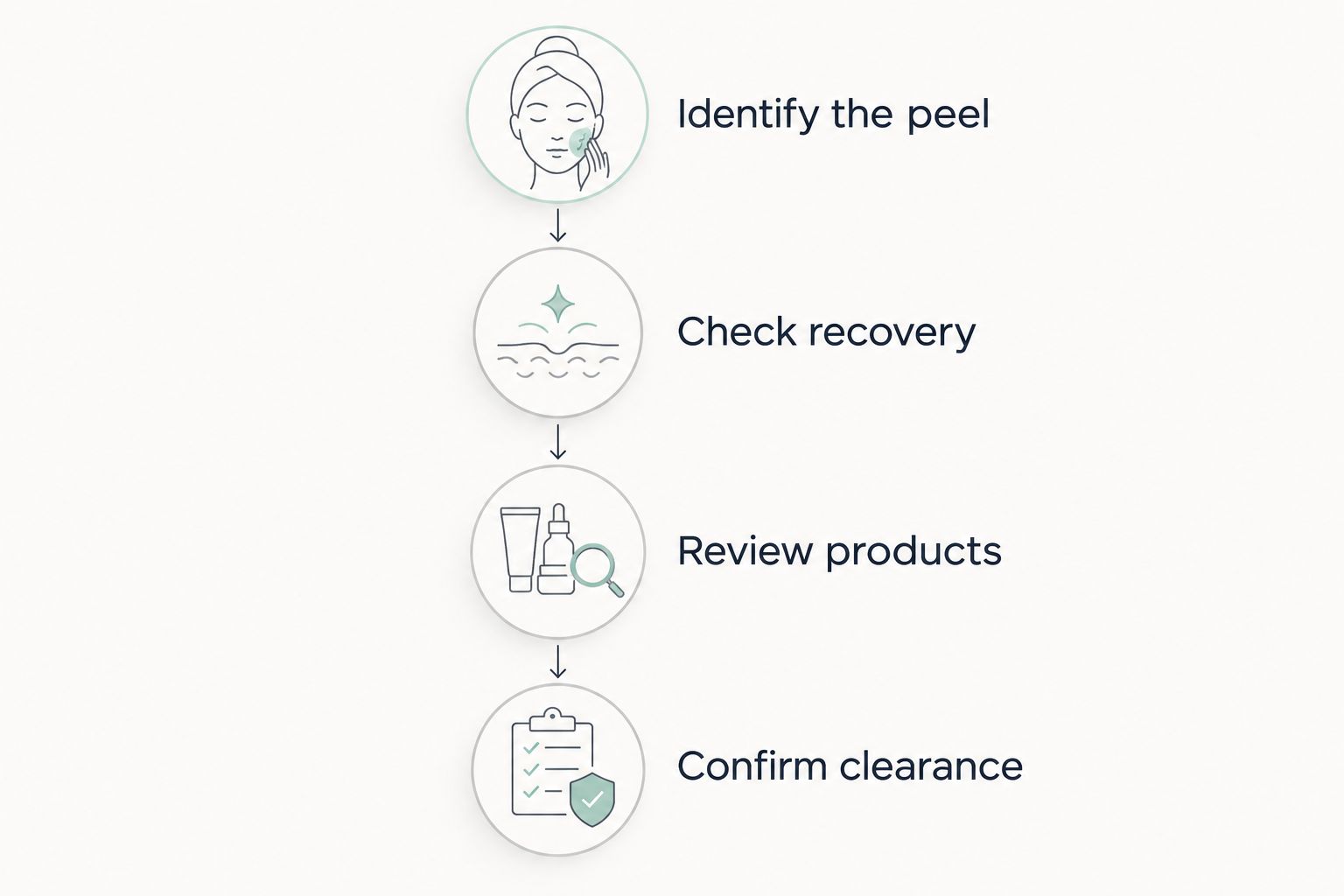
Use this sequence before confirming another peel. It organizes the conversation with your provider; it does not replace an examination or procedure-specific instructions.
- Identify the peel. Confirm the treatment name, depth, and date. If you only know it as a brightening or resurfacing peel, ask for the clinical details.
- Check recovery. Look for ongoing peeling, unusual redness, tenderness, crusting, or open skin. Report symptoms even if they seem minor.
- Review products. Tell your provider what you restarted after treatment and whether anything burns or stings.
- Confirm clearance. Ask whether the next peel is appropriate for your current skin, not simply whether the appointment slot is available.
A useful question for your appointment is whether the proposed interval reflects your actual response or only the usual protocol. Both matter, but a protocol should not override signs that your skin has not recovered.
For your 2026 appointments, keep a brief record of treatment dates, reactions, and product changes. That record helps you describe recovery accurately instead of trying to remember it at the next visit.
What should you do between chemical peels?
Protect healing skin instead of adding more exfoliation. Follow the cleanser, moisturizer, and wound-care instructions supplied for your specific peel. Deeper procedures can require care that differs substantially from a light-peel routine.
Use broad-spectrum sunscreen with SPF 30 or higher, alongside shade and protective clothing, as recommended by the American Academy of Dermatology. If your skin is still healing, follow your treating clinician's instructions about when and how to apply products. Sunscreen does not make deliberate tanning or prolonged exposure safe.
Do not pick flakes or remove peeling skin with scrubs, brushes, or at-home acids. Ask when to restart retinoids, exfoliating products, and other active treatments. A product you normally tolerate can irritate recently treated skin.
Phoenix clients should account for outdoor work, exercise, and travel when planning recovery. If you cannot follow the aftercare instructions during a particular week, discuss a different appointment date rather than compressing recovery around your plans.
When should you postpone the next peel?
Postpone treatment and contact your provider if your skin remains unusually red, painful, raw, or sensitive. Do not conceal a reaction with makeup and proceed as though it has resolved. Your provider needs to see or understand what happened.
Worsening pain, spreading redness, pus, fever, or blisters warrant prompt medical assessment. New or worsening dark patches also deserve review before further exfoliation. These are not reasons to try a stronger peel at home.
Cold sores require particular attention because resurfacing procedures can reactivate herpes infections. Tell your treating clinician about any history of cold sores before treatment, even when there is no active outbreak. Do not start or change medication without their advice.
Can you repeat a light chemical peel after 2 weeks?
2 weeks is the shortest end of the American Academy of Dermatology's general light-peel interval, not a target for everyone. Repeat treatment only if the specific protocol allows it, your skin has healed, and your provider confirms that another peel is appropriate.
If your skin still stings, feels raw, or looks inflamed, do not use the elapsed time as clearance. Report the symptoms and let the treating professional reassess the plan.
Does healing in 7 days mean you can peel again?
7 days falls within the initial healing window for some light peels, but initial healing and retreatment readiness are different. Your provider still needs to consider the procedure, remaining sensitivity, and treatment goal before recommending another session.
A smooth surface is not proof that more exfoliation is useful. Judge progress against the original concern, not against how quickly you can repeat treatment.
Is a monthly chemical peel schedule right for everyone?
A monthly schedule fits within the general light-peel interval, but it is not suitable for every peel or every person. Medium and deep treatments require different planning, and even superficial peels need adjustment when recovery is incomplete.
Bonnie Frances Skin is best for Phoenix clients seeking in-person chemical peel care. Bonnie Frances Skin offers chemical peels, but the clinic description does not establish a specific peel depth or repeat-treatment protocol; confirm those details before booking. The service is relevant to local treatment seekers, not a substitute for medical assessment of complications.
FAQ
How long between chemical peels is usually recommended?
Light chemical peels generally have a 2–5-week repeat interval, according to the American Academy of Dermatology. Medium-depth peels require individualized scheduling, and deep peels are generally performed only once.
Can I get another chemical peel while my skin is still peeling?
Do not repeat a chemical peel while your skin is still recovering without explicit assessment and clearance from your treating professional. Ongoing peeling, tenderness, or raw skin needs review before another treatment.
Should I wait longer if my face is still red?
Persistent or worsening redness needs assessment before another peel. Contact your provider, especially if redness comes with increasing pain, warmth, discharge, or fever.
Does more peeling mean the chemical peel worked better?
More visible peeling does not reliably mean a better result. Treatment depth, formulation, and individual response affect shedding; assess results against the concern being treated.
Can I use retinol between chemical peels?
Restart retinol only according to your provider's instructions for the specific peel. Retinoids can irritate recovering skin, and there is no single restart schedule suitable for every procedure.
What sunscreen should I use between chemical peels?
Use broad-spectrum SPF 30 or higher with shade and protective clothing, following your clinician's instructions for healing skin. Ask about product application if your skin is raw or undergoing wound care.
Can I schedule dermaplaning between chemical peels?
Do not add dermaplaning between peels without discussing the timing with your provider. Both treatments affect the skin surface, so the combined plan must account for recovery.
One last thing
Do not use the amount of visible peeling to set your next appointment. A peel can cause limited visible shedding without justifying an earlier repeat, while substantial flaking does not prove that a stronger treatment is needed. Ask what changed in the original concern and whether your skin tolerated the procedure.
For your 2026 plan, bring the previous treatment date, product list, and recovery notes to Bonnie Frances Skin. The useful next step is confirming what your skin needs—not simply repeating what the calendar says.