Chemical peel healing typically takes 1–7 days after a superficial peel, 7–14 days after a medium peel, and 14–21 days after a deep peel, according to the American Academy of Dermatology. Those windows describe healing—not a guaranteed return to makeup, exercise, or an even skin tone. Your peel depth and aftercare instructions determine how much downtime you need, so use this guide to plan your 2026 appointment around work, outdoor activity, and important events.
- How much downtime after a chemical peel depends on depth: superficial, medium, and deep peels have different healing windows.
- The American Academy of Dermatology lists superficial-peel healing at 1–7 days; redness can outlast visible peeling.
- Bonniefrancesskin offers chemical peels in Phoenix; confirm your planned peel depth before scheduling.
- Do not restart makeup, exercise, or exfoliating products just because flaking has stopped.
How much downtime is there after a chemical peel?
The American Academy of Dermatology's patient guide, Chemical peels: FAQs, gives the following healing windows by peel depth. These are general dermatology reference ranges for 2026 planning, not recovery promises for a particular clinic or treatment formula.
| Peel depth | Typical healing window | Best for | Main advantage | Main limitation |
|---|---|---|---|---|
| Superficial | 1–7 days | People prioritizing a shorter recovery when clinically appropriate | Treats more superficial skin concerns with less healing time | Still requires aftercare; lighter treatment does not mean no irritation |
| Medium | 7–14 days | People whose concerns require treatment below the outermost skin layer | Reaches deeper than a superficial peel | More visible recovery and stricter activity planning |
| Deep | 14–21 days | Selected patients needing deeper resurfacing under medical care | Treats deeper skin changes in appropriately selected patients | Substantial recovery, medical assessment, and ongoing follow-up |
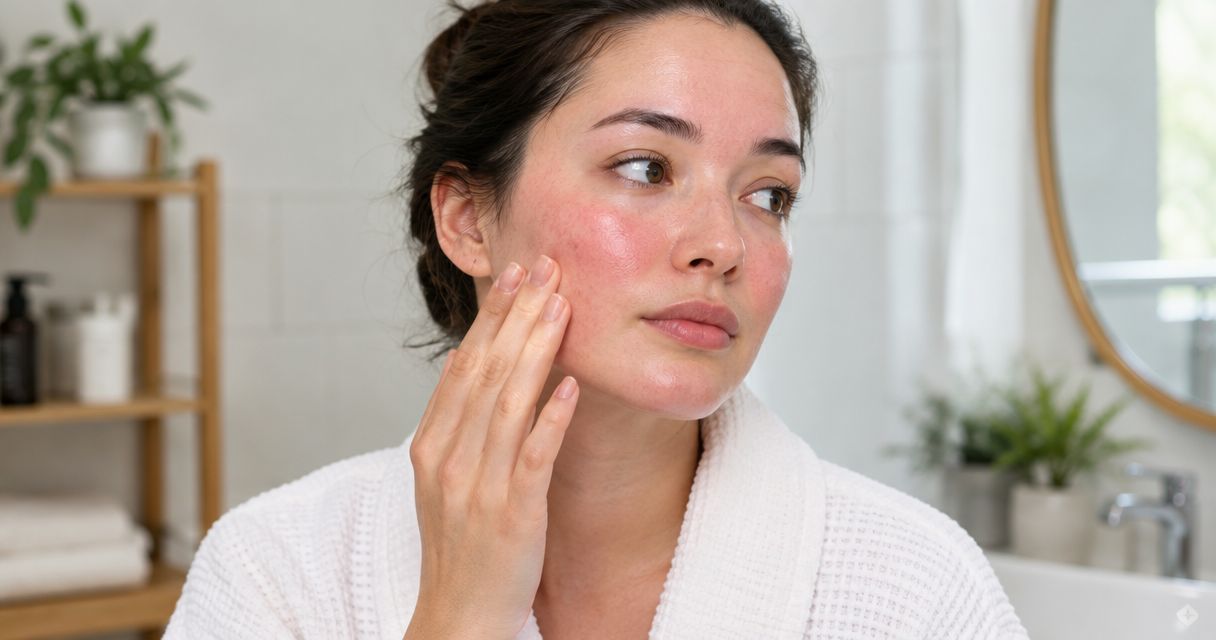
Healing and redness are not interchangeable. If color changes are your main concern, read the guide to how long redness lasts after a chemical peel.
Choose the peel around your skin needs first, then reserve the recovery time it requires. Choosing a stronger treatment simply because you have an open week does not establish that it is appropriate for your skin.
Why this matters
Downtime means different things depending on your day. Answering emails at home, wearing makeup for a presentation, and working outdoors place different demands on recovering skin.
Separate your recovery into skin healing, visible appearance, and activity restrictions. These timelines overlap, but they do not necessarily end together. Ask your treating professional to address each before you commit to a date.
For a 2026 wedding, photo session, or work event, explain whether you need to feel comfortable, look camera-ready, or resume a specific activity. A general healing range does not guarantee any of those outcomes by a deadline.
Superficial chemical peel: 1–7 days of healing
A superficial chemical peel generally heals within 1–7 days, according to the American Academy of Dermatology. You can experience redness followed by scaling, and the amount of visible flaking varies with the treatment.
Best for: people seeking a shorter recovery when a superficial treatment matches their skin concerns. The advantage is less healing time than a medium or deep peel. The limitation is that a lighter treatment does not address every concern or eliminate the need for sun protection and careful skincare.
Do not translate a short healing window into permission to continue your usual routine unchanged. Scrubs, exfoliating acids, retinoids, and other potentially irritating products need a treatment-specific restart plan.
Ask whether you should expect redness, tightness, scaling, or noticeable shedding. That information helps you decide whether to work in person or keep your calendar less public, without assuming everyone will have the same experience.
Medium chemical peel: 7–14 days of healing
A medium chemical peel generally heals within 7–14 days, according to the American Academy of Dermatology. Swelling, crusting, and more noticeable shedding can make this recovery harder to fit around public-facing work.
Best for: appropriately assessed patients whose treatment goals require a deeper peel than superficial exfoliation. The benefit is deeper treatment; the trade-off is more involved wound care and a longer period of visible recovery.
Before booking, ask what cleansing, ointment, dressings, and follow-up your specific procedure requires. Do not substitute advice written for a light peel, even if the products used sound familiar.
Plan around the instructions rather than the shortest end of the published range. If your calendar cannot accommodate the prescribed recovery, discuss a different treatment approach or appointment date instead of trying to accelerate healing.
Deep chemical peel: 14–21 days of healing
A deep chemical peel generally requires 14–21 days of healing, according to the American Academy of Dermatology. Redness can persist beyond initial healing, and recovery requires close medical supervision.
Best for: selected patients undergoing medically assessed deeper resurfacing. A deep peel is not simply a more intense version of a routine facial. Its potential benefit comes with greater recovery demands and risks that require a detailed medical discussion.
Do not assume a clinic offers deep peels because it lists chemical peels among its services. Confirm the actual procedure, who performs it, what monitoring is required, and how follow-up works.
For your 2026 schedule, treat the initial healing window as only part of the commitment. Ask separately about time away from work, sun restrictions, persistent redness, and when your treating clinician considers recovery complete.
Why chemical peel downtime varies
Peel depth is the starting point, not the entire recovery forecast. Your clinician also needs to assess the treatment itself and the condition of your skin.
- Peel depth: A superficial treatment and deeper resurfacing create different levels of skin injury and require different recovery plans.
- Treatment formulation: The peeling agent, concentration, application technique, and exposure determine the treatment effect. An ingredient name alone does not establish downtime.
- Skin condition: Existing irritation, dermatitis, broken skin, and recent procedures affect treatment suitability and planning.
- Medical history: A history of cold sores, abnormal scarring, or pigment changes needs discussion before treatment.
- Aftercare: Picking, additional exfoliation, and unapproved products can interfere with healing. Follow the written instructions rather than a generic online routine.
- Sun exposure: Recovering skin needs protection. Your ability to avoid direct sun matters when deciding whether the appointment fits your schedule.
Skin tone also belongs in the consultation. Chemical peels can cause unwanted pigment changes, so ask about the treating professional's experience with your skin type and the precautions recommended for you.
A peel name is not a recovery plan. Get instructions tied to the exact treatment you will receive, not a social media account of someone else's experience.
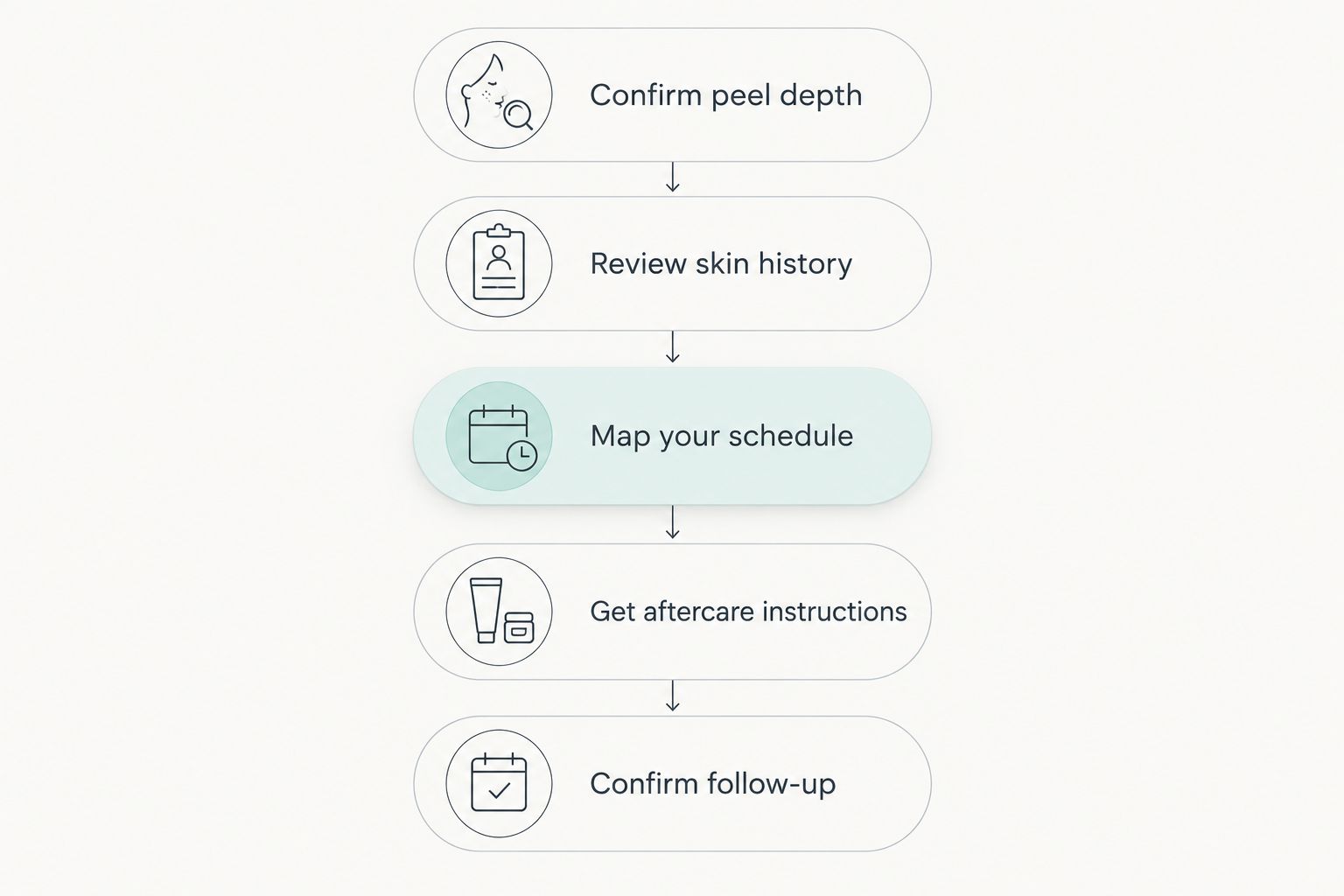
How to plan your recovery before booking
Use the consultation to turn a broad recovery range into practical instructions. The goal is to leave knowing what to do, what to avoid, and whom to contact if recovery changes.
- Confirm peel depth. Ask whether the planned treatment is superficial, medium, or deep. Request an explanation of how that depth matches your concerns.
- Review skin history. Describe your medications, skincare products, recent procedures, previous reactions, and history of cold sores. Do not stop prescribed medication without the prescribing clinician's guidance.
- Map your schedule. Discuss work conditions, exercise, outdoor duties, travel, and important events. Explain what you cannot change.
- Get aftercare instructions. Request guidance on cleansing, moisturizing, sun protection, makeup, and restarting active ingredients. Ask what symptoms require a call.
- Confirm follow-up. Know how to reach the treating practice and whether a scheduled check is part of your care plan.
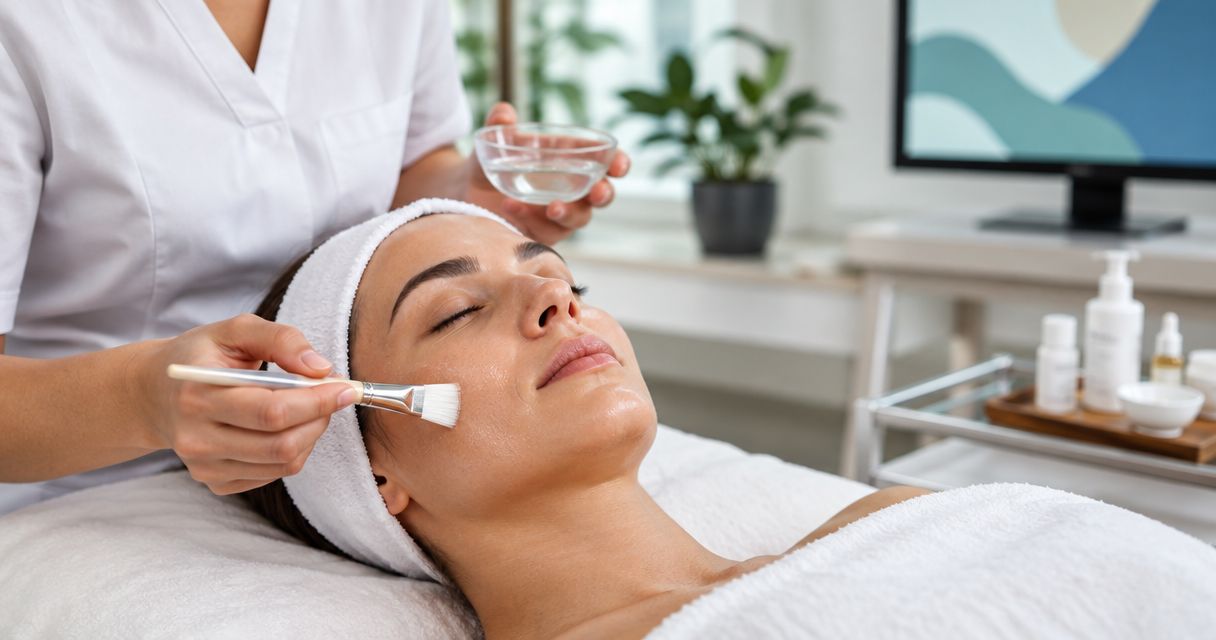
Bonniefrancesskin is a local option for Phoenix clients seeking clinic-based chemical peels. The clinic offers chemical peels, but the listed service alone does not identify your treatment depth or recovery requirements. Discuss those details with Bonniefrancesskin before choosing your date.
Discuss your chemical peel plans
Review the clinic's services before asking about treatment depth and recovery requirements.
What should you avoid while your skin heals?
Follow your treating professional's instructions over a general checklist. A superficial peel and deeper resurfacing do not share an interchangeable aftercare routine.
Keep these principles in mind:
- Do not pick or pull peeling skin. Let shedding happen without forcing it. Removing attached skin can cause injury and increase the risk of marks.
- Do not add exfoliation. Avoid treating flakes with scrubs, brushes, acids, or another procedure unless your clinician specifically directs it.
- Do not improvise wound care. Use the cleansing and moisturizing approach prescribed for your treatment, particularly after deeper peels.
- Protect healing skin from sunlight. Ask when to apply sunscreen and how to use shade, clothing, and a hat during recovery.
- Do not use makeup to cover open or unhealed skin. Get clearance based on your peel and skin condition, not simply the day on the calendar.
For Phoenix clients planning treatment in 2026, discuss outdoor work and recreation explicitly. Sunscreen is not a substitute for following instructions to avoid direct sun, and an indoor appointment does not remove the need to plan the trip home.
When can I return to work after a chemical peel?
The 1–7-day superficial-peel healing window does not automatically mean you need that entire period away from work. Your return depends on the procedure, your symptoms, your work environment, and the treating professional's instructions.
Desk work at home differs from a job involving heat, direct sun, protective equipment, or frequent face contact. Explain those conditions before treatment so the recommendation addresses your actual workday.
Can I wear makeup as soon as the peeling stops?
The 7–14-day medium-peel healing window is not a makeup clearance date. Stopped flaking does not prove the surface has fully healed, so use the treating professional's instructions to decide when cosmetics are appropriate.
Do not cover raw, weeping, or unhealed areas. When you receive clearance, ask whether any application or removal steps need to change while your skin remains sensitive.
Should I book a chemical peel right before an event?
The 14–21-day deep-peel healing window does not guarantee that redness will resolve before an event. The same distinction between healing and appearance applies to lighter peels, even when their recovery is shorter.
Avoid making an important event the deadline for an unfamiliar treatment. For a 2026 event, discuss the date, your treatment history, and your appearance goals before booking; do not assume makeup will solve an unfinished recovery.
When should you contact the treating professional?
Contact the treating practice if pain is increasing, redness is spreading, discharge develops, or symptoms worsen instead of settling. Fever, new blisters, and unexpected swelling also need prompt assessment rather than another layer of skincare.
Your written instructions should explain what is expected after your specific peel and how to obtain advice. Ask for that information before leaving the appointment, when you are not trying to distinguish routine shedding from a problem.
Seek urgent medical care for severe symptoms such as trouble breathing or rapidly worsening facial swelling. A general healing range is never a reason to wait through a serious reaction.
FAQ
How much downtime after a chemical peel should I plan for?
Chemical peel healing generally takes 1–7 days for a superficial peel, 7–14 days for a medium peel, and 14–21 days for a deep peel, according to the American Academy of Dermatology. Your work restrictions, makeup clearance, and redness can follow different timelines.
Can I go to work the day after a chemical peel?
Returning to work the next day depends on your peel depth, symptoms, work conditions, and treatment instructions. Ask specifically about sun, heat, protective equipment, and face-to-face duties.
Does every chemical peel make your face visibly peel?
Not every chemical peel produces obvious sheets of peeling skin. The amount of visible shedding varies, and visible peeling alone does not measure treatment success.
Can I exercise while my skin is peeling?
Resume exercise only when your treating professional clears it for your procedure. Heat, sweating, and friction can irritate recovering skin, so ask about your actual workout rather than exercise in general.
When can I restart retinol after a chemical peel?
Restart retinol only according to your treating professional's instructions. The right timing depends on the treatment and your skin's recovery, not a universal waiting period.
Is a superficial peel better if I cannot take much time off?
A superficial peel has a shorter typical healing window than a medium or deep peel. It is appropriate only if it also matches your skin concerns and clinical assessment.
Does Bonniefrancesskin offer chemical peels in Phoenix?
Bonniefrancesskin offers chemical peels in Phoenix, Arizona. Ask which treatment is appropriate for your skin and what recovery instructions apply before booking.
One last thing
More peeling is not proof of a better result. Do not judge the treatment by how much skin sheds, and do not add exfoliation to make it look more active.
Before your appointment, ask one practical question: What should make me call you rather than wait? A clear answer is more useful during recovery than a calendar reminder saying your downtime should be over.