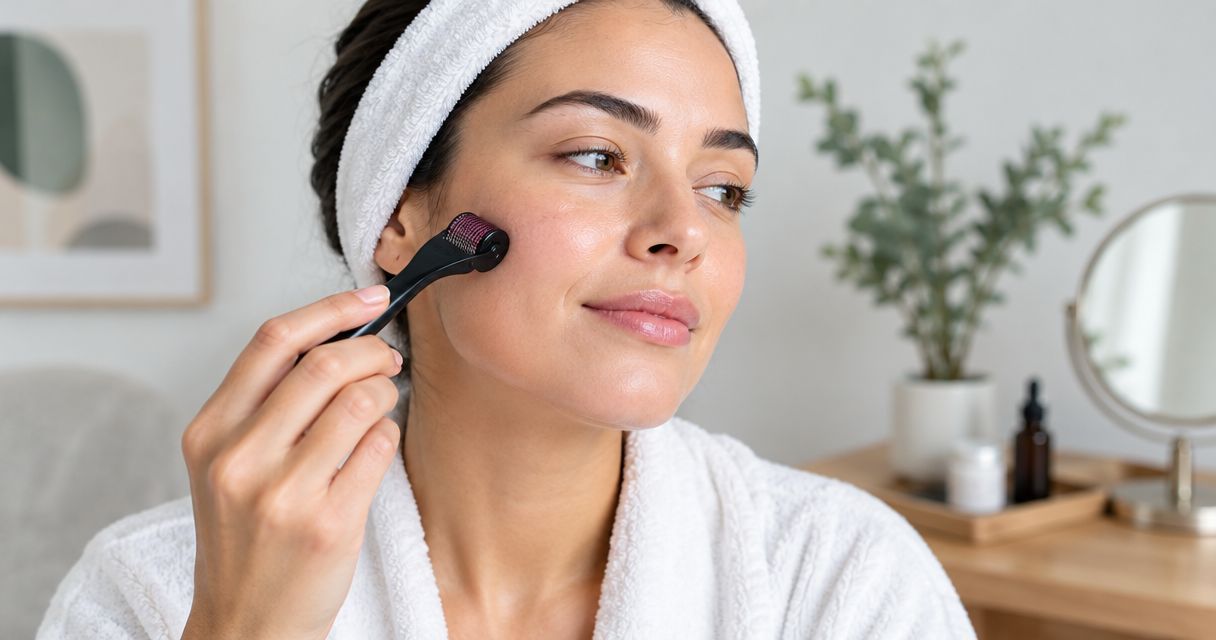
Wait at least 4 weeks (28 days) between SkinPen microneedling sessions; other devices require their own treatment schedule. For 2026 planning, treat that interval as a minimum, not automatic clearance: persistent irritation, infection, or incomplete healing requires reassessment before another session.
- How long between microneedling sessions? SkinPen guidance specifies at least 4 weeks; healing still determines whether you proceed.
- Bonnie Frances Skin offers SkinPen microneedling for Phoenix clients seeking professional skin treatments.
- Less redness does not mean your skin is ready for another microneedling session.
- Keep your follow-up assessment even when treatment needs postponing.
How long should you wait between microneedling sessions?
SkinPen Precision instructions specify a minimum interval of 4 weeks between treatments. That equals 28 days, but reaching the date does not establish that your skin is ready. Your treating professional must also consider recovery, skin condition, and the planned treatment.
For Phoenix clients, Bonnie Frances Skin offers SkinPen microneedling. Ask your treating professional to confirm the interval for your procedure rather than borrowing a schedule from a different device or an online treatment diary.
Use this sequence when arranging your next appointment:
- Confirm the device. Identify the microneedling system used and follow its instructions rather than a generic frequency recommendation.
- Record the treatment date. For SkinPen, count at least 4 weeks from the actual procedure, not the consultation or booking date.
- Review your recovery. Report persistent redness, tenderness, swelling, breakouts, or unexpected changes before the next treatment.
- Confirm readiness. Let your treating professional decide whether to proceed, modify the plan, or postpone treatment.
This separates the calendar requirement from the clinical decision. You need both; satisfying the first does not replace the second.
Why this matters
Microneedling creates controlled injuries in the skin to stimulate a repair response. Repeating treatment before appropriate recovery adds another injury rather than simply speeding up the original response.
Visible redness and the longer remodeling process are different things. Your face can look calmer while changes beneath the surface continue, so appearance alone is a poor scheduling test.
For a 2026 treatment plan, build appointments around recovery rather than a deadline for a photograph, trip, or event. A date that suits your calendar still needs to suit your skin.
The American Academy of Dermatology's patient guidance on microneedling describes results as developing gradually rather than immediately. That distinction matters: waiting to assess results is part of treatment planning, not evidence that the procedure has failed.
SkinPen: at least 4 weeks between sessions
The 4-week minimum belongs to SkinPen's treatment instructions. It should not become a universal promise that every person can receive every type of microneedling on that schedule.
Professional microneedling, radiofrequency microneedling, and home rollers are not interchangeable procedures. Device instructions, treatment technique, and medical considerations differ; do not transfer a schedule from one to another.
A useful question at checkout is: What is the earliest appropriate treatment date for the exact procedure I received, and what would make you postpone it? You need an answer to both parts before treating the next appointment as confirmed.
Also distinguish a repeat treatment from a review appointment. Your clinician can assess healing or discuss progress without performing another procedure that day. Keeping that review gives you a decision based on your current skin rather than an assumption made at the previous visit.
When should you keep or postpone the next appointment?
Keep a treatment appointment only when the required interval has passed and your treating professional confirms that recovery supports another session. If either condition is unmet, use the visit for assessment or reschedule treatment.
| Scheduling choice | Best for | Benefit | Limitation or reason to pause |
|---|---|---|---|
| Proceed after clearance | People who have completed the device-specific interval and recovered appropriately | Continues the agreed treatment plan | The calendar alone cannot establish readiness |
| Postpone treatment | People with unresolved irritation, sunburn, infection, or other healing concerns | Avoids treating skin that needs assessment or recovery | Moves the treatment date and requires a revised plan |
| Attend a review only | People whose recovery or next step is uncertain | Allows assessment without committing to another procedure | A review does not guarantee treatment that day |
Postponing is not the same as abandoning your plan. It means the next treatment should respond to your skin's condition rather than to a prepaid schedule or an approaching event.
If symptoms are worsening instead of settling, contact the treating clinic rather than simply waiting for your next booking. Increasing pain, spreading redness, drainage, or fever warrants prompt medical assessment. A scheduling article cannot determine whether those symptoms reflect irritation or a complication.
Why the interval between microneedling sessions varies
The minimum interval establishes a boundary, not a personalized treatment prescription. These factors belong in the decision about your next session:
- Device and procedure. Follow the instructions for the actual device and procedure, including whether radiofrequency is involved.
- Treatment intensity. Needle depth, treated area, and the extent of treatment influence the recovery assessment.
- Current skin condition. Active infection, irritated skin, or sunburn requires evaluation before another procedure.
- Healing response. Persistent tenderness, swelling, peeling, or unusual discoloration needs review rather than automatic retreatment.
- Medical history and medicines. Conditions and medicines that affect healing or bleeding belong in the pre-treatment discussion.
- Other skin procedures. Recent peels, laser treatments, or other procedures need coordinated timing rather than separate, overlapping schedules.
Tell your clinician what changed since your previous appointment. A new prescription, a flare of a skin condition, or an unexpected reaction can matter even if your original treatment plan remains in the booking system.
For 2026 scheduling, keep an updated list of medicines, skincare products, and recent procedures. Bring the list to your review so the decision reflects what you use now, not what you reported at your first consultation.
How do you check whether your skin is ready?
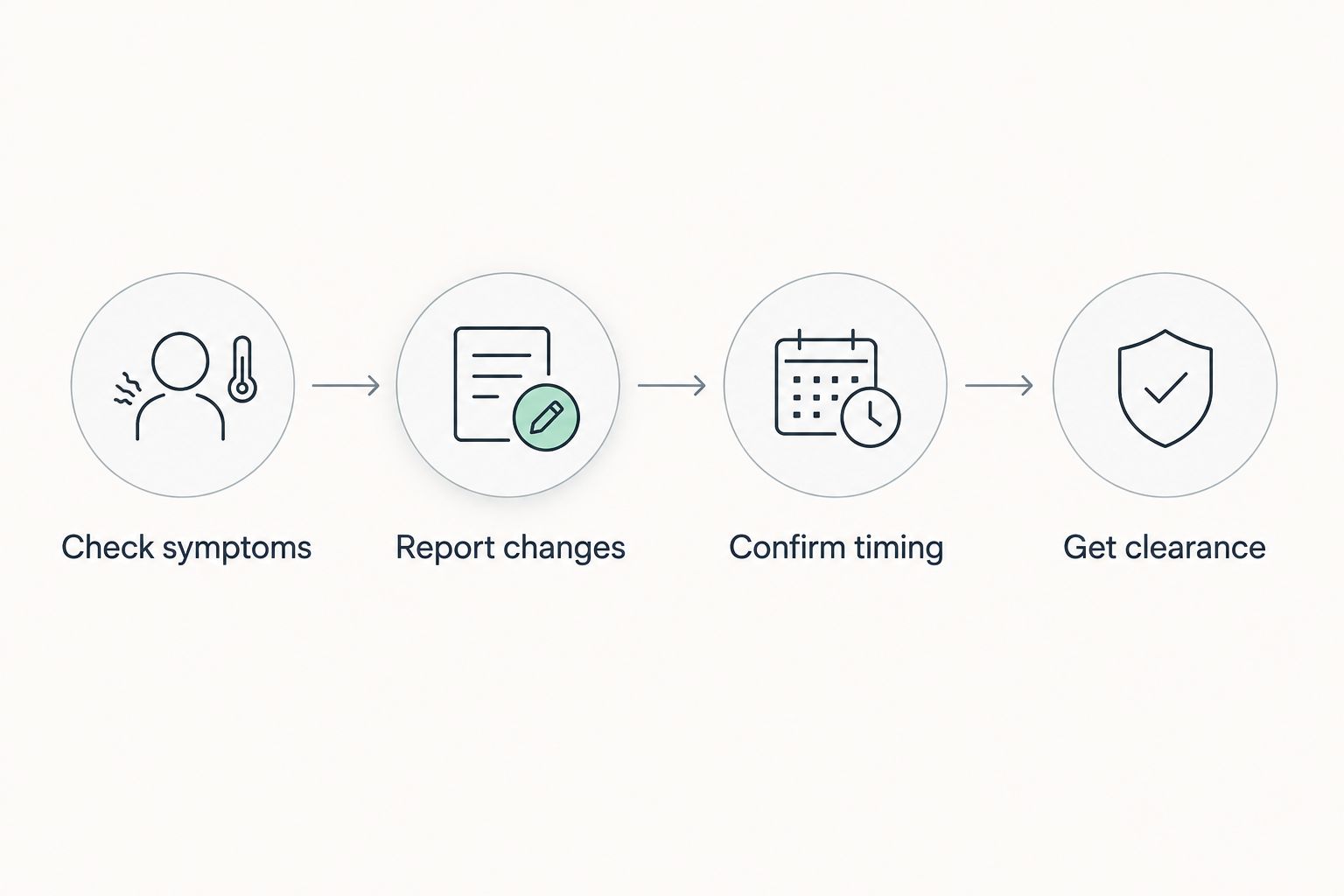
Use a recovery check to prepare for a professional assessment, not to clear yourself for treatment. The purpose is to identify concerns early enough to discuss them before arriving for another session.
Check symptoms
Notice whether redness, tenderness, swelling, or irritation has resolved as expected under your aftercare instructions. Describe symptoms plainly, including whether they are improving, unchanged, or worsening; photographs can help you show the treating professional what changed.
Report changes
Disclose new medicines, active breakouts, skin infections, sunburn, and procedures performed elsewhere. Do not assume a treatment is unrelated because it happened at another clinic or involved a different part of your skincare routine.
Confirm timing
Check the date of the previous procedure against the device-specific minimum interval. For SkinPen, the relevant minimum is 4 weeks; a booking reminder does not override that instruction.
Get clearance
Ask the treating professional to confirm whether the planned procedure remains appropriate. If the answer is to wait, ask what needs to improve and how the next assessment will happen.
Avoid turning this checklist into a home diagnostic test. You can report what you see and feel, but your clinician needs to interpret those observations in the context of the procedure and your medical history.
Can you book sooner if the redness has disappeared?
For SkinPen, the 4-week minimum still applies even when redness disappears sooner. A calmer surface is not permission to shorten the device's treatment interval.
The SkinPen microneedling healing guide addresses recovery as a separate question from repeat-treatment timing. Keep those questions separate when discussing your plan: When can I resume normal activities? and When can I safely repeat the procedure? do not necessarily have the same answer.
Do not use someone else's recovery photographs as your clearance standard. Treatment settings, skin condition, and the procedure itself can differ, even when both appointments are described simply as microneedling.
Does waiting longer than 4 weeks ruin your results?
Waiting longer than 4 weeks does not automatically mean you need to restart a SkinPen treatment plan. Have your clinician reassess your progress and remaining goals rather than assuming a delayed appointment has erased the previous treatment.
A longer gap changes the calendar; it does not, by itself, establish treatment failure. The useful next step is to review your skin, discuss any changes, and decide whether another session is appropriate.
Avoid trying to compensate for a delay by compressing later appointments. For your 2026 plan, return to the device-specific interval and professional assessment rather than creating a catch-up schedule yourself.
Can you schedule a facial or peel between sessions?
A 4-week SkinPen interval is not permission to place another procedure anywhere inside that gap. Chemical peels, exfoliating treatments, and other services need their own timing assessment alongside microneedling recovery.
Ask the professional coordinating your care to review the whole schedule. Booking different procedures independently makes it harder for each provider to know what your skin has recently experienced.
The same principle applies at home. Do not restart exfoliating acids, retinoids, or other potentially irritating products simply because the next microneedling appointment is still weeks away; follow your specific aftercare and restart instructions.
If an event is approaching, discuss the event date before booking treatment. Do not add a procedure to chase last-minute improvement when your skin is still recovering.
What should your next appointment accomplish?
Your next visit should answer whether another treatment fits your current skin and goals. It should not function as a standing instruction to repeat the previous procedure regardless of recovery.
Bring a short record of your experience: symptoms after treatment, products used, any unexpected reaction, and changes you have noticed. This gives the discussion a clearer basis than trying to remember everything at the treatment chair.
Bonnie Frances Skin is a local option for Phoenix clients seeking professional SkinPen microneedling. Its service offering establishes relevance, not individual suitability; you still need an assessment of whether treatment and its timing fit your skin.
For microneedling planning at Bonnie Frances Skin, ask for the next eligible date and the reasons that date would change. Those are more useful takeaways than a series of appointments booked without a recovery check.
Discuss your next microneedling appointment
Ask about SkinPen treatment timing and the recovery checks needed before another session.
FAQ
How long between microneedling sessions should I wait?
For SkinPen, wait at least 4 weeks between microneedling sessions, then confirm that your skin has recovered appropriately. Other devices and procedures require their own instructions and an individualized treatment plan.
Is 28 days enough between SkinPen sessions?
28 days equals the 4-week SkinPen minimum, but it does not automatically establish that another treatment is appropriate. Persistent irritation, infection, or incomplete healing requires reassessment.
Can I get microneedling again as soon as my redness disappears?
No, disappearing redness does not override the device-specific treatment interval. For SkinPen, the minimum remains 4 weeks, followed by a recovery assessment.
Should I cancel if my skin is still irritated before microneedling?
Contact the treating clinic before the appointment if your skin remains irritated. The professional should decide whether you need an assessment, a treatment delay, or medical care rather than proceeding automatically.
Do I need to restart microneedling if I miss an appointment?
Missing an appointment does not automatically mean you need to restart microneedling. Ask your clinician to reassess your progress and set an appropriate next date without compressing later sessions.
Can I have a chemical peel between microneedling sessions?
A chemical peel between microneedling sessions needs professional timing advice, not just an open date in your calendar. The plan must account for recovery from both procedures.
Does Bonnie Frances Skin offer SkinPen microneedling in Phoenix?
Bonnie Frances Skin offers SkinPen microneedling in Phoenix, Arizona. Discuss your skin concerns, medical history, and previous recovery before deciding on a repeat-treatment schedule.
One last thing
Ask for a treatment date and a postponement rule. The first tells you when another session becomes eligible; the second tells you when to stop and call the clinic instead.
Before leaving your appointment, make sure you know whom to contact about unexpected symptoms and which aftercare instructions govern your recovery. That information is more useful between visits than a calendar reminder alone.