Best overall: a gentle hydrating facial. Best for cleansing and hydration: a hydrafacial. Best for surface smoothness: dermaplaning. The best facials for glowing skin before an event in 2026 prioritize a familiar treatment and calm skin over aggressive exfoliation.
- The best facials for glowing skin before an event prioritize hydration and a treatment your skin already tolerates.
- A hydrafacial suits cleansing and hydration goals; dermaplaning targets facial fuzz and surface smoothness.
- Save chemical peels and SkinPen microneedling for a plan that allows recovery, not last-minute experimentation.
- Bonnie Frances Skin offers Phoenix clients facials, hydrafacials, dermaplaning, chemical peels, and SkinPen microneedling.
For local treatment options, Bonnie Frances Skin offers these services in Phoenix. Choose by your skin’s current condition and your event date, not by which treatment sounds strongest.
Why this matters
A facial can improve the appearance of dry, rough skin, but treatment-related redness or peeling can defeat the purpose of event preparation. Your goal is skin that feels comfortable and works with your usual makeup, not skin recovering from an unfamiliar procedure.
For your 2026 event calendar, separate immediate appearance goals from longer-term concerns. Facial fuzz and surface dryness call for different decisions than acne scars, persistent pigmentation, or fine lines. Trying to address everything in one appointment adds unnecessary complexity.
A familiar, gentle treatment is the default for event preparation; stronger treatment belongs in a separate corrective plan.
What makes the best pre-event facial?
Use these criteria before choosing a treatment:
- Skin compatibility: Your history of irritation, acne, rosacea, and previous treatment reactions matters more than a treatment’s popularity.
- Recovery requirements: Ask about visible redness, flaking, sensitivity, and restrictions after the exact procedure proposed.
- Goal fit: Hydration, removal of facial fuzz, and treatment of scarring are different jobs. Pick the treatment that matches your main concern.
- Treatment familiarity: A treatment you have tolerated gives you more useful information than someone else’s before-and-after photograph.
- Control over intensity: Understand whether the appointment includes acids, extractions, exfoliation, or multiple procedures together.
- Aftercare practicality: Your plan must work with sun exposure, exercise, travel, and the makeup you expect to wear.
Do not treat the word facial as a guarantee of gentleness. The steps performed determine how demanding the appointment is for your skin.
Pre-event facials at a glance: 2026 picks
| Rank and treatment | Best for | Standout feature | Key limitation |
|---|---|---|---|
| 1. Gentle hydrating facial | Dry-feeling skin and a conservative approach | Focuses on cleansing and moisturization | Does not meaningfully address established scars |
| 2. Hydrafacial | Cleansing, exfoliation, and hydration together | Combines several surface-care steps | Exfoliation and suction can irritate reactive skin |
| 3. Dermaplaning | Facial fuzz and surface smoothness | Removes fine facial hair and superficial dead skin | Can cause irritation or small cuts |
| 4. Superficial chemical peel | Planned work on uneven tone and texture | Uses chemical exfoliation | Peeling and pigment changes are possible |
| 5. SkinPen microneedling | Longer-term texture and acne-scar goals | Creates controlled skin punctures | Recovery makes it a poor last-minute glow choice |
These are treatment categories, not interchangeable packages. Confirm the proposed steps and suitability before deciding.
1. Gentle hydrating facial: best for a conservative glow
A gentle hydrating facial centers on cleansing and moisturization rather than strong resurfacing. It is the default recommendation when your main complaint is dry-feeling, dull-looking skin and you want to avoid unnecessary treatment intensity.
Ask what the facial actually includes. A hydration-focused appointment becomes a different proposition when it adds strong acids, vigorous extractions, or products you have never used.
Gentle hydrating facial pros:
- Targets surface dryness without requiring an aggressive exfoliation goal.
- Keeps the treatment focused on comfort and moisturization.
- Offers a simpler starting point than combining several procedures.
Gentle hydrating facial cons:
- Does not correct established acne scars or deeper wrinkles.
- Fragrance, botanicals, and other ingredients can still cause reactions.
- The name alone does not establish which steps are included.
Best for: You want a conservative facial and your main concern is dryness rather than scarring or persistent discoloration.
Verdict: Buy into a gentle hydration-focused plan after confirming the ingredients and steps. Do not mistake a longer treatment menu for a better result.
2. Hydrafacial: best for cleansing and hydration together
A hydrafacial combines cleansing, exfoliation, extraction, and hydration-oriented steps. It suits readers who want surface cleansing and moisturization in one treatment rather than a facial focused only on relaxation.
The combination is also its main consideration. Exfoliation and suction are active treatment steps, so a hydrafacial should not automatically be treated as suitable for inflamed or highly reactive skin.
Hydrafacial pros:
- Combines several surface-care goals in one appointment.
- Includes hydration alongside exfoliation.
- Addresses a different need than treatments aimed at deeper scarring.
Hydrafacial cons:
- Suction and exfoliation can cause temporary redness or irritation.
- Treatment solutions still require an ingredient review.
- A previous good result does not guarantee identical skin behavior before every event.
Best for: You want cleansing and hydration together, and a treating professional confirms that your skin can tolerate the proposed protocol.
Bonnie Frances Skin offers hydrafacials in Phoenix. Describe your event date and previous reactions before selecting this service instead of assuming it is the gentlest option.
Verdict: Buy when the protocol fits your skin; hold if your barrier is already irritated.
3. Dermaplaning: best for facial fuzz and surface smoothness
Dermaplaning uses a blade to remove fine facial hair and superficial dead skin. It is the most directly matched option here when facial fuzz, rather than dehydration or deeper texture, is your concern.
Removing that surface layer can change how your skin feels and how makeup sits. It does not change hair follicles or turn fine hair into thicker hair, and it does not treat established acne scars.
Dermaplaning pros:
- Directly removes fine facial hair.
- Removes superficial dead skin at the same time.
- Matches a clearly defined surface-smoothness goal.
Dermaplaning cons:
- Can cause small cuts, irritation, or post-treatment sensitivity.
- Is not a good treatment over active inflamed acne or broken skin.
- Does not address the underlying cause of pigmentation or recurring breakouts.
Best for: Facial fuzz is your main concern and your skin is suitable for blade-based exfoliation.
Read the guide to dermaplaning treatments for dull skin if surface smoothness is your priority. Keep hair removal separate from promises about deeper skin correction.
Verdict: Buy for a suitable surface-smoothness goal; skip over inflamed or damaged skin.
4. Superficial chemical peel: best for a planned tone-and-texture goal
A superficial chemical peel uses an exfoliating solution to remove outer skin layers. The exact acid, strength, application, and your skin history affect both the response and recovery.
A peel belongs in an event plan only when its purpose and recovery requirements are clear. The phrase light peel is not a promise that you will have no redness, sensitivity, or visible shedding.
Superficial chemical peel pros:
- Targets surface texture through chemical exfoliation.
- Can form part of treatment for selected pigmentation concerns.
- Has a defined corrective purpose beyond general pampering.
Superficial chemical peel cons:
- Can cause redness, flaking, and irritation.
- Can trigger unwanted pigment changes, particularly without appropriate selection and aftercare.
- Requires more planning than simply choosing a treatment labeled for glow.
Best for: You are pursuing a specific tone-or-texture concern with professional guidance and enough flexibility for recovery.
Bonnie Frances Skin offers chemical peels, but an approaching event is not a reason to increase treatment intensity. Ask which peel is proposed and what would make the professional postpone it.
Verdict: Hold for a planned treatment window; skip an unfamiliar peel immediately before an important event.
5. SkinPen microneedling: best for longer-term texture planning
SkinPen microneedling creates controlled punctures in the skin as part of a remodeling treatment. It belongs in a discussion about concerns such as acne-scar texture, not in the same decision category as a moisturizing facial.
Microneedling can leave skin red and sensitive during recovery. Its purpose is not an immediate, makeup-ready finish, so an event deadline should not drive a rushed appointment.
SkinPen microneedling pros:
- Addresses a different depth of concern than surface moisturization.
- Is relevant to a professionally assessed acne-scar treatment plan.
- Separates longer-term texture work from temporary cosmetic preparation.
SkinPen microneedling cons:
- Causes a recovery period with potential redness and sensitivity.
- Carries risks including infection and pigment changes.
- Does not provide an instant result for an approaching celebration.
Best for: You have a longer-term texture concern and can follow a treatment and recovery plan unrelated to an immediate event.
Verdict: Wait for a dedicated corrective-treatment window; skip as a last-minute glow treatment.
Match the treatment to your event plan
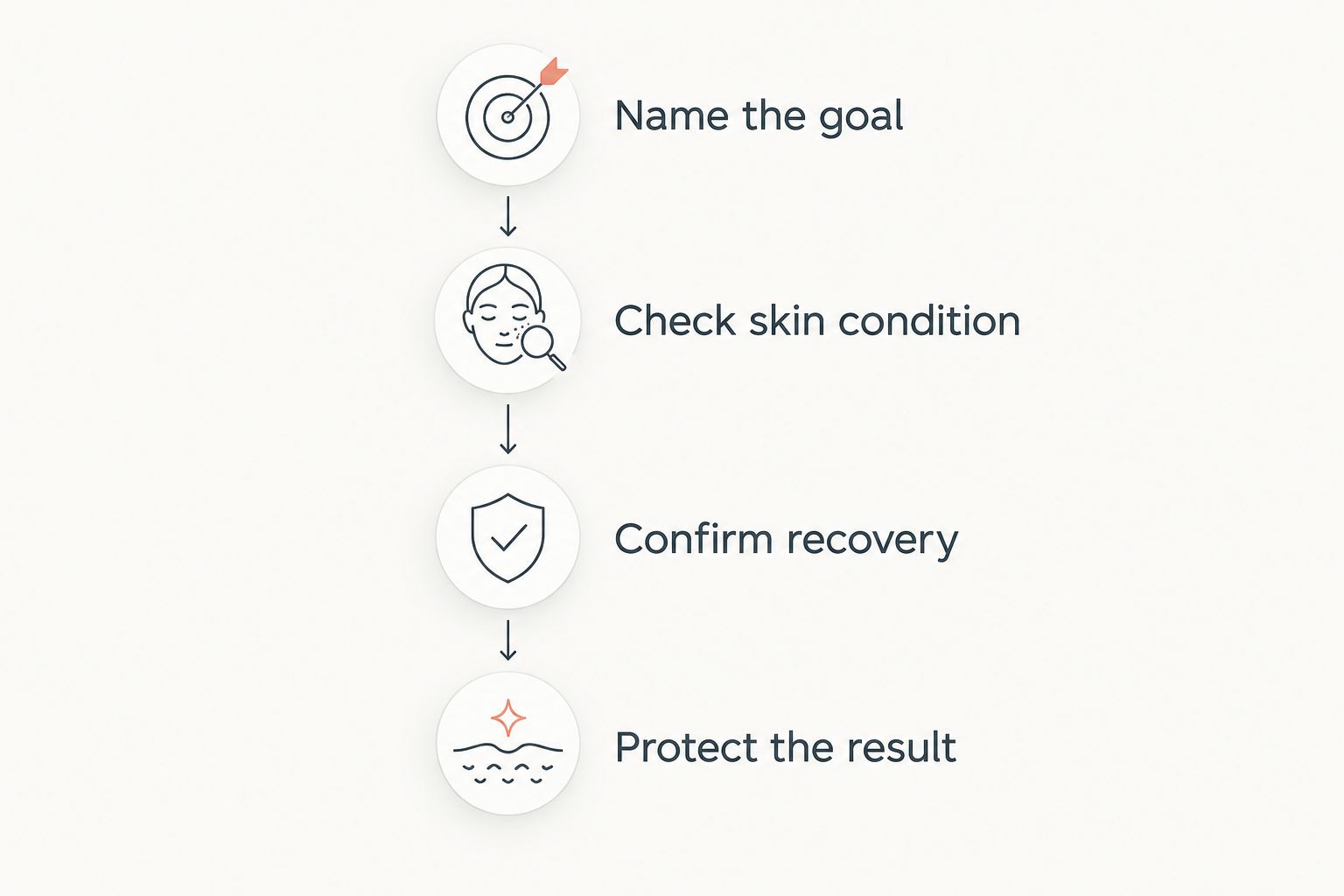
Use your 2026 event date as a scheduling constraint, not a reason to demand faster results. Work through this sequence before booking:
- Name the goal. Choose the main issue: dryness, congestion, facial fuzz, uneven tone, or established texture.
- Check skin condition. Report active irritation, sunburn, breakouts, recent procedures, medications, and products such as retinoids.
- Confirm recovery. Ask when makeup, exercise, swimming, and sun exposure are appropriate after the exact treatment.
- Protect the result. Follow the written aftercare instead of adding extra exfoliation at home.
Avoid stacking treatments simply because each one sounds useful. A facial, dermaplaning, and a peel together create a different exposure than any one of those treatments alone.
Bring your event date and current skincare list to the discussion. Photos of a past reaction are more useful than asking for the strongest available facial.
How these treatments are ranked
This 2026 ranking prioritizes compatibility, recovery burden, goal fit, treatment familiarity, and clarity about intensity. It is a treatment-selection guide, not a claim that these services were tested side by side.
Gentle hydration ranks first because the query is about preparing for an event, not correcting every skin concern. Chemical peels and microneedling rank lower because their recovery requirements conflict with last-minute preparation.
Which facial should you choose?
Choose a gentle hydrating facial if you are undecided. Move to a hydrafacial when cleansing and hydration are the priorities, or dermaplaning when facial fuzz is the specific issue.
Bonnie Frances Skin suits Phoenix clients seeking professional facials rather than an at-home event-prep routine. Select the treatment by its purpose and your skin history; do not book a corrective procedure solely because a celebration is approaching.
FAQ
What's the best facial for glowing skin before an event?
A gentle hydrating facial is the default choice when your main concern is dryness and you want a conservative treatment. A hydrafacial or dermaplaning fits a more specific goal, provided your skin is suitable.
Is a hydrafacial better than dermaplaning before a party?
A hydrafacial is better matched to cleansing and hydration, while dermaplaning directly targets fine facial hair and surface smoothness. Choose by your main concern rather than treating them as interchangeable.
Can I get my first facial the day before my event?
Avoid making an unfamiliar facial your last-minute event plan. New products, exfoliation, and extractions introduce a risk of irritation when you have little flexibility for recovery.
Should I get a chemical peel before my wedding?
A chemical peel belongs in a planned treatment schedule, not an unfamiliar last-minute appointment. Ask about the exact peel, expected recovery, pigment risks, and aftercare before scheduling around your wedding.
Is SkinPen microneedling good for an instant glow?
SkinPen microneedling is not the right choice for an instant, event-ready finish. It is a corrective treatment that requires recovery and should be scheduled separately from immediate cosmetic preparation.
Can I wear makeup immediately after a facial?
Makeup timing depends on the procedure and your skin's condition afterward. Follow the treating professional's instructions, especially after microneedling, peels, or treatment that leaves skin irritated.
What should I tell my facial provider before an event?
Share your event date, current products, medications, allergies, recent procedures, and previous treatment reactions. Also explain whether you will wear makeup, travel, or spend time outdoors.
One last thing
For an outdoor event in 2026, sunscreen is part of preparation, not an optional finishing step. The American Academy of Dermatology recommends broad-spectrum, water-resistant SPF 30 or higher, applied 15 minutes before going outdoors and reapplied every 2 hours outdoors, or after swimming or sweating.
Those are general sun-protection recommendations, not permission to ignore procedure-specific restrictions. If aftercare requires avoiding direct sun, plan shade and your schedule accordingly rather than relying on sunscreen alone.