Yes, dermaplaning can cause breakout-like bumps through irritation, inflamed hair follicles, or reactions to products used afterward. Not every bump is acne, and a flare after treatment is not proof that your skin is purging. The right response in 2026 is to stop additional exfoliation, simplify your routine, and get worsening or painful symptoms assessed rather than treating every bump the same way.
- Can dermaplaning cause breakouts? Yes, but new bumps can also reflect irritation, folliculitis, or a product reaction.
- Dermaplaning removes surface skin and facial hair; it does not treat the underlying causes of acne.
- Avoid dermaplaning over inflamed pimples, open skin, or an active skin infection.
- Bonnie Frances Skin offers dermaplaning for Phoenix clients seeking in-person skincare treatments.
Can dermaplaning cause breakouts?
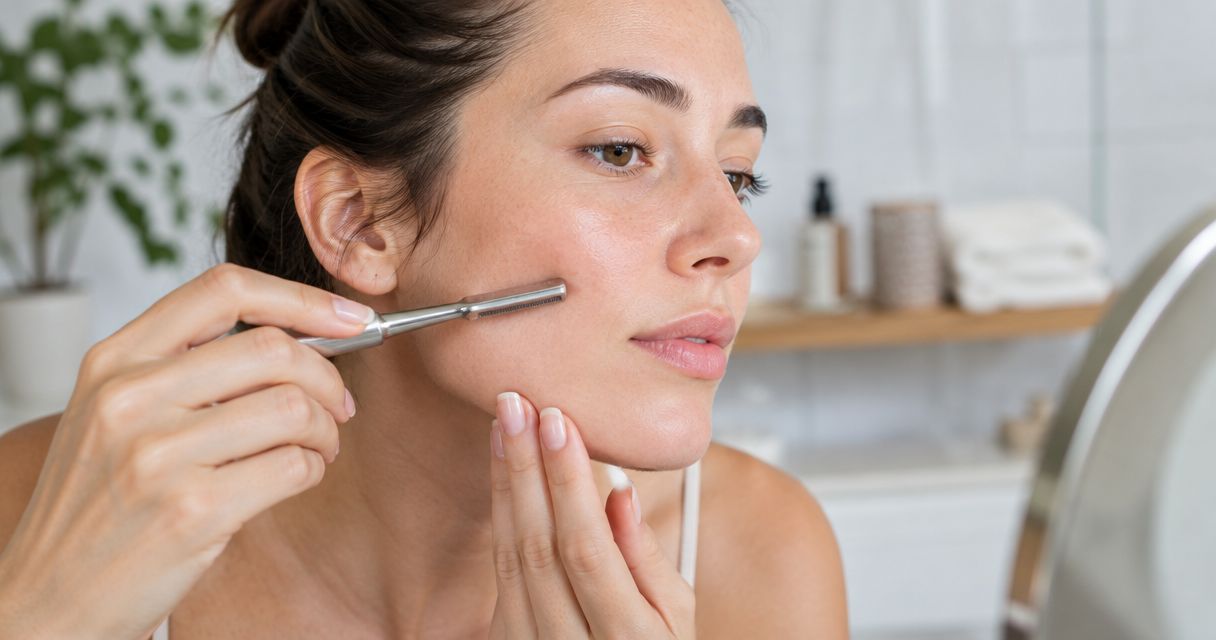
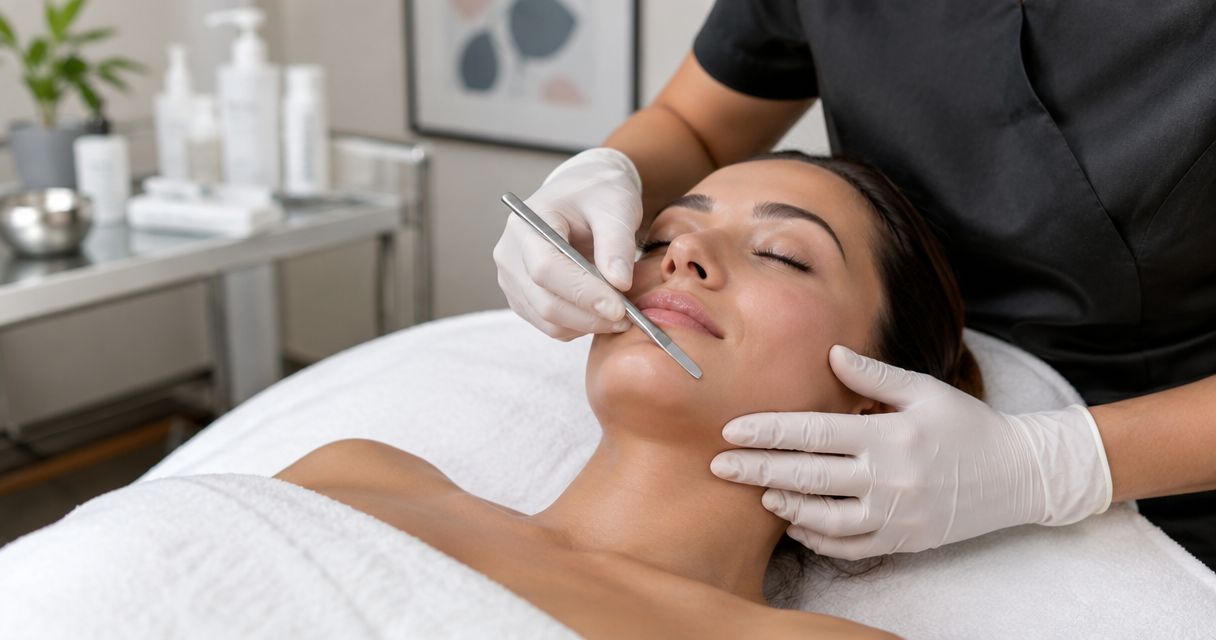
Dermaplaning can trigger bumps, but their appearance alone does not identify the cause. A blade passes over the skin to remove surface dead skin and fine facial hair. Friction, small skin injuries, contaminated equipment, and unsuitable aftercare products can create problems.
If you already have acne, distinguish an occasional clogged pore from inflamed or broken skin before booking. The guide to whether dermaplaning is safe for acne-prone skin explains the treatment-selection question; the table below helps you describe a reaction without diagnosing it yourself.
| What you notice | Possible explanation | What to do next |
|---|---|---|
| Diffuse redness, burning, or tightness | Irritation or a disrupted skin barrier | Stop exfoliation and use gentle, tolerated skincare |
| Small, similar-looking bumps around hairs | Folliculitis or another follicular reaction | Avoid shaving again and seek assessment if symptoms persist or worsen |
| Blackheads, whiteheads, and mixed inflamed pimples | Acne, including a flare associated with unsuitable products | Review aftercare and discuss acne treatment with a clinician |
| Itchy patches, swelling, or a rash | Irritant or allergic contact dermatitis | Stop suspected new products and seek advice |
| Increasing pain, warmth, spreading redness, or drainage | Possible infection | Get prompt medical assessment |
These patterns overlap. A photograph or checklist cannot reliably distinguish acne, folliculitis, and dermatitis, especially when several reactions occur together.
Why this matters
Treating every post-dermaplaning bump as acne can make irritated skin worse. Adding a scrub, acid toner, or another pass with a facial razor creates more exposure when your skin already needs less.
The practical question is not just whether dermaplaning caused the reaction. You need to identify whether your next step is gentle aftercare, an acne-treatment review, or medical assessment. Your symptoms should determine the response—not a promise that breaking out means the treatment is working.
For your 2026 skincare plan, separate cosmetic goals from medical ones. Removing peach fuzz and smoothing surface texture are different goals from controlling inflammatory acne.
Is a breakout after dermaplaning actually purging?
Do not assume a breakout after dermaplaning is purging. The term usually describes an early acne flare associated with certain treatments that affect skin-cell turnover, such as retinoids. It is not a blanket explanation for a rash after a cosmetic procedure.
Dermaplaning is physical exfoliation. It does not make painful bumps, an itchy rash, or pustules evidence of a beneficial process. If your appointment also included an acid or you started a retinoid afterward, that separate exposure matters when a clinician evaluates the reaction.
Write down what touched your skin, including cleanser, treatment products, sunscreen, makeup, and anything applied at home. The sequence is more useful than labeling every new spot a purge.
Why breakout risk varies
Your skin's condition, the procedure, and your aftercare all influence the risk of a reaction. These factors belong in a treatment discussion:
- Active inflammation: Passing a blade over inflamed pimples or broken skin can worsen irritation and cause injury. Postpone treatment over affected areas.
- Skin-barrier condition: Skin that already stings, peels, or feels raw is not a good surface for additional exfoliation. Describe those symptoms before treatment.
- Blade hygiene and handling: Contaminated equipment introduces an avoidable infection risk. Clean technique does not eliminate every possible reaction, but hygiene is essential.
- Pressure and repeated passes: Excessive friction increases skin injury. A closer-feeling result is not a reason to keep scraping the same area.
- Products applied afterward: Fragrance, irritating active ingredients, or products that clog your pores can contribute to a reaction. Consider everything applied, not just the blade.
- Overlapping treatments: Scrubs, exfoliating acids, retinoids, and other procedures can add irritation. Tell your provider about current products and prescriptions before changing their use.
Acne-prone skin is not automatically the same as actively inflamed skin. A treatment decision should reflect what is happening on your face now, rather than relying only on your usual skin-type label.
What should you do if bumps appear after dermaplaning?
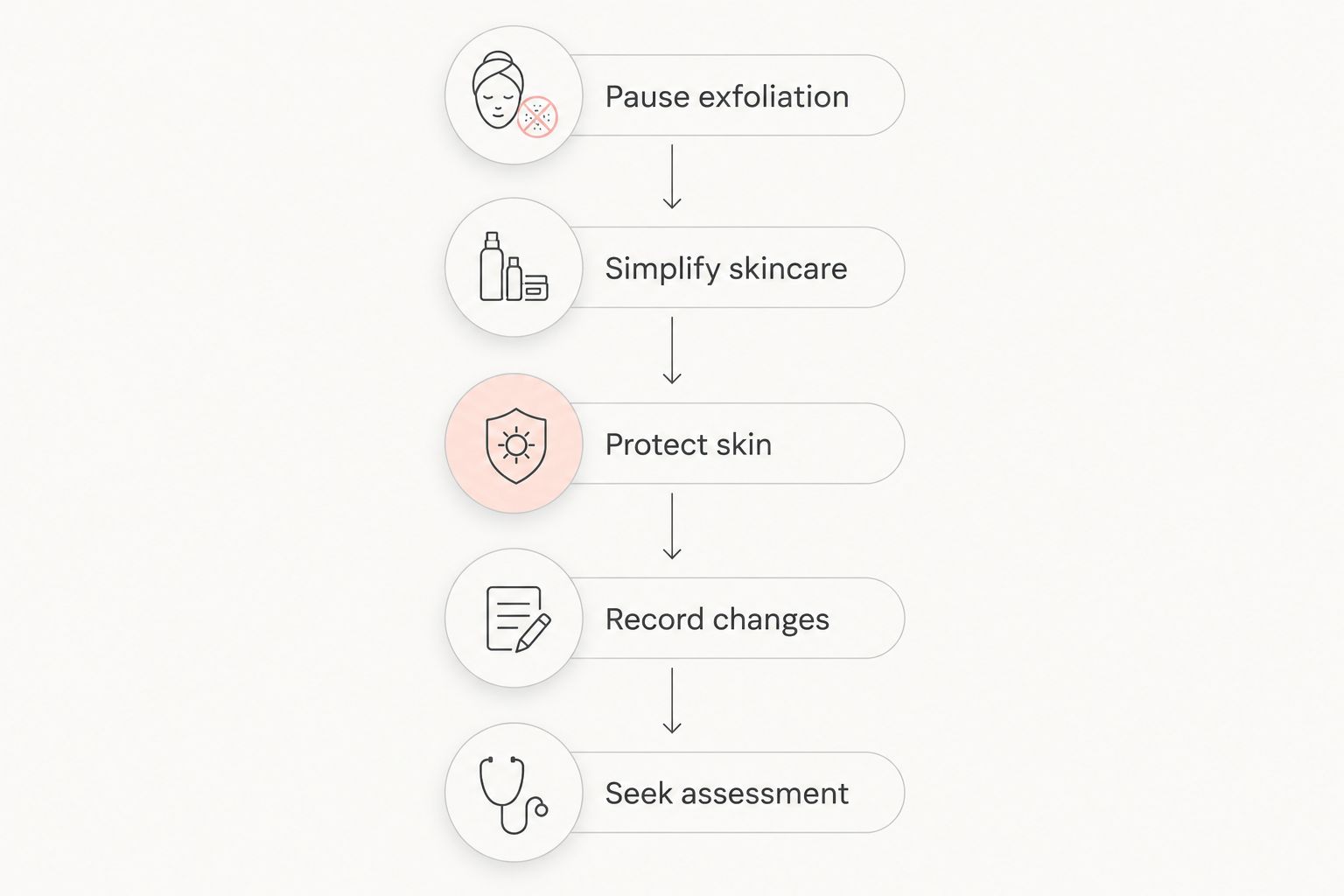
Stop adding treatments while you work out what happened. A restrained routine makes it easier to avoid further irritation and identify which exposures deserve review.
1. Pause exfoliation
Put down facial razors, scrubs, exfoliating brushes, and acid toners. Do not try to scrape off bumps or smooth them with another dermaplaning session.
If you use a prescription acne treatment, contact the prescribing clinician about significant irritation rather than independently redesigning the prescription. Advice about restarting depends on the medication and your skin's condition.
2. Simplify skincare
Use a gentle cleanser and a moisturizer you already tolerate. Avoid introducing a collection of new recovery products; each addition makes a reaction harder to trace.
Choose products labeled noncomedogenic if clogged pores are a concern, while recognizing that the label does not guarantee your individual skin will tolerate a formula. Stop a product that causes burning or a worsening rash.
3. Protect skin
Use broad-spectrum, water-resistant sunscreen with SPF 30 or higher, alongside shade and protective clothing. For outdoor exposure, the American Academy of Dermatology recommends reapplication every 2 hours, and after swimming or sweating.
The FDA's standard sunscreen directions call for application 15 minutes before sun exposure. Follow the product's label, and ask for advice if sunscreen stings your irritated skin rather than abandoning sun protection altogether.
4. Record changes
Take clear photographs in consistent lighting and note itching, burning, tenderness, drainage, or spreading redness. Record the procedure date and the products used before and afterward.
Do not pick or squeeze the bumps. Manipulating inflamed skin adds injury and can increase the risk of lingering marks or scarring.
5. Seek assessment
Contact a medical clinician for worsening, persistent, painful, or pus-filled bumps. Rapidly spreading redness, substantial swelling, fever, or feeling unwell needs urgent medical attention.
A cosmetic aftercare conversation is not a substitute for medical evaluation when infection is possible. Severe allergic symptoms, including trouble breathing or swelling of the lips or tongue, require emergency care.
Should you book dermaplaning if you have acne-prone skin?
Postpone dermaplaning when you have inflamed acne, open lesions, an active infection, or an unexplained rash in the treatment area. Discuss suitability before treating skin that is peeling, unusually sensitive, or reacting to a prescription product.
The benefit of dermaplaning is surface exfoliation and removal of fine facial hair. The limitation is equally important: it does not address all the processes behind acne, and the procedure itself can irritate susceptible skin. Better surface smoothness does not establish better acne control.
Best for: surface smoothness on suitable, noninflamed skin
Dermaplaning fits a cosmetic goal when your skin tolerates the procedure and a provider finds no reason to postpone. Ask what improvement is realistic and what symptoms should prompt a call afterward.
Not recommended for: scraping away active breakouts
Dermaplaning is not a way to remove inflamed pimples or replace an acne-management plan. If preventing breakouts is your main goal, discuss acne care before choosing an exfoliating service.
Bonnie Frances Skin is a local dermaplaning option for Phoenix clients seeking in-person skin treatments. You can use Bonnie Frances Skin to explore the clinic's services; suitability still depends on your current skin condition, not simply your interest in smoother skin.
Your 2026 consultation checklist
Tell your provider about previous reactions, active acne, eczema or other diagnosed skin conditions, and current irritation. Bring the names of prescription treatments and over-the-counter actives rather than describing everything as an acne cream.
Ask these questions before agreeing to treatment:
- Is my skin currently suitable for dermaplaning, or should treatment wait?
- Which areas should you avoid because of inflamed or broken skin?
- What products will touch my skin during and after the procedure?
- Should I change any skincare steps, and who should advise on prescriptions?
- What reaction requires medical care rather than routine aftercare advice?
Ask specifically about oral isotretinoin and any recent procedures if they apply to you. Do not substitute a generic online waiting period for advice tailored to your treatment history.
A useful consultation includes reasons to postpone. If you are told every reaction is normal purging, ask for a clearer explanation before proceeding.
How long do breakouts after dermaplaning last?
There is no single recovery timeline for bumps after dermaplaning because irritation, acne, dermatitis, and infection are different problems. A fixed promise about when every bump disappears is not a diagnosis.
Watch the direction of change: improving comfort and fading redness are different from increasing pain, spreading inflammation, or new drainage. Seek assessment for symptoms that persist or worsen instead of waiting for an arbitrary deadline.
Can you prevent every breakout after dermaplaning?
No, careful technique and sensible aftercare cannot guarantee a reaction-free result. Avoiding treatment over active inflammation, using clean equipment, limiting friction, and reviewing products reduce avoidable exposures without removing individual skin sensitivity.
For a 2026 aftercare plan, ask for instructions that name your actual products. Generic advice to use gentle skincare is less useful if you do not know whether your usual cleanser contains an exfoliating ingredient.
Does peach fuzz grow back thicker after dermaplaning?
Dermaplaning does not make facial hair grow back thicker or change the hair follicle. Cutting hair at the surface can leave a blunt end that feels different as it grows.
That sensation is separate from an inflammatory bump. Do not explain away itchy or painful lesions as ordinary regrowth without considering irritation or folliculitis.
FAQ
Can dermaplaning cause breakouts even if I never usually get acne?
Yes, dermaplaning can cause breakout-like bumps even if you do not usually have acne. Irritation, folliculitis, or a reaction to a product can resemble an acne flare.
Is it normal to get white bumps after dermaplaning?
White bumps after dermaplaning are not automatically a normal recovery step. Clogged pores, folliculitis, and other reactions can look similar, so persistent or worsening bumps need assessment.
Should I put salicylic acid on a breakout after dermaplaning?
Do not automatically apply salicylic acid to newly irritated skin after dermaplaning. Additional exfoliation can worsen burning and redness; ask a clinician how to manage the reaction and your existing acne treatment.
Can I dermaplane again to remove the bumps?
No, do not dermaplane over new bumps to remove them. Another pass adds friction and risks injuring already inflamed skin.
Is professional dermaplaning guaranteed not to cause acne?
No, professional dermaplaning cannot guarantee that you will avoid acne or other skin reactions. Your skin condition, technique, and products used afterward all matter.
Does Bonnie Frances Skin offer dermaplaning in Phoenix?
Yes, Bonnie Frances Skin offers dermaplaning in Phoenix, Arizona. Discuss active breakouts, skin sensitivity, and current treatments before deciding whether the procedure fits your skin.
When should I get medical help for bumps after dermaplaning?
Get medical help for worsening pain, spreading redness, warmth, drainage, or persistent bumps after dermaplaning. Fever, rapidly spreading symptoms, or feeling unwell requires urgent assessment.
One last thing
Before your next appointment, photograph the ingredient lists of your cleanser, serum, moisturizer, and sunscreen. A familiar product can still contain an exfoliating acid or another ingredient that matters after treatment.
The most useful 2026 takeaway: do not add a stronger treatment to a reaction you have not identified. Bring the product list and symptom history to your provider, and choose the next step based on the condition of your skin—not the assumption that every breakout needs more exfoliation.