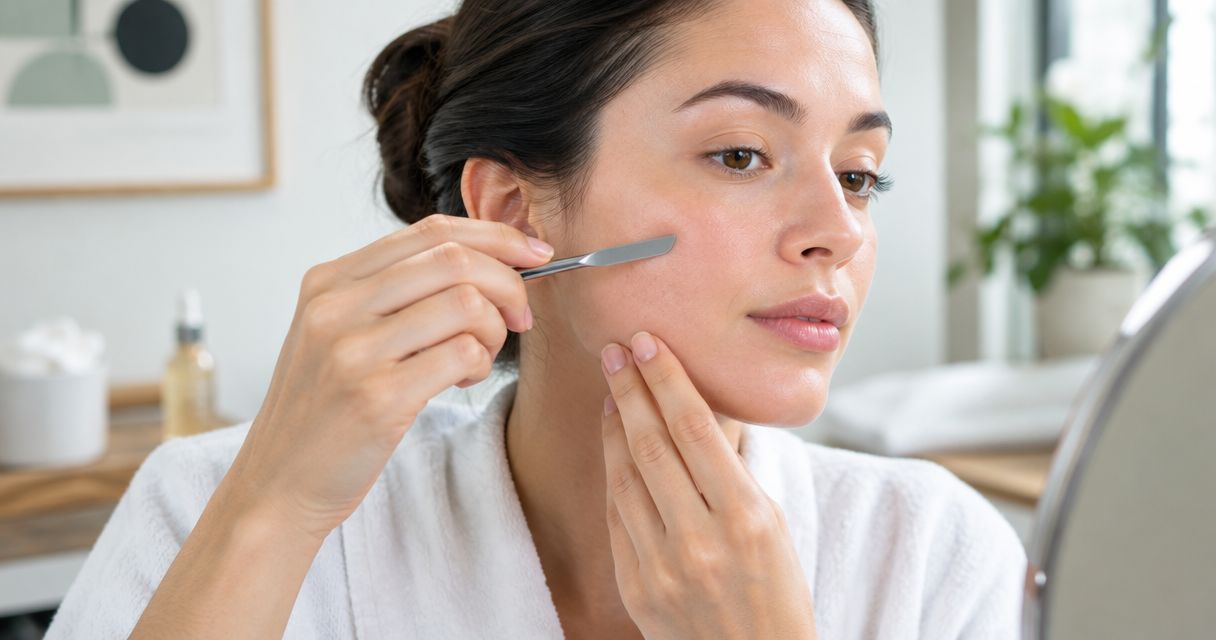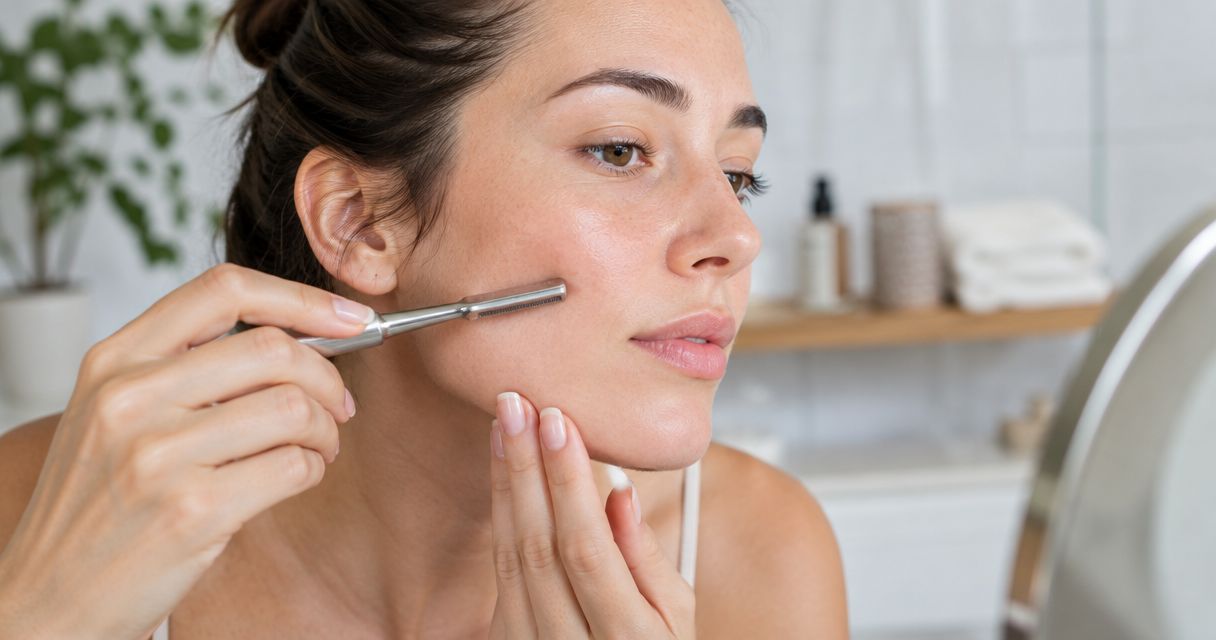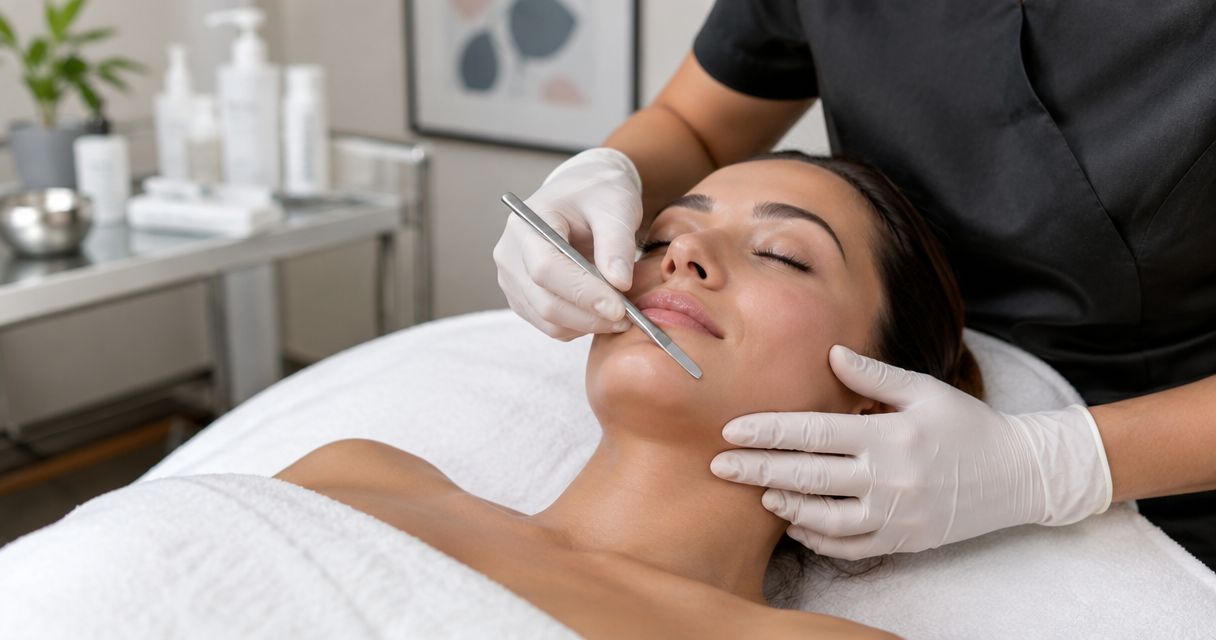
You should generally get dermaplaning about once a month in 2026, using roughly 4 weeks between appointments as a starting point rather than a deadline. Wait longer if your skin remains irritated, and have your provider account for acne, prescription skincare, and other exfoliating treatments before you rebook.
- How often should you get dermaplaning done? About monthly, provided your skin has recovered and treatment remains appropriate.
- Bonnie Frances Skin offers professional dermaplaning for Phoenix clients; timing should follow your skin’s condition, not hair regrowth alone.
- Postpone dermaplaning over inflamed acne, sunburn, open skin, or an active skin infection.
- Coordinate dermaplaning, retinoids, and chemical peels with your provider instead of stacking exfoliation yourself.
How often should you get dermaplaning done?
About once a month is a practical starting point for professional dermaplaning, not a requirement for healthy skin. A 4-week interval gives you a reference for discussing maintenance with your provider. It does not establish that your skin is ready on a particular date.
Separate the appointment schedule from the result you notice. Facial hair returning, makeup looking less smooth, and skin recovering are different considerations. The guide to how long dermaplaning results last explains the results question; readiness for another treatment still requires checking your skin.
Use this comparison when deciding whether to maintain, extend, or pause your schedule:
| Scheduling option | Best for | Benefit | Limitation |
|---|---|---|---|
| About monthly | Suitable skin that tolerates treatment without ongoing irritation | Provides a consistent maintenance reference | A calendar cannot account for a new breakout or damaged skin barrier |
| Longer intervals | People who prefer occasional treatment or develop sensitivity | Avoids unnecessary repeat exfoliation | Smoothness and hair removal are temporary |
| Postpone treatment | Inflamed acne, sunburn, open skin, or active infection | Avoids passing a blade over compromised skin | Requires resolving the skin concern before reconsidering treatment |
These are scheduling choices, not treatment tiers. More frequent appointments do not automatically produce better skin.
Why this matters
Dermaplaning removes fine facial hair and exfoliates the skin’s surface with a blade. Repeating that process while your skin is irritated adds another physical stress rather than fixing the irritation.
That distinction matters when you plan your 2026 skincare routine. A treatment that leaves your skin comfortable does not give you permission to repeat it whenever you notice peach fuzz. Recovery comes before maintenance.
You also do not need dermaplaning to maintain healthy skin. It is an optional cosmetic treatment, and choosing occasional appointments—or none—is reasonable when your goals do not require regular hair removal or surface exfoliation.
Monthly maintenance: about 4 weeks between appointments
A monthly schedule is most useful when your skin tolerates professional dermaplaning and you want to maintain its temporary smoothing effect. Before repeating treatment, check whether your usual cleanser and moisturizer feel comfortable and whether any redness or tenderness has resolved.
Four weeks equals 28 days, but that arithmetic is not a biological deadline. Skin does not become ready simply because your booking reminder arrives. Your provider should reassess your current condition rather than assume the previous appointment guarantees the next one will suit you.
Ask yourself what you are maintaining. If the answer is smoother makeup application or less visible peach fuzz, an occasional treatment might meet your needs. If the answer is acne scars, persistent pigmentation, or deeper wrinkles, discuss those concerns directly instead of shortening the dermaplaning interval.
Best for: people with suitable, comfortable skin who want repeat cosmetic maintenance. The benefit is consistency; the drawback is treating on a schedule when you no longer need or tolerate the service.
Longer intervals: let comfort and goals set the pace
You can leave more time between dermaplaning appointments. There is no obligation to remove fine facial hair as soon as it becomes visible, and stopping treatment does not create a need to compensate with extra exfoliation.
Longer intervals make sense when you only want occasional smoothing or when your skin becomes uncomfortable after treatment. Persistent sensitivity needs assessment, not simply a revised appointment date. Tell your provider what happened, which products you used, and whether symptoms are improving.
For an event in 2026, avoid making your first dermaplaning appointment immediately before the occasion. You do not yet know how your skin will respond. Discuss timing in advance rather than assuming a treatment described as having little downtime cannot cause temporary redness or irritation.
Best for: occasional maintenance and people reassessing tolerance. The benefit is avoiding unnecessary treatment; the limitation is that the cosmetic results will not remain constant between visits.
When you should postpone dermaplaning
Do not use a monthly schedule to justify treating sunburned, broken, infected, or visibly inflamed skin. Active inflammatory acne also changes the decision: passing a blade over lesions risks further injury and irritation.
A history of acne does not automatically rule out dermaplaning forever. What matters is the condition of the skin being treated. A qualified provider should distinguish residual marks and inactive congestion from inflamed lesions rather than treating every acne-prone face the same way.
Postpone and seek advice if you have:
- Open skin: cuts, picked spots, or areas that have not healed.
- Active inflammation: painful breakouts, a rash, or a flare of a diagnosed skin condition.
- Sunburn: redness, heat, tenderness, or peeling after sun exposure.
- Possible infection: spreading redness, drainage, or an active cold sore near the treatment area.
Best for: anyone whose skin needs recovery or medical assessment before cosmetic exfoliation. Delaying protects compromised skin; it does not replace diagnosis or treatment of the underlying problem.
Why dermaplaning frequency varies
A useful schedule accounts for your skin, your routine, and what else you are having done. These factors matter more than matching someone else’s appointment frequency:
- Current skin condition: irritation, sunburn, wounds, and inflamed breakouts can make treatment inappropriate regardless of the interval.
- Response to previous treatment: report lingering redness, stinging, tenderness, or breakouts before agreeing to another appointment.
- Home exfoliation: scrubs and exfoliating acids add to the exfoliation your skin receives between visits.
- Prescription skincare: disclose retinoids, isotretinoin use, and other prescribed treatments; ask the prescriber and provider about compatibility.
- Other procedures: chemical peels, microneedling, and resurfacing treatments require coordinated timing rather than separate calendars.
- Your cosmetic goal: occasional peach-fuzz removal does not necessarily call for the same maintenance pattern as a preference for consistently smooth makeup application.
Bring your actual product list to the appointment. Describing your routine as gentle or simple does not tell your provider which active ingredients you use.
How to decide whether your skin is ready
Use this sequence before your next appointment in 2026. It organizes the conversation; it does not replace an assessment.
- Check skin comfort. Note redness, tenderness, peeling, or stinging with products you ordinarily tolerate. Comfortable skin is a useful observation, but not proof that every treatment is suitable.
- Review active products. List exfoliating acids, scrubs, retinoids, and prescription treatments. Do not stop prescribed medication solely to fit a cosmetic appointment without asking the prescriber.
- Review recent treatments. Tell your provider about peels, microneedling, waxing, and other procedures affecting the area. Include treatments performed elsewhere and anything you did at home.
- Confirm the plan. Ask whether to proceed, wait, or address a skin concern first. Get aftercare instructions that account for your routine rather than relying on a generic social-media checklist.

Write down any reaction after treatment while the details are fresh. A description such as stinging when applying moisturizer is more useful at your next appointment than saying the treatment felt strong.
Does combining treatments change the schedule?
Yes. Dermaplaning already exfoliates the surface, so adding a peel, scrub, or another exfoliating procedure changes the overall treatment plan. A combination performed under professional assessment is different from adding extra exfoliation yourself afterward.
Do not assume that treatments with different names have unrelated recovery needs. Your provider needs to know about the whole routine, including services booked with another practice. The safest scheduling conversation starts with everything your skin has recently experienced.
Bonnie Frances Skin is a Phoenix clinic for clients seeking professional dermaplaning. Its service range also includes facials, hydrafacials, chemical peels, and SkinPen microneedling; those options are reasons to discuss your goal, not reasons to combine every service.
Choose a treatment plan for the concern you want addressed, not the largest number of procedures you can fit into a visit. Dermaplaning offers temporary surface smoothing and hair removal, but it is not a substitute for treating inflammatory acne or diagnosing persistent irritation.
What should you do between appointments?
Keep your routine focused on cleansing, moisturizing, and sun protection, following the instructions provided after your treatment. Resist the urge to scrub away texture or shave over skin that still feels sensitive.
Use a broad-spectrum sunscreen with SPF 30 or higher as part of daily sun protection. Reapply according to the label, and use shade and protective clothing outdoors. Sunscreen does not make sunburned skin ready for another exfoliating treatment.
For your 2026 appointment notes, record which products you paused, what your provider told you about restarting them, and how your skin responded. Do not borrow another person’s restart schedule for retinoids or exfoliating acids. Product strength, prescription instructions, and your skin’s condition all matter.
If discomfort is worsening, or you develop signs of infection, contact a healthcare professional rather than trying another exfoliant. Persistent redness or stinging is a reason to reassess the routine, not a sign that treatment is working better.
Can you get dermaplaning every week?
Weekly professional dermaplaning is not a sensible default maintenance schedule. It repeats physical exfoliation more frequently than the usual monthly starting point without establishing that your skin needs it.
If hair regrowth is your main concern, explain that to your provider. A discussion about hair-removal goals is more useful than automatically increasing exfoliation frequency.
Should you book again as soon as peach fuzz returns?
No. Visible peach fuzz is not a reliable test of whether your skin is ready for another dermaplaning treatment.
Hair growth and skin recovery are separate processes. Wait until your skin is comfortable, review any changes in your routine, and follow the interval agreed with your provider.
FAQ
How often should you get dermaplaning done in 2026?
About once a month is a practical starting point, with roughly 4 weeks between professional appointments. Wait longer if your skin is irritated or your provider recommends a different interval.
Can I get dermaplaning done every two weeks?
Do not make a two-week schedule your default without an individual assessment. More frequent physical exfoliation can irritate your skin, especially alongside exfoliating acids or retinoids.
Does dermaplaning make facial hair grow back thicker?
No. Cutting hair at the surface does not change the follicle or make it produce thicker hair; the cut end can feel different as it grows out.
Should I dermaplane if I have active acne?
Do not dermaplane directly over inflamed acne lesions. Ask a qualified provider to assess your skin and address active inflammation before considering cosmetic exfoliation.
Can I use retinol before my dermaplaning appointment?
Ask your provider for instructions based on the retinol product and your skin’s condition. Disclose prescription retinoids and do not interrupt prescribed treatment without guidance from the prescriber.
Do I need dermaplaning every month to keep my skin healthy?
No. Dermaplaning is an optional cosmetic treatment, not a requirement for healthy skin. Choose an interval based on suitability, tolerance, and the temporary result you want.
Where can I discuss professional dermaplaning in Phoenix?
Bonnie Frances Skin offers dermaplaning in Phoenix. Discuss your current skincare, recent procedures, and any irritation before choosing a repeat-treatment schedule.
One last thing
The most useful detail to bring to your next appointment is not the date your peach fuzz returned. It is whether your skin stayed comfortable afterward.
For your next 2026 visit to Bonnie Frances Skin, bring your product list and a brief account of any redness, stinging, or peeling. A monthly reminder is useful; comfortable, suitable skin is the condition that matters.