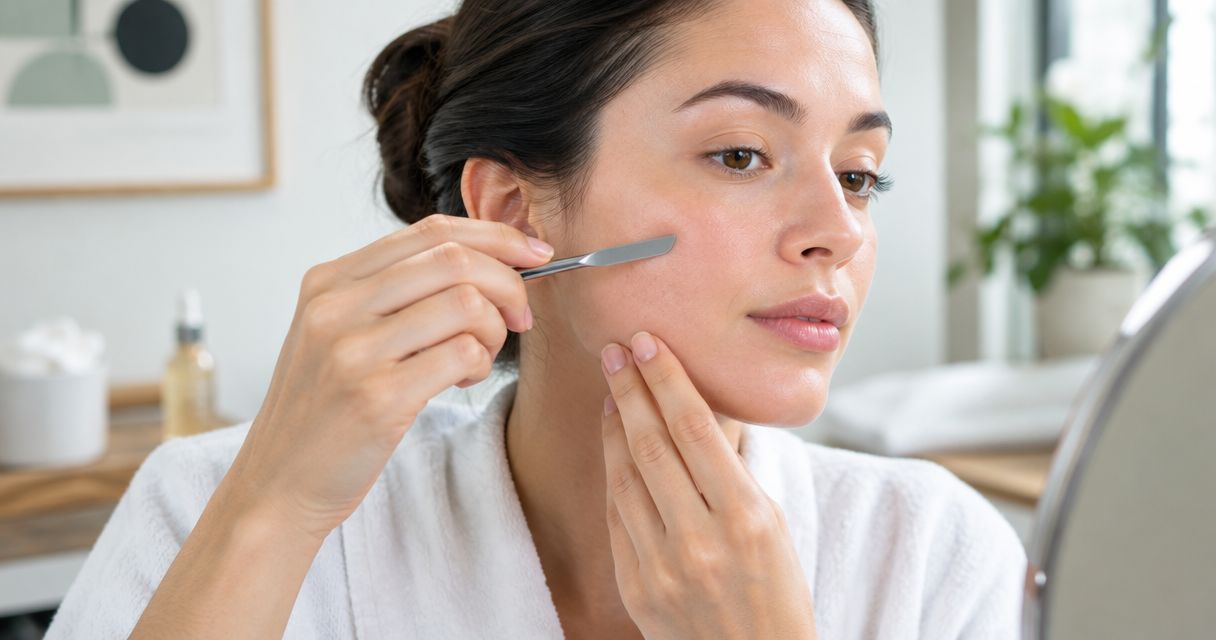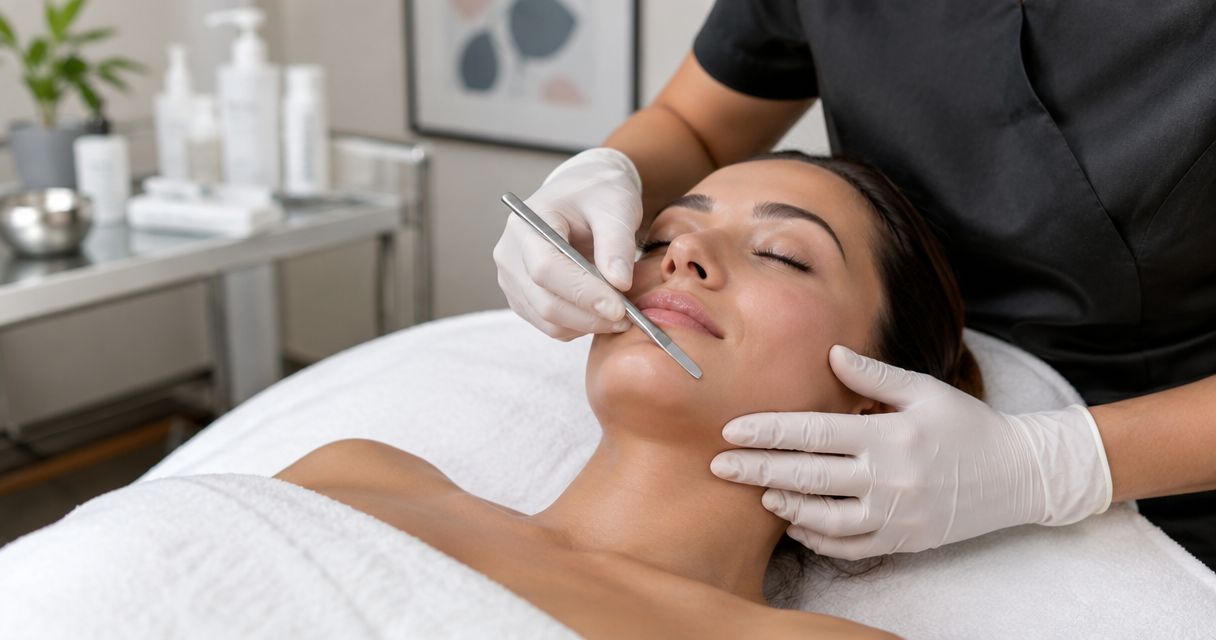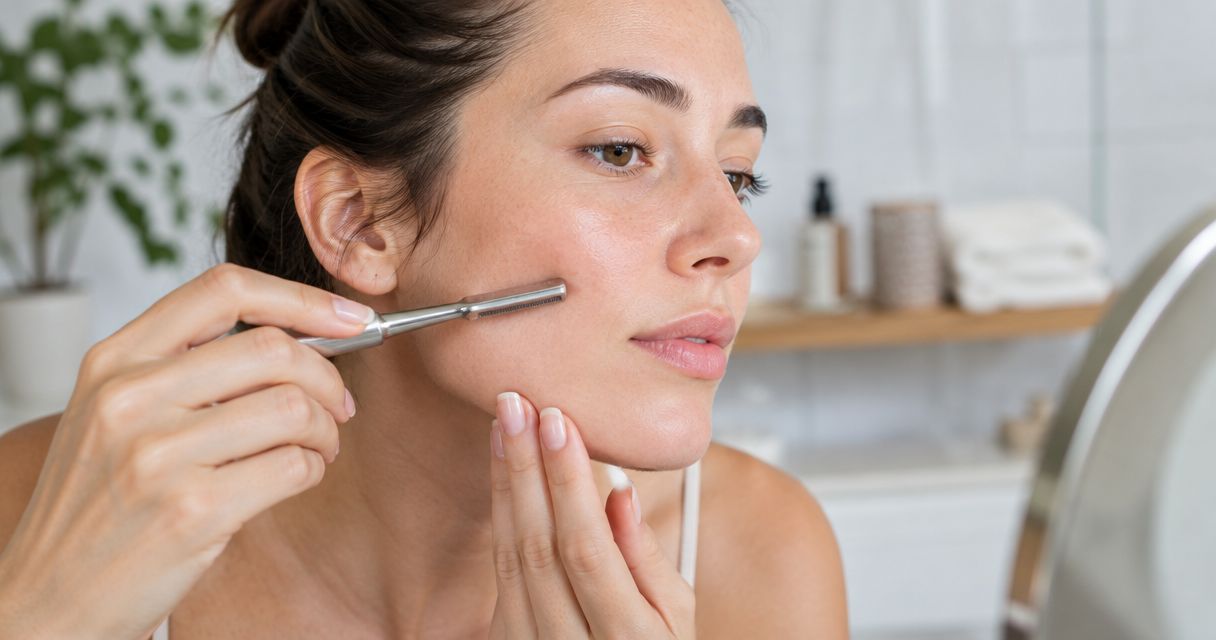
No, dermaplaning cannot remove peach fuzz permanently: it cuts hair at the skin’s surface without destroying the follicle that produces it. It also exfoliates the skin, so smoother texture after treatment does not mean future hair growth has stopped.
- Can dermaplaning remove peach fuzz permanently? No. Surface hair removal leaves the follicle intact.
- Dermaplaning does not make peach fuzz grow back thicker, darker, or faster.
- Electrolysis targets individual follicles for permanent hair removal; laser treatment is generally unsuitable for very light peach fuzz.
- Bonnie Frances Skin offers dermaplaning in Phoenix for clients seeking temporary hair removal and exfoliation.
Can dermaplaning remove peach fuzz permanently?
Dermaplaning removes visible peach fuzz, not the follicle beneath it. Once the cut hair grows beyond the skin’s surface, you can see or feel it again. Repeating dermaplaning does not turn a temporary treatment into permanent hair removal.
For your 2026 treatment plan, separate two goals: removing facial hair and improving surface texture. Dermaplaning addresses both temporarily, but a treatment that destroys follicles works differently.
If you want local treatment rather than permanent hair removal, Bonnie Frances Skin offers dermaplaning in Phoenix. The important decision is whether temporary smoothness matches your goal—not whether repeated appointments will eventually stop regrowth.
| Method | Best for | What it does | Main limitation |
|---|---|---|---|
| Dermaplaning | Temporary peach-fuzz removal with exfoliation | Cuts surface hair and removes superficial dead skin cells | Leaves follicles intact and can irritate unsuitable skin |
| Facial shaving | Temporary hair removal without a clinical exfoliation treatment | Cuts hair at the surface | Regrowth continues; cuts and irritation are possible |
| Laser hair removal | Long-term reduction of suitable pigmented hair | Uses light absorbed by pigment to damage follicles | Very light, fine peach fuzz is a poor target; skin and hair assessment matter |
| Electrolysis | Permanent removal of individually treated hairs | Uses a fine probe and electrical energy to destroy a follicle’s growth center | Treats hairs individually and requires a course of treatment |
Why this matters
Choosing dermaplaning because you expect permanent results creates the wrong treatment plan. You can enjoy smoother-feeling skin after an appointment and still see peach fuzz return without anything having gone wrong.
Bonnie Frances Skin is a fit for Phoenix clients seeking dermaplaning for temporary peach-fuzz removal and exfoliation. Permanent hair removal is a different objective and calls for a different assessment.
Your choice should also reflect how much the hair bothers you. Fine facial hair is normal, and leaving it alone is a valid option. Treatment is a preference, not a requirement for healthy skin.
Dermaplaning: temporary removal with exfoliation
During dermaplaning, a practitioner moves a blade across the skin to remove fine surface hair and superficial dead skin cells. The blade does not reach down into the follicle to disable hair production. That distinction explains both the immediate result and its limit.
Peach fuzz is commonly called vellus hair. It is generally finer and less pigmented than the coarse terminal hair found in areas such as the beard. Removing the visible shaft changes what you see above the skin, not the biological structures producing that hair.
Best for: you want a temporary reduction in visible fuzz along with surface exfoliation. A smoother surface can also change how makeup sits on your face, although dermaplaning does not treat every cause of uneven makeup application.
The trade-off is maintenance and the possibility of irritation, small cuts, or infection. Active inflammation, damaged skin, and certain skin conditions make assessment more important than getting the closest possible result. Dermaplaning is not a treatment to push through when your skin is already sore.
Electrolysis: a permanent-removal approach
Electrolysis treats individual hair follicles using a fine probe and electrical energy. Unlike dermaplaning, its purpose is to destroy the follicle’s growth center rather than cut off the hair above it. It does not depend on dark hair pigment in the way laser hair removal does.
Best for: you want permanent removal of specific unwanted hairs and accept an individual-follicle treatment process. This makes electrolysis a different conversation from booking regular exfoliation appointments.
Its limitation is that hairs must be treated individually, and a course of treatment is needed because hair growth cycles differ. Discomfort, temporary skin reactions, pigment changes, and scarring are considerations to discuss with a qualified practitioner. Permanent removal of treated hairs also does not prevent unrelated follicles from producing new visible hair later.
For a permanent-removal goal in 2026, ask an electrolysis practitioner about suitability before committing to repeated surface-removal treatments. Do not interpret “long-lasting smoothness” as a promise that follicles have been destroyed.
Laser hair removal: not a shortcut for pale peach fuzz
Laser hair removal relies on pigment in the hair to absorb light energy. Fine, pale peach fuzz provides a poor target compared with suitable darker hair. A treatment being called laser hair removal does not make every facial hair type a good candidate.
Best for: suitable pigmented hair after a professional assessment of hair color, skin tone, treatment area, and device. It is generally discussed in terms of long-term hair reduction rather than a guarantee that every hair disappears permanently.
The disadvantages include burns, pigment changes, and the possibility of paradoxical hair growth, particularly in some facial treatment settings. Do not choose laser treatment for diffuse peach fuzz simply because you want a result that lasts longer than dermaplaning. First establish whether the hair is an appropriate target at all.
Why peach-fuzz regrowth varies
There is no universal date when every face returns to its pretreatment appearance. What you notice depends on the hair, the area, and the difference between the freshly treated surface and your usual skin texture.
- Growth cycle: facial hairs do not all grow or shed at the same time, so visible regrowth is not perfectly synchronized.
- Hair characteristics: fine, lightly pigmented hair is less conspicuous than coarse or darker hair, even when both are growing normally.
- Treatment area: fuzz on the cheeks can look different from more noticeable hairs around the upper lip or chin.
- Hormonal changes: hormonal shifts can affect facial hair over time; dermaplaning does not control those changes.
- What you are judging: the return of visible hair and the loss of a freshly exfoliated feel are different observations.
For your 2026 maintenance plan, judge whether your skin has recovered and whether the returning hair bothers you. Do not scrape repeatedly just to preserve the exact feel of treatment day. More frequent blade use does not make the result permanent.
Will peach fuzz grow back thicker after dermaplaning?
No. Dermaplaning does not change the thickness, color, or growth rate of the follicle’s hair. Cutting a shaft creates a different tip from the naturally tapered end, which can change how regrowth feels without changing how the follicle functions.
Will stopping dermaplaning make my facial hair worse?
Stopping dermaplaning does not create extra follicles or make existing follicles produce thicker hair. Your normal facial hair becomes visible again; a genuine change toward coarse or rapidly increasing hair deserves a separate medical assessment.
Can repeated dermaplaning eventually stop regrowth?
Repeated dermaplaning does not destroy follicles, so it does not eventually stop regrowth. Schedule treatment for temporary hair removal and exfoliation, not as a cumulative permanent-removal strategy.
How to choose your next step
Start with the result you actually want. “I want my makeup to sit more smoothly” and “I never want these hairs to return” require different decisions, even if both begin with noticing facial fuzz.
- Set your goal. Decide whether you want temporary smoothness, exfoliation, or permanent removal of particular hairs. Avoid choosing a procedure before naming the outcome.
- Check your skin. Tell the practitioner about active acne, eczema, rosacea flares, cuts, sunburn, and any current irritation. These details affect whether blade exfoliation is appropriate.
- Review your routine. Bring up retinoids, exfoliating acids, prescription skin treatments, recent procedures, and any medication affecting skin sensitivity or healing. Get individualized instructions rather than inventing a pause schedule.
- Match the method. Choose dermaplaning for temporary surface removal; discuss follicle-targeting treatment when permanence is the goal. Ask specifically about fine facial hair rather than hair removal in general.
- Plan aftercare. Confirm which products to use, which to pause, and what symptoms should prompt a call. Leave with instructions suited to your skin, not just a future appointment date.

At Bonnie Frances Skin, dermaplaning is one of the listed skincare services. Ask whether your current skin condition suits that service and how it fits with your existing routine; do not assume every facial treatment belongs in the same appointment.
Explore dermaplaning in Phoenix
Review the clinic before discussing temporary peach-fuzz removal and exfoliation.
Protect your skin after temporary hair removal
Aftercare should protect the skin barrier rather than chase an even smoother finish. Use the gentle cleansing and moisturizing routine your practitioner recommends. Avoid adding another exfoliation step simply because some texture remains.
For sun protection in 2026, established dermatology guidance recommends broad-spectrum, water-resistant sunscreen with SPF 30 or higher. Apply sunscreen 15 minutes before going outdoors, and reapply every 2 hours outdoors, as well as after swimming or sweating according to the label. Shade and protective clothing also matter; sunscreen is not a reason to stay in direct sun longer.
Do not pick at irritated areas or shave over skin that has not recovered. Ask your practitioner when to restart potentially irritating products, rather than applying a fixed waiting period to every skin type and treatment combination.
Seek medical advice for worsening redness, increasing pain, swelling, pus, or other signs of infection. Routine peach-fuzz maintenance should not mean accepting persistent inflammation as normal.
When facial hair needs a medical conversation
A gradual return of the same fine fuzz after dermaplaning is expected. A sudden increase in coarse facial hair is a different issue, particularly when it appears alongside irregular periods, scalp hair thinning, or other new symptoms.
A dermatologist or another qualified healthcare professional can assess those changes. Hair removal addresses appearance; it does not diagnose or treat an underlying hormonal condition.
If your facial hair changes during 2026, record what changed and when before your appointment. That history is more useful than assuming the blade caused a new growth pattern. You can still discuss cosmetic removal, but it should not replace evaluation of a new symptom.
FAQ
Can dermaplaning remove peach fuzz permanently?
No. Dermaplaning cuts peach fuzz at the skin’s surface and leaves the hair-producing follicle intact, so hair grows back.
Does peach fuzz grow back thicker after dermaplaning?
No. Dermaplaning does not change hair thickness, color, or growth rate. A cut tip can feel different from a naturally tapered tip without the hair becoming thicker.
What removes facial peach fuzz permanently?
Electrolysis is a permanent hair-removal method that treats individual follicles. A qualified practitioner should assess whether treating your fine facial hair is appropriate and explain the treatment course and risks.
Is laser hair removal better than dermaplaning for peach fuzz?
Laser hair removal is generally unsuitable for very light, fine peach fuzz because it depends on pigment in the hair. Dermaplaning removes that surface hair temporarily, while laser suitability requires an individual assessment.
Can I get dermaplaning if I have active acne?
Do not dermaplane directly over inflamed acne lesions. A practitioner should assess your skin and decide whether to postpone treatment or use a different approach.
Will my peach fuzz get worse if I stop dermaplaning?
Stopping dermaplaning does not make peach fuzz worse. Your usual hair becomes visible again; new coarse hair or a sudden increase in facial hair should be assessed separately.
What sunscreen should I use after dermaplaning?
Choose broad-spectrum, water-resistant sunscreen with SPF 30 or higher, unless your clinician gives different individualized instructions. Reapply every 2 hours outdoors and follow the label for swimming or sweating.
One last thing
You do not have to remove peach fuzz to have healthy skin. If you want temporary smoothness, dermaplaning can match that goal; if you want permanent removal, choose a conversation about follicles rather than a promise about exfoliation.
Before booking, use this question: “Will this treatment cut the hair, or will it treat the follicle?” The answer tells you more about permanence than how smooth your face feels immediately afterward.