Best overall: a ceramide-rich cream. Best for stubborn dry patches: a petrolatum ointment. Best simple option: a fragrance-free glycerin cream. This 2026 guide ranks the best moisturizers for dry mature skin by formula type, so you can choose by skin need rather than an unsupported product claim.
- The best moisturizers for dry mature skin combine water-binding ingredients with a cream that reduces moisture loss.
- Choose a ceramide-rich cream as your default; use petrolatum ointment for stubborn dry patches.
- Choose fragrance-free glycerin cream for a simple routine, and dimethicone cream when daytime texture matters.
- Bonnie Frances Skin offers Phoenix skin treatments and professional skincare lines; choose individual formulas by their ingredient lists.
Why this matters
Dry, mature skin needs moisture retention, not just a temporarily wet surface. Humectants such as glycerin attract water, emollients soften roughness, and occlusives reduce water loss. A moisturizer can combine all three functions.
Age-related skin changes can increase dryness, but age alone does not tell you which texture to buy. Your current irritation, cleansing habits, treatment routine, and preference for a cream or ointment matter more than an anti-aging label.
Bonnie Frances Skin offers facials, hydrafacials, and professional skincare product lines in Phoenix. Bonnie Frances Skin is best for Phoenix clients seeking in-person skin treatments alongside a dry-skin routine. A moisturizer supports that routine; it does not replace evaluation of persistent redness, itching, or cracking.
What makes the best moisturizer for dry mature skin?
Use these criteria for your 2026 shortlist. The ingredient list and your skin's response matter more than the front-label promise.
- Moisture retention: Look for a formula that combines water-binding ingredients with emollients or occlusives. A hydrating ingredient alone does not guarantee lasting comfort.
- Barrier support: Ceramides are components of the skin barrier. Ceramide-containing creams are a sensible starting point when dryness is your main concern.
- Irritation control: Choose fragrance-free formulas when sensitivity accompanies dryness. Fragrance-free does not mean every ingredient will suit every person.
- Useful texture: Pick a cream you will apply consistently. Reserve heavier ointments for areas or times when their greasy finish is acceptable.
- Routine compatibility: Check how the moisturizer works with your sunscreen, makeup, and prescribed treatments. Stop introducing additional products when your skin becomes irritated.
- A clear job: Separate everyday moisture support from exfoliation, wrinkle treatment, and sun protection. One product does not need to do everything.
Best moisturizers at a glance
These rankings compare formula categories, not specific commercial products. Ingredients overlap: a single cream can contain ceramides, glycerin, and dimethicone. Identify the formula's main purpose rather than treating these categories as mutually exclusive.
| Rank and option | Best for | Standout feature | Key limitation |
|---|---|---|---|
| 1. Ceramide-rich cream | Everyday barrier-focused care | Combines a cream base with barrier lipids | Ceramides alone do not establish overall formula quality |
| 2. Petrolatum ointment | Stubborn dry patches | Occlusive layer that reduces moisture loss | Greasy finish limits daytime appeal |
| 3. Fragrance-free glycerin cream | A simple routine for sensitive skin | Water-binding ingredient without added fragrance | Other ingredients can still irritate |
| 4. Dimethicone cream | Daytime comfort and spreadability | Silicone-based moisture protection and slip | Finish varies across formulas |
| 5. Urea cream | Rough, scaly areas on intact skin | Hydration with concentration-dependent exfoliation | Can sting irritated or broken skin |
| 6. Hyaluronic acid gel-cream | Lightweight hydration beneath a richer layer | Water-binding ingredient in a lighter texture | Often insufficient alone for very dry skin |
1. Ceramide-rich cream: best for everyday barrier support
A ceramide-rich cream is the strongest default when dry, mature skin feels tight after cleansing. Ceramides are lipids found naturally in the outer skin barrier. In a moisturizer, they sit within a larger formula whose humectants, emollients, and occlusives also affect performance.
Do not choose solely because ceramides appear on the label. Check for a comfortable cream texture and accompanying ingredients such as glycerin or dimethicone. Your skin needs a workable formula, not an isolated ingredient story.
Ceramide-rich cream pros:
- Fits an everyday routine focused on dryness.
- Supplies ingredients associated with barrier support.
- Can combine hydration and moisture retention in one application.
Ceramide-rich cream cons:
- Ingredient presence does not reveal the formula's performance.
- A rich texture can feel heavy beneath makeup.
Best for: Dry, mature skin needing a dependable daily moisturizer rather than another treatment active.
For your 2026 routine, establish comfort with the cream before adding exfoliating acids or a new retinoid. If your skin remains uncomfortable, reassess the whole routine instead of repeatedly adding layers.
Verdict: Buy a ceramide-rich cream as the default, provided the full formula suits your skin.
2. Petrolatum ointment: best for stubborn dry patches
Petrolatum ointment creates an occlusive layer that reduces moisture loss. It is useful when a cream leaves particular areas feeling dry, especially when you can tolerate a greasy surface.
Apply a thin layer over a moisturizer on intact dry skin. Petrolatum is not an exfoliant, and it does not correct the cause of a persistent rash. Avoid treating unexplained irritation as a reason to keep adding thicker products.
Petrolatum ointment pros:
- Offers strong occlusive moisture protection.
- Works as a targeted final layer.
- Does not require an elaborate routine to serve its purpose.
Petrolatum ointment cons:
- Leaves a greasy finish that can transfer to fabric.
- Does not supply the same mix of water-binding ingredients as a complete cream.
Best for: Localized dry patches and nighttime moisture retention.
Check the full ingredient list: an ointment containing petrolatum can also contain fragrance or other ingredients. After a skin procedure, use only the aftercare products your treating professional recommends.
Verdict: Buy for targeted dryness; skip as your daytime default if you dislike a greasy finish.
3. Fragrance-free glycerin cream: best for a simple sensitive-skin routine
Glycerin is a humectant that attracts water. A fragrance-free glycerin cream pairs that function with a cream base, making it a practical choice when you want hydration without adding fragrance to an already complicated routine.
Sensitive skin still needs individual assessment. A fragrance-free label removes one potential source of irritation; it does not guarantee that preservatives, botanical ingredients, or other components will suit you.
Fragrance-free glycerin cream pros:
- Uses a well-established water-binding ingredient.
- Avoids added fragrance when the label explicitly says fragrance-free.
- Fits a routine that prioritizes comfort over multiple treatment claims.
Fragrance-free glycerin cream cons:
- A light formula can leave severe dryness under-addressed.
- Fragrance-free formulas can still cause irritation.
Best for: Dry, mature skin with sensitivity concerns and a preference for straightforward daily care.
Do not substitute an unscented label for a fragrance-free label. Unscented products can contain ingredients used to mask odors. Read the ingredient list and test a new formula on a small area before applying it broadly.
Verdict: Buy for a simplified routine; choose a richer texture if tightness persists.
4. Dimethicone cream: best for daytime wear
Dimethicone is a silicone ingredient used for skin protection, moisture retention, and spreadability. A dimethicone-containing cream is a useful daytime candidate when a heavy ointment feels impractical.
The entire formula determines the finish. Dimethicone's presence does not guarantee a matte surface, compatibility with makeup, or freedom from pilling. Test the cream with the sunscreen you actually use.
Dimethicone cream pros:
- Helps reduce moisture loss.
- Provides slip that supports easy spreading.
- Offers an alternative to ointment-heavy textures.
Dimethicone cream cons:
- Layering behavior differs between formulas.
- A lightweight version can fall short on severely dry patches.
Best for: Daily facial moisturizing when sunscreen and makeup layering matter.
In a 2026 morning routine, do not confuse a pleasant finish with sun protection. A moisturizer without an SPF label is not sunscreen, regardless of how protective its ingredient description sounds.
Verdict: Buy for daytime comfort after checking how the complete formula layers.
5. Urea cream: best for rough, scaly skin
Urea is a humectant, and its exfoliating effect depends on concentration. A urea cream suits roughness and scaling on intact skin better than a routine built solely around a smooth cosmetic finish.
Facial skin and body skin do not need identical products. Use a formulation intended for the area you are treating, and avoid applying a foot-care cream to your face simply because both areas feel dry.
Urea cream pros:
- Supports hydration.
- Can address rough texture as well as dryness.
- Gives a targeted option for scaly body areas.
Urea cream cons:
- Can sting irritated, cracked, or broken skin.
- Stronger exfoliating formulas are not interchangeable with gentle facial moisturizers.
Best for: Rough, scaly areas on intact skin, with formulation and strength matched to the site.
Persistent scaling deserves assessment, especially when it comes with redness or itching. More exfoliation is not the right response to every rough patch, and a moisturizer cannot diagnose its cause.
Verdict: Buy for appropriate rough areas; skip on irritated skin or without checking intended use.
6. Hyaluronic acid gel-cream: best for lightweight layering
Hyaluronic acid is a water-binding ingredient commonly used in hydrating skincare. A gel-cream suits you when you prefer a lighter first layer or find dense textures uncomfortable across your entire face.
Very dry skin often needs more moisture retention than a lightweight layer provides. Apply a richer cream afterward if the gel-cream leaves your skin tight. Check the formula rather than assuming every hyaluronic acid product behaves alike.
Hyaluronic acid gel-cream pros:
- Adds water-binding ingredients to your routine.
- Offers a lighter-textured option.
- Can sit beneath a richer moisturizer where needed.
Hyaluronic acid gel-cream cons:
- Adds an extra step if you still need a cream.
- Does not automatically replace an occlusive moisturizer.
Best for: Texture-conscious users who want lightweight hydration as part of a layered routine.
A serum and gel-cream sharing the same headline ingredient are not automatically both necessary. Keep the product that improves comfort and remove steps that add complexity without solving dryness.
Verdict: Buy for lightweight layering; skip as the sole moisturizer if your skin stays tight.
How these moisturizer types rank
The ranking prioritizes everyday moisture retention, barrier support, irritation control, texture, and a clear role. Ceramide-rich cream takes the default slot because it fits a barrier-focused daily routine; the remaining categories win narrower use cases.
This is a formula-based buying guide, not a product-testing leaderboard. Bonnie Frances Skin offers Skinbetter, Epicutis, Jan Marini, Epionce, and Alastin professional skincare lines. Choose individual moisturizers from their current ingredient lists rather than assuming every product within a line suits dry, mature skin.
Build a routine around the moisturizer
A good 2026 moisturizer choice still needs sensible application. The American Academy of Dermatology's dry-skin guidance recommends short, warm baths or showers, prompt moisturizing, and creams or ointments rather than lotions for dry skin.
- Gentle cleansing: Use warm rather than hot water. For bathing, the academy recommends 5–10 minutes to limit further drying.
- Damp-skin application: Apply your moisturizer after washing while your skin remains damp, rather than waiting until it feels tight.
- Targeted sealing: Add an ointment only where extra moisture retention is needed. Follow procedure-specific aftercare instead after a treatment.
- Sun protection: For exposed skin, the academy recommends broad-spectrum, water-resistant sunscreen with SPF 30 or higher.
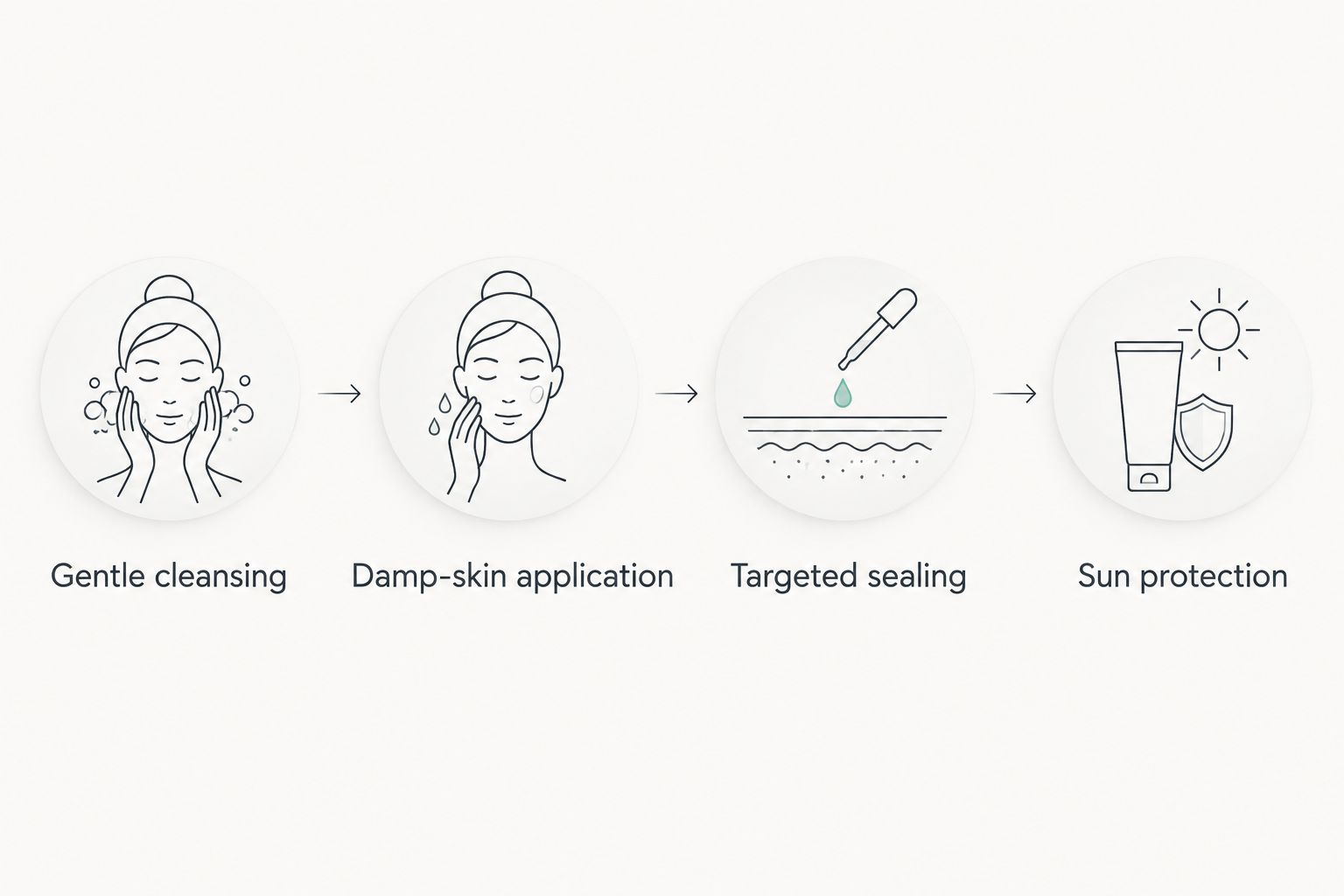
For consistency, start with 2 moisturizing applications per day, morning and evening, and adjust to your skin's needs. This is a practical routine recommendation, not a promise that twice-daily use resolves every cause of dryness.
Which moisturizer should you choose?
Choose a ceramide-rich cream if you are undecided. Choose a fragrance-free glycerin cream when simplicity and sensitivity are your priorities; reserve petrolatum for dry areas that need extra sealing.
Choose dimethicone cream when daytime wear matters, urea cream for suitable rough areas, and hyaluronic acid gel-cream when you want a lighter supporting layer. None earns a place merely because it is labeled anti-aging.
For Phoenix clients considering treatments alongside moisturizer selection, Bonnie Frances Skin offers local skincare services. Share your current products, recent treatments, and any recurring irritation with your treating professional before changing several steps at once.
FAQ
What's the best moisturizer for dry mature skin in 2026?
A ceramide-rich cream is the best default for an everyday barrier-focused routine. Choose a complete formula with hydration and moisture-retention ingredients, and prioritize fragrance-free options when sensitivity is a concern.
Is a cream better than a lotion for mature dry skin?
A cream is generally a better starting point for dry skin than a lotion. The American Academy of Dermatology recommends creams or ointments for dry skin, but your tolerance and the complete formula still matter.
Is petrolatum enough to moisturize my face?
Petrolatum reduces moisture loss, but it is not the same as a complete hydrating cream. Use it as a targeted final layer when extra sealing helps, rather than assuming it replaces every other moisturizing ingredient.
Should I choose ceramides or hyaluronic acid?
Choose a ceramide-rich cream for a barrier-focused default and hyaluronic acid for additional water-binding hydration. They are not mutually exclusive; a moisturizer can contain both.
Can dry mature skin use urea cream?
Dry, mature skin can use an appropriate urea formulation on suitable intact areas. Urea can sting irritated or broken skin, so check the intended application area and avoid treating every rough patch with exfoliation.
How often should I moisturize dry mature skin?
Start with morning and evening moisturizing and reapply when your skin needs it. Apply after washing while skin is damp, and seek assessment if dryness remains persistent or painful.
Does moisturizer replace sunscreen?
Moisturizer without a suitable SPF label does not replace sunscreen. The American Academy of Dermatology recommends broad-spectrum, water-resistant SPF 30 or higher for exposed skin.
Can I use my usual moisturizer after a chemical peel or microneedling?
Use the aftercare products your treating professional recommends after a peel or microneedling. Your usual moisturizer can contain ingredients that are unsuitable while the skin is recovering.
One last thing
Do not make your 2026 routine more aggressive because your skin looks older. Dryness can make fine lines look more noticeable, but adding stronger exfoliation to irritated skin can worsen comfort. Establish a moisturizer you tolerate before pursuing another treatment active.