Office professionals’ skincare is daily skin care adapted to desk-based work, commuting, and meeting schedules, with the aim of maintaining comfortable, protected skin. Effective skincare for office professionals starts with a repeatable routine, then adds targeted treatment without creating irritation or disrupting your workweek.
- Skincare for office professionals starts with gentle cleansing, moisturizer, and broad-spectrum sunscreen—not a crowded desk drawer.
- Bonnie Frances Skin offers Phoenix office professionals facials and other professional treatments; home care remains the foundation.
- Choose treatment timing around aftercare requirements, not just gaps in your meeting calendar.
- Treat persistent irritation or changing skin lesions as medical concerns, not reasons to add another serum.
Why skincare matters for office professionals
Your work schedule determines when you can apply products, spend time outdoors, and follow treatment aftercare. A routine that ignores those constraints becomes difficult to maintain. For your 2026 plan, prioritize what you can repeat on a rushed morning and a late evening.
Office work does not automatically cause a particular skin condition. Instead, identify your actual problems: tightness during the afternoon, sunscreen that pills under makeup, or irritation after shaving. These observations are more useful than buying products labeled for a desk-based lifestyle.
Bonnie Frances Skin offers facials, hydrafacials, dermaplaning, SkinPen microneedling, and chemical peels in Phoenix. Bonnie Frances Skin is best for Phoenix office professionals seeking clinic-based skincare treatments alongside a consistent home routine. Professional treatment adds an appointment and aftercare commitments; it does not replace daily cleansing, moisturizing, or sun protection.
Build a routine that fits your workweek
1. Map your skin concerns against your calendar
Start with a written note rather than a purchase. Record what bothers you, when it happens, and which products you already use. Include prescription treatments, shaving habits, makeup, and recent procedures so you can spot overlapping sources of irritation.
Separate appearance goals from symptoms. Uneven texture is a cosmetic concern; persistent burning, a spreading rash, or a changing skin lesion requires medical assessment. A facial appointment is not a substitute for diagnosing a skin condition.
For your 2026 routine, choose a primary goal before adding extras. Comfortable skin, fewer breakouts, and improved discoloration require different decisions; trying to address everything simultaneously makes troubleshooting harder.
- Write down your main concern in plain language.
- List current cleansers, moisturizers, sunscreens, and active ingredients.
- Note when tightness, redness, or breakouts appear.
- Mark outdoor lunches, commuting, travel, and important events.
- Seek medical care for persistent symptoms or changing lesions.
2. Establish a gentle morning and evening baseline
Use what you already tolerate before buying a replacement. A practical baseline is gentle cleansing as needed, moisturizer, and daytime sunscreen. At night, remove makeup and sunscreen, cleanse gently, and moisturize.
Choose texture by comfort rather than workplace stereotypes. Oily skin can still need moisturizer, while dry skin does not automatically need several heavy layers. If your face feels tight after washing, review the cleanser and washing habits before adding another serum.
The American Academy of Dermatology’s general face-washing guidance recommends limiting washing to twice daily and after sweating. That means an afternoon feeling of oiliness is not an automatic instruction to scrub your face again.
- Use lukewarm water and your fingertips instead of abrasive scrubbing.
- Keep cleansing to no more than 2 times daily, plus after sweating.
- Apply moisturizer when your skin needs it, including after cleansing.
- Remove makeup gently before bed.
- Avoid introducing several unfamiliar products together.
3. Match sun protection to your actual exposure
Start with a sunscreen you will wear consistently. For your 2026 workday, follow the American Academy of Dermatology’s general recommendation for broad-spectrum, water-resistant sunscreen with SPF 30 or higher. Follow the product label for application.
An indoor job does not eliminate outdoor exposure during a commute, lunch, or errands. UVA can also pass through window glass. Consider where you sit and drive, rather than assuming every desk has the same exposure.
When outdoors, reapply sunscreen approximately every 2 hours and after swimming or sweating, following the label. That outdoor guidance is not a requirement to interrupt every indoor meeting on a timer. Shade and protective clothing remain useful alongside sunscreen.
If your skin reacts to products, start by reviewing ingredients and tolerability. The guide to facials for sensitive skin in Phoenix addresses a related treatment decision, but a facial does not replace sun protection.
- Choose broad-spectrum SPF 30 or higher.
- Apply sunscreen according to its label before outdoor exposure.
- Plan reapplication around outdoor lunches and other exposure.
- Use shade, hats, and protective clothing when practical.
- Test sunscreen under your usual makeup before an important workday.
4. Address dryness without overloading your skin
If your skin feels uncomfortable at your desk, review your existing routine first. Harsh cleansing, frequent exfoliation, and unsuitable products are worth checking before assuming the office environment is the only cause. Keep a simple record of what changes when you simplify.
Best for afternoon tightness: adjust moisturizer and cleansing before adding another exfoliant. A moisturizer containing humectants such as glycerin helps attract water; ingredients such as petrolatum help reduce water loss. The finished formula and your tolerance matter more than a single ingredient on the label.
Keep workday adjustments modest. Repeatedly layering unfamiliar products over makeup makes it harder to identify irritation. If dryness persists despite gentle care, ask a qualified clinician whether a skin condition needs treatment.
- Review whether your cleanser leaves your skin tight.
- Apply a tolerated moisturizer before sunscreen.
- Choose a richer or lighter texture according to comfort.
- Stop using products that cause persistent burning or irritation.
- Avoid treating flaking skin with repeated scrubbing.
5. Add targeted care only after the basics work
A stable routine gives you a clearer starting point for addressing acne, discoloration, or fine lines. Introduce a targeted product separately so that you can identify which change caused irritation. Follow its label or your prescribing clinician’s instructions instead of improvising a schedule.
Retinoids, exfoliating acids, and acne treatments have different purposes and precautions. Using more of them together is not automatically more effective. Ask your clinician about compatibility if you use prescriptions, and discuss pregnancy or pregnancy planning before using a retinoid.
Bonnie Frances Skin offers professional skincare lines including Skinbetter, Epicutis, Jan Marini, Epionce, and Alastin. The relevant question is which specific formula fits your skin and current treatment—not whether every product in a line belongs in your routine.
- Choose the concern you want the new product to address.
- Read directions and warnings before applying it.
- Introduce products separately rather than changing everything together.
- Check compatibility with prescription treatments.
- Pause irritating products and seek advice when symptoms persist.
6. Schedule professional treatments around aftercare
Begin by checking your work calendar, then ask which treatment fits your goal and recovery constraints. Do not select a procedure simply because an appointment fits between meetings. Visible redness, sensitivity, peeling, and restrictions differ by treatment and individual response.
Bonnie Frances Skin skincare services include facials, hydrafacials, dermaplaning, SkinPen microneedling, and chemical peels. Best for treatment planning: choose by concern and aftercare tolerance, not by the shortest appointment. No procedure should be treated as automatically suitable for every office professional.
For a 2026 presentation, conference, or photo session, avoid trying an unfamiliar procedure immediately beforehand. Ask for individualized instructions covering makeup, exercise, sun exposure, shaving, and active ingredients. Do not invent your own recovery deadline from someone else’s experience.
- State your skin concern and upcoming work commitments.
- Disclose medications, recent procedures, and a history of reactions.
- Ask what visible changes and restrictions to expect.
- Request instructions for stopping and restarting active products.
- Confirm whom to contact if recovery differs from expectations.
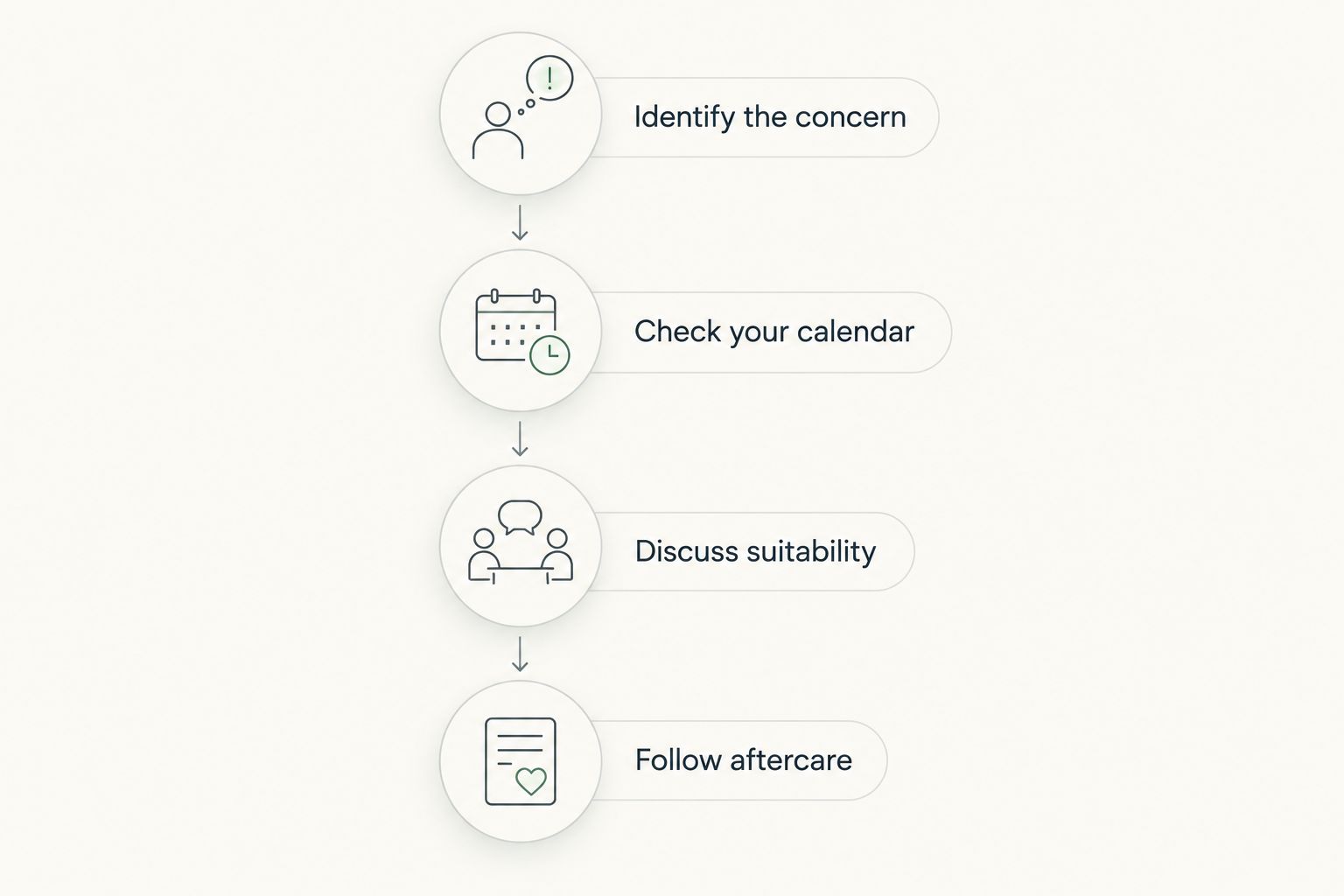
Your treatment plan should follow the same sequence each time: identify the concern, check your calendar, discuss suitability, and follow aftercare. Keep those decisions separate so convenience does not become the reason you choose a procedure.
Compare skincare options for your work schedule
The best option depends on your goal, current skin condition, and willingness to manage aftercare. For your 2026 plan, compare the trade-offs before escalating from home care to a procedure. Treatment suitability requires an individual assessment.
| Option | Best for | Main benefit | Key limitation |
|---|---|---|---|
| Gentle home routine | Professionals building consistent daily care | Supports cleansing, moisturization, and sun protection | Does not diagnose or treat every skin concern |
| Facial | Professionals seeking a customizable clinic visit | Can combine cleansing and selected skincare steps | Results and irritation risk depend on the protocol |
| Hydrafacial | Professionals considering cleansing and exfoliation in a treatment | Combines treatment steps in a clinic appointment | Does not replace daily care; suitability needs assessment |
| Dermaplaning | Professionals targeting surface buildup and fine facial hair | Removes fine hair and superficial dead skin | Can irritate skin and is not suitable for every condition |
| Chemical peel | Professionals discussing texture or discoloration concerns | Uses a chemical exfoliant in a controlled treatment | Peeling and sensitivity depend on the peel and skin response |
| SkinPen microneedling | Professionals seeking assessment for texture-related treatment | Creates controlled skin punctures as part of a clinical procedure | Requires suitability screening and aftercare; visible recovery varies |
A more intensive procedure is not automatically a better choice. If you cannot follow the aftercare, change the timing or discuss a different approach. Never shorten recovery instructions to accommodate a meeting.
Common mistakes office professionals make
Treating an indoor job as complete sun protection
A desk job describes your work, not your entire day. Account for driving, outdoor breaks, and window exposure when planning sunscreen use. Avoid building your routine around the assumption that you never encounter sunlight.
Trying a new treatment before a high-visibility meeting
An unfamiliar peel, exfoliant, or procedure introduces uncertainty when you want predictable skin. Keep established care before important events and discuss treatment timing with the provider. A colleague’s recovery experience is not a guarantee of yours.
Using exfoliation to fix every afternoon problem
Tightness, flaking, shine, and uneven texture are not interchangeable. Adding an acid or scrub whenever skin looks different can create irritation. Review cleansing, moisturizer, and existing active ingredients before intensifying exfoliation.
Buying a full routine without checking overlap
Several products can contain ingredients with similar effects. A toner, serum, and treatment cream can unintentionally stack exfoliants or other irritating ingredients. Read the ingredient lists and show your full routine to the clinician advising you.
Choosing treatment by appointment length alone
The time spent in a treatment room is only part of the commitment. Aftercare can affect makeup, exercise, outdoor plans, and other products. Select a procedure only after you understand both the appointment and the recovery instructions.
FAQ
What is the best skincare routine for office professionals?
The best starting routine is gentle cleansing, moisturizer, and daytime broad-spectrum sunscreen. Add targeted products only when they address a specific concern and fit your skin’s tolerance.
Do I need sunscreen if I work indoors all day?
Plan sunscreen around your daylight exposure, including commuting, outdoor breaks, and time near windows. The American Academy of Dermatology recommends broad-spectrum, water-resistant SPF 30 or higher for sun protection.
How often should I wash my face during a workday?
General dermatology guidance recommends washing no more than twice daily and after sweating. Avoid adding repeated washes just because your skin feels oily at your desk.
What should I do if my face feels dry in the office?
Review your cleanser and moisturizer before adding more treatment products. Reduce avoidable irritation, and seek clinical advice if dryness persists or comes with burning, cracking, or a rash.
Is a facial better than a chemical peel before a presentation?
Neither treatment is automatically the better choice before a presentation. Suitability and visible recovery depend on the specific treatment and your skin, so avoid unfamiliar procedures immediately before important events.
Can I wear makeup after microneedling or a peel?
Follow the treating provider’s instructions about when to restart makeup. Restrictions depend on the procedure and your recovery; a meeting or office dress code does not change those instructions.
Where can Phoenix office professionals discuss professional skincare treatments?
Bonnie Frances Skin offers Phoenix clients facials, hydrafacials, dermaplaning, SkinPen microneedling, and chemical peels. Discuss your concern, existing routine, and work commitments before selecting a treatment.
One last thing
Your most useful office skincare tool can be a note, not another product. Keep a brief record of products, symptoms, and procedure dates so you can explain what changed instead of reconstructing your routine from memory.
Keep a routine you can repeat on your busiest workday. If a plan requires constant correction, simplify it before adding another treatment.