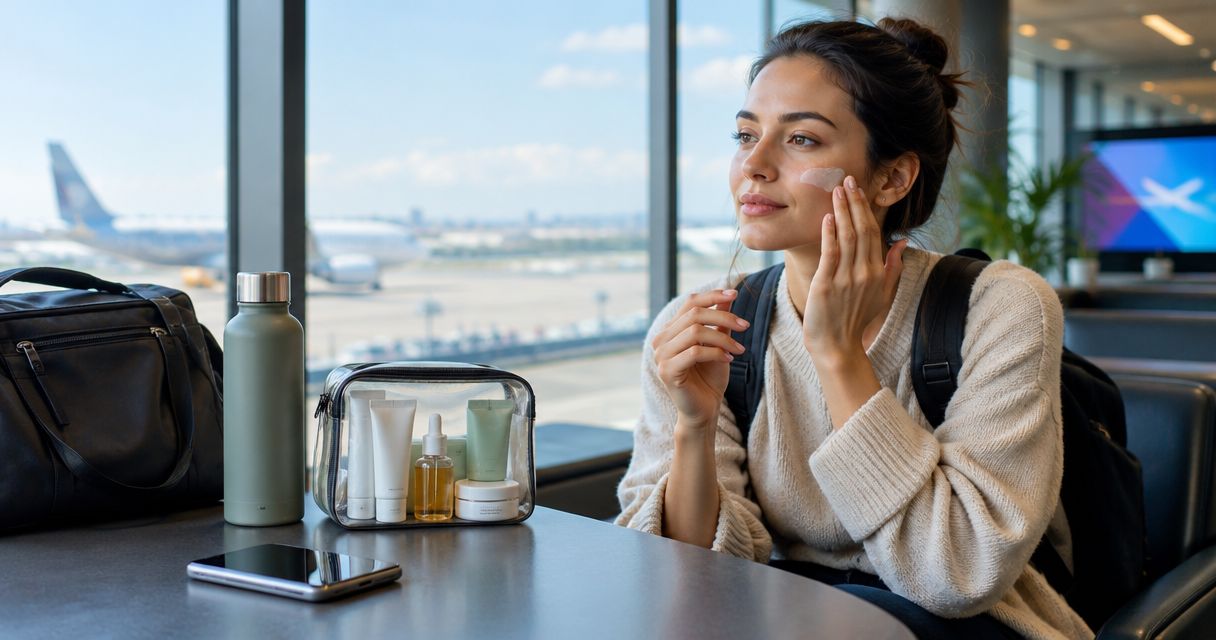
Frequent travelers’ skincare is a portable cleansing, moisturizing, and sun-protection routine aimed at keeping skin comfortable across changing environments. This 2026 guide explains what to pack, how to adjust your routine between destinations, and when to schedule professional treatments without crowding recovery into a trip.
- Skincare for frequent travelers starts with familiar cleanser, moisturizer, and broad-spectrum sunscreen—not a larger collection of travel minis.
- Bonnie Frances Skin suits Phoenix travelers seeking in-person skincare treatments; procedures require recovery planning around travel.
- Use broad-spectrum SPF 30 or higher and reapply every 2 hours outdoors, following the product label.
- Keep unfamiliar exfoliants out of your departure-day routine; adjust moisturizer before adding more treatment steps.
Why skincare matters for frequent travelers
Travel changes your surroundings faster than your skincare needs change. Aircraft cabins have low humidity, unfamiliar accommodation introduces different products, and a crowded itinerary makes consistent cleansing and sunscreen use harder to maintain.
The practical constraint is portability. You need products that fit your baggage allowance and still address dryness, breakouts, or sensitivity without requiring a bathroom shelf full of bottles.
For your 2026 routine, separate maintenance from treatment: maintain comfort and sun protection while traveling, then address persistent concerns with an appropriate professional. If dryness is your main concern, the guide to moisturizers for dry mature skin provides a related starting point, particularly if mature skin is also relevant to you.
A travel routine succeeds when you can repeat it on a tired evening—not when it contains every active ingredient you own. Keep the steps familiar enough that a late arrival does not turn into a skipped routine or an experiment.
Build a routine that survives your itinerary
Identify your usual skin pattern before packing
Start with what your skin does at home. Record whether you typically experience tightness after washing, an oily forehead, inflamed breakouts, persistent redness, or irritation from particular products. These observations help you distinguish an existing concern from a reaction to something introduced during travel.
Then review the actual trip. Outdoor sightseeing, swimming, overnight flights, and indoor meetings create different practical demands; the destination name alone does not tell you what to pack. A beach trip needs a different sunscreen-use plan from a conference spent mostly indoors.
For 2026 travel planning, write your routine in your phone before buying anything. If a product has no clear role, leave it out. Do not change prescribed treatment solely because you are traveling; ask the prescribing clinician how to handle your itinerary.
- List your current cleanser, moisturizer, sunscreen, and prescribed treatments.
- Note products that have previously caused burning, itching, or a rash.
- Identify outdoor activities and swimming sessions on your itinerary.
- Record existing skin concerns so you can recognize a genuine change.
Pack familiar essentials in compliant containers
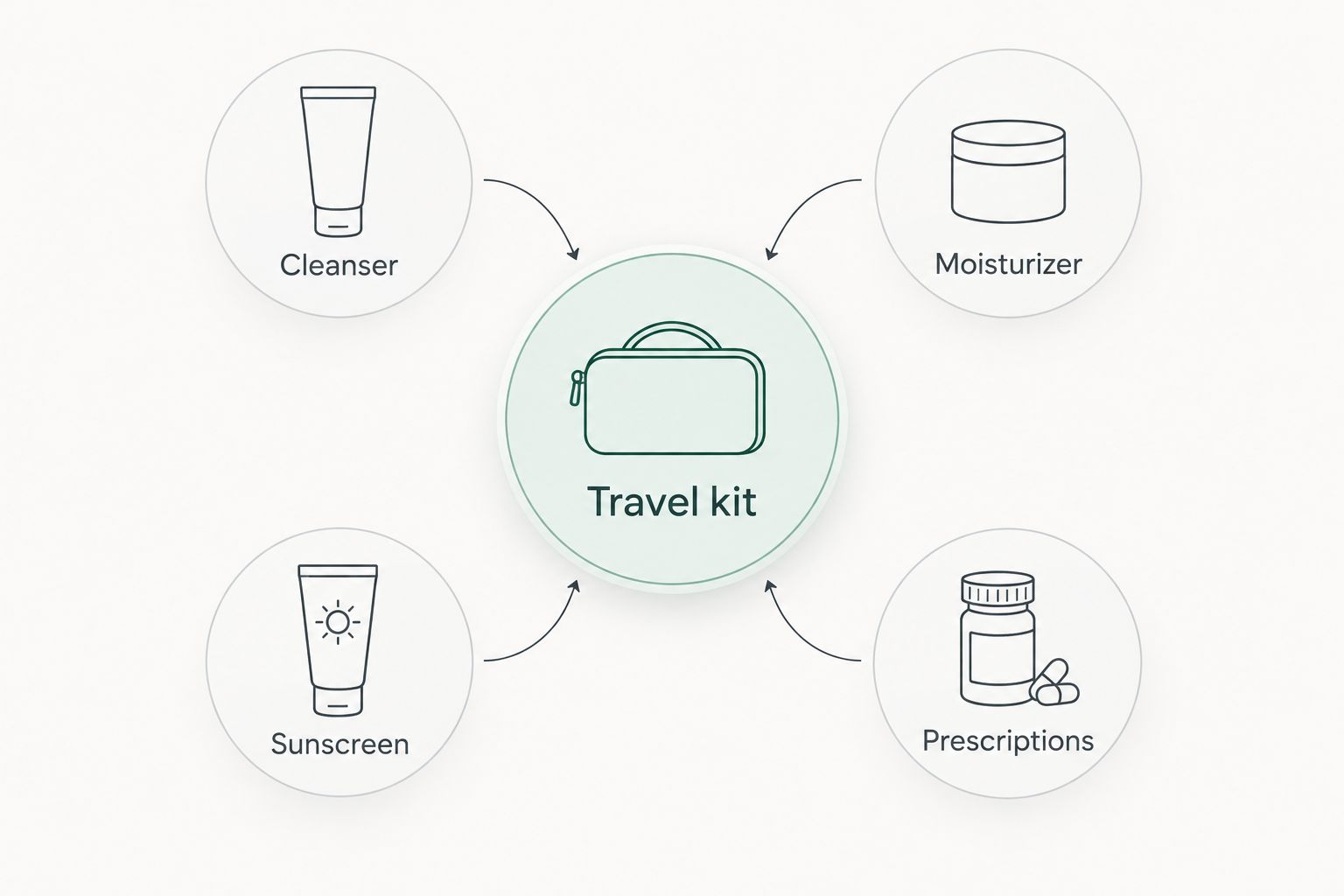
Build the kit manually from products you already tolerate. A gentle cleanser, a suitable moisturizer, and sunscreen form the maintenance routine; prescribed products remain subject to your clinician’s directions. Keep original labels or clear identifying information so you do not confuse similar containers.
For departures from U.S. airports, TSA’s published carry-on liquids rule limits individual containers to 3.4 ounces, or 100 milliliters, inside a single quart-sized bag. Check TSA guidance for applicable medical exceptions and check departure-airport rules for international legs. A partly empty oversized bottle does not meet the standard container-size limit.
Buy manufacturer-packaged travel sizes when practical. If you transfer a product, use a clean, suitable container and retain its directions; follow any packaging or storage restrictions. Do not leave skincare baking in a parked car.
- Cleanser: Pack a familiar formula rather than relying on hotel soap.
- Moisturizer: Bring the texture your skin already tolerates.
- Sunscreen: Keep its label, directions, and expiration information accessible.
- Prescriptions: Keep identifying information and clinician instructions with you.
The kit should make each product’s job obvious. Separate maintenance essentials from prescribed treatment so a rushed evening does not become a guessing exercise.
Establish a baseline before adding clinic treatments
Use your familiar routine at home before departure, then identify what remains unresolved. Dryness that improves with moisturizer needs a different conversation from persistent acne, recurrent flushing, or a changing skin lesion. Do not treat all of them as reasons to exfoliate more.
Bonnie Frances Skin is best for Phoenix travelers seeking in-person skin treatments rather than a travel-only product routine. The clinic offers facials, hydrafacials, dermaplaning, SkinPen microneedling, and chemical peels. Those services are options for a treatment discussion, not interchangeable fixes for travel-related irritation.
For a clinic-based path, review Bonnie Frances Skin and discuss your concern alongside your travel dates. Professional input helps you choose among treatments, but treatment adds preparation and aftercare requirements that a simple maintenance routine does not.
- Describe your main concern and what you currently use.
- Share departure dates, outdoor plans, swimming, and upcoming events.
- Ask which concerns need a dermatologist or another medical clinician.
- Request treatment-specific preparation and aftercare instructions before committing.
Protect your skin during transit and outdoor time
Use the same familiar routine on travel days. If your skin feels tight, apply your tolerated moisturizer rather than layering exfoliating pads, fragranced sprays, and unfamiliar masks. You do not need a separate in-flight skincare ritual to maintain a basic routine.
Sun protection needs its own plan. The American Academy of Dermatology recommends broad-spectrum, water-resistant sunscreen with SPF 30 or higher and reapplication every 2 hours outdoors, as well as after swimming or sweating according to the label. Use clothing, shade, and a hat alongside sunscreen rather than treating sunscreen as permission for unlimited exposure.
For a 2026 itinerary with walking tours or pool time, keep sunscreen accessible instead of buried in checked luggage. A product in your hotel room cannot help you reapply during an excursion.
- Wash your hands before touching your face or applying products.
- Apply moisturizer when your skin needs it, without adding unnecessary actives.
- Follow sunscreen directions and plan outdoor reapplication.
- Keep a hat and other sun-protective clothing within reach.
Adjust texture before increasing treatment strength
Change the smallest part of your routine first. If your usual moisturizer feels insufficient in a dry environment, consider a richer, familiar option rather than adding several hydrating serums at once. If a heavier texture feels uncomfortable in humid conditions, use a lighter moisturizer you already tolerate.
Oily skin still needs an appropriate moisturizer. Trying to remove every trace of oil with repeated washing or strong exfoliation can irritate skin, especially when travel has already disrupted your routine. Tightness after cleansing is not evidence that your skin is cleaner.
Keep prescribed acne or pigment treatments consistent with medical instructions. If a product starts causing significant irritation, contact the prescribing clinician rather than improvising a stronger routine. New swelling, blistering, or a spreading rash is a medical concern, not a signal to book another facial.
- Adjust moisturizer texture before adding treatment products.
- Avoid starting several unfamiliar formulas during the same trip.
- Choose fragrance-free options if fragrance is a known trigger for you.
- Seek medical advice for persistent or worsening symptoms.
Schedule procedures around aftercare, not departure day
Choose treatment timing from the recovery requirements, not from an assumed pre-trip glow. Chemical peels, microneedling, and dermaplaning differ in how they affect the skin and what aftercare they require. Recovery also depends on treatment intensity and your individual response.
There is no single safe countdown that applies to every procedure. Ask the treating professional when you can resume your usual products, exercise, swimming, makeup, and planned sun exposure. If the itinerary conflicts with those instructions, move the procedure rather than compressing recovery.
Bonnie Frances Skin offers both facials and procedures such as SkinPen microneedling and chemical peels. The benefit is access to different treatment approaches; the limitation is that an appointment alone does not remove the need for preparation, suitability screening, or aftercare.
- Share your full itinerary before choosing a treatment date.
- Ask about expected skin changes and signs that require a call.
- Confirm which products to stop and when to restart them.
- Reschedule treatment when recovery instructions conflict with travel plans.
Review your skin after returning home
Return to the routine you tolerated before the trip, unless your clinician has given different instructions. Do not respond to every post-travel breakout by stacking a scrub, an acid, and a retinoid into the same evening. First check what actually changed: products, cleansing habits, sunscreen use, or prescribed-treatment consistency.
Keep a short record of symptoms and exposures. Photographs taken in similar lighting help you explain changes during a professional assessment, but they do not establish a diagnosis. Persistent acne, redness, itching, or pigmentation deserves a targeted discussion rather than repeated trial and error.
For your next trip, update the packing list from experience. Remove unused extras and replace anything that leaked or lost its label. A simpler kit is useful only if it still contains the essentials you actually need.
- Resume familiar maintenance products and clinician-directed treatments.
- Note new products, irritation, missed steps, and outdoor exposure.
- Seek care for symptoms that persist, worsen, or concern you.
- Revise your packing list before the next departure.
Compare your travel-skincare options
For 2026, choose an approach by the problem it solves—not by how many products or treatments it includes. These options can complement each other, but none replaces medical assessment when a skin condition needs diagnosis.
| Option | Best for | Main benefit | Key limitation |
|---|---|---|---|
| Familiar maintenance routine | Travelers whose main need is consistency | Keeps cleansing, moisturizing, and sun protection repeatable | Does not diagnose or treat every persistent concern |
| Manufacturer-packaged travel sizes | Travelers managing carry-on space | Retains product identification and packaging directions | A smaller bottle does not make an unfamiliar formula suitable |
| Bonnie Frances Skin skincare treatments | Phoenix clients seeking in-person facials or procedures | Offers several treatment types for a provider discussion | Procedures require suitability assessment and aftercare planning |
| Dermatologist assessment | Travelers with persistent symptoms or suspected skin disease | Provides medical evaluation and treatment planning | Does not replace daily routine adherence or sun protection |
Start with the maintenance routine; add treatment only for a defined concern. Booking a procedure because your trip is approaching reverses that order and leaves less room to follow aftercare.
Common mistakes frequent travelers make
Saving every sample for a trip
Travel is a poor setting for identifying which unfamiliar formula caused irritation. Pack products you already tolerate instead of treating a hotel stay as a testing session. Small packaging solves a luggage problem, not a compatibility problem.
Treating cabin dryness with more exfoliation
Tightness and flaking are not automatic reasons to scrub. Start with gentle cleansing and an appropriate moisturizer; persistent symptoms need assessment. Stronger exfoliation adds another variable when your skin is already uncomfortable.
Planning a peel before a sunny itinerary
A treatment date must fit the aftercare plan. Swimming, outdoor excursions, and limited access to your usual products can conflict with recovery instructions. Discuss those activities before booking, not after treatment.
Packing sunscreen without planning reapplication
Morning application does not cover an entire outdoor day. Keep sunscreen accessible, follow its label, and use clothing and shade. Check your itinerary for the moments when you will actually be able to reapply.
FAQ
What's the best skincare routine for frequent travelers?
The best starting routine is a familiar gentle cleanser, an appropriate moisturizer, and broad-spectrum sunscreen. Keep prescribed treatment aligned with your clinician’s instructions, and avoid adding unfamiliar products simply because you are traveling.
Should I do skincare during a flight?
You do not need a separate in-flight routine. Use a familiar moisturizer if your skin feels dry, clean your hands before applying it, and avoid experimenting with masks or exfoliants in transit.
What size skincare bottles can I bring through U.S. airport security?
Under TSA’s standard carry-on liquids rule, each container must hold no more than 3.4 ounces or 100 milliliters and fit in a single quart-sized bag. Check TSA guidance for applicable medical exceptions and verify rules for international departure airports.
Is a facial better than a chemical peel before traveling?
A facial is not automatically better than a chemical peel; suitability depends on your skin, the exact treatment, and the itinerary. Ask the treating professional whether you can follow all preparation and recovery instructions before choosing either.
Should I stop retinol when I travel?
Travel alone is not a universal reason to stop retinol. Follow your product directions and ask your clinician about irritation, prescribed retinoids, or changes required around a professional procedure.
How often should I reapply sunscreen while sightseeing?
Reapply sunscreen every 2 hours outdoors and after swimming or sweating according to the label. Choose broad-spectrum SPF 30 or higher and add shade, a hat, and protective clothing.
Can oily skin skip moisturizer in a humid destination?
Oily skin can still need moisturizer. Choose a lighter texture you tolerate rather than replacing moisturizer with repeated washing or stronger exfoliation.
One last thing
For your next 2026 trip, rehearse the packed routine at home before departure. Use only the products you intend to take and check whether their labels, closures, and application steps work without your full bathroom setup.
That rehearsal reveals practical problems before they become travel problems. Fix a leaking container or an unidentified bottle at home; keep your skin routine familiar once you leave.