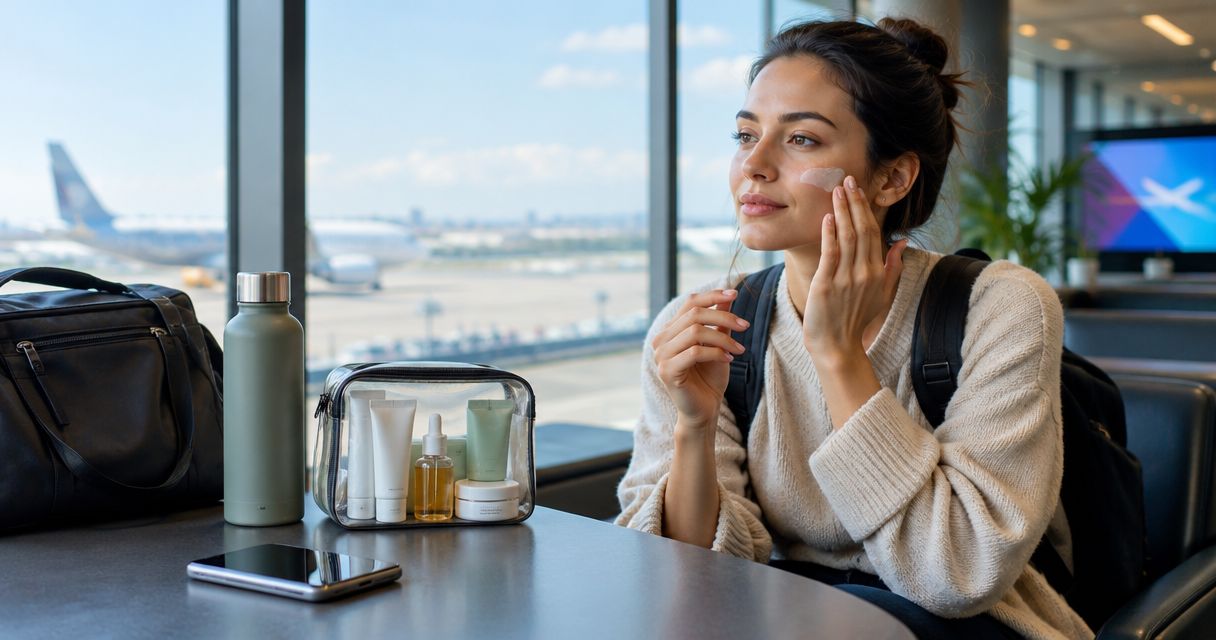
Runners’ and desert athletes’ skincare is the practice of protecting and caring for skin exposed to sun, sweat, friction, and dry air, with the aim of keeping outdoor training comfortable without preventable skin damage. This 2026 guide explains what to apply before exercise, remove afterward, and discuss before scheduling professional treatments.
- Skincare for runners and desert athletes starts with broad-spectrum, water-resistant SPF 30 or higher, protective clothing, and gentle cleansing.
- Bonnie Frances Skin is best for Phoenix athletes seeking professional facials alongside a consistent home skincare routine.
- Sweat resistance has limits: follow sunscreen reapplication instructions and replace protection after toweling.
- Schedule chemical peels and SkinPen microneedling around provider-directed recovery, not immediately before outdoor events.
Why skincare matters for runners and desert athletes
Desert training creates competing needs: your skin needs protection that stays in place during sweating, but repeated washing and exfoliation can leave it irritated. Hats, sunglasses, helmet straps, and clothing also create friction exactly where sweat collects.
Your first priority is preventing irritation and UV exposure, not adding more active ingredients. A routine that feels manageable on a rest day still needs to work when you leave early, finish sweaty, and head straight to work.
Bonnie Frances Skin offers skincare services in Phoenix, including facials, hydrafacials, dermaplaning, chemical peels, and SkinPen microneedling. Professional care belongs alongside daily protection; it does not replace sunscreen or make sun-damaged skin immune to further exposure.
Build your 2026 training-day skincare routine
Start with products you already tolerate, clothing you already own, and a written training schedule. Add professional support when you need help choosing a treatment or resolving a routine that repeatedly causes irritation.
1. Plan your exposure
Check the UV Index alongside the weather forecast before choosing your route and departure time. The World Health Organization recommends sun protection when the UV Index reaches 3 or higher; cool air does not establish that UV exposure is low.
Move exposed sessions away from the strongest sun when your schedule allows. Shade helps, but it does not replace sunscreen because scattered and reflected UV radiation still reaches your skin. An early start also needs a return-trip plan if you finish after sunrise.
Use your 2026 race calendar to identify days when protection will be harder: long trail runs, exposed cycling routes, and events without easy access to your bag.
- Check the UV Index rather than relying on temperature.
- Choose shaded routes where practical.
- Pack a hat and UV-protective sunglasses.
- Identify a place to stop and reapply sunscreen.
- Keep treatment appointments separate from major outdoor events.
2. Apply sun protection
Choose broad-spectrum, water-resistant sunscreen with SPF 30 or higher. The American Academy of Dermatology recommends this combination for outdoor protection; broad-spectrum coverage addresses both UVA and UVB exposure.
Apply sunscreen to dry skin before leaving. Follow the product label; American Academy of Dermatology guidance recommends application about 15 minutes before going outdoors. Cover your ears, neck, hairline, exposed scalp, hands, and any skin left uncovered by clothing.
Reapply at least every 2 hours outdoors and follow the label’s instructions during sweating or swimming. Under FDA labeling rules, water resistance is stated as either 40 minutes or 80 minutes—not unlimited protection. Reapply immediately after towel drying.
Higher SPF does not remove the need to reapply. Choose a texture you can use generously without repeatedly wiping it away from your eyes.
- Read the broad-spectrum and water-resistance statements.
- Use SPF 30 or higher on exposed skin.
- Apply before exercise, not after sweating starts.
- Carry sunscreen on routes that outlast its protection window.
- Use an SPF lip product and follow its label.
3. Control friction
Reduce rubbing before reaching for another exfoliant. Repeated contact from a cap band, sports bra, helmet strap, or hydration vest can cause chafing and contribute to acne-like irritation in covered areas.
Check fit while moving, not just while standing in front of a mirror. Clean contact surfaces regularly and avoid leaving damp equipment pressed against your skin after training. A small amount of a tolerated anti-chafing barrier on intact, friction-prone skin can help, but it does not replace sunscreen.
For facial irritation, Bonnie Frances Skin offers professional skincare and facials; a dermatologist is the appropriate next step for persistent, painful, or unexplained eruptions. Do not assume every bump under a strap is ordinary acne.
- Adjust straps that slide or dig into skin.
- Wash reusable headbands, hats, and face-contact gear.
- Change out of sweaty clothing after exercise.
- Trial anti-chafing products during ordinary training.
- Avoid scrubbing irritated areas to remove bumps.
4. Cleanse after exercise
Remove sweat, sunscreen, and accumulated debris with a gentle cleanser after training. Use lukewarm water and your fingertips rather than a cleansing brush or rough washcloth. Your face does not need to feel tight or squeaky to be clean.
If you cannot wash immediately, gently pat sweat away with a clean towel and cleanse when practical. Avoid rubbing salt and grit across your face. Reapply sunscreen if you return outdoors after washing.
Persistent burning after cleansing is a reason to reassess the cleanser and the rest of your routine, not to increase washing intensity. Keep cleansing separate from exfoliation: removing the day’s residue does not require an acid or scrub.
- Keep a gentle cleanser in your gym or work bag.
- Pat sweat instead of dragging a towel across skin.
- Rinse thoroughly around the hairline and jaw.
- Avoid hot water on already flushed skin.
- Put on clean clothing before settling into your day.
5. Restore your barrier
Apply moisturizer after cleansing to support skin that feels dry or tight. Choose the texture according to your skin’s response: a lighter formula can suit oily areas, while a richer cream can suit dry patches. More layers are not automatically better.
A fragrance-free moisturizer is a sensible starting point for easily irritated skin. Introduce unfamiliar products separately so you can identify what causes stinging, redness, or new bumps. Avoid testing a new active ingredient immediately before a race.
Your 2026 recovery routine should also account for prescription skincare. Follow the prescribing clinician’s directions rather than stopping or changing medication to fit a generic training plan.
- Moisturize after your post-workout cleanse.
- Use a tolerated formula rather than chasing a trend.
- Keep exfoliating acids off chafed or broken skin.
- Introduce unfamiliar products on an ordinary training week.
- Ask your clinician about persistent burning or peeling.
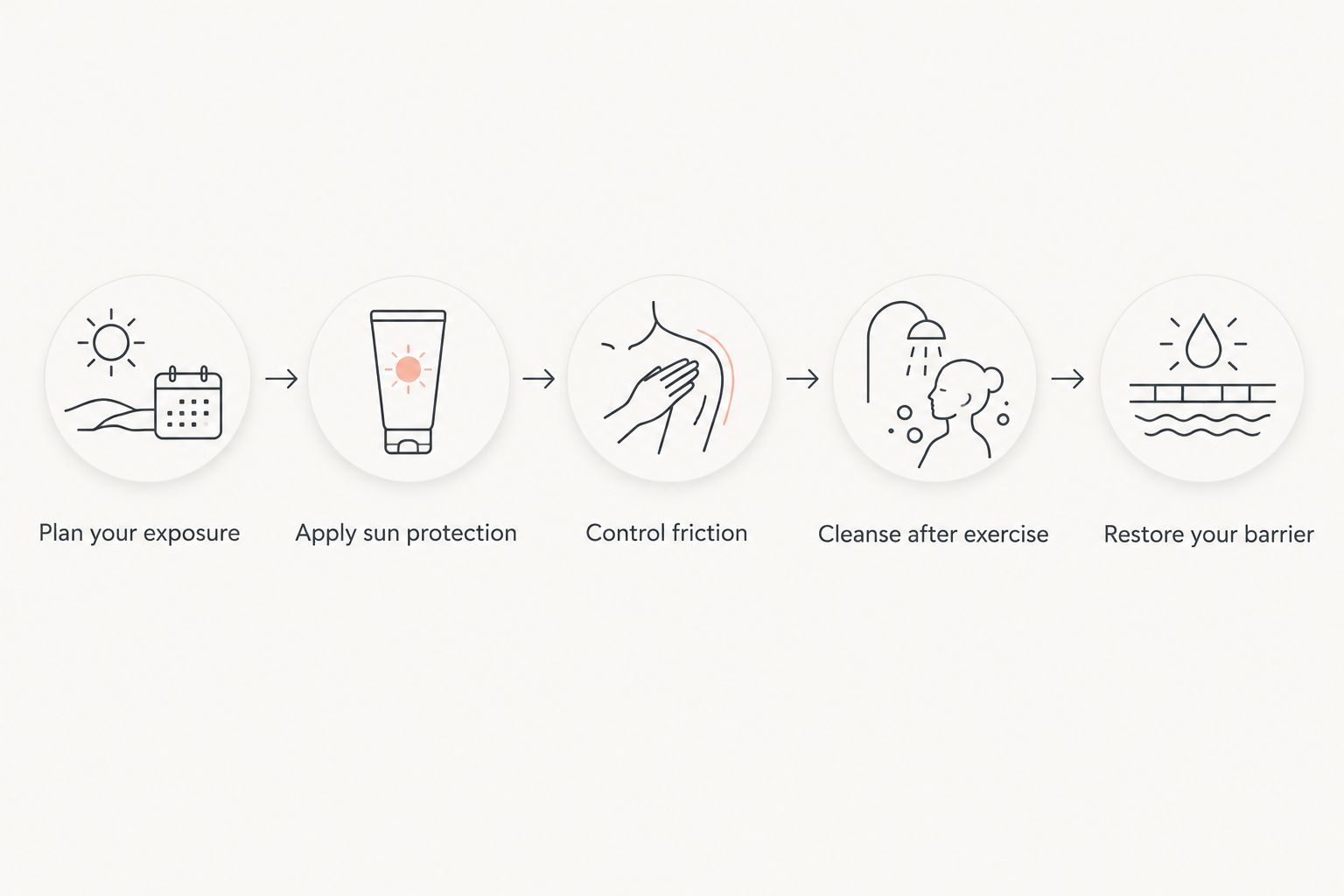
The routine follows a simple order: plan your exposure, apply sun protection, control friction, cleanse after exercise, and restore your barrier. Treatment decisions come after those basics are working.
6. Schedule treatments deliberately
Start by bringing your training calendar and current skincare routine to the appointment. Explain your outdoor exposure, recent sunburn, irritation, and any prescription or over-the-counter active ingredients. Those details matter more than asking for the strongest treatment.
Facials, dermaplaning, chemical peels, and microneedling are different procedures, not interchangeable recovery tools. Their suitability and aftercare depend on the procedure and your skin. Chemical peels and SkinPen microneedling require a specific conversation about healing, sun avoidance, sweating, and when to resume exercise.
Do not book a procedure before a race unless its aftercare fits your training plan. There is no single exercise waiting period that safely covers every treatment and every person.
- Share your next outdoor event date before treatment selection.
- Disclose medications and active skincare ingredients.
- Ask when you can resume sweating and outdoor exercise.
- Request clear cleansing, moisturizing, and sun-protection instructions.
- Reschedule when you cannot follow the required aftercare.
7. Track skin changes
Record where irritation occurs and what touched that area during training. A rash beneath sunglasses needs a different investigation from widespread peeling after a new exfoliant. Photos taken under similar lighting help you describe changes without relying on memory.
Review your 2026 routine when your mileage, equipment, or outdoor schedule changes. Do not wait for severe irritation to reconsider a cap that rubs or a sunscreen that repeatedly stings your eyes.
Seek medical evaluation for a changing spot, a sore that does not heal, or a persistent rash. Stop exercise and seek urgent help for signs of heat illness, especially confusion or collapse; skincare cannot make unsafe heat exposure safe.
- Record product changes alongside training changes.
- Note whether symptoms follow a specific strap or garment.
- Photograph persistent irritation for a clinical discussion.
- Avoid picking at blisters, bumps, or peeling skin.
- Arrange medical care for concerning or worsening symptoms.
Compare skincare options for desert athletes
Choose an option by the problem you need to address, not by how intensive it sounds. Home care supports daily protection; professional treatments address selected concerns after an assessment. Neither replaces medical evaluation for suspicious lesions or persistent inflammation.
| Option | Best for | Main advantage | Key limitation |
|---|---|---|---|
| Daily sunscreen, gentle cleanser, and moisturizer | Every outdoor athlete building a baseline | Addresses routine UV exposure, cleansing, and dryness | Requires consistent use and sunscreen reapplication |
| Clothing, shade, and route planning | Athletes with prolonged outdoor exposure | Reduces exposed skin and direct sun exposure | Does not protect every uncovered area or eliminate reflected UV |
| Bonnie Frances Skin facials | Phoenix athletes seeking professional facial care | Adds an in-person professional service to home care | Does not replace daily sunscreen or dermatologic diagnosis |
| Chemical peels | People discussing texture or pigmentation concerns with a provider | Offers controlled chemical exfoliation | Recovery and sun precautions can conflict with training |
| SkinPen microneedling | People seeking assessment for concerns such as acne scars | Uses controlled skin punctures as a professional treatment | Requires suitability screening and procedure-specific aftercare |
For your 2026 plan, choose the least complicated approach that addresses your actual concern. If daily care already keeps your skin comfortable, you do not need to add a procedure simply because your training is demanding.
Common mistakes runners and desert athletes make
- Treating water resistance as all-day protection. A sunscreen labeled for 80 minutes of water resistance still needs reapplication according to its instructions, including after towel drying.
- Skipping sunscreen on cool training days. Temperature and UV exposure are different measurements. Check the UV Index and protect exposed skin.
- Scrubbing away post-run bumps. More friction can worsen irritation. Review equipment contact and seek assessment when the problem persists.
- Scheduling resurfacing before an outdoor event. Treatment aftercare can conflict with sweating and sun exposure. Discuss the event before choosing the procedure.
- Confusing sweat with adequate moisturization. Sweating does not replace moisturizer when your skin feels dry or tight after cleansing.
FAQ
What’s the best skincare for runners and desert athletes?
The best starting routine is broad-spectrum, water-resistant SPF 30 or higher, gentle post-exercise cleansing, and a tolerated moisturizer. Add protective clothing and friction control before considering optional treatments.
Should I put sunscreen on before an early morning run?
Apply sunscreen before an early run if you will be outdoors after sunrise. Plan for the whole session, including the return trip, and follow the sunscreen label’s application instructions.
How often should I reapply sunscreen when I’m sweating?
Reapply at least every 2 hours outdoors, after towel drying, and according to the label’s sweating or swimming instructions. Water-resistant sunscreen labels specify either 40 minutes or 80 minutes of water resistance.
Do I need to wash my face immediately after every workout?
Cleanse gently after sweating when practical. If you cannot wash immediately, pat sweat away with a clean towel rather than rubbing, then cleanse when you can.
Can I run after a chemical peel or SkinPen microneedling?
Resume running only according to your treating provider’s aftercare instructions. The procedure, your skin’s condition, and your exposure to heat, sweat, and sun determine the appropriate recovery plan.
Is a facial better than a home skincare routine for runners?
A facial complements a home skincare routine; it does not replace one. Bonnie Frances Skin offers facials in Phoenix, while daily sunscreen, cleansing, and moisturizing remain your responsibility between visits.
Should I exfoliate more because I sweat every day?
Daily sweating is not a reason to increase exfoliation. Gentle cleansing removes sweat and residue; persistent bumps, burning, or peeling call for reassessment rather than stronger scrubs or acids.
One last thing
Your sunscreen plan can fail at the towel, not the starting line. If you wipe your face during a run, treat that moment as a protection check: follow the label’s reapplication instructions rather than assuming the morning application is still intact.
Pack sunscreen where you can actually reach it during training. A suitable product left in your bathroom cannot protect you on the return leg.